


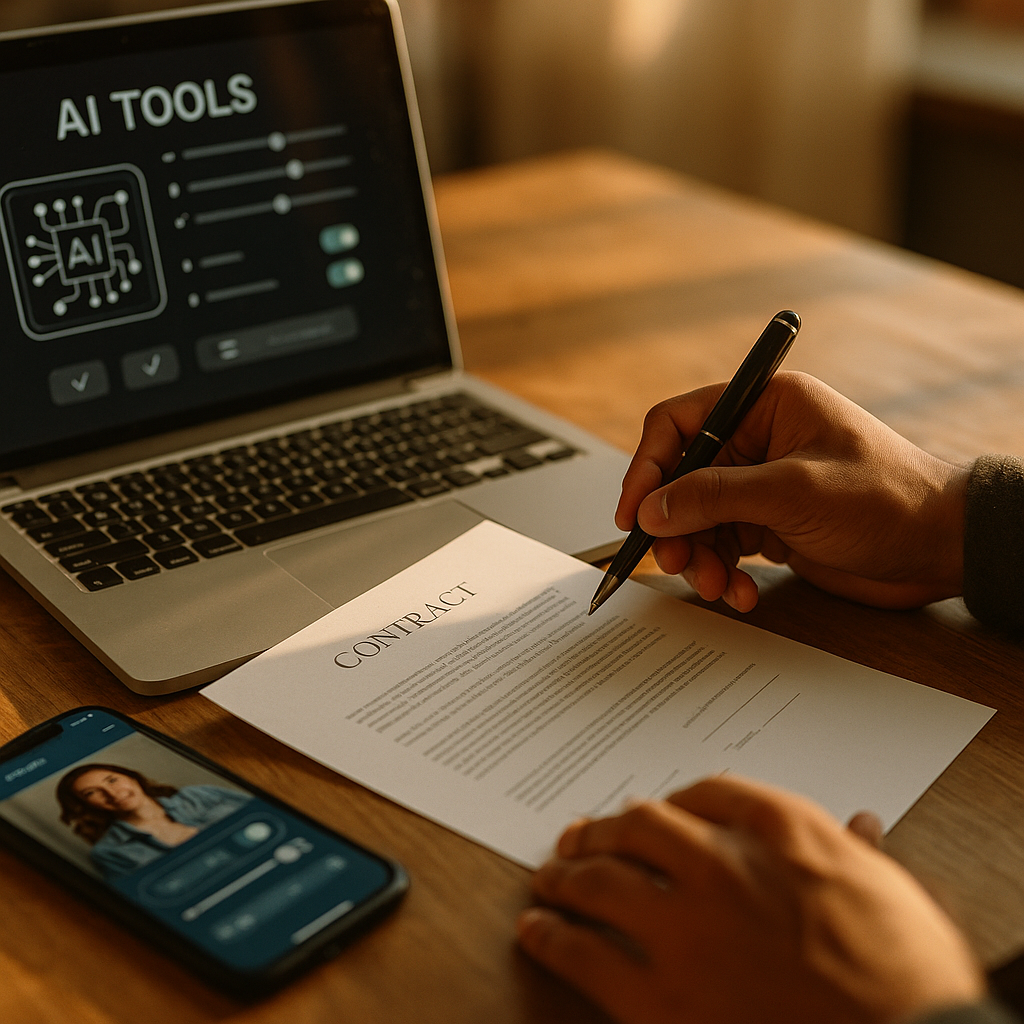
Platform AI features can now legally alter sponsored content after it goes live, and most creator contracts say nothing about it. That’s a liability gap brands can no longer afford to ignore when it comes to creator contract AI provisions for platform-native generative tools.
The Problem No One Briefed Legal On
TikTok’s Generative Remix lets users (and potentially the platform itself) transform existing videos, swapping backgrounds, altering dialogue, and remixing visual elements. YouTube’s AI editing suite, including auto-dubbing, Dream Screen backgrounds, and its evolving suite of generative overlays, can modify a creator’s video well after the brand has approved and paid for it.
Here’s the operational reality: a creator posts an approved, FTC-compliant sponsored video. A viewer remixes it using TikTok’s native tools. The remixed version circulates, featuring your product in a context you never approved, possibly alongside content that contradicts your brand guidelines, misrepresents claims, or strips out required disclosures. Who’s liable? Under most current contracts, that question is completely unanswered.
This isn’t a hypothetical. Both TikTok and YouTube have expanded their generative AI feature sets aggressively, and TikTok for Business now positions AI-native features as core engagement drivers. The speed of platform deployment has outpaced legal frameworks on both sides of the negotiating table.
Where Standard Contracts Break Down
Most influencer agreements define deliverables, approval rights, usage windows, and exclusivity. What they don’t define is what happens to content after publication when a platform’s AI infrastructure modifies it without either party’s explicit consent.
The failure points cluster around three areas:
- Modification rights: Contracts typically restrict the brand and creator from editing approved content, but say nothing about third-party platform modifications.
- Disclosure persistence: FTC disclosure placement requirements assume a static piece of content. AI-remixed versions may not carry the original #ad or sponsored label.
- Brand safety triggers: Existing brand safety clauses focus on creator behavior. They rarely contemplate a scenario where the platform algorithmically repositions approved content into a problematic context.
The gap isn’t accidental. It reflects how fast these features shipped. Legal teams were not in the room when TikTok’s product team launched Generative Remix. Now they need to catch up.
What “Platform-Native AI Transformation” Actually Covers
Before updating contracts, brands need a precise definition of scope. Platform-native AI transformation includes any modification to published content made by the platform’s own tools, whether initiated by a third-party user, the creator themselves using post-publication features, or automated by the platform’s recommendation and personalization systems.
That’s a broader category than most legal teams initially assume. It includes:
- User-triggered remixes and duets that use generative fill or voice synthesis
- Automated translations and AI-dubbed audio that alter the creator’s original script
- Background replacement and visual overlays applied by AI editing tools
- Platform-generated thumbnails or preview clips that crop or reframe sponsored content
- AI-generated captions that misquote or paraphrase the creator’s claims about your product
For YouTube UGC brand safety, automated captions and AI summaries are already a known compliance risk. The same logic extends to YouTube’s newer generative editing tools.
Platform terms of service grant these companies extraordinarily broad rights to modify, distribute, and create derivative works from any content uploaded to their systems. Your creator contract needs to account for what those rights mean for your sponsored posts specifically.
Five Contract Clauses Brands Need to Add Now
Generic “no modifications without approval” language won’t hold up when the modifier is a platform operating under its own ToS. Contracts need to be rebuilt around platform-specific realities. Here are the clauses that matter.
1. Platform AI Transformation Definition Clause
Define “AI modification” explicitly in the contract to include any alteration made by platform-native generative tools, automated systems, or user-activated AI features available on the publishing platform. This creates the predicate language for every other clause.
2. Creator Opt-Out Obligation
Require creators to disable all available platform settings that allow third-party AI remixing of sponsored content. Both TikTok and YouTube provide content controls that limit how AI tools can interact with uploaded video. Make enabling those controls a contractual condition of payment release.
3. Disclosure Persistence Warranty
The creator warrants that they will take commercially reasonable steps to ensure required disclosures survive any platform-permitted modification. For content that cannot technically carry persistent disclosures through AI transformation, the contract should require the creator to report the transformation to the brand within 48 hours of discovery.
4. Post-Publication Monitoring Period
Define a monitoring window (90 days is a reasonable baseline) during which the creator actively checks for AI-modified derivatives of sponsored content and notifies the brand. This shifts some of the surveillance burden back to the party closest to the platform activity. It also pairs logically with stronger brand leverage clauses already being adopted for other compliance scenarios.
5. Indemnification Carve-Out for Platform Actions
Standard indemnification clauses hold the creator liable for content they produce. Add a carve-out that clarifies indemnification does not extend to modifications made by the platform’s own AI systems without the creator’s initiation, while preserving brand recourse for creator-initiated AI edits.
The FTC Disclosure Angle Is the Highest-Risk Exposure
Disclosure isn’t just an ethical obligation. Under FTC guidelines, brands can be held liable for inadequate disclosure in content that promotes their products, regardless of whether the brand itself created that content. If an AI-remixed version of a sponsored TikTok circulates without a visible #ad label, the question of brand liability is live.
The FTC’s endorsement guidelines require that disclosures be clear, conspicuous, and difficult to miss. A disclosure embedded in video text that gets cropped by an AI thumbnail generator fails that standard. One that gets removed when a user remixes the clip through Generative Remix fails even more clearly.
For teams navigating TikTok and Instagram disclosure compliance at scale, this is the scenario that keeps enforcement counsel awake. Document your brand’s good-faith efforts to require disclosure persistence in contracts. That documentation is your defense exhibit.
AI Content Licensing: The Overlooked Downstream Problem
There’s a second exposure layer that’s receiving less attention. When a platform’s AI system transforms sponsored content, that transformation may itself be used to train future AI models, including the platform’s own creative tools. If the original content contains your brand assets, product visuals, or proprietary messaging, those elements could effectively become training data.
This is a material concern for brand legal teams. The AI training licensing dimension of creator agreements is already being litigated in adjacent contexts. Brands should ensure that sponsorship agreements explicitly restrict the creator from publishing content in formats or settings where platform AI training on brand assets is permitted by default.
A sponsored post transformed by generative AI and then used to train that same platform’s creative tools could effectively put your brand’s visual identity and product claims into a dataset you have zero visibility into. That’s not a future risk, it’s a current one.
For a broader operational view of how AI disclosure requirements are evolving across platforms, the YouTube AI disclosure workflow developed for brand teams offers a useful structural model that can be adapted for TikTok campaigns.
What Brands Should Do This Quarter
Start with a contract audit against your active and upcoming campaigns. Flag every agreement that lacks explicit platform AI modification language. Prioritize TikTok and YouTube campaigns, as these platforms currently have the most mature generative AI feature sets available to creators and users alike.
Coordinate with your influencer marketing platform or agency to push updated contract templates to the creator tier. Nano and micro-creators are the least likely to push back on new clauses, and they’re also the highest-volume segment where platform AI features see the most organic use. Mid-tier and macro creators with established legal counsel will negotiate, so come prepared with clear rationale and a definition of scope that’s tight enough to be enforceable.
Finally, loop in your AI backlash risk and disclosure standards framework. Platform-native AI transformation is not just a legal exposure. It’s a brand safety and reputation risk that requires cross-functional alignment between legal, brand, and your influencer operations team.
Run your next contract review cycle with one question on the agenda: what happens to this content after the creator hits publish, and does our agreement say anything useful about it?
Frequently Asked Questions
Can a brand be held liable if TikTok’s AI tools transform a sponsored post without the creator’s knowledge?
Potentially, yes. FTC guidelines assign liability to brands when sponsored content lacks adequate disclosure, regardless of who created or modified the content. If an AI-transformed version of a sponsored post circulates without a visible #ad label, the brand’s exposure is real. Contractual clauses that require creators to disable AI remix permissions and report modifications are the primary mitigation strategy.
Do platform terms of service override creator contract protections?
Platform ToS governs the creator-platform relationship. Creator contracts govern the creator-brand relationship. The two operate in parallel, not in competition. However, platform ToS can enable modifications that your contract didn’t anticipate. The practical answer is to require creators to use available platform controls to limit AI transformation of sponsored content, making that a contractual obligation rather than assuming the contract alone overrides platform capabilities.
What specific TikTok and YouTube settings should creators be required to disable for sponsored posts?
On TikTok, creators should disable the “Allow Duet,” “Allow Stitch,” and any Generative Remix permissions in their video privacy settings. On YouTube, creators should review AI dubbing opt-in settings and ensure that Content ID and automated caption editing features are configured to preserve original content. These settings evolve as platforms update their products, so contracts should require creators to implement “all available controls” rather than listing specific settings by name.
How does AI-generated captioning on YouTube create FTC disclosure risk?
YouTube’s auto-generated captions can misquote, paraphrase, or omit portions of a creator’s spoken disclosures. If a creator verbally states “this video is sponsored by [Brand]” but the AI caption generates an inaccurate or omitted transcription, viewers relying on captions, including those with hearing impairments, may not receive adequate disclosure. Contracts should require creators to review and correct auto-generated captions before and after publication.
Should brands seek indemnification from creators for AI-modified content they didn’t initiate?
No, and attempting to do so will create negotiation friction without providing meaningful protection. The enforceable approach is a targeted indemnification carve-out that distinguishes between creator-initiated AI edits (where creator liability is appropriate) and platform-initiated modifications (where liability is better addressed through platform-level advocacy and brand-side risk monitoring). Broad indemnification for platform actions is unlikely to hold up and signals that your legal team hasn’t mapped the actual risk correctly.
Top Influencer Marketing Agencies
The leading agencies shaping influencer marketing in 2026
Agencies ranked by campaign performance, client diversity, platform expertise, proven ROI, industry recognition, and client satisfaction. Assessed through verified case studies, reviews, and industry consultations.
Moburst

-
2

The Shelf
Boutique Beauty & Lifestyle Influencer AgencyA data-driven boutique agency specializing exclusively in beauty, wellness, and lifestyle influencer campaigns on Instagram and TikTok. Best for brands already focused on the beauty/personal care space that need curated, aesthetic-driven content.Clients: Pepsi, The Honest Company, Hims, Elf Cosmetics, Pure LeafVisit The Shelf → -
3

Audiencly
Niche Gaming & Esports Influencer AgencyA specialized agency focused exclusively on gaming and esports creators on YouTube, Twitch, and TikTok. Ideal if your campaign is 100% gaming-focused — from game launches to hardware and esports events.Clients: Epic Games, NordVPN, Ubisoft, Wargaming, Tencent GamesVisit Audiencly → -
4

Viral Nation
Global Influencer Marketing & Talent AgencyA dual talent management and marketing agency with proprietary brand safety tools and a global creator network spanning nano-influencers to celebrities across all major platforms.Clients: Meta, Activision Blizzard, Energizer, Aston Martin, WalmartVisit Viral Nation → -
5

The Influencer Marketing Factory
TikTok, Instagram & YouTube CampaignsA full-service agency with strong TikTok expertise, offering end-to-end campaign management from influencer discovery through performance reporting with a focus on platform-native content.Clients: Google, Snapchat, Universal Music, Bumble, YelpVisit TIMF → -
6

NeoReach
Enterprise Analytics & Influencer CampaignsAn enterprise-focused agency combining managed campaigns with a powerful self-service data platform for influencer search, audience analytics, and attribution modeling.Clients: Amazon, Airbnb, Netflix, Honda, The New York TimesVisit NeoReach → -
7

Ubiquitous
Creator-First Marketing PlatformA tech-driven platform combining self-service tools with managed campaign options, emphasizing speed and scalability for brands managing multiple influencer relationships.Clients: Lyft, Disney, Target, American Eagle, NetflixVisit Ubiquitous → -
8

Obviously
Scalable Enterprise Influencer CampaignsA tech-enabled agency built for high-volume campaigns, coordinating hundreds of creators simultaneously with end-to-end logistics, content rights management, and product seeding.Clients: Google, Ulta Beauty, Converse, AmazonVisit Obviously →