


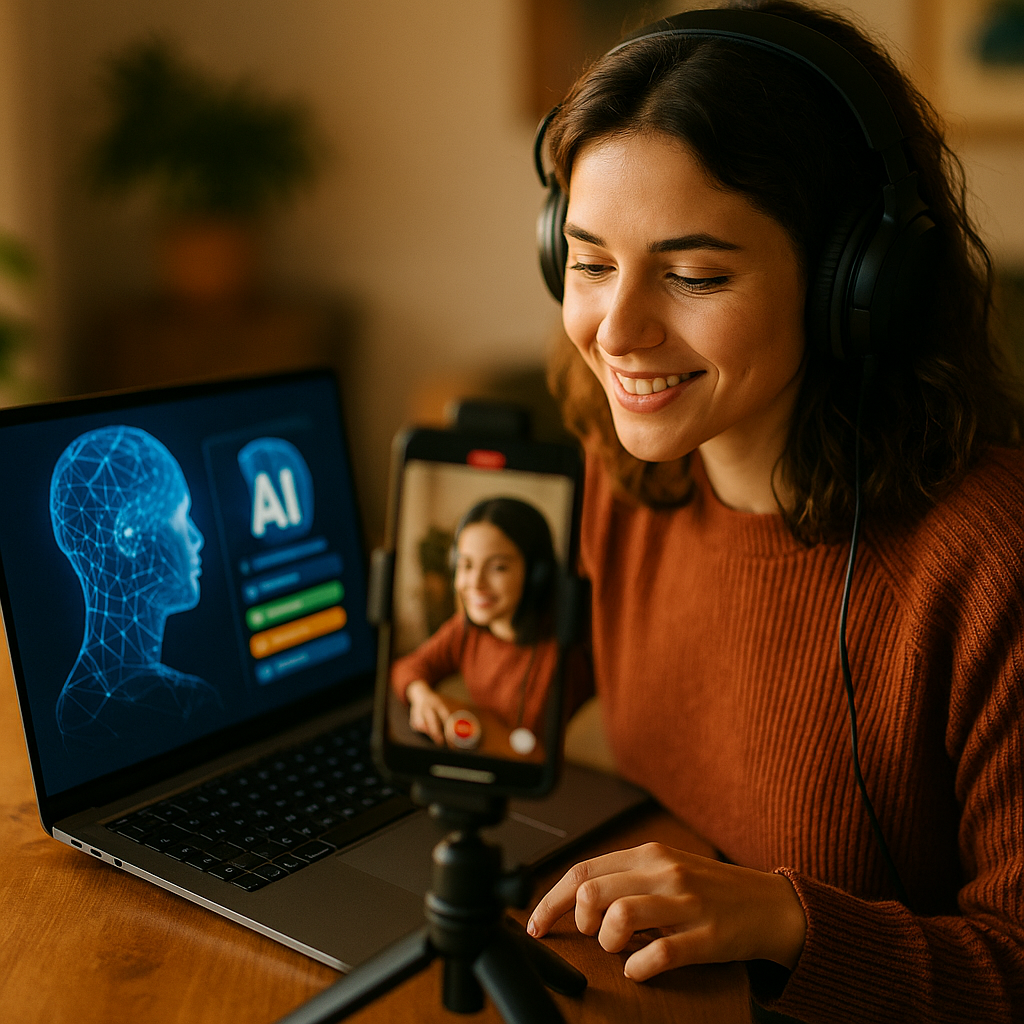
Most Retention Stacks Are Missing Half the Signal
Brands running sophisticated CRM programs are leaving serious money on the table. Not because their retention logic is wrong, but because the data feeding it is incomplete. AI-powered next-best-action for creator-driven CRM workflows is closing that gap, and the brands evaluating MarTech platforms right now need to understand exactly what they’re buying.
The core problem is structural. Traditional CRM platforms optimize on purchase history, email engagement, and browsing behavior. Clean, first-party data. But they have no visibility into which creator content a customer consumed before buying, which influencer’s community they belong to, or what kind of social proof triggered their last three repurchase decisions. That’s a blind spot the size of your entire influencer budget.
Why Creator Audience Signals Change the Retention Equation
Think about what a creator audience signal actually represents. When someone buys a skincare product after watching a 12-minute tutorial from a mid-tier creator with a high-trust beauty community, that purchase carries different retention implications than a customer who arrived through a paid search click. The first customer has social context: they belong to a community, they’re influenced by ongoing creator content, and their repurchase likelihood is partly conditional on whether that creator keeps recommending the product.
Platforms like Sprout Social have documented the compounding engagement lift that creator-affiliated audiences deliver versus generic paid audiences. The problem is that this insight rarely makes it back into CRM logic. Most retention teams are scoring customers without knowing whether they’re community buyers or transactional ones.
For creator attribution to actually power retention decisions, the platform stack needs to do two things simultaneously: resolve creator-sourced identities across channels, and feed that context into next-best-action models in real time.
A customer who converted through a creator’s community isn’t just a buyer. They’re a socially-anchored buyer, and the intervention that retains them looks fundamentally different from the one that retains a search-intent buyer.
What “Next-Best-Action” Actually Means in This Context
Next-best-action (NBA) is a decision-engine concept that’s been in enterprise CRM for years. The innovation here isn’t the concept; it’s the input data. When you combine creator audience signals with purchase history, the NBA model gains access to a whole new class of predictive variables:
- Creator affinity score: How closely is this customer associated with a specific creator’s audience cluster?
- Content touchpoint recency: When did this customer last engage with creator content, and did that engagement precede a purchase?
- Community churn risk: Has the creator’s audience engagement dropped, signaling potential drift in customer loyalty?
- Cross-creator overlap: Is this customer a multi-creator buyer who responds to social proof generally, or are they loyal to one voice?
Feed these variables into an AI model trained on retention outcomes, and the triggered intervention changes meaningfully. Instead of a generic “we miss you” email at the 60-day lapse mark, you get a creator-personalized re-engagement sequence that references the community context, features the specific creator the customer follows, and times the send to align with that creator’s typical posting cadence.
Platforms like Attentive and Klaviyo are building toward this, but the creator signal layer is still largely custom integration territory. That’s a critical evaluation criterion for any brand currently in a MarTech RFP process.
Evaluating the Platform: Six Questions That Actually Matter
Generic vendor scorecards won’t surface the right answers here. When you’re evaluating a MarTech platform for creator-driven CRM automation, the questions need to be operationally specific.
1. How does the platform ingest creator-sourced attribution data? Does it accept UTM-level creator tags from platforms like TikTok Ads or custom creator tracking pixels? Can it connect to influencer management platforms via API, or does the integration require custom engineering work every time?
2. What is the identity resolution methodology? Matching a social media follower to a CRM record requires probabilistic or deterministic identity resolution. Ask vendors directly how they handle this, what their match rates are on first-party data, and whether they can maintain compliance with GDPR and CCPA requirements while doing it. For a deeper look at how this works at the infrastructure level, see identity resolution for AI attribution.
3. Where in the decision model do creator signals appear? Are they a primary feature or a metadata tag? A platform that buries creator affinity as a secondary filter will never produce the kind of personalization that drives meaningful retention lift. You want creator signals at the feature-importance level of the model.
4. What intervention types can be triggered? Email is table stakes. The real capability question is whether the platform can trigger personalized SMS, push notifications, paid retargeting audience updates, and creator-seeded social proof injections through a single automation layer.
5. How is the model’s performance measured and improved? NBA models degrade if they’re not retrained on fresh outcome data. Ask vendors about their retraining cadence, whether you own the model outputs, and how quickly the system adapts to shifts in creator audience behavior.
6. What are the compliance guardrails? Combining behavioral data with social audience signals touches multiple regulatory frameworks. The platform needs built-in consent management, audit trails, and clear data residency documentation. Review the ICO’s guidance on behavioral profiling if you’re operating in UK/EU markets.
The Integration Architecture Brands Consistently Underestimate
Here’s what doesn’t show up in vendor demos: the integration lift required to make this actually work. Most brands discover post-contract that their influencer management platform, their CRM, their ESP, and their data warehouse are operating in separate schemas with no shared customer identifier. The AI model is only as good as the data pipeline feeding it.
The practical minimum viable stack includes: a creator campaign management platform with outbound API capability, a customer data platform (CDP) capable of ingesting creator-sourced events, an AI decisioning layer with real-time trigger capacity, and an execution layer that can personalize across at least three channels simultaneously.
Platforms like Salesforce Marketing Cloud with creator data extensions, or mParticle as a CDP backbone, can support this architecture. But integration requires deliberate schema design from the start. This is also where understanding agentic AI journey orchestration becomes directly relevant; the automation layer needs to handle non-linear decision trees, not just sequential drip sequences.
For brands concerned about AI automation creeping beyond defined parameters, an AI campaign governance model provides a useful framework for setting operational guardrails.
The brands winning at creator-driven CRM retention aren’t necessarily using more sophisticated AI. They’ve done the unglamorous work of building a unified data schema that lets creator signals and purchase history speak the same language.
ROI Framing for Budget Conversations
Retention programs funded through a CRM budget and influencer signals funded through a marketing budget create an organizational incentive problem. Nobody owns the combined ROI. Before evaluating platforms, get cross-functional alignment on how incrementality will be measured.
A reasonable benchmark: brands with mature creator-CRM integration report 15-25% improvement in retention rates among creator-sourced customer cohorts compared to control groups receiving standard retention sequences. eMarketer research consistently shows that influencer-attributed customers carry higher lifetime value across CPG, beauty, and apparel categories. The platform investment justification should be built on LTV uplift in those cohorts, not on open rate improvements.
For teams still mapping out how AI tools fit into the broader budget allocation, the analysis in generative AI sales effectiveness is worth reviewing before going into vendor negotiations.
One more consideration: segment-of-one personalization at scale requires ongoing model maintenance costs. Factor in a realistic total cost of ownership, not just the SaaS license. HubSpot’s research on CRM operational costs is a useful baseline for budgeting that side of the equation. Also, see the detailed breakdown in segment-of-one loyalty CRM for how leading brands are structuring churn prevention logic at the individual customer level.
Start the platform evaluation with a structured data audit: map every creator touchpoint in your existing customer journey, identify where those signals currently die in your stack, and use that gap analysis as the primary criterion for vendor shortlisting. The right platform isn’t the one with the best demo; it’s the one that closes the specific gaps your current architecture has.
FAQs
What is AI-powered next-best-action in the context of creator-driven CRM?
AI-powered next-best-action (NBA) in creator-driven CRM refers to using machine learning models to determine the optimal retention intervention for each individual customer, where the model’s inputs include not just purchase history and behavioral data, but also signals derived from creator audience membership, influencer content engagement, and social proof touchpoints. The goal is to personalize retention communications based on the social context in which a customer originally converted.
How do creator audience signals get connected to CRM records?
Creator audience signals are typically connected to CRM records through a combination of UTM-based attribution (tracking which creator campaign drove a conversion), identity resolution technology within a customer data platform (CDP), and API integrations between influencer management platforms and the CRM. The technical challenge is maintaining a persistent customer identifier across social, web, and purchase touchpoints while remaining compliant with data privacy regulations.
Which MarTech platforms currently support creator signal integration with CRM automation?
As of now, no single platform offers fully native creator-CRM integration out of the box. Brands are typically building this capability by combining an influencer management platform (such as Grin, Aspire, or Creator.co) with a CDP (such as mParticle or Segment) and a CRM automation layer (such as Salesforce Marketing Cloud or Klaviyo). The AI decisioning layer is often a separate component or a native feature being expanded by these platforms through product roadmaps.
What compliance risks should brands be aware of when combining creator signals with purchase data?
Combining creator audience signals with purchase and behavioral data raises significant data privacy considerations. Brands must ensure they have proper consent for behavioral profiling under GDPR (EU), UK GDPR, and CCPA (California). This includes clear disclosure in privacy policies, consent management platform (CMP) integration, and data residency controls. Using social audience data to inform CRM interventions without explicit consent can expose brands to regulatory risk, particularly in European markets.
How should brands measure the ROI of creator-driven CRM automation?
ROI should be measured primarily through incremental lift in customer lifetime value (LTV) and retention rates within creator-sourced customer cohorts, compared against control groups receiving standard retention sequences. Secondary metrics include repeat purchase rate, time-to-second-purchase, and churn rate reduction within creator-attributed segments. Brands should avoid measuring success solely through email open rates or click metrics, which do not capture the full retention impact of creator-personalized interventions.
Top Influencer Marketing Agencies
The leading agencies shaping influencer marketing in 2026
Agencies ranked by campaign performance, client diversity, platform expertise, proven ROI, industry recognition, and client satisfaction. Assessed through verified case studies, reviews, and industry consultations.
Moburst

-
2

The Shelf
Boutique Beauty & Lifestyle Influencer AgencyA data-driven boutique agency specializing exclusively in beauty, wellness, and lifestyle influencer campaigns on Instagram and TikTok. Best for brands already focused on the beauty/personal care space that need curated, aesthetic-driven content.Clients: Pepsi, The Honest Company, Hims, Elf Cosmetics, Pure LeafVisit The Shelf → -
3

Audiencly
Niche Gaming & Esports Influencer AgencyA specialized agency focused exclusively on gaming and esports creators on YouTube, Twitch, and TikTok. Ideal if your campaign is 100% gaming-focused — from game launches to hardware and esports events.Clients: Epic Games, NordVPN, Ubisoft, Wargaming, Tencent GamesVisit Audiencly → -
4

Viral Nation
Global Influencer Marketing & Talent AgencyA dual talent management and marketing agency with proprietary brand safety tools and a global creator network spanning nano-influencers to celebrities across all major platforms.Clients: Meta, Activision Blizzard, Energizer, Aston Martin, WalmartVisit Viral Nation → -
5

The Influencer Marketing Factory
TikTok, Instagram & YouTube CampaignsA full-service agency with strong TikTok expertise, offering end-to-end campaign management from influencer discovery through performance reporting with a focus on platform-native content.Clients: Google, Snapchat, Universal Music, Bumble, YelpVisit TIMF → -
6

NeoReach
Enterprise Analytics & Influencer CampaignsAn enterprise-focused agency combining managed campaigns with a powerful self-service data platform for influencer search, audience analytics, and attribution modeling.Clients: Amazon, Airbnb, Netflix, Honda, The New York TimesVisit NeoReach → -
7

Ubiquitous
Creator-First Marketing PlatformA tech-driven platform combining self-service tools with managed campaign options, emphasizing speed and scalability for brands managing multiple influencer relationships.Clients: Lyft, Disney, Target, American Eagle, NetflixVisit Ubiquitous → -
8

Obviously
Scalable Enterprise Influencer CampaignsA tech-enabled agency built for high-volume campaigns, coordinating hundreds of creators simultaneously with end-to-end logistics, content rights management, and product seeding.Clients: Google, Ulta Beauty, Converse, AmazonVisit Obviously →