


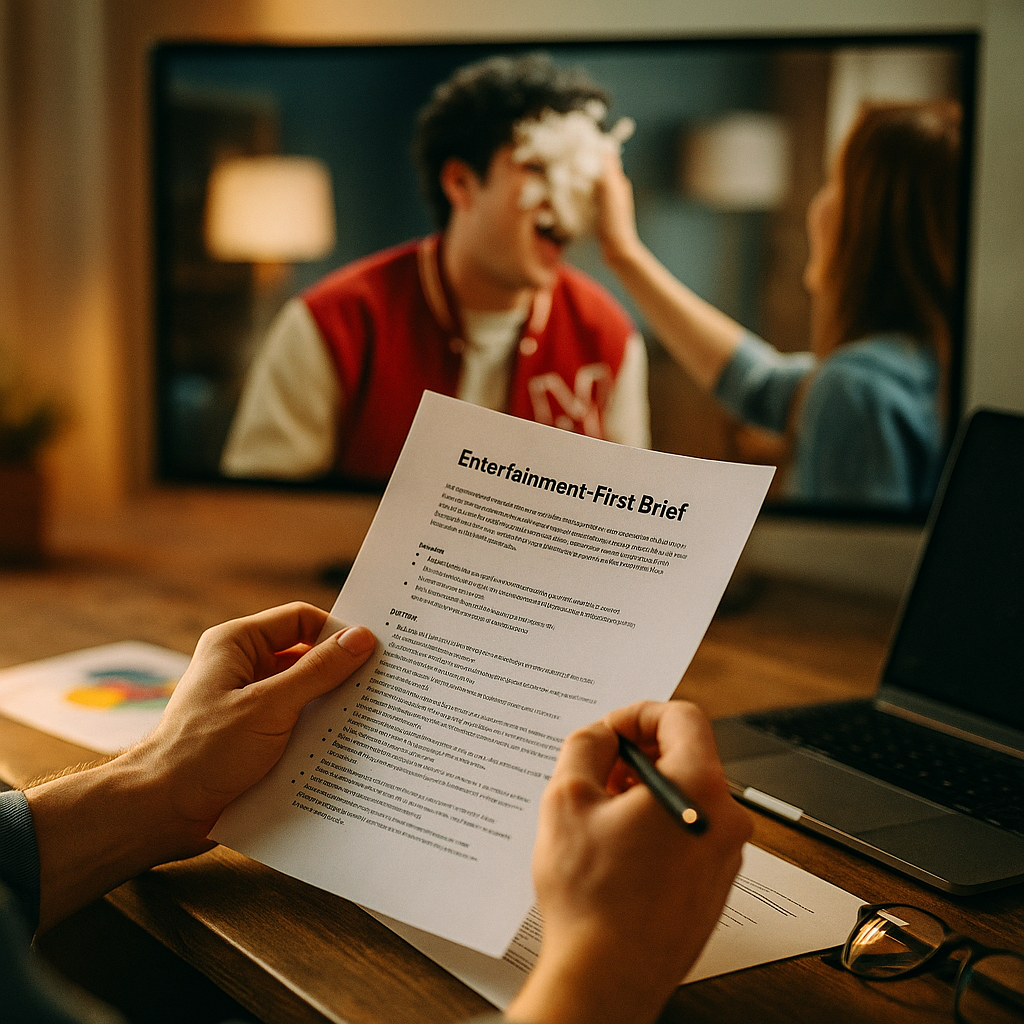
When was the last time a sponsored post made you feel something? Not informed. Not prompted to swipe up. Actually feel something. The entertainment-first brand advertising revival is not a nostalgia play. It is a direct market response to measurable audience fatigue with informational creator content, and if your brief design hasn’t shifted yet, you’re already behind.
The Fatigue Signal Is Real and Getting Louder
Engagement rates on standard product-feature creator content have been declining across platforms for several consecutive quarters. Sprout Social data consistently shows that entertainment and humor content outperforms educational and product-demo formats in reach-to-engagement conversion. Meanwhile, skip rates on pre-roll and mid-roll sponsored integrations have climbed sharply, with viewers demonstrating increasing pattern recognition for the “partnership with” disclosure opening that typically signals: brace yourself for a talking points walkthrough.
The audience has been trained. They know what an informational ad feels like. And they are opting out.
Audiences don’t reject advertising. They reject predictability. The brands breaking through right now lead with entertainment value first and product truth second, and that sequence is everything.
What Gap, Hawaiian Tropic, and Lume Are Actually Doing
Each of these brands made deliberate creative choices to produce content that functions as entertainment before it functions as advertising. Gap’s recent campaign leaned into choreographed, music-driven visual storytelling that referenced the aesthetic language of early MTV-era fashion advertising. Hawaiian Tropic revived the sun-drenched aspirational visual narrative with production value that wouldn’t be out of place on a streaming platform. Lume, a brand that built its early growth on direct-response creator content, pivoted to higher-gloss, narrative-forward production for specific campaign moments, using music and visual rhythm as the primary hook before product claims entered the frame.
What they share is a willingness to subordinate the product message to the entertainment experience, at least for the first two-thirds of the content. The product earns its place in the story rather than leading with it.
This is not just an aesthetic choice. It is a structural brief decision. Someone in the room explicitly said: entertainment first, message second. That decision came from somewhere, and it came from audience data.
Why Music-Video Aesthetics Specifically?
The music video format carries specific cultural memory for multiple demographic cohorts simultaneously. For older Millennials and Gen X audiences, it references a pre-algorithm era when content was selected based on genuine appeal. For Gen Z, the format is actually novel. They grew up on compressed, text-overlaid, talking-to-camera vertical video. A fully produced horizontal music-video aesthetic reads as premium and cinematic to them, not dated.
That cross-cohort resonance is strategically valuable. Brands targeting wide demographic bands, which includes most consumer packaged goods, personal care, and lifestyle categories, get a format that doesn’t alienate either end of the age spectrum. For brands targeting Boomer and Gen X audiences specifically, the nostalgia component adds a dimension of emotional warmth that direct-response formats structurally cannot deliver.
Music also bypasses rational processing. Before a viewer has consciously evaluated whether they trust the brand or care about the product category, a well-chosen track has already established an emotional state. That is not an accident. That is brief design.
The Brief Design Implications Across Sponsored Formats
If you’re running influencer sponsorships, paid social, CTV, or branded content, this trend has direct operational consequences. The conventional brief structure, which typically moves from brand background to product claims to messaging hierarchy to call-to-action, prioritizes information transfer. It is optimized for a viewer who is willing to listen. Today’s viewer is not that viewer.
Reorienting your brief means making several structural changes:
- Lead with the emotional outcome, not the product feature. The brief should specify how the audience should feel in the first five seconds, not what they should know.
- Define the entertainment format before the message format. Is this a mini-narrative? A performance piece? A visual mood reel? That decision shapes everything downstream, including creator selection.
- Loosen the message timing constraint. Requiring the product mention before the fifteen-second mark optimizes for skip-rate anxiety, not entertainment value. Test longer entertainment lead-ins.
- Build music and sound into the brief itself. Not as an afterthought or a creator discretion item. Sound design should be specified or at minimum directionally guided at the brief stage.
- Separate the entertainment assets from the conversion assets. A single piece of content rarely maximizes both. Consider brief architecture that creates an entertainment-first awareness layer and a separate, retargeted conversion layer.
For teams managing influencer brief structure at scale, this reorientation requires workflow changes, not just creative philosophy adjustments. Approval processes built for fact-checking product claims are not equipped to evaluate entertainment quality. That capability gap needs to be addressed explicitly.
Budget Architecture Follows Creative Strategy
Producing entertainment-grade brand content costs more than producing information-grade content. That is simply true. Music licensing, production crew, choreography, higher-tier talent, post-production polish: these costs are real and need to be accounted for in budget planning.
The strategic response is not to avoid entertainment-first production, but to concentrate it. Rather than distributing a flat sponsorship budget across a high volume of mid-tier informational creator posts, the entertainment revival approach often means fewer, higher-production pieces supplemented by paid amplification spend to extend reach. The creative asset does heavier lifting per dollar when it earns organic sharing, and entertainment content earns sharing at rates informational content cannot match.
The video budget shift from linear TV to creator channels also matters here. Brands pulling dollars from broadcast and cable still have production expectations calibrated to broadcast quality. Entertainment-first creator content is one way to redeploy those dollars without sacrificing production ambition, while gaining the targeting precision and algorithmic distribution that creator platforms offer.
Entertainment-first content earns shares. Informational content earns saves. Shares extend reach organically. That difference compounds across a campaign lifecycle in ways that cost-per-post comparisons never capture.
Compliance and Disclosure in Entertainment-Forward Formats
One operational risk worth addressing directly: entertainment-first formats can blur the disclosure line. When content is highly produced, cinematic, and not obviously “by a creator talking about a product,” the FTC disclosure requirements do not change. The obligation to clearly and conspicuously disclose a material commercial relationship applies regardless of how artistically the content is constructed.
Brands and agencies managing entertainment-forward campaigns need to ensure that disclosure placement and prominence are not sacrificed for aesthetic reasons. This is a brief design and legal review item, not just a creator instruction. If your entertainment-first content gets flagged for inadequate disclosure, the brand equity you built with the creative quality takes a direct hit. The compliance infrastructure needs to scale with the creative ambition.
Creator Selection Shifts When the Brief Shifts
Standard influencer selection metrics, follower count, engagement rate, audience demographic match, are necessary but not sufficient for entertainment-first campaigns. You also need to evaluate performance capability, on-camera charisma under production conditions, movement and rhythm awareness for music-driven content, and the creator’s experience working with production crews rather than self-shooting on a phone.
This is a different talent pool. Not entirely separate from the creator ecosystem, but it overlaps more with commercial talent than typical influencer rosters do. Agencies running AOR-style creator programs may need to expand their casting criteria and sourcing channels. Platforms like eMarketer have tracked the growing category of creators who explicitly position themselves as commercial talent rather than niche content specialists, and that category is growing precisely because brand demand for production-capable talent is rising.
The creator economy’s rate architecture also shifts when production requirements increase. Budget allocations need to account for talent fees that reflect performance demands, not just audience size.
Measurement frameworks need updating too. View-through rates, share velocity, and emotional recall metrics (when available through brand lift studies on platforms like Meta or via TikTok’s brand lift tools) become more relevant than click-through rates for entertainment-first content. Optimizing entertainment campaigns against direct-response metrics is how good creative gets killed in post-campaign reviews.
Start by auditing one existing brief in your current pipeline. Identify every place the brief prioritizes information transfer over emotional experience. That gap is where your next creative evolution lives.
Frequently Asked Questions
What is entertainment-first brand advertising?
Entertainment-first brand advertising is a creative and structural approach where the primary function of the content is to engage, entertain, or emotionally resonate with the audience before delivering a product message. The brand or product earns its place in the story rather than leading with it. Recent examples include Gap’s music-driven visual campaigns and Lume’s narrative-forward productions, which prioritize audience experience over immediate product information delivery.
Why are informational creator posts losing effectiveness?
Audiences have become highly pattern-literate when it comes to sponsored content. They can identify the structure of an informational creator post within the first few seconds and mentally categorize it as an ad to be skipped or ignored. Engagement rates on product-demo and feature-walkthrough formats have been declining across major platforms as skip behavior and passive viewing increase. The informational format has been overused to the point where novelty and attention value have eroded significantly.
How should brands update their influencer briefs for entertainment-first campaigns?
Brands should restructure briefs to specify the desired emotional state in the first five seconds before defining product messaging, build sound and music direction into the brief itself rather than leaving it to creator discretion, loosen product mention timing requirements to allow entertainment value to develop, and separate awareness-stage entertainment assets from conversion-stage direct-response assets. Approval workflows should also be retooled to evaluate entertainment quality alongside compliance accuracy.
Does entertainment-first content still require FTC disclosure?
Yes, absolutely. FTC disclosure requirements apply to all sponsored content regardless of production style, format, or creative approach. Highly produced, cinematic, or music-driven content that involves a material commercial relationship must still include clear and conspicuous disclosure. Brands and agencies should ensure that disclosure placement and prominence are addressed explicitly in the brief and reviewed by legal teams before content is published, particularly when entertainment formats make the sponsored nature less immediately obvious.
Is entertainment-first advertising more expensive to produce?
Generally, yes. Music licensing, higher production crew requirements, choreography, and post-production polish add cost relative to standard creator content. The strategic response is to concentrate budget into fewer, higher-quality pieces and amplify them through paid distribution rather than distributing flat budgets across a high volume of lower-production posts. Entertainment-first content that earns organic sharing can generate significantly better cost efficiency over a campaign lifecycle than informational content that relies entirely on paid reach.
Top Influencer Marketing Agencies
The leading agencies shaping influencer marketing in 2026
Agencies ranked by campaign performance, client diversity, platform expertise, proven ROI, industry recognition, and client satisfaction. Assessed through verified case studies, reviews, and industry consultations.
Moburst

-
2

The Shelf
Boutique Beauty & Lifestyle Influencer AgencyA data-driven boutique agency specializing exclusively in beauty, wellness, and lifestyle influencer campaigns on Instagram and TikTok. Best for brands already focused on the beauty/personal care space that need curated, aesthetic-driven content.Clients: Pepsi, The Honest Company, Hims, Elf Cosmetics, Pure LeafVisit The Shelf → -
3

Audiencly
Niche Gaming & Esports Influencer AgencyA specialized agency focused exclusively on gaming and esports creators on YouTube, Twitch, and TikTok. Ideal if your campaign is 100% gaming-focused — from game launches to hardware and esports events.Clients: Epic Games, NordVPN, Ubisoft, Wargaming, Tencent GamesVisit Audiencly → -
4

Viral Nation
Global Influencer Marketing & Talent AgencyA dual talent management and marketing agency with proprietary brand safety tools and a global creator network spanning nano-influencers to celebrities across all major platforms.Clients: Meta, Activision Blizzard, Energizer, Aston Martin, WalmartVisit Viral Nation → -
5

The Influencer Marketing Factory
TikTok, Instagram & YouTube CampaignsA full-service agency with strong TikTok expertise, offering end-to-end campaign management from influencer discovery through performance reporting with a focus on platform-native content.Clients: Google, Snapchat, Universal Music, Bumble, YelpVisit TIMF → -
6

NeoReach
Enterprise Analytics & Influencer CampaignsAn enterprise-focused agency combining managed campaigns with a powerful self-service data platform for influencer search, audience analytics, and attribution modeling.Clients: Amazon, Airbnb, Netflix, Honda, The New York TimesVisit NeoReach → -
7

Ubiquitous
Creator-First Marketing PlatformA tech-driven platform combining self-service tools with managed campaign options, emphasizing speed and scalability for brands managing multiple influencer relationships.Clients: Lyft, Disney, Target, American Eagle, NetflixVisit Ubiquitous → -
8

Obviously
Scalable Enterprise Influencer CampaignsA tech-enabled agency built for high-volume campaigns, coordinating hundreds of creators simultaneously with end-to-end logistics, content rights management, and product seeding.Clients: Google, Ulta Beauty, Converse, AmazonVisit Obviously →