


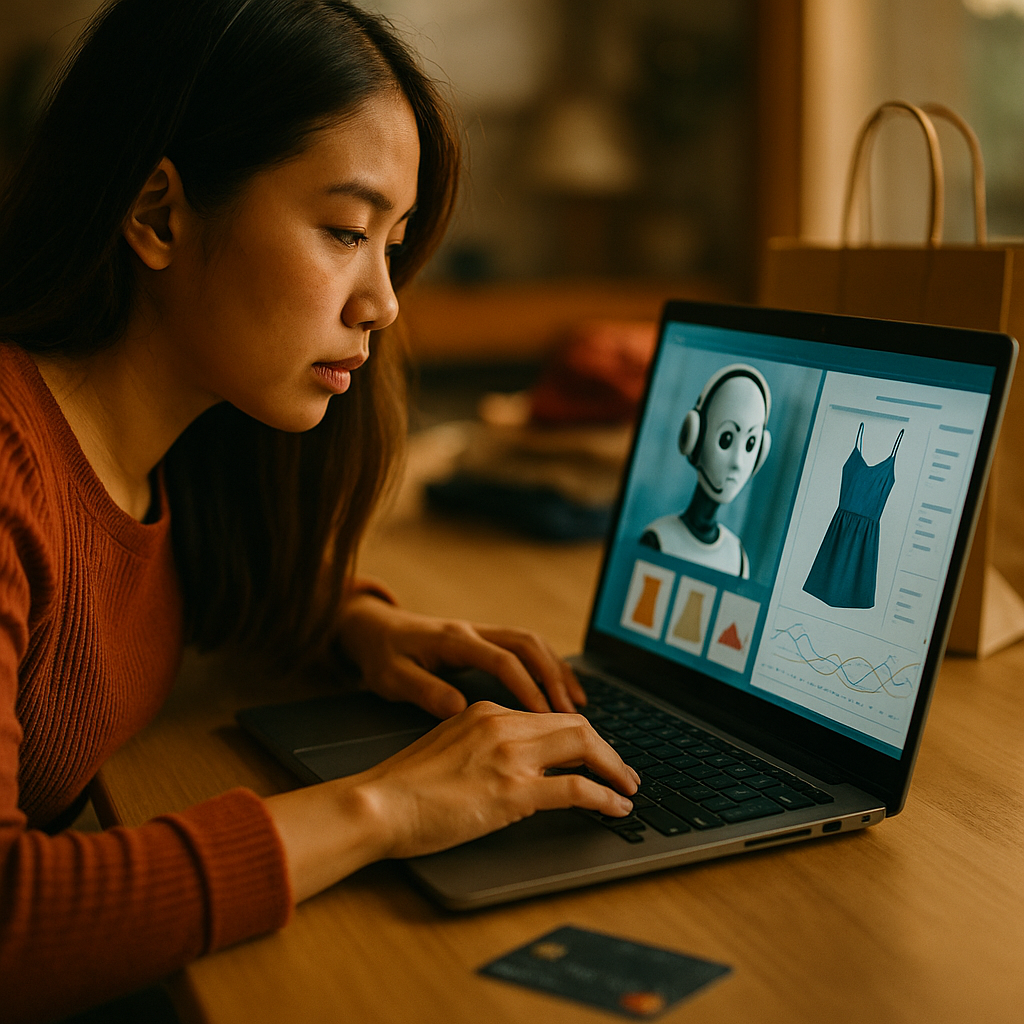
AI shopping agents convert at nearly double the rate of organic search. If your creator content and product architecture aren’t built for autonomous buyers, you’re invisible to the fastest-growing purchase channel of this decade. This is what AI shopping agent session optimization looks like in practice.
Why Autonomous Buyers Are a Different Animal
A human browsing Google reads your headline, skims your page, and makes a judgment call. An AI shopping agent doesn’t. It ingests structured data, cross-references reviews and specifications, evaluates return policies, compares shipping windows, and surfaces a ranked recommendation — often without the end user ever seeing your product page at all.
That’s the shift most brand teams are still underestimating. Perplexity’s shopping assistant, Google’s Gemini shopping overlays, and OpenAI’s operator-mode agents don’t browse the way consumers do. They query. They parse. They score. And if your product data is incomplete or your creator content doesn’t feed clean signals into the retrieval layer, you simply don’t exist in that session.
The 50% conversion lift isn’t magic. It’s selection bias doing its best work: users who delegate a purchase to an AI agent are further down the funnel, with higher intent and lower comparison friction. Your job is to be the brand the agent recommends.
The Product Architecture Problem Most Brands Get Wrong
Structured data is the obvious starting point, and most mid-market brands still don’t have it right. Schema markup matters, but it’s table stakes. What AI agents actually weigh is the coherence between what your schema says, what your product description says, what third-party reviews say, and what creator content says. Misalignment across those layers is a trust signal problem, and agents penalize it.
Think of it like this: if your product page lists a 30-day return window, your schema says 14 days, and a creator video from three months ago mentions “free returns no questions asked,” the agent sees three conflicting data points and either deprioritizes your listing or surfaces a competitor with cleaner signals. Consistency is your conversion architecture.
AI shopping agents don’t just read your product page — they cross-reference it. Every inconsistency between your schema, your PDP copy, your reviews, and your creator content is a trust penalty that costs you the recommendation.
Practical fix: run a generative AI e-commerce audit quarterly. Map every data point an agent could retrieve about your product and audit for conflicts. Price, shipping, availability, return policy, key specifications — these need to be in agreement across your owned properties and any creator content that’s actively indexed.
How Creator Content Feeds Agent Retrieval
Here’s the part most influencer programs are missing entirely: creator content is retrieval training data. When a creator publishes a detailed YouTube review, a TikTok product walkthrough, or a long-form blog comparison, AI shopping agents can surface those as corroborating evidence when making a recommendation. That’s not hypothetical — Perplexity already cites creator and editorial content in its shopping answers.
The implication is significant. Your creator briefs need to be written with machine readability in mind, not just human engagement. Creators should be briefed to include specific product attributes (dimensions, material composition, use-case scenarios, compatibility notes) in natural language, because those specifics are exactly what retrieval models extract. A creator saying “I love how lightweight this is” is useless to an agent. A creator saying “at 1.2 pounds, it’s light enough to carry in a tote bag all day” is indexable signal.
This is why LLM-compatible creator briefs are becoming a non-negotiable part of serious influencer programs. The brief isn’t just a creative direction document anymore. It’s a data specification.
Platform Selection and Where Agents Are Actually Shopping
Not all creator content platforms feed equally into AI agent retrieval. YouTube transcripts are indexed by Google and parsed by Gemini. Reddit threads surface frequently in Perplexity shopping answers. Long-form blog content from established creator domains gets cited by multiple models. TikTok video content, despite its reach, is still largely opaque to most shopping agents due to limited transcript indexability at scale.
What does this mean for budget allocation? It means brands that are running influencer programs purely for social reach are leaving the agent channel completely unaddressed. A micro-creator with a well-optimized YouTube channel and a detailed review video may drive more AI agent sessions than a macro-influencer whose content lives exclusively on platforms with poor machine readability.
This connects directly to how you structure your creator attribution pipeline. If you’re not tracking which creator touchpoints are influencing AI agent sessions, you’re making budget decisions on incomplete data.
Designing for the Agent’s Decision Criteria
AI shopping agents score products against a set of implicit and explicit criteria depending on the user’s query. For a query like “best running shoes under $150 for wide feet,” an agent will weight: price match, feature match (wide fit), review sentiment, return policy, shipping speed, and brand credibility signals. Your job is to optimize for all of them simultaneously.
Credibility signals deserve special attention. Agents weight domain authority, review volume, and sentiment consistency differently than Google’s PageRank did. A brand with 200 reviews averaging 4.7 stars with specific attribute mentions (the width, the cushioning, the durability) will outrank a brand with 2,000 generic reviews. Specificity is the new volume.
For brands managing large SKU catalogs, the AI buyer session optimization stack needs to operate at the product level, not just the brand level. Each SKU needs its own structured data completeness score, review quality assessment, and creator content coverage map.
Measurement: What to Track When the Agent Is the Shopper
Traditional attribution models weren’t built for agent-mediated commerce. When a user asks Gemini to “find me a good espresso machine and add it to my cart,” the click path that your analytics platform sees bears almost no resemblance to how the conversion decision was actually made. The agent may have evaluated dozens of signals across multiple sessions before surfacing your product.
If you’re still measuring AI agent traffic with last-click logic, you’re systematically undervaluing every creator touchpoint that fed the agent’s recommendation. The attribution model needs to change before the budget conversation can change.
Leading brands are moving toward cookieless attribution models that can stitch together signal from creator content, product page visits, and agent session entry points. This is early-stage work, but the brands investing in it now will have a significant data advantage as agent commerce scales. Track share-of-model mentions (how often your brand appears in AI shopping answers) alongside traditional conversion metrics — monitoring share-of-model across ChatGPT, Gemini, and Grok is becoming a core brand health metric.
Benchmark against eMarketer’s commerce data to contextualize your AI session growth against category trends. Use tools like Statista for market sizing, and reference Google’s own documentation on Merchant Center structured data requirements to ensure your schema stays current. For compliance around AI-generated or AI-assisted content disclosures in creator programs, stay current with FTC guidelines.
The operational ask isn’t small. But the brands treating agent-mediated commerce as an emerging edge case are making the same mistake retailers made with mobile in 2012. It’s not emerging. It’s here, and the conversion gap between optimized and unoptimized brands is already measurable.
Start with one high-priority SKU: audit its data consistency, rebuild the creator brief with LLM-readable specificity, and map its share-of-model across the three major shopping agents. That single SKU audit will tell you more about your readiness for autonomous commerce than a year of traditional analytics reports.
FAQs
What is an AI shopping agent session?
An AI shopping agent session occurs when an AI system (such as Google’s Gemini, Perplexity Shopping, or an OpenAI operator-mode agent) autonomously searches for, evaluates, and recommends or purchases products on behalf of a user. These sessions differ from organic search because the agent, not the human, is doing the evaluation and comparison work, resulting in higher purchase intent at the moment of recommendation.
Why do AI shopping agent sessions convert better than organic search?
Users who delegate purchasing decisions to AI agents are typically further down the buying funnel with stronger purchase intent. The agent has already filtered and compared options before surfacing a recommendation, which removes most of the friction and indecision that characterizes organic browsing. This selection effect produces conversion rates that are roughly 50% higher than standard organic search sessions, based on early commerce data from agent-enabled platforms.
How should creator briefs change to support AI agent optimization?
Creator briefs need to include specific, machine-readable product attributes: exact dimensions, materials, use-case scenarios, compatibility details, and verifiable claims. Vague language like “great quality” or “so comfortable” provides no useful signal to AI retrieval models. Briefs should also ensure creator-stated policies (returns, shipping) match current product page data to avoid conflicting signals that reduce your brand’s recommendation score.
Which platforms produce creator content that AI shopping agents can actually read?
YouTube is currently the highest-value platform for agent-readable creator content because transcripts are indexed and parsed by Google’s models. Long-form blog content from established creator domains is also frequently cited by Perplexity and other AI shopping tools. Reddit threads surface strongly in Perplexity shopping answers. TikTok content has limited indexability for most shopping agents due to video transcript accessibility constraints.
What is share-of-model and why does it matter for brand teams?
Share-of-model measures how frequently your brand is mentioned or recommended in AI-generated shopping responses across platforms like ChatGPT, Gemini, and Perplexity. As agent-mediated commerce grows, share-of-model functions similarly to share-of-voice in traditional media: it indicates your brand’s presence in the channels where purchase decisions are increasingly being made. Brand teams should track this metric alongside conversion data as a leading indicator of AI channel health.
How do you audit product data consistency for AI agent optimization?
A product data consistency audit compares your schema markup, product description page copy, third-party review content, and active creator content to identify conflicting claims about price, return policy, shipping time, specifications, and availability. Any inconsistency across these data points creates a trust penalty with AI shopping agents. Running this audit quarterly and including creator content in scope is the minimum standard for brands competing in agent-mediated commerce.
Top Influencer Marketing Agencies
The leading agencies shaping influencer marketing in 2026
Agencies ranked by campaign performance, client diversity, platform expertise, proven ROI, industry recognition, and client satisfaction. Assessed through verified case studies, reviews, and industry consultations.
Moburst

-
2

The Shelf
Boutique Beauty & Lifestyle Influencer AgencyA data-driven boutique agency specializing exclusively in beauty, wellness, and lifestyle influencer campaigns on Instagram and TikTok. Best for brands already focused on the beauty/personal care space that need curated, aesthetic-driven content.Clients: Pepsi, The Honest Company, Hims, Elf Cosmetics, Pure LeafVisit The Shelf → -
3

Audiencly
Niche Gaming & Esports Influencer AgencyA specialized agency focused exclusively on gaming and esports creators on YouTube, Twitch, and TikTok. Ideal if your campaign is 100% gaming-focused — from game launches to hardware and esports events.Clients: Epic Games, NordVPN, Ubisoft, Wargaming, Tencent GamesVisit Audiencly → -
4

Viral Nation
Global Influencer Marketing & Talent AgencyA dual talent management and marketing agency with proprietary brand safety tools and a global creator network spanning nano-influencers to celebrities across all major platforms.Clients: Meta, Activision Blizzard, Energizer, Aston Martin, WalmartVisit Viral Nation → -
5

The Influencer Marketing Factory
TikTok, Instagram & YouTube CampaignsA full-service agency with strong TikTok expertise, offering end-to-end campaign management from influencer discovery through performance reporting with a focus on platform-native content.Clients: Google, Snapchat, Universal Music, Bumble, YelpVisit TIMF → -
6

NeoReach
Enterprise Analytics & Influencer CampaignsAn enterprise-focused agency combining managed campaigns with a powerful self-service data platform for influencer search, audience analytics, and attribution modeling.Clients: Amazon, Airbnb, Netflix, Honda, The New York TimesVisit NeoReach → -
7

Ubiquitous
Creator-First Marketing PlatformA tech-driven platform combining self-service tools with managed campaign options, emphasizing speed and scalability for brands managing multiple influencer relationships.Clients: Lyft, Disney, Target, American Eagle, NetflixVisit Ubiquitous → -
8

Obviously
Scalable Enterprise Influencer CampaignsA tech-enabled agency built for high-volume campaigns, coordinating hundreds of creators simultaneously with end-to-end logistics, content rights management, and product seeding.Clients: Google, Ulta Beauty, Converse, AmazonVisit Obviously →