


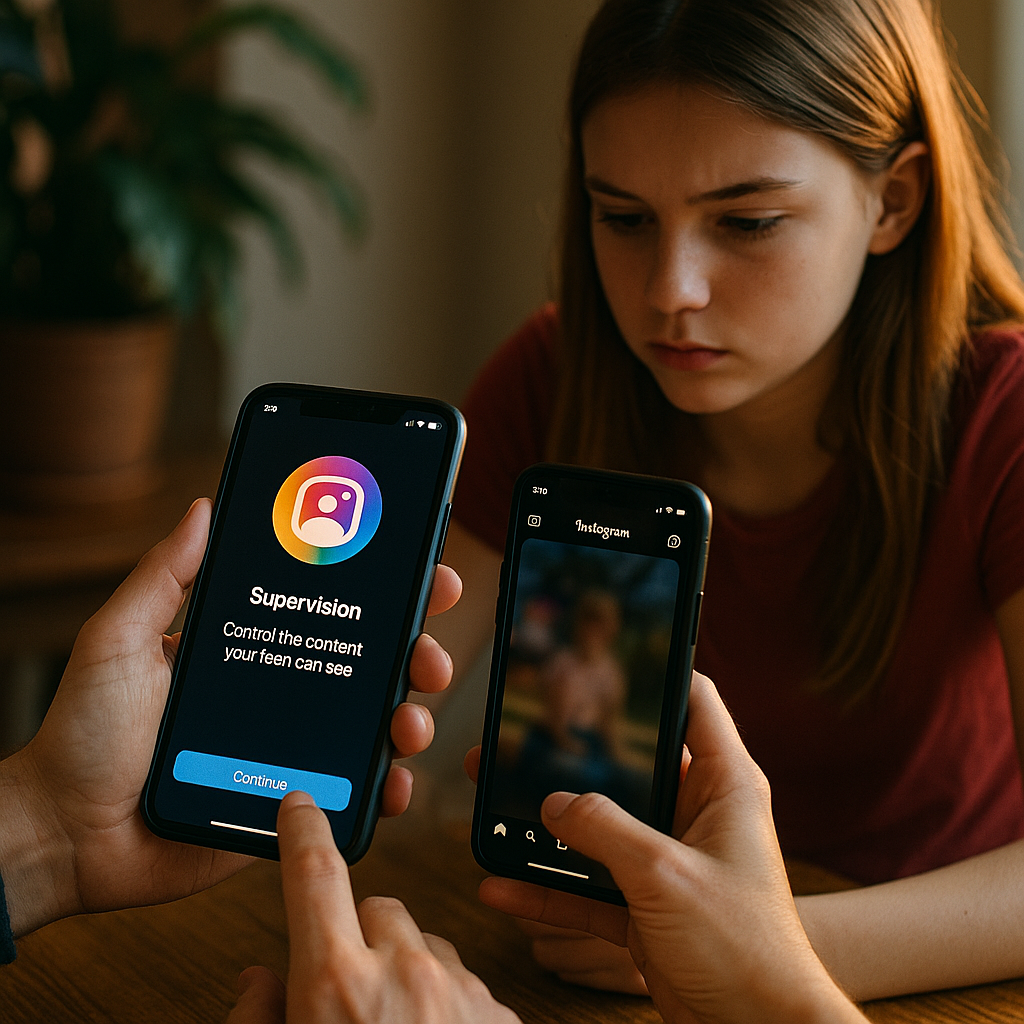
Nearly 70% of Instagram’s teen users are now subject to AI-enforced content restrictions they didn’t personally opt into — and brands that haven’t updated their creator compliance frameworks are already running campaigns that violate platform policy. Instagram’s AI content controls for teen audiences aren’t a future concern. They’re active enforcement today.
What Instagram’s Teen Protection System Actually Does (And Why It Catches Brands Off Guard)
Instagram’s AI-driven “Teen Accounts” system, rolled out and progressively tightened through late 2025 and into 2026, automatically classifies users under 18 and applies content restrictions without requiring parental setup. The system analyzes content signals, account behavior, and engagement patterns to determine whether a post should be shown to teen-classified profiles. Critically, this isn’t just an audience-side filter. It has direct implications for how sponsored content is distributed, which creators qualify for youth-adjacent campaigns, and what content types will be suppressed before they ever reach their intended audience.
For brands running influencer programs, the operational surprise tends to hit in the same place: a creator posts approved brand content, it performs below projection, and a post-campaign audit reveals a significant portion of the intended teen-adjacent audience never saw it because the AI flagged the content format or the targeting signal. No violation notice. No warning. Just suppressed reach and a budget that didn’t convert.
Instagram’s teen AI enforcement doesn’t send alerts when your content gets suppressed. It just quietly limits distribution — and brands often don’t know until they audit campaign reach against expected impressions.
Compliance teams need to understand exactly what triggers the suppression layer. Right now, the system flags content that includes direct-response calls to action toward purchase, certain product categories (supplements, financial products, alcohol-adjacent lifestyle content), and creators whose audience composition skews heavily under-18 even if they don’t market to teens explicitly.
Reclassifying “Youth-Adjacent” in Your Internal Targeting Framework
Most compliance frameworks built before 2025 used a simple binary: campaigns targeting under-18 users required additional approvals; everything else did not. Instagram’s enforcement model makes that binary obsolete.
The more useful classification is now a three-tier system:
- Tier 1 — Explicit youth targeting: Campaigns intentionally directed at users under 18. These have always required elevated compliance review.
- Tier 2 — Youth-adjacent targeting: Campaigns directed at 18-24 audiences on platforms with significant under-18 overlap. This is the tier most brands are under-managing.
- Tier 3 — Incidentally overlapping: General audience campaigns where a material percentage of organic reach may include teen users based on creator audience composition.
Tier 2 is where enforcement is currently biting hardest. A back-to-school campaign, a gaming peripheral launch, a sneaker collaboration — none of these are technically “youth-targeted,” but they frequently use creators whose followings include 25-35% teen users. Instagram’s AI sees the audience signal on the receiving end, not the intent signal on the planning end. That asymmetry is the compliance gap.
For deeper context on how Meta’s broader teen control architecture interacts with brand targeting, the Meta teen controls compliance guide on this site is a strong operational reference.
Updating Approval Workflows: Three Checkpoints That Need to Change Now
Standard influencer approval workflows have four stages: creator vetting, brief delivery, content review, and post-live monitoring. Instagram’s teen enforcement requires intervention at three of those stages.
Creator vetting must now include audience age composition analysis. Tools like Modash, HypeAuditor, and GRIN all surface audience demographic breakdowns. Any creator with an audience that is more than 20% under-18 should automatically trigger your Tier 2 review process, regardless of how the campaign is classified. Set that threshold in your vendor contracts and make it a hard gate, not a soft flag.
Content review must add a platform-signals checklist. The Instagram AI system responds to specific content signals: urgency language (“limited time,” “act now”), direct product pricing callouts, and certain visual formats that index toward direct commerce. Your legal or compliance reviewer needs a checklist that maps these triggers to your content brief before creator approval — not as a post-production afterthought.
Post-live monitoring must track reach-to-impression ratio by age cohort. If a creator’s content normally generates a certain impression rate and a campaign post underperforms by more than 15%, flag it for a teen suppression audit. This is now a routine operational step, not a crisis response.
If your team is still building out the framework for AI-influenced content signals more broadly, the creator contract AI provisions guide covers how to codify these requirements at the contract level with creators.
Content Direction: What Brands Need to Brief Differently
Content direction is where compliance teams and creative teams most often conflict — and Instagram’s teen enforcement is going to force that conflict into the open faster than either side expects.
The practical changes for briefs are specific. Remove urgency-based CTAs from any campaign that touches Tier 2 or Tier 3 audiences. Replace “shop now” with content-forward CTAs that don’t trigger the direct-response flag. Avoid lifestyle content that is aspirational in ways that index toward teen identity formation — the AI is trained on exactly this kind of signal.
Product category is also a variable your brief needs to address explicitly. Meta’s advertising policies for teen audiences cover restricted categories, but the AI enforcement layer now extends beyond those categories into adjacent lifestyle content. If your product is in beauty, fitness, food and beverage, or consumer electronics, your brief should explicitly address content tone relative to teen exposure risk.
Creators also need explicit guidance in the brief about what not to say — not just what to include. Add a “teen-trigger exclusion” section to your standard brief template. Creators who have worked with your brand for years won’t automatically know that the platform enforcement landscape has changed. That’s your team’s responsibility to communicate.
This connects directly to FTC compliance, where disclosure requirements are also tightening in parallel. The FTC AI disclosure compliance checklist is worth cross-referencing here, because some content changes you make for platform compliance will also affect how disclosures need to be structured.
Contractual and Operational Adjustments with Creator Partners
Brands can’t fully offload platform compliance responsibility to creators. But contracts can and should allocate specific obligations clearly.
Add a “platform enforcement compliance” clause that requires creators to disclose accurate audience demographic data at the time of contract signing and update it if the composition shifts materially before a campaign goes live. This gives you a contractual basis for campaign adjustments if a creator’s audience ages down between vetting and delivery.
Include a right-to-request clause that allows your team to pull or modify content if post-live monitoring reveals teen suppression signals. This is operationally awkward but legally protective. Creators will push back; frame it as a mutual protection mechanism, because suppressed content doesn’t serve their performance metrics either.
Creators with youth-adjacent audiences are just as exposed to Instagram’s enforcement as brands are — building suppression monitoring into your partnership framework protects both sides of the relationship.
For brands operating creator programs under ESG or responsible marketing commitments, documenting these controls also feeds your governance reporting. The creator program ESG accountability framework outlines how to integrate compliance controls into broader brand stewardship reporting.
It’s also worth noting that these requirements don’t exist in isolation on Instagram. YouTube has implemented comparable AI labeling and audience protection mechanisms that demand parallel updates. The YouTube AI labels and brand workflows guide is a practical complement to everything covered here, especially if your creator campaigns run cross-platform.
Regulatory context matters too. The UK’s ICO has published age-appropriate design guidance that intersects with platform enforcement, and the FTC’s ongoing attention to youth marketing means U.S. brands face compounding compliance pressure from both directions. The FTC’s guidelines on marketing to children remain foundational to any youth-adjacent compliance framework. For global campaigns, the Sprout Social platform intelligence tools can help surface audience age data across markets where your own analytics may have coverage gaps.
The bottom line for compliance teams is straightforward: audit your active campaigns against the three-tier classification system this quarter, update your content brief templates to include teen-trigger exclusion language, and get audience age composition gates written into your creator vetting SOP before the next campaign cycle starts.
FAQs
Does Instagram notify brands when content is suppressed under teen protections?
No. Instagram’s AI enforcement does not send alerts to brand accounts or creators when content is filtered for teen audiences. Suppression shows up only as underperformance in reach and impression data, which is why post-live monitoring with age-cohort reach benchmarks is now an essential compliance step.
What audience age threshold should trigger a Tier 2 youth-adjacent review?
A practical threshold used by many compliance teams is 20% under-18 audience composition for any creator being considered for a campaign. Any creator whose audience meets or exceeds that threshold should automatically enter a higher-scrutiny approval workflow, regardless of how the campaign itself is categorized.
Are brands legally liable if Instagram suppresses their content without warning?
Not directly for the suppression itself, but brands remain liable for FTC disclosure requirements and any applicable youth marketing regulations regardless of whether content is fully distributed. Suppression doesn’t eliminate regulatory exposure — it just reduces the commercial upside while the compliance risk remains.
How should brands update creator contracts to reflect Instagram’s teen enforcement?
Contracts should include clauses requiring creators to disclose accurate audience age demographics at signing, update that data if it shifts materially before campaign delivery, and acknowledge a brand’s right to modify or withdraw content if post-live monitoring reveals teen suppression risk. Framing these as mutual performance protections rather than punitive terms tends to reduce creator resistance during negotiations.
Does this enforcement apply only to paid campaigns, or to organic creator content too?
Instagram’s teen AI controls apply to content distribution broadly, not just paid amplification. Organic posts from creators participating in brand campaigns are subject to the same suppression logic if they carry commercial signals or fall into restricted content categories. Paid boosting of that same content adds a second layer of enforcement through Meta’s ad policies for teen audiences.
Top Influencer Marketing Agencies
The leading agencies shaping influencer marketing in 2026
Agencies ranked by campaign performance, client diversity, platform expertise, proven ROI, industry recognition, and client satisfaction. Assessed through verified case studies, reviews, and industry consultations.
Moburst

-
2

The Shelf
Boutique Beauty & Lifestyle Influencer AgencyA data-driven boutique agency specializing exclusively in beauty, wellness, and lifestyle influencer campaigns on Instagram and TikTok. Best for brands already focused on the beauty/personal care space that need curated, aesthetic-driven content.Clients: Pepsi, The Honest Company, Hims, Elf Cosmetics, Pure LeafVisit The Shelf → -
3

Audiencly
Niche Gaming & Esports Influencer AgencyA specialized agency focused exclusively on gaming and esports creators on YouTube, Twitch, and TikTok. Ideal if your campaign is 100% gaming-focused — from game launches to hardware and esports events.Clients: Epic Games, NordVPN, Ubisoft, Wargaming, Tencent GamesVisit Audiencly → -
4

Viral Nation
Global Influencer Marketing & Talent AgencyA dual talent management and marketing agency with proprietary brand safety tools and a global creator network spanning nano-influencers to celebrities across all major platforms.Clients: Meta, Activision Blizzard, Energizer, Aston Martin, WalmartVisit Viral Nation → -
5

The Influencer Marketing Factory
TikTok, Instagram & YouTube CampaignsA full-service agency with strong TikTok expertise, offering end-to-end campaign management from influencer discovery through performance reporting with a focus on platform-native content.Clients: Google, Snapchat, Universal Music, Bumble, YelpVisit TIMF → -
6

NeoReach
Enterprise Analytics & Influencer CampaignsAn enterprise-focused agency combining managed campaigns with a powerful self-service data platform for influencer search, audience analytics, and attribution modeling.Clients: Amazon, Airbnb, Netflix, Honda, The New York TimesVisit NeoReach → -
7

Ubiquitous
Creator-First Marketing PlatformA tech-driven platform combining self-service tools with managed campaign options, emphasizing speed and scalability for brands managing multiple influencer relationships.Clients: Lyft, Disney, Target, American Eagle, NetflixVisit Ubiquitous → -
8

Obviously
Scalable Enterprise Influencer CampaignsA tech-enabled agency built for high-volume campaigns, coordinating hundreds of creators simultaneously with end-to-end logistics, content rights management, and product seeding.Clients: Google, Ulta Beauty, Converse, AmazonVisit Obviously →