


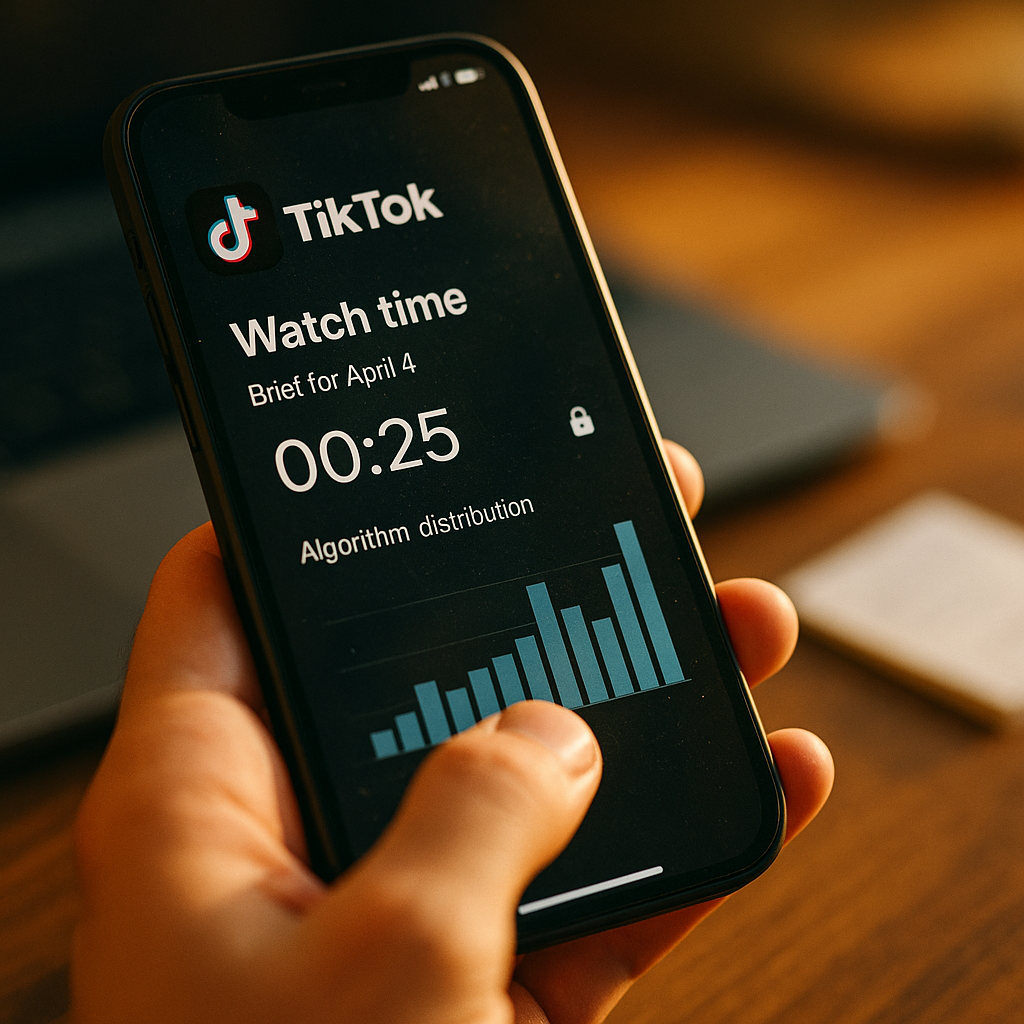
Most Sponsored TikToks Die in the First Three Seconds
Not because the product is wrong. Not because the creator is wrong. Because the brief was written for brand safety, not algorithmic survival. Watch time is TikTok’s dominant ranking signal, and if your sponsored content isn’t engineering retention from frame one, you’re paying for content that the platform actively suppresses before it reaches meaningful scale.
Why Watch Time Outranks Everything Else
TikTok’s recommendation system operates on a tiered testing model. Every piece of content, organic or paid, enters a small initial audience pool. The algorithm measures completion rate, replays, and average watch time against a baseline for that content category. Underperformers get buried. Overperformers get pushed to larger pools, exponentially.
Likes and comments matter, but they are downstream signals. A viewer who shares without finishing the video contributes less algorithmic weight than a viewer who watches twice and says nothing. This is a fundamental shift from how most brand teams were trained to think about social performance metrics.
TikTok’s internal research has consistently shown that watch time and completion rate are the strongest predictors of content reaching the For You Page’s broader distribution tiers. For sponsored content, that means retention engineering is not optional — it’s the entire brief.
According to data published via TikTok for Business, branded content that achieves high video completion rates sees significantly stronger secondary distribution even without additional paid amplification. The organic lift from algorithmic favor is effectively free media — if you earn it.
What the 90th-Percentile Threshold Actually Means
Here’s where most marketing teams get tripped up. TikTok doesn’t evaluate your sponsored video against a universal benchmark. It evaluates it against the top performers in its content category, for your target audience segment, at that moment in time. The 90th-percentile outperformance threshold refers to the retention and completion benchmarks that separate content the algorithm actively promotes from content it merely tolerates.
Hitting the 90th percentile for watch time in your category means your content is outperforming 90% of comparable videos on that metric. That’s the distribution unlock. Below it, your content exists. Above it, TikTok starts serving it beyond your initial target parameters, reaching cold audiences who never engaged with your brand before.
For sponsored content specifically, this threshold is harder to hit because TikTok’s system has historically identified and slightly penalized overt commercial intent. The platform’s own creator economy data confirms this pattern. Which means the brief has to work twice as hard: it must disguise the sell while engineering the watch.
If you’re already thinking about how brief structure differs across platforms, our breakdown of TikTok vs Instagram creator briefs covers the discovery-versus-conversion tension in detail.
Restructuring the Brief: From Compliance Document to Retention Blueprint
Most influencer briefs read like legal disclaimers with a mood board attached. Key messages. Mandatory product shots at the 15-second mark. Brand color compliance. Hashtag requirements. These briefs optimize for brand approval, not viewer behavior.
A retention-engineered brief looks structurally different. It works in five layers:
- The hook mandate (0-2 seconds): Specify the emotional or curiosity trigger, not the product reveal. The product comes later. The hook is a question, a visual anomaly, or a statement that creates unresolved tension. Brief the creator on the hook goal, not the exact execution.
- The retention architecture (2-20 seconds): Map the narrative beats explicitly. Where does the viewer’s curiosity escalate? Where does the pacing shift? The brief should indicate a beat structure, not just talking points. Think of it as a scene outline, not a script.
- The brand integration window (20-40 seconds): Insert the product into a moment of earned attention, not forced placement. The viewer is already engaged. The brand solves something the creator just established as a problem or aspiration.
- The replay trigger (final 5 seconds): Engineer a reason to rewatch. A visual reveal, a callback to the hook, a piece of information that recontextualizes the beginning. Replays are algorithmic gold on TikTok.
- The CTA as earned content: Brief creators to treat the call to action as the emotional payoff, not a commercial appendage. If viewers feel the CTA is abrupt, they drop off before completing the video, which tanks your completion rate at the exact moment it matters most.
This is meaningfully different from how brands typically approach YouTube sponsorships. For comparison on how brief structure shifts by platform length and intent, see our piece on YouTube sponsored content briefs.
The Creator Selection Problem
Retention engineering at the brief level only works if the creator can execute it. This is where watch-time optimization exposes a flaw in most creator selection processes: brands are still filtering by follower count and average views when they should be filtering by average watch percentage.
A creator with 200,000 followers and a 68% average completion rate will outperform a creator with 2 million followers and a 22% completion rate for your campaign goals. Every time. The algorithm doesn’t care about audience size at entry. It cares about what that audience does with the content.
Ask your influencer marketing platform (whether you’re using Creator.co, Grin, Aspire, or pulling data from Sprout Social’s analytics suite) to surface average video completion rate as a primary filter. If the platform can’t surface it, request it directly from creators via their TikTok Studio analytics screenshots before contracting. This is not a nice-to-have. It’s a pre-qualification requirement.
For budget allocation decisions between creator tiers, the data on TikTok micro-creators vs macro-influencers is directly relevant here, particularly for brands working with constrained paid amplification budgets.
Paid Amplification and the Watch Time Feedback Loop
Once you identify which sponsored posts are hitting or approaching the 90th-percentile threshold organically, that’s your signal to amplify with Spark Ads. Boosting content that’s already performing above category benchmarks creates a compounding effect: the paid reach feeds more watch-time data into the algorithm, which continues expanding organic distribution in parallel.
Boosting underperforming content is essentially paying TikTok to confirm the content doesn’t work. Brands do this constantly because they’re working on fixed posting schedules that don’t account for watch-time signals. The brief should include a 24-48 hour organic observation window before any paid amplification decision is made.
According to eMarketer projections, TikTok’s share of social video ad spend continues to grow, which means competition for algorithmic distribution is intensifying. Organic watch-time performance is increasingly the differentiator between campaigns that generate earned reach and campaigns that exist only on paid rails.
Brands integrating TikTok content into broader commerce strategies should also look at how TikTok Shop creator briefs can extend watch-time-optimized content directly into purchase paths.
The 90th-percentile watch time threshold is not a vanity benchmark. It’s the gateway to TikTok’s self-sustaining distribution engine — where algorithmic amplification replaces paid reach as the primary growth driver for sponsored content.
Measuring What Actually Matters
Reframe your post-campaign reporting. Remove reach and impressions as primary KPIs for TikTok sponsored content. Replace them with: average watch time, video completion rate, replay rate, and Spark Ad CPV (cost per view) calculated only against completed views, not partial ones.
These metrics tell you whether your brief is working at the algorithmic layer. Reach tells you what TikTok decided to do after you’d already lost the watch-time signal. Set 90th-percentile completion rate targets by content category before the campaign launches, not after. That benchmark becomes the creative brief’s hidden success criterion, the one the algorithm is actually grading you on.
For brands running multi-platform creator programs, understanding how algorithmic signals differ across properties is essential. The retention signals on Instagram Reels, covered in our piece on Instagram Reels DMs and Saves, show a parallel evolution toward depth-of-engagement metrics that brand teams need to build into their measurement frameworks now.
Audit your last three TikTok creator campaigns. Pull the watch-time data. If your sponsored posts averaged below the 60th percentile for completion in their content category, your brief is the problem, not the creator.
Frequently Asked Questions
What is the 90th-percentile watch time threshold on TikTok?
The 90th-percentile watch time threshold refers to the completion rate and average watch time benchmark that separates the top 10% of performing content in a given TikTok content category from the rest. Content that reaches this threshold receives significantly expanded algorithmic distribution, being pushed to larger and colder audience pools beyond the initial test group. For sponsored content, reaching this threshold can unlock organic reach that reduces dependence on paid amplification.
Why is watch time more important than likes or shares on TikTok?
TikTok’s recommendation algorithm treats watch time and video completion as primary signals because they indicate genuine audience interest rather than passive or reflexive engagement. A like takes one tap; watching a video twice requires real attention. The algorithm interprets high completion rates and replays as strong positive signals, weighting them more heavily than shares or comments when deciding whether to expand a content piece’s distribution to larger audience pools.
How should a TikTok creator brief be structured to improve watch time?
A retention-engineered TikTok brief should define five layers: a hook mandate for the first two seconds (curiosity or tension, not product reveal), a narrative beat structure for the middle section, a brand integration window where the product is introduced into earned attention, a replay trigger in the final seconds, and a CTA framed as emotional payoff rather than a commercial add-on. The brief should guide the creator’s structural approach rather than dictating a word-for-word script.
How do I identify creators with strong watch time performance before contracting?
Request average video completion rate data directly from creators via their TikTok Studio analytics before signing any agreement. Influencer marketing platforms like Grin, Aspire, or Creator.co may surface this data; if not, make it a contractual pre-qualification step. Prioritize creators with consistently high completion rates over creators with large follower counts but lower retention, as the algorithm weights watch-time performance heavily in initial distribution decisions.
When should brands use Spark Ads on TikTok sponsored content?
Spark Ads should be applied to sponsored content that is already demonstrating above-average watch time and completion rates organically. Allow a 24-48 hour organic observation window after posting before making any paid amplification decision. Boosting content that is already performing well creates a compounding algorithmic effect. Boosting underperforming content typically wastes budget by amplifying content the algorithm has already signaled it does not want to distribute broadly.
Top Influencer Marketing Agencies
The leading agencies shaping influencer marketing in 2026
Agencies ranked by campaign performance, client diversity, platform expertise, proven ROI, industry recognition, and client satisfaction. Assessed through verified case studies, reviews, and industry consultations.
Moburst

-
2

The Shelf
Boutique Beauty & Lifestyle Influencer AgencyA data-driven boutique agency specializing exclusively in beauty, wellness, and lifestyle influencer campaigns on Instagram and TikTok. Best for brands already focused on the beauty/personal care space that need curated, aesthetic-driven content.Clients: Pepsi, The Honest Company, Hims, Elf Cosmetics, Pure LeafVisit The Shelf → -
3

Audiencly
Niche Gaming & Esports Influencer AgencyA specialized agency focused exclusively on gaming and esports creators on YouTube, Twitch, and TikTok. Ideal if your campaign is 100% gaming-focused — from game launches to hardware and esports events.Clients: Epic Games, NordVPN, Ubisoft, Wargaming, Tencent GamesVisit Audiencly → -
4

Viral Nation
Global Influencer Marketing & Talent AgencyA dual talent management and marketing agency with proprietary brand safety tools and a global creator network spanning nano-influencers to celebrities across all major platforms.Clients: Meta, Activision Blizzard, Energizer, Aston Martin, WalmartVisit Viral Nation → -
5

The Influencer Marketing Factory
TikTok, Instagram & YouTube CampaignsA full-service agency with strong TikTok expertise, offering end-to-end campaign management from influencer discovery through performance reporting with a focus on platform-native content.Clients: Google, Snapchat, Universal Music, Bumble, YelpVisit TIMF → -
6

NeoReach
Enterprise Analytics & Influencer CampaignsAn enterprise-focused agency combining managed campaigns with a powerful self-service data platform for influencer search, audience analytics, and attribution modeling.Clients: Amazon, Airbnb, Netflix, Honda, The New York TimesVisit NeoReach → -
7

Ubiquitous
Creator-First Marketing PlatformA tech-driven platform combining self-service tools with managed campaign options, emphasizing speed and scalability for brands managing multiple influencer relationships.Clients: Lyft, Disney, Target, American Eagle, NetflixVisit Ubiquitous → -
8

Obviously
Scalable Enterprise Influencer CampaignsA tech-enabled agency built for high-volume campaigns, coordinating hundreds of creators simultaneously with end-to-end logistics, content rights management, and product seeding.Clients: Google, Ulta Beauty, Converse, AmazonVisit Obviously →