


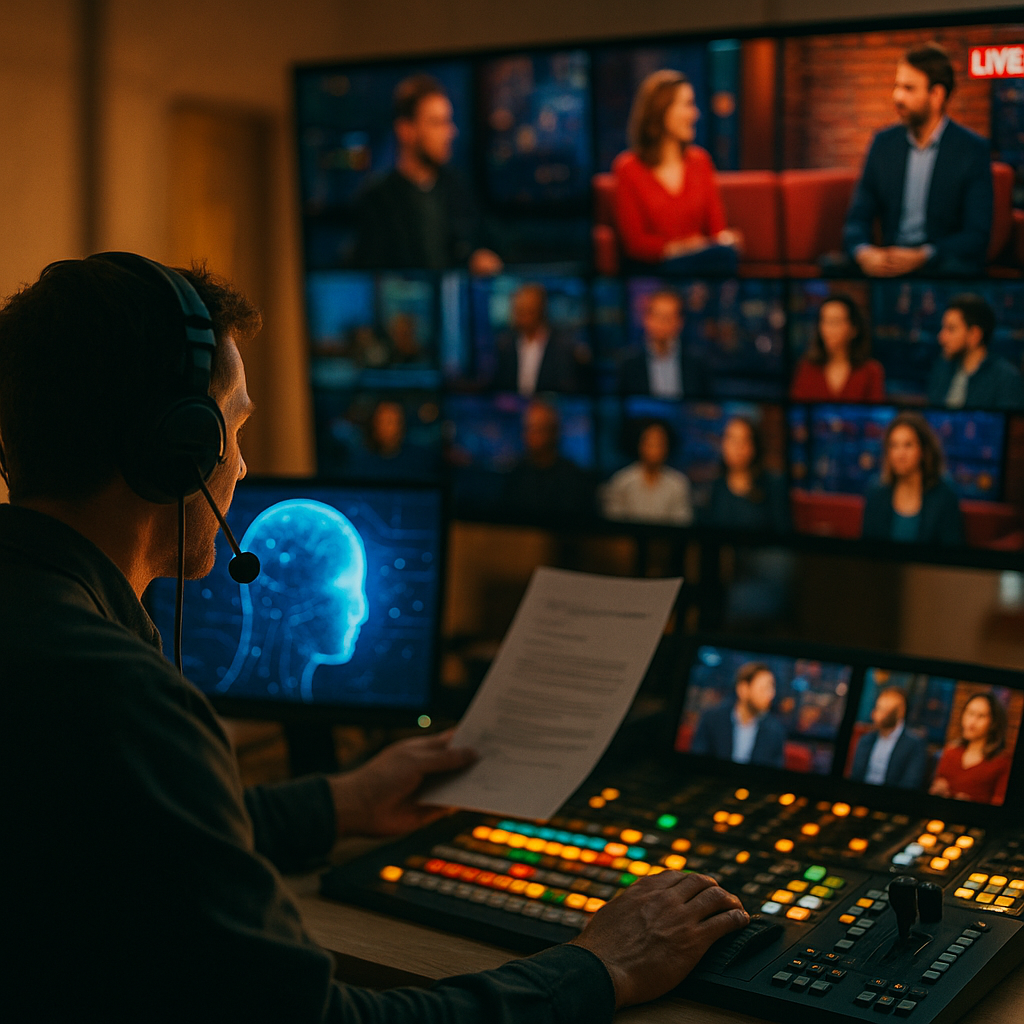
Brands running the same 30-second TV spot on TikTok are leaving money on the table. A study by Sprout Social found that platform-native content drives up to 3x higher engagement than repurposed broadcast assets. The Social-TV Creator Content Architecture solves this by engineering one creative backbone that AI then reformats intelligently across every channel.
Why Most Brands Are Solving the Wrong Problem
The instinct is understandable. You have a broadcast creative that cost $400,000 to produce. Leadership wants it everywhere. So you crop it for Reels, slap a text overlay on it for TikTok, and call it an omnichannel strategy. It isn’t. It’s a recycling operation dressed up as distribution.
The fundamental error is treating the broadcast asset as the master, when it should be treated as one output of a larger creative system. The master is the story: the brand tension, the character logic, the emotional arc, the product truth. Everything else, including the 30-second TV spot, flows from that upstream document.
This is the core premise of Social-TV Creator Content Architecture: design the creative backbone first, produce the broadcast version second, and let AI-assisted workflows produce the remaining platform cuts in parallel rather than as an afterthought.
What a Creative Backbone Actually Contains
The backbone isn’t a mood board or a brand style guide. It’s a structured creative brief with five specific components that give AI reformatting tools enough context to make intelligent decisions.
- Brand Narrative DNA: A 2-3 sentence distillation of the campaign story that must survive in every format, even a 6-second pre-roll.
- Mandatory Brand Moments: The specific visual or verbal cues (logo lockup timing, product hero shot, sonic branding) that cannot be cut regardless of format length.
- Emotional Trajectory Map: The intended feeling at each stage of the viewer journey, annotated per platform context (lean-back TV vs. thumb-stop social).
- Creator Voice Parameters: If creators are involved, the tonal guardrails and authentic expression zones where they have latitude to localize the message.
- Platform Tension Points: Known format constraints per channel, including TikTok’s front-loaded engagement requirement, LinkedIn’s professional framing expectations, and CTV’s longer dwell time tolerance.
When you build this document before production begins, you give every downstream stakeholder, human and AI, a decision framework rather than a set of raw assets to guess from.
The creative backbone is not a brief for one campaign. It’s a reusable operating system for your brand’s storytelling across every format and platform your media plan touches.
How AI Reformatting Actually Works in Practice
Tools like Adobe Firefly, Runway Gen-3, and Meta’s own AI creative suite are now capable of more than simple aspect ratio conversion. They can identify narrative anchor points within a master video, extract platform-appropriate sequences, generate context-specific supers and captions, and even reframe product shots for vertical orientation without manual editing. The catch? They need structured input to produce structured output.
A creative backbone document functions as the prompt architecture for these tools. When Runway or a similar platform receives both the master video and a structured creative brief, its outputs become defensible rather than random. The AI isn’t guessing which 15 seconds matter for a TikTok cut. It’s executing against defined parameters: front-load the problem statement, hit the brand moment at second 8, end on the product CTA with supered text.
For brands running creator-generated content alongside broadcast, this workflow has an additional layer. Creators produce their platform-native footage according to the multi-format creator brief, and AI tools reconcile that footage against the backbone to ensure message coherence before the content goes live. This is quality assurance at speed, not creative restriction.
Teams using creator ads across streaming and social are already seeing the operational benefit: instead of briefing three separate creative teams for three separate formats, one upstream brief generates compliant outputs across the board.
The Broadcast-First Fallacy and Why CTV Changes Everything
Connected TV (CTV) has complicated the broadcast-first assumption in ways that most brand teams haven’t fully processed. CTV viewers are on the same devices they use for social media. They skip, they react, they screenshot. The behavioral expectations they bring to a Hulu or Peacock ad break are increasingly shaped by TikTok and YouTube, not by linear TV conventions.
eMarketer projects that CTV ad spend will account for a significant share of total video budgets, with audience targeting capabilities that make it behave more like programmatic digital than traditional broadcast. That positioning has creative implications. A CTV ad can reference a social campaign. It can use creator-style production aesthetics. It can carry QR codes that drive to shoppable landing pages.
The Social-TV architecture acknowledges this by treating CTV as a bridge format: longer dwell time than social, more controlled context than linear, and addressable enough to carry personalized messaging. The creative backbone accommodates this by including CTV-specific parameters alongside its TikTok and Reels annotations. What changes isn’t the story. What changes is the pacing, the information density, and the call to action.
For serialized creator content in particular, as explored in approaches to serialized creator briefs, CTV becomes a natural home for the longer-form arc while social carries the episodic hooks that drive viewers to the full story.
Governance: Keeping Brand Coherence When AI Does the Cutting
The biggest operational risk in AI-assisted reformatting isn’t technical. It’s approval governance. When a platform can generate 40 format variants in an afternoon, your standard creative review process, built for reviewing six assets over two weeks, becomes a bottleneck that defeats the entire efficiency argument.
The solution is tiered governance built into the creative backbone itself. Low-risk reformats (aspect ratio changes, caption additions, duration trims within defined ranges) can be auto-approved if they don’t touch mandatory brand moments. Medium-risk reformats (sequence reordering, music bed changes, creator voice interpolation) require a single-reviewer sign-off with a 4-hour SLA. High-risk reformats (new voiceover, product claim modification, visual brand identity changes) follow the full legal and brand review process.
This framework, combined with AI tools that flag which tier each reformat falls into, makes a 40-asset campaign manageable without creating a compliance nightmare. For brands already operating reactive UGC workflows, this tiered approval logic will feel familiar. The difference is applying it to pre-planned creative rather than real-time content.
FTC disclosure requirements add another governance layer. Any AI-generated or AI-assisted creative that features a human likeness or voice still requires appropriate disclosure under current FTC guidelines. Build that into your backbone document as a non-negotiable parameter, not a post-production checklist item.
Governance built into the creative backbone before production is worth ten approval rounds after the fact. The most expensive moment to catch a brand coherence failure is after 30 platform cuts have already been scheduled.
Briefing Creators Inside the Architecture
When creators are part of the Social-TV plan (and they should be, because creator-style content consistently outperforms polished broadcast formats on social feeds), their briefing process changes under this architecture. They’re not being handed a script. They’re being handed a backbone extract: the three campaign truths they need to carry, the mandatory brand moment they need to hit, and the latitude they have to express it in their own format.
This is meaningfully different from traditional influencer briefing. The creator isn’t interpreting a brand deck. They’re filling in a defined variable within a larger creative system. That framing gives legal and compliance teams more confidence while giving creators the authentic expression space that makes their content actually perform.
For campaigns spanning TikTok micro-series formats, reviewing how micro-series briefs structure episodic creator content gives a useful operational model. The same serialization logic applies when creator content needs to ladder up to a broadcast narrative. And for brands running cross-platform content simultaneously on TikTok and streaming, the backbone becomes the single source of truth that keeps both formats telling the same story without sounding identical.
What Good Looks Like
A consumer electronics brand launching a new wearable builds a 90-second master video with a clear three-act structure: problem (you’re overwhelmed), solution (the device simplifies), transformation (your day looks different). The backbone document specifies that the transformation moment, a specific product shot at second 62, is mandatory across all formats.
AI tools generate: a 30-second broadcast cut (acts 1 and 3), a 15-second CTV pre-roll (accelerated act 1, full act 3), a 9-second TikTok hook (transformation moment first, problem reframed as caption), and a 60-second YouTube mid-roll (all three acts with expanded product detail). Three creators each receive a backbone extract and produce their own 30-60 second takes that follow the emotional trajectory but speak in their own voice to their own audiences. Total production assets: 8. Total briefing documents: 1.
Platform performance data from TikTok for Business and Meta for Business confirms what practitioners are already observing: creative that’s been natively adapted for each platform, rather than resized from a broadcast master, consistently outperforms on completion rate and conversion metrics.
Start by auditing your last three campaigns: how many format variants were produced, how many briefing documents generated them, and how much of the brand narrative survived across all variants. That gap is the exact problem the Social-TV Creator Content Architecture is built to close.
FAQs
What is a Social-TV Creator Content Architecture?
It’s a content production framework where brands create a single creative backbone document that defines the core story, mandatory brand moments, and platform parameters. AI reformatting tools and creators both work from this backbone to produce platform-native assets for broadcast, CTV, and social feeds without requiring separate briefs or creative processes for each format.
How does AI reformatting maintain brand coherence across different platform cuts?
AI reformatting tools like Adobe Firefly and Runway Gen-3 use the structured creative backbone as their prompt architecture. Because the backbone defines mandatory brand moments, emotional trajectory, and format-specific constraints, the AI makes edits within pre-defined parameters rather than making arbitrary cuts. The result is platform-appropriate content that still carries the core brand narrative.
Do creator-generated assets fit into this architecture, or is it only for produced brand content?
Creators are a core part of this architecture. Instead of receiving a full creative brief, creators receive a backbone extract that specifies the campaign truths they must communicate, the mandatory brand moment they need to hit, and the latitude they have for authentic expression. This keeps creator content both platform-native and brand-coherent.
What’s the difference between a creative backbone and a traditional brand brief?
A traditional brand brief describes a campaign for a specific deliverable. A creative backbone is a reusable upstream document that governs all deliverables from a single campaign, including broadcast, CTV, social formats, and creator content. It includes machine-readable parameters (mandatory moments, platform tension points, emotional trajectory) that work as structured inputs for AI tools as well as human creators.
How should brands handle FTC compliance when AI is generating or reformatting creative content?
FTC guidelines require disclosure when AI materially contributes to content, particularly when human likenesses or voices are involved. Brands should embed FTC disclosure requirements directly into the creative backbone as a non-negotiable parameter, ensuring all AI-generated or AI-assisted reformats carry appropriate disclosures before scheduling. This is a production governance issue, not an afterthought.
What tools are currently available for AI-assisted creative reformatting?
Platforms including Adobe Firefly, Runway Gen-3, and Meta’s AI creative suite offer varying degrees of intelligent video reformatting, from aspect ratio adaptation and caption generation to narrative sequence reordering and product shot reframing. The effectiveness of these tools depends heavily on the quality and structure of the creative backbone document they’re working from.
Top Influencer Marketing Agencies
The leading agencies shaping influencer marketing in 2026
Agencies ranked by campaign performance, client diversity, platform expertise, proven ROI, industry recognition, and client satisfaction. Assessed through verified case studies, reviews, and industry consultations.
Moburst

-
2

The Shelf
Boutique Beauty & Lifestyle Influencer AgencyA data-driven boutique agency specializing exclusively in beauty, wellness, and lifestyle influencer campaigns on Instagram and TikTok. Best for brands already focused on the beauty/personal care space that need curated, aesthetic-driven content.Clients: Pepsi, The Honest Company, Hims, Elf Cosmetics, Pure LeafVisit The Shelf → -
3

Audiencly
Niche Gaming & Esports Influencer AgencyA specialized agency focused exclusively on gaming and esports creators on YouTube, Twitch, and TikTok. Ideal if your campaign is 100% gaming-focused — from game launches to hardware and esports events.Clients: Epic Games, NordVPN, Ubisoft, Wargaming, Tencent GamesVisit Audiencly → -
4

Viral Nation
Global Influencer Marketing & Talent AgencyA dual talent management and marketing agency with proprietary brand safety tools and a global creator network spanning nano-influencers to celebrities across all major platforms.Clients: Meta, Activision Blizzard, Energizer, Aston Martin, WalmartVisit Viral Nation → -
5

The Influencer Marketing Factory
TikTok, Instagram & YouTube CampaignsA full-service agency with strong TikTok expertise, offering end-to-end campaign management from influencer discovery through performance reporting with a focus on platform-native content.Clients: Google, Snapchat, Universal Music, Bumble, YelpVisit TIMF → -
6

NeoReach
Enterprise Analytics & Influencer CampaignsAn enterprise-focused agency combining managed campaigns with a powerful self-service data platform for influencer search, audience analytics, and attribution modeling.Clients: Amazon, Airbnb, Netflix, Honda, The New York TimesVisit NeoReach → -
7

Ubiquitous
Creator-First Marketing PlatformA tech-driven platform combining self-service tools with managed campaign options, emphasizing speed and scalability for brands managing multiple influencer relationships.Clients: Lyft, Disney, Target, American Eagle, NetflixVisit Ubiquitous → -
8

Obviously
Scalable Enterprise Influencer CampaignsA tech-enabled agency built for high-volume campaigns, coordinating hundreds of creators simultaneously with end-to-end logistics, content rights management, and product seeding.Clients: Google, Ulta Beauty, Converse, AmazonVisit Obviously →