


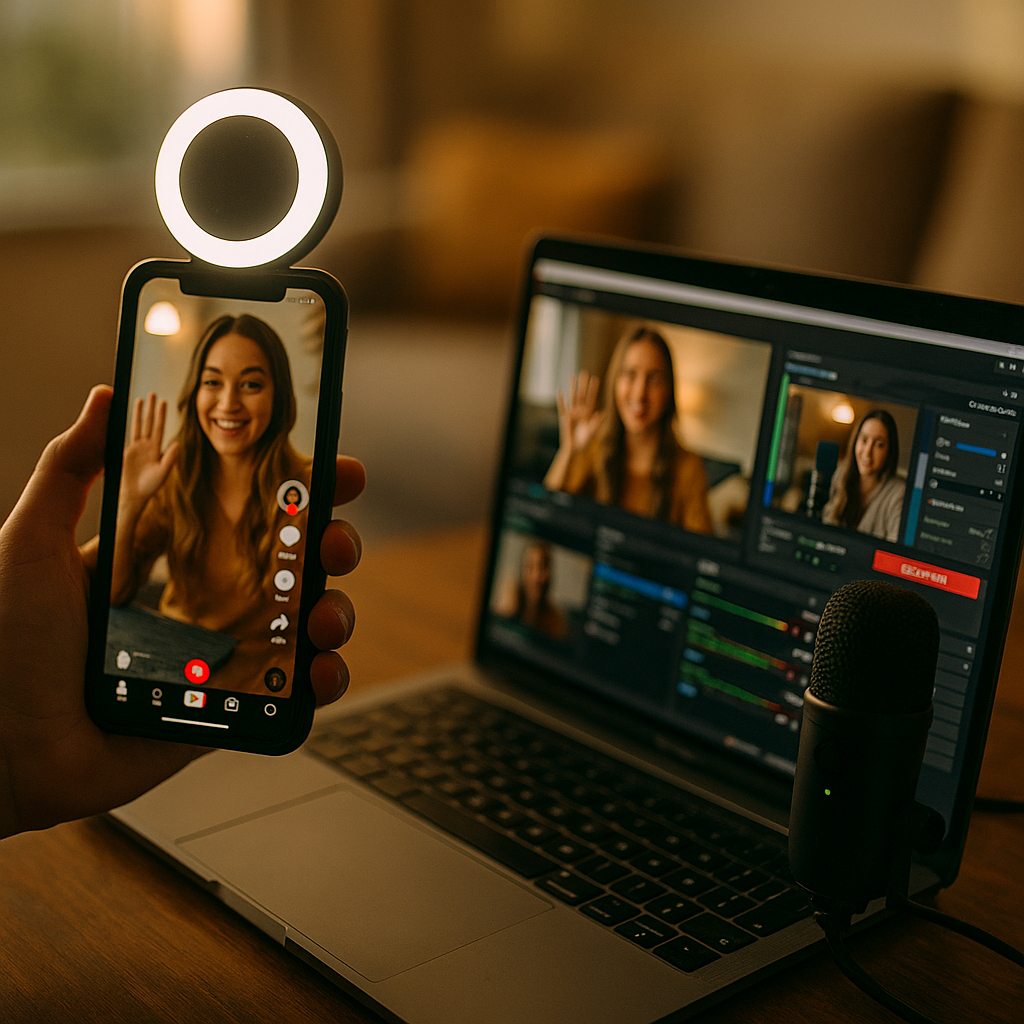
Sixty-three percent of Gen Z now watches short-form video and long-form streaming content within the same hour. If your sponsored content is built for only one of those environments, you’re already leaving reach on the table. This framework addresses exactly that problem: how to brief creators for social and television cross-platform content that performs natively on both TikTok and streaming services without commissioning two separate productions.
Why Most Branded Content Fails the Dual-Platform Test
The failure isn’t creative. It’s structural. Brands brief creators for a single environment, so the asset is engineered for that environment’s constraints: 9:16 vertical for TikTok, punchy three-second hook, text overlays for silent viewing. Then someone in media asks if the piece can run as a pre-roll on Peacock or a sponsored segment on a Pluto TV channel, and the answer is almost always “not without a re-shoot.”
That’s a budget problem disguised as a logistics problem. The root cause is a brief that names one platform instead of one creative concept that travels.
Streaming platforms now actively court creator-style content. Amazon Freevee, Tubi, and Pluto TV all have ad inventory that supports mid-form branded segments. TikTok Pulse and TikTok LIVE push creator content into premium ad adjacency. The infrastructure for distribution already exists. What’s missing is a brief that accounts for it from the start.
The Entertainment-First Principle
Entertainment-first means the content earns attention before it asks for anything. It sounds obvious. It isn’t practiced nearly enough.
Most creator briefs are structured around brand requirements: mention the product by name within 30 seconds, include the tagline, show the packaging. Those are compliance checkboxes, not creative architecture. When you lead with constraints, you get content that satisfies the legal team and bores everyone else.
Flipping the brief means leading with a story premise or a tension that an audience would want to watch regardless of the sponsor. The brand integrates as a plot element, a prop, or a natural part of the creator’s world. Think about how State Farm has embedded itself in Jake from State Farm content across both social clips and longer broadcast placements. The character carries the brand. The entertainment carries the character.
The brief should define the story first. Brand requirements should function as creative constraints, not creative directives. Constraints generate better ideas than mandates do.
For practical guidance on building briefs that prioritize watchability while protecting brand recall, the templates at entertainment-first creator briefs are worth studying before you write your next RFP.
The Cross-Platform Brief: A Seven-Component Framework
Here’s what needs to be in the brief. Not a brand guidelines PDF. Not a mood board. These seven components.
1. The Premise (not the product). Write two or three sentences describing the story the content will tell. What happens? What’s the tension? What does the audience walk away thinking or feeling? The product should appear in this description naturally, not as the subject of the sentence.
2. The Primary Format Block. Specify a 60-to-90-second “core block” that will serve as the anchor for every version of the asset. This block is shot and edited to work at 16:9 for streaming and can be re-cropped to 9:16 for vertical without losing the narrative spine. Shooting with the center frame in mind (leaving compositional headroom on all four sides) is a cinematography note your creator needs in the brief, not in post-production feedback.
3. The Hook Architecture. Define two hooks: a visual hook for social (front-loaded, motion-driven, designed to stop the scroll in under two seconds) and a narrative hook for streaming (slightly slower burn, assumes the viewer opted in, rewards sustained attention). These are not two different videos. They are two different entry points into the same story. One creator, shooting once, can deliver both if they’re briefed correctly.
4. Brand Integration Parameters. List what the brand must do: appear visually, be mentioned verbally, show a specific SKU or feature. Then list what the brand must not do: dominate a scene, interrupt an emotional beat, require a hard sell. Give the creator creative latitude within those rails. This section of the brief is where most brand teams over-engineer and lose the creator’s voice.
5. Platform-Specific Cut Requirements. Be explicit. You need a 90-second version for streaming pre-roll, a 60-second version for TikTok, and a 15-second cut for social paid amplification. State this upfront. Creators who know they’re delivering three cuts from one shoot will plan the shoot accordingly. Creators who find out in post will deliver rushed re-edits that feel disjointed.
6. Audio Treatment. Streaming platforms support (and expect) mixed audio: music, voiceover, ambient sound. TikTok performs better with trending audio or a clear creator voice. Brief the creator on whether they’re using original audio, licensed music (confirm the license covers streaming distribution), or platform-native sound. Audio licensing is one of the most common legal gaps in cross-platform creator deals.
7. Compliance and Disclosure Language. FTC disclosure requirements apply regardless of whether content runs on TikTok, a CTV platform, or both. The disclosure mechanism differs by surface: superimposed text on streaming, native tags on TikTok. Your brief needs to specify both. For current guidance on disclosure requirements, the FTC’s endorsement guidelines remain the definitive source.
Production Economics: One Brief, Three Deliverables
The cost argument is straightforward once you’ve seen the math.
A mid-tier creator producing a TikTok integration typically charges between $8,000 and $25,000 depending on follower count and category. A produced branded segment for streaming inventory starts at $40,000 for basic talent and post. Commission both separately and you’re at $50,000-plus before media spend. Commission one cross-platform asset using this framework and you’re producing the core block once, generating three cuts, and distributing across both surfaces for $20,000 to $35,000 all-in. That’s a 30-to-40 percent production efficiency gain, minimum.
The key is that the creator relationship supports this from the start. Negotiate usage rights for streaming distribution in the initial contract. Many brands forget this and pay re-licensing fees later that erode the savings entirely. Your creator contract should explicitly cover CTV, AVOD, and social distribution rights for a defined term, typically 12 months.
If you’re running multi-format campaigns already, the one budget, four formats model is a useful operational parallel for how to structure deliverables without inflating production costs.
Choosing the Right Creator for a Dual-Platform Brief
Not every creator can execute this. The skill set required is genuinely different from a creator who only makes TikToks.
You’re looking for creators with documentary or narrative experience, even informal. YouTube long-form veterans often have better instincts for story structure than pure short-form creators. Podcast-native video talent (think video podcast hosts) understands pacing for a lean-back audience. Check a creator’s back catalog for evidence they can sustain narrative tension beyond 60 seconds before you brief them on a streaming deliverable.
Casting for this type of work also means evaluating the creator’s audience demographics against your streaming platform’s audience profile. A creator with 2 million TikTok followers skewing 18-to-24 may not map to the 35-to-54 demographic that dominates Peacock’s viewer base. Audience alignment across surfaces is a media planning conversation, not just a creative one.
For a related look at how creator ads perform across streaming and social environments, creator ads for streaming and social covers the performance data worth benchmarking against.
The creator you hire for a cross-platform brief is functioning as a director, a talent, and a media strategist simultaneously. Vet them accordingly, and pay them accordingly.
Measurement: Aligning KPIs Across Two Very Different Environments
TikTok measures engagement: watch time, shares, comment sentiment, saves. Streaming platforms measure completion rates, brand recall lift, and audience attention scores. These are not interchangeable metrics, and a campaign debrief that uses one framework to evaluate both will produce misleading conclusions.
Set platform-native KPIs from the start. For TikTok: target a 30-percent watch-through rate on the 60-second cut and a share-to-view ratio above 0.5 percent. For streaming: target a 70-percent completion rate on the 90-second cut and a brand recall lift of 10-15 points above control (Nielsen ONE and iSpot.tv both offer this measurement layer for CTV). For your own tracking, tools like Sprout Social can unify social performance data, while eMarketer publishes current CTV benchmarks worth using as your baseline.
The unified asset strategy also creates a natural A/B testing opportunity: does the same story perform differently when delivered in a lean-in (TikTok) versus lean-back (streaming) context? That data informs your next brief more than any focus group will.
For deeper brief optimization with performance signals built in, the framework at TikTok briefs for watch time addresses the social side of the measurement equation in granular detail.
Serialized content structures also hold up particularly well across both platforms if you’re planning a campaign with multiple drops. The approach covered in serialized creator briefs shows how episodic narrative hooks can drive repeat viewing on streaming and re-engagement on social simultaneously.
Start your next brief by writing the premise first, before you write a single brand requirement, and see what that one change does to the creative you get back.
Frequently Asked Questions
What makes a creator brief “entertainment-first” versus a standard sponsored content brief?
An entertainment-first brief leads with a story premise, tension, or character situation that the audience would want to watch regardless of the brand. Standard briefs typically lead with brand requirements: messaging, product features, and call-to-action instructions. Entertainment-first briefs still include those requirements, but they’re positioned as creative constraints within a story framework, not as the structural foundation of the content.
Can any creator execute a cross-platform brief, or does this require specialist talent?
Not every creator has the skill set for it. You’re looking for creators with evidence of narrative range: the ability to sustain story structure across 60 to 90 seconds and adjust pacing for different audience contexts. Long-form YouTube veterans and video podcast hosts often have stronger instincts here than pure short-form creators. Always audit a creator’s existing catalog for multi-format work before briefing them on a cross-platform deliverable.
How should usage rights be structured for a social and streaming cross-platform campaign?
Usage rights need to be negotiated upfront and explicitly cover CTV, AVOD, and social distribution channels for a defined licensing term, typically 12 months. Many brands default to social-only usage rights and then pay re-licensing fees to run the same asset on streaming platforms. Those fees can eliminate the production efficiency gains entirely. Include streaming distribution rights in the initial creator contract, not as an amendment later.
What aspect ratio should be used for content designed to run on both TikTok and streaming platforms?
Shoot the core block at 16:9 with deliberate center-frame composition that allows safe re-cropping to 9:16 for vertical social formats. This is called a “safe zone” or “center-safe” shooting approach. Include this as a specific cinematography note in the brief, so the creator and their camera operator account for it during the shoot rather than in post-production, where options are significantly more limited.
What are realistic production cost savings from a unified cross-platform brief?
Brands typically see a 30-to-40 percent reduction in total production costs by commissioning one cross-platform asset instead of separate productions for social and streaming. A social-only creator integration might cost $8,000 to $25,000, while a standalone produced streaming segment starts at $40,000. A unified cross-platform brief with three deliverables from one shoot typically ranges from $20,000 to $35,000 all-in, depending on creator tier and post-production complexity.
Top Influencer Marketing Agencies
The leading agencies shaping influencer marketing in 2026
Agencies ranked by campaign performance, client diversity, platform expertise, proven ROI, industry recognition, and client satisfaction. Assessed through verified case studies, reviews, and industry consultations.
Moburst

-
2

The Shelf
Boutique Beauty & Lifestyle Influencer AgencyA data-driven boutique agency specializing exclusively in beauty, wellness, and lifestyle influencer campaigns on Instagram and TikTok. Best for brands already focused on the beauty/personal care space that need curated, aesthetic-driven content.Clients: Pepsi, The Honest Company, Hims, Elf Cosmetics, Pure LeafVisit The Shelf → -
3

Audiencly
Niche Gaming & Esports Influencer AgencyA specialized agency focused exclusively on gaming and esports creators on YouTube, Twitch, and TikTok. Ideal if your campaign is 100% gaming-focused — from game launches to hardware and esports events.Clients: Epic Games, NordVPN, Ubisoft, Wargaming, Tencent GamesVisit Audiencly → -
4

Viral Nation
Global Influencer Marketing & Talent AgencyA dual talent management and marketing agency with proprietary brand safety tools and a global creator network spanning nano-influencers to celebrities across all major platforms.Clients: Meta, Activision Blizzard, Energizer, Aston Martin, WalmartVisit Viral Nation → -
5

The Influencer Marketing Factory
TikTok, Instagram & YouTube CampaignsA full-service agency with strong TikTok expertise, offering end-to-end campaign management from influencer discovery through performance reporting with a focus on platform-native content.Clients: Google, Snapchat, Universal Music, Bumble, YelpVisit TIMF → -
6

NeoReach
Enterprise Analytics & Influencer CampaignsAn enterprise-focused agency combining managed campaigns with a powerful self-service data platform for influencer search, audience analytics, and attribution modeling.Clients: Amazon, Airbnb, Netflix, Honda, The New York TimesVisit NeoReach → -
7

Ubiquitous
Creator-First Marketing PlatformA tech-driven platform combining self-service tools with managed campaign options, emphasizing speed and scalability for brands managing multiple influencer relationships.Clients: Lyft, Disney, Target, American Eagle, NetflixVisit Ubiquitous → -
8

Obviously
Scalable Enterprise Influencer CampaignsA tech-enabled agency built for high-volume campaigns, coordinating hundreds of creators simultaneously with end-to-end logistics, content rights management, and product seeding.Clients: Google, Ulta Beauty, Converse, AmazonVisit Obviously →