


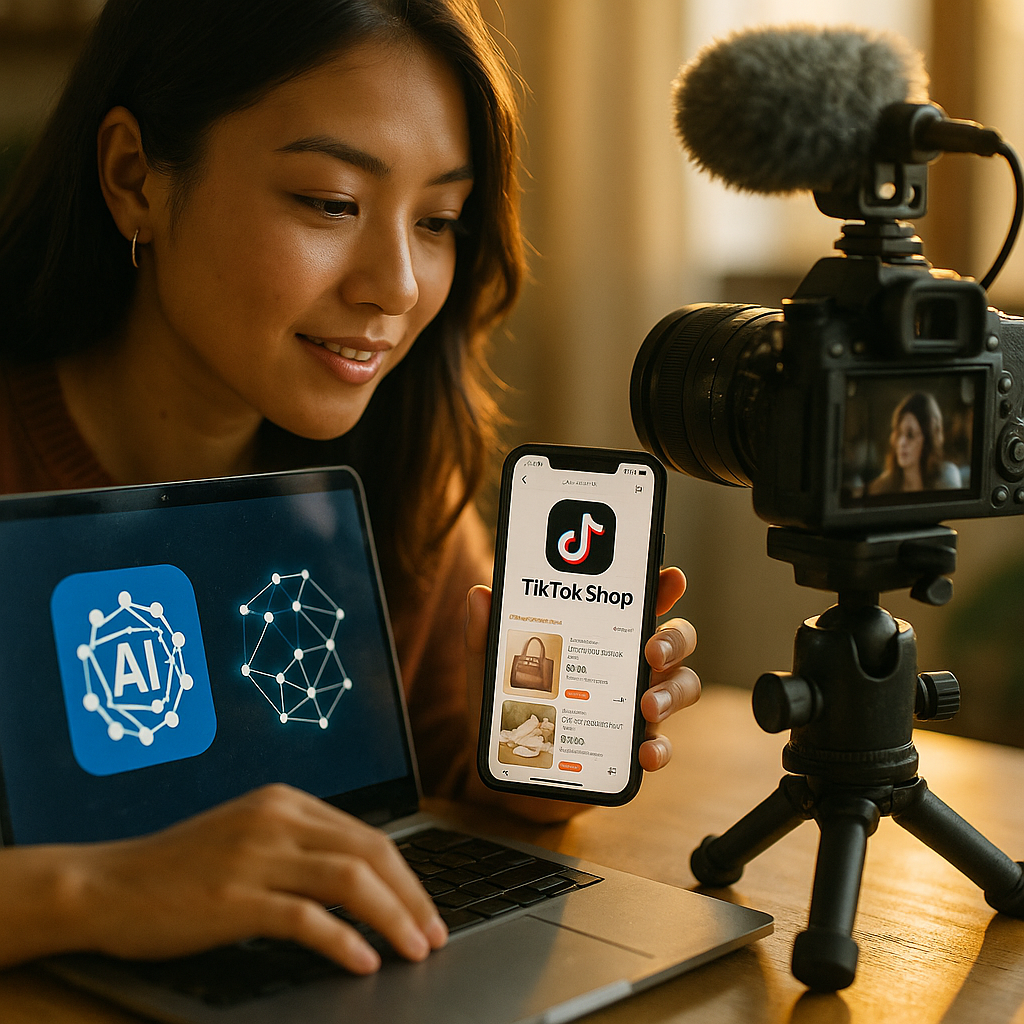
More than half of Gen Z consumers now discover products through AI-curated feeds or conversational search before they ever visit a brand’s website. If your product metadata isn’t readable by recommendation engines and your creator content isn’t structured for AI indexing, you’re invisible at the moment of intent.
The Discovery Layer Has Shifted Under Your Feet
Traditional funnel thinking assumes consumers start at search or social and move toward your owned properties. That model is outdated. Today, discovery happens inside closed AI environments: TikTok’s recommendation engine surfaces products to users who never searched for them, and ChatGPT’s shopping integrations serve product suggestions from structured data sources that most brand managers haven’t audited in years.
This isn’t a platform trend. It’s a structural change in how commerce attention is allocated. The brands winning right now built for AI readability before it became obvious — and the gap between them and everyone else is widening fast.
How TikTok’s AI Loop Actually Works (and Where Brands Lose)
TikTok’s For You Page algorithm doesn’t just rank content — it operates a continuous signal-feedback loop. A creator posts a product review. The AI reads on-screen text, audio transcription, visual object recognition, and engagement velocity. It then decides which audience segments see the video and, critically, whether the product tag attached to that video gets surfaced in the TikTok Shop discovery layer.
Most brands break this loop in one of three places:
- Untagged or inconsistently tagged products. If a creator’s video isn’t connected to a live product listing in TikTok Shop, the AI has no commerce signal to act on. The video drives awareness with nowhere to go.
- Thin product metadata. TikTok’s algorithm reads product titles, descriptions, and attributes to match items against user intent signals. Vague titles like “Blue Jacket” outperform nothing, but they lose to structured entries that include material, fit type, occasion, and use case.
- Creator briefs that don’t account for AI signals. Asking a creator to “show off the product naturally” is insufficient. Briefs need to specify spoken product name, key attributes mentioned verbally, and on-screen text overlays — because the AI parses all three independently.
TikTok Shop generated record commerce volume last Black Friday, and the top-performing brands shared one trait: their creator content and product listings were engineered as a unified data system, not separate creative and catalog decisions. See our breakdown of TikTok Shop’s creator commerce mechanics for specifics on incentive structures that drove those results.
ChatGPT as a Discovery Surface — Not Just a Search Replacement
ChatGPT’s shopping features pull from structured data: merchant feeds, schema markup, and increasingly, indexed content from brand websites and creator posts that have been crawled by Bing (which powers a significant portion of OpenAI’s web knowledge). This means a consumer asking “What’s the best waterproof running jacket under £150?” is getting an answer shaped by how well your product data is structured for machine parsing.
The implication for brand teams is concrete. Your product pages need valid schema markup (specifically Product, Offer, and Review schema) so AI engines can surface accurate pricing, availability, and social proof in conversational results. Brands that have invested in product data quality for AI sessions are already seeing measurable AOV lift from these surfaces.
Creator content plays here too — but differently than on TikTok. Long-form creator reviews published on YouTube or embedded on brand sites, with proper schema and clear product mentions, are increasingly cited by ChatGPT when it synthesizes product recommendations. A creator’s written breakdown or video transcript becomes a retrieval asset if it’s structured correctly.
Designing Creator Briefs for AI Readability
This is the operational change most brand teams haven’t made yet. A brief optimized for human engagement and a brief optimized for AI discoverability are not the same document.
For AI-optimized creator briefs, you need to specify:
- Spoken product identifiers: The creator should say the product name and at least two key attributes (e.g., “the Apex Trail Runner in Gore-Tex”) within the first 15 seconds. Audio transcription is one of TikTok’s primary content-classification signals.
- On-screen text requirements: Product name, key benefit, and price point (if used in the hook) should appear as overlay text. This feeds TikTok’s visual text recognition layer separately from the audio signal.
- Hashtag and caption discipline: Niche, attribute-specific hashtags outperform broad category tags for reaching in-market audiences. “WaterproofJacket” surfaces in front of different algorithmic segments than “OutdoorGear.”
- Product link placement: TikTok’s algorithm treats videos with active product tags differently from untagged posts. Every creator activation should have a corresponding live product in TikTok Shop before the video goes live.
Good creator brief strategy has always been about clarity and intent. The new layer is that you’re writing for two audiences simultaneously: the human viewer and the AI that decides who sees the content.
Commerce Architecture: Building for the AI-First Purchase Path
The purchase path that starts inside TikTok or ChatGPT doesn’t naturally route through your brand website. That’s the architecture problem brands need to solve. If a consumer discovers your product through an AI-curated feed and taps through to a poorly configured landing page (or worse, a generic homepage), the conversion rate collapse is dramatic.
Build landing pages that mirror the discovery context. If a creator’s TikTok video focused on the “evening skincare routine” use case for your serum, the linked page should lead with that specific use case, not your full product range. AI-driven traffic carries contextual intent that generic pages can’t satisfy.
Beyond landing pages, consider the full data architecture. Your product catalog needs to be consistent across TikTok Shop, your DTC site, and any retail media networks you participate in. Inconsistent pricing, missing attributes, or outdated inventory signals create friction points that AI recommendation engines interpret as poor product quality. Understanding how AI search shapes content strategy helps frame this as a content operations challenge, not just a tech one.
For brands working with retail partners, the complexity compounds. A product available through a retailer’s site needs its metadata maintained upstream, not just on your DTC catalog. Retail media networks are increasingly integrating with social commerce surfaces, which means a data gap at the retailer level creates a discovery gap on social. This is the exact challenge explored in the Cotswold Outdoor retail media case.
The brands that will dominate AI-driven discovery aren’t producing more creator content — they’re producing more legible creator content. Every video, every product tag, every metadata field is a signal. Treat them that way.
Measurement: What Changes When AI Owns the Discovery Moment
Attribution breaks in an AI-first discovery environment. A consumer who finds your product through a ChatGPT shopping recommendation, clicks through to your site, adds to cart, abandons, then converts via a retargeted social ad — which touchpoint gets credit? Most attribution models still can’t handle this, and most brands are undervaluing their AI discovery investments as a result.
Practical adjustments for your measurement stack:
- Add UTM parameters specific to TikTok Shop product links so you can isolate AI-surface traffic from organic TikTok traffic.
- Track “first touch” source data in your CRM to identify what share of new customers are entering the funnel from AI-curated surfaces.
- Monitor ChatGPT referral traffic in your analytics platform (it appears as direct or Bing referral depending on configuration).
- Use creator-specific discount codes or product SKUs to maintain conversion visibility when standard tracking breaks.
The budget conversation with finance becomes easier once you have this data. If you’re making the case for increased creator investment, the creator ROI framework for CFO conversations provides a structure that incorporates AI-driven discovery attribution into the business case.
What to Do in the Next 90 Days
Audit your TikTok Shop product catalog for metadata completeness — every missing attribute is a ranking penalty. Revise two or three creator briefs using the AI-readability framework above and A/B test them against your current brief format. Then pull your product schema markup and validate it against Google’s structured data guidelines — because what’s readable to Google’s crawler is increasingly readable to ChatGPT’s retrieval layer too.
Frequently Asked Questions
How does TikTok’s AI recommendation engine decide which products to surface?
TikTok’s algorithm uses a combination of audio transcription, visual object recognition, on-screen text, user engagement signals, and product tag data from TikTok Shop listings. It matches this content signal against behavioral profiles of users who have shown similar interest patterns. Products with complete metadata in TikTok Shop and creators who mention product attributes clearly in their audio and captions receive stronger commerce signals from the algorithm.
Does ChatGPT actually use creator content for product recommendations?
Yes, increasingly. ChatGPT’s shopping features draw from Bing-indexed web content, structured data feeds from merchant partners, and crawled product pages with valid schema markup. Creator content that is published on indexed platforms (YouTube descriptions, brand blogs, long-form review sites) and contains structured product information can be retrieved and cited in ChatGPT shopping responses. The key is that the content must be machine-parseable, not just human-readable.
What product metadata fields matter most for AI commerce discovery?
For TikTok Shop, prioritize product title (including material, fit, use case), category tags, attributes (size, color, occasion), and high-quality images with descriptive alt text. For AI search surfaces like ChatGPT, Product schema markup on your site covering name, description, price, availability, and aggregated review data is essential. Consistency across all commerce surfaces — your DTC site, retail partners, and social shops — compounds the discoverability signal.
How should creator briefs change to account for AI recommendation engines?
AI-optimized briefs should specify that creators verbally mention the product name and at least two key attributes in the first 15 seconds, include on-screen text overlays with the product name and benefit, use niche attribute-specific hashtags rather than broad category tags, and ensure the product is live and tagged in TikTok Shop before the video publishes. Briefs should treat audio, visual, and text layers as independent AI signals rather than a single creative piece.
How do you measure ROI when discovery starts inside an AI environment?
Standard last-click attribution significantly undervalues AI-driven discovery. Brands should implement UTM parameters specific to TikTok Shop and AI-surface links, track first-touch source data in their CRM, monitor Bing referral traffic as a ChatGPT proxy, and use creator-specific discount codes or product SKUs to maintain conversion visibility. Building a multi-touch attribution model that includes AI surface touchpoints is increasingly important as the share of first discovery shifting to these environments grows.
Top Influencer Marketing Agencies
The leading agencies shaping influencer marketing in 2026
Agencies ranked by campaign performance, client diversity, platform expertise, proven ROI, industry recognition, and client satisfaction. Assessed through verified case studies, reviews, and industry consultations.
Moburst

-
2

The Shelf
Boutique Beauty & Lifestyle Influencer AgencyA data-driven boutique agency specializing exclusively in beauty, wellness, and lifestyle influencer campaigns on Instagram and TikTok. Best for brands already focused on the beauty/personal care space that need curated, aesthetic-driven content.Clients: Pepsi, The Honest Company, Hims, Elf Cosmetics, Pure LeafVisit The Shelf → -
3

Audiencly
Niche Gaming & Esports Influencer AgencyA specialized agency focused exclusively on gaming and esports creators on YouTube, Twitch, and TikTok. Ideal if your campaign is 100% gaming-focused — from game launches to hardware and esports events.Clients: Epic Games, NordVPN, Ubisoft, Wargaming, Tencent GamesVisit Audiencly → -
4

Viral Nation
Global Influencer Marketing & Talent AgencyA dual talent management and marketing agency with proprietary brand safety tools and a global creator network spanning nano-influencers to celebrities across all major platforms.Clients: Meta, Activision Blizzard, Energizer, Aston Martin, WalmartVisit Viral Nation → -
5

The Influencer Marketing Factory
TikTok, Instagram & YouTube CampaignsA full-service agency with strong TikTok expertise, offering end-to-end campaign management from influencer discovery through performance reporting with a focus on platform-native content.Clients: Google, Snapchat, Universal Music, Bumble, YelpVisit TIMF → -
6

NeoReach
Enterprise Analytics & Influencer CampaignsAn enterprise-focused agency combining managed campaigns with a powerful self-service data platform for influencer search, audience analytics, and attribution modeling.Clients: Amazon, Airbnb, Netflix, Honda, The New York TimesVisit NeoReach → -
7

Ubiquitous
Creator-First Marketing PlatformA tech-driven platform combining self-service tools with managed campaign options, emphasizing speed and scalability for brands managing multiple influencer relationships.Clients: Lyft, Disney, Target, American Eagle, NetflixVisit Ubiquitous → -
8

Obviously
Scalable Enterprise Influencer CampaignsA tech-enabled agency built for high-volume campaigns, coordinating hundreds of creators simultaneously with end-to-end logistics, content rights management, and product seeding.Clients: Google, Ulta Beauty, Converse, AmazonVisit Obviously →