


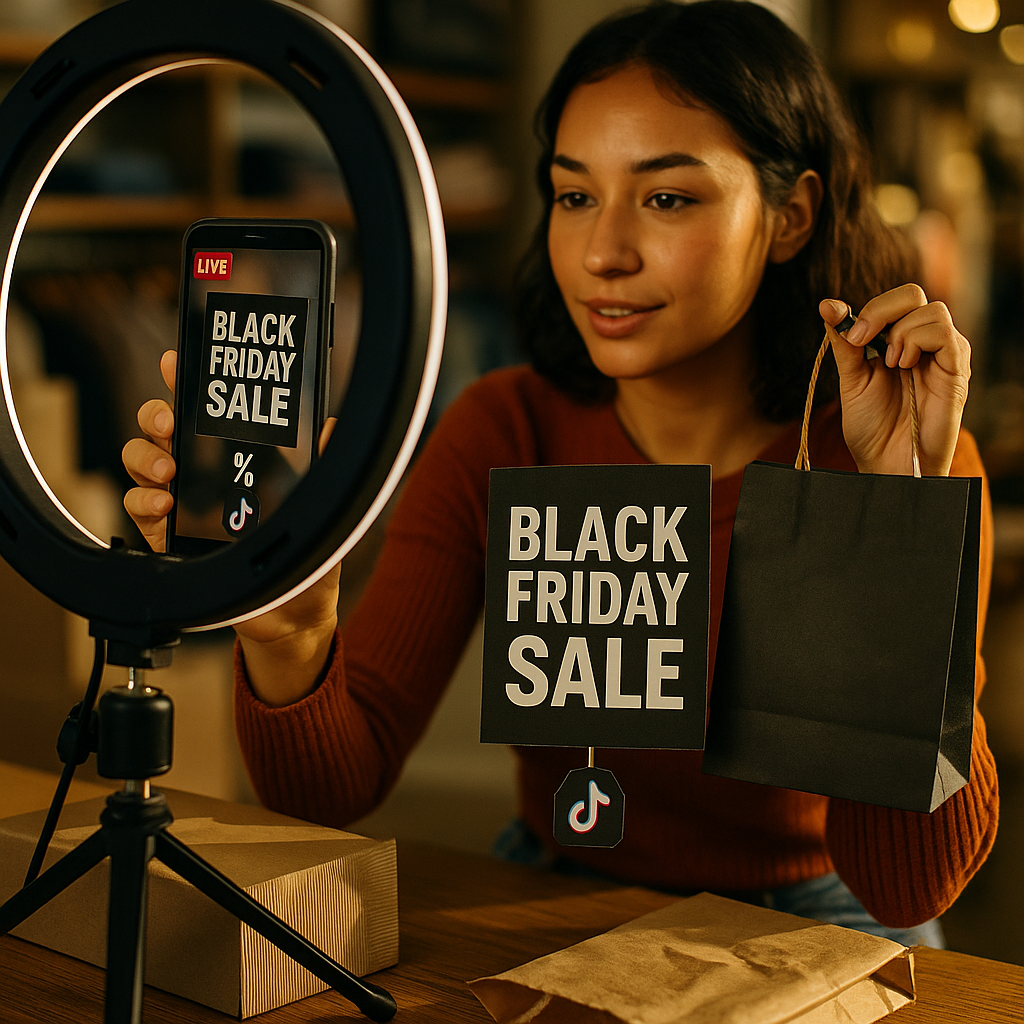
Half a Billion Dollars in One Day Changes the Conversation
TikTok Shop’s $500 million Black Friday record isn’t just a platform milestone. It’s a benchmark that resets what brands should expect from social commerce, and how aggressively they should be building toward it. The TikTok Shop Black Friday record signals a shift in where retail velocity actually lives now, and the brands that treat it as a one-time anomaly will be behind by Q4.
For context: that single-day figure outpaced projections from major commerce analysts tracking social-native shopping behavior. eMarketer has been tracking social commerce growth for several cycles, and even their bullish forecasts didn’t fully anticipate how quickly TikTok Shop would compress the path from creator content to checkout. The implication for brand-side operators isn’t abstract. It’s calendar-level, budget-level, and structural.
What “Sales Velocity” Actually Means for Planning Teams
Sales velocity, in the TikTok Shop context, refers to the speed at which a product moves from a creator mention to a completed transaction. The $500 million figure matters less as a headline and more as a signal about concentration: a massive share of that volume happened in compressed windows driven by specific creator activations, product drops, and affiliate-incentivized livestreams.
That’s operationally significant. It means your commerce calendar can no longer be built around a static promotional grid. Black Friday now behaves more like a series of creator-led flash events than a single 24-hour retail window. Brands that planned their TikTok Shop strategy around a handful of posts and a discount code captured a fraction of the available velocity. Brands that pre-seeded creators with inventory access, tiered affiliate rates, and exclusive product unlocks captured multiples of that.
The gap between brands that “participated” in TikTok Shop’s Black Friday and brands that “dominated” it came down almost entirely to creator incentive architecture built at least 8 weeks out.
If your team is still building seasonal influencer activations the same way you built them for Instagram Stories two years ago, the velocity gap will widen every quarter.
Rebuilding the Commerce Calendar Around Creator Peaks
The old model: brand sets a sale date, notifies influencers two weeks prior, provides a discount code, measures promo redemptions. That model is structurally misaligned with how TikTok Shop drives purchase behavior.
The new model requires working backward from creator content schedules, not forward from your promotional calendar. Here’s what that looks like in practice:
- Anchor dates shift left by 6-10 weeks. Briefing creators for a November Black Friday push means starting affiliate program enrollment, product seeding, and content pre-approval in mid-September at the latest.
- Creator content warm-up is non-negotiable. TikTok’s algorithm rewards accounts that have already posted about a product category. Creators who post about your product twice before Black Friday convert at higher rates than those posting for the first time on the day of the event.
- Livestream scheduling becomes a media buy decision. High-performing TikTok Shop livestreamers often book promotional slots weeks in advance. Treating livestream scheduling as an afterthought is the equivalent of forgetting to buy television airtime.
- Post-peak windows are undertapped. The velocity data from Black Friday shows significant purchase activity continuing through the weekend and into Cyber Monday. Brands that exhaust their creator budget on a single day miss the extended tail entirely.
For teams planning multi-surface creator activations, TikTok Shop’s event-driven commerce model adds a new layer of complexity: you’re not just coordinating content across platforms, you’re coordinating transaction infrastructure, affiliate payouts, and inventory availability simultaneously.
Creator Incentive Architecture: The Variable That Actually Moved the Needle
Platform-wide numbers tell you what happened. Creator incentive structure tells you why.
The brands that drove outsized TikTok Shop performance during Black Friday shared a common structural trait: they treated creator compensation as a performance variable, not a fixed cost. Flat-fee sponsorships produce flat-fee effort. Tiered affiliate structures, milestone bonuses, and exclusive product access produce creator behavior that optimizes for conversion.
Specifically, high-performing programs in recent commerce cycles have used:
- Tiered commission rates that increase with volume thresholds (e.g., 8% base, 12% above 100 units sold, 18% above 500 units)
- Early-access product drops that give creators authentic first-look content, which converts better than obviously promotional posts
- Bonus pools for creators who post within a specific pre-event window, rewarding the warm-up content that actually drives algorithm seeding
- Transparent performance dashboards so creators can see their real-time sales data and self-optimize
This structural shift has direct implications for how you draft agreements. As covered in our analysis of how creator contracts must evolve, brands that still rely on deliverables-based flat agreements are leaving significant performance upside on the table, especially during high-velocity commerce events.
The creator side of this equation is also evolving. As the creator economy scales toward $250B, top-performing commerce creators are increasingly sophisticated about their own affiliate economics. They’re choosing brand partnerships partly based on commission structure competitiveness. If your rate card isn’t compelling, they’ll allocate their Black Friday content slots to brands that pay better.
Platform Risk and the Diversification Imperative
A $500 million day on TikTok Shop is genuinely impressive. It’s also a single-platform concentration risk that should be part of every brand’s commerce strategy conversation.
The coverage gaps in TikTok Shop’s embedded insurance model are one operational risk dimension. But the deeper risk is algorithmic and regulatory dependency. TikTok Shop’s commerce performance is partly a function of TikTok’s unique discovery algorithm, which surfaces product content to non-follower audiences at rates that Meta and YouTube simply don’t match today. That advantage isn’t guaranteed to persist in its current form.
Smart brands are using TikTok Shop’s event velocity to build commerce muscles, not commerce dependency. That means running parallel affiliate programs on Amazon, building DTC email capture during TikTok Shop campaigns, and activating creators across platforms so that audience relationships exist independent of any single commerce interface. The TikTok for Business platform itself offers brand safety and attribution tools worth auditing before scaling seasonal spend.
Your TikTok Shop Black Friday strategy should also be generating first-party data and platform-agnostic creator relationships. If it’s only generating TikTok Shop revenue, you’re optimizing for the wrong output.
Budget Reallocation Signals for Brand Commerce Teams
The $500 million benchmark creates a useful internal conversation for brand teams: if that volume is possible on a single platform in a single day, what share of your commerce budget is currently allocated to creator-driven social commerce versus traditional retail media or paid search?
For most mid-to-large brands, the honest answer is: not enough. Statista data tracking social commerce adoption shows the category growing faster than almost any other retail channel, yet brand budget allocation to creator-powered commerce still lags behind brand awareness influencer spend by a significant margin.
The reallocation logic isn’t complicated: if creator-driven TikTok Shop content produces measurable, attributable transactions at a CPA that competes with paid search, it deserves budget parity with paid search. For brands exploring how niche creator strategies drive lower CPA, TikTok Shop’s affiliate model offers one of the cleanest attribution environments available in influencer marketing today.
From an agency perspective, the operational ask is also shifting. Managing a creator affiliate program at Black Friday scale requires tooling, not just relationships. Platforms like Shopify Collabs and dedicated affiliate management systems are increasingly table-stakes infrastructure for brands running TikTok Shop at any meaningful volume. And for teams thinking about how incentive architecture fits into broader creator program design, understanding participatory commerce models offers a useful strategic frame beyond the transactional.
The 2026 Planning Imperative
Black Friday is now a social commerce event as much as a retail one. The $500 million TikTok Shop record is the floor, not the ceiling, for what the next cycle will produce. Brands that start building creator incentive architecture, pre-event warm-up calendars, and multi-platform commerce infrastructure now will compound their advantages. Those that wait until October to “figure out their TikTok Shop strategy” will be paying premium rates for mid-tier creator slots while their competitors are already mid-campaign.
Start with your creator roster audit in Q2. Map your affiliate rate structure against competitive benchmarks. And treat livestream inventory on TikTok Shop the way you’d treat premium television placement. You can also cross-reference HubSpot’s commerce attribution frameworks to ensure your reporting infrastructure can actually capture the multi-touch reality of social commerce conversions before peak season arrives.
Frequently Asked Questions
What does TikTok Shop’s Black Friday record mean for brand commerce strategy?
The $500 million single-day sales figure establishes TikTok Shop as a primary commerce channel, not a supplemental one. For brands, it means commerce calendars need to be rebuilt around creator-led event windows, with creator briefings, product seeding, and affiliate program setup beginning 6-10 weeks before major sales dates rather than days before.
How should brands structure creator incentives for TikTok Shop commerce events?
High-performing brands use tiered commission structures that reward volume milestones, early-access product drops that generate authentic pre-event content, and bonus pools for creators who post during warm-up windows. Flat-fee sponsorships produce flat performance; variable compensation aligned with conversion outcomes produces creator behavior that actually optimizes for sales velocity.
What are the key platform risks brands should consider when scaling TikTok Shop investment?
The primary risks include algorithmic dependency (TikTok’s unique discovery engine may not maintain its current commercial advantage), regulatory and operational uncertainty, and coverage gaps in TikTok Shop’s embedded insurance model. Brands should run parallel programs on other platforms, build DTC email capture during TikTok campaigns, and avoid single-platform commerce concentration.
How far in advance should brands plan their TikTok Shop Black Friday campaigns?
Planning should begin at least 8-10 weeks before the event. Creator enrollment in affiliate programs, product seeding for warm-up content, and livestream slot booking should all be finalized by mid-September for a November Black Friday activation. Top-performing TikTok Shop livestreamers book promotional slots weeks in advance, similar to premium media placements.
How does TikTok Shop attribution compare to other influencer marketing channels?
TikTok Shop’s native affiliate infrastructure offers one of the cleanest attribution environments in influencer marketing, with direct creator-to-transaction tracking available through the platform. This makes CPA comparison to paid search more straightforward than in traditional influencer campaigns, strengthening the budget allocation case for brands that need hard performance data to justify social commerce investment.
Top Influencer Marketing Agencies
The leading agencies shaping influencer marketing in 2026
Agencies ranked by campaign performance, client diversity, platform expertise, proven ROI, industry recognition, and client satisfaction. Assessed through verified case studies, reviews, and industry consultations.
Moburst

-
2

The Shelf
Boutique Beauty & Lifestyle Influencer AgencyA data-driven boutique agency specializing exclusively in beauty, wellness, and lifestyle influencer campaigns on Instagram and TikTok. Best for brands already focused on the beauty/personal care space that need curated, aesthetic-driven content.Clients: Pepsi, The Honest Company, Hims, Elf Cosmetics, Pure LeafVisit The Shelf → -
3

Audiencly
Niche Gaming & Esports Influencer AgencyA specialized agency focused exclusively on gaming and esports creators on YouTube, Twitch, and TikTok. Ideal if your campaign is 100% gaming-focused — from game launches to hardware and esports events.Clients: Epic Games, NordVPN, Ubisoft, Wargaming, Tencent GamesVisit Audiencly → -
4

Viral Nation
Global Influencer Marketing & Talent AgencyA dual talent management and marketing agency with proprietary brand safety tools and a global creator network spanning nano-influencers to celebrities across all major platforms.Clients: Meta, Activision Blizzard, Energizer, Aston Martin, WalmartVisit Viral Nation → -
5

The Influencer Marketing Factory
TikTok, Instagram & YouTube CampaignsA full-service agency with strong TikTok expertise, offering end-to-end campaign management from influencer discovery through performance reporting with a focus on platform-native content.Clients: Google, Snapchat, Universal Music, Bumble, YelpVisit TIMF → -
6

NeoReach
Enterprise Analytics & Influencer CampaignsAn enterprise-focused agency combining managed campaigns with a powerful self-service data platform for influencer search, audience analytics, and attribution modeling.Clients: Amazon, Airbnb, Netflix, Honda, The New York TimesVisit NeoReach → -
7

Ubiquitous
Creator-First Marketing PlatformA tech-driven platform combining self-service tools with managed campaign options, emphasizing speed and scalability for brands managing multiple influencer relationships.Clients: Lyft, Disney, Target, American Eagle, NetflixVisit Ubiquitous → -
8

Obviously
Scalable Enterprise Influencer CampaignsA tech-enabled agency built for high-volume campaigns, coordinating hundreds of creators simultaneously with end-to-end logistics, content rights management, and product seeding.Clients: Google, Ulta Beauty, Converse, AmazonVisit Obviously →