


The Budget Shift Brands Can No Longer Ignore
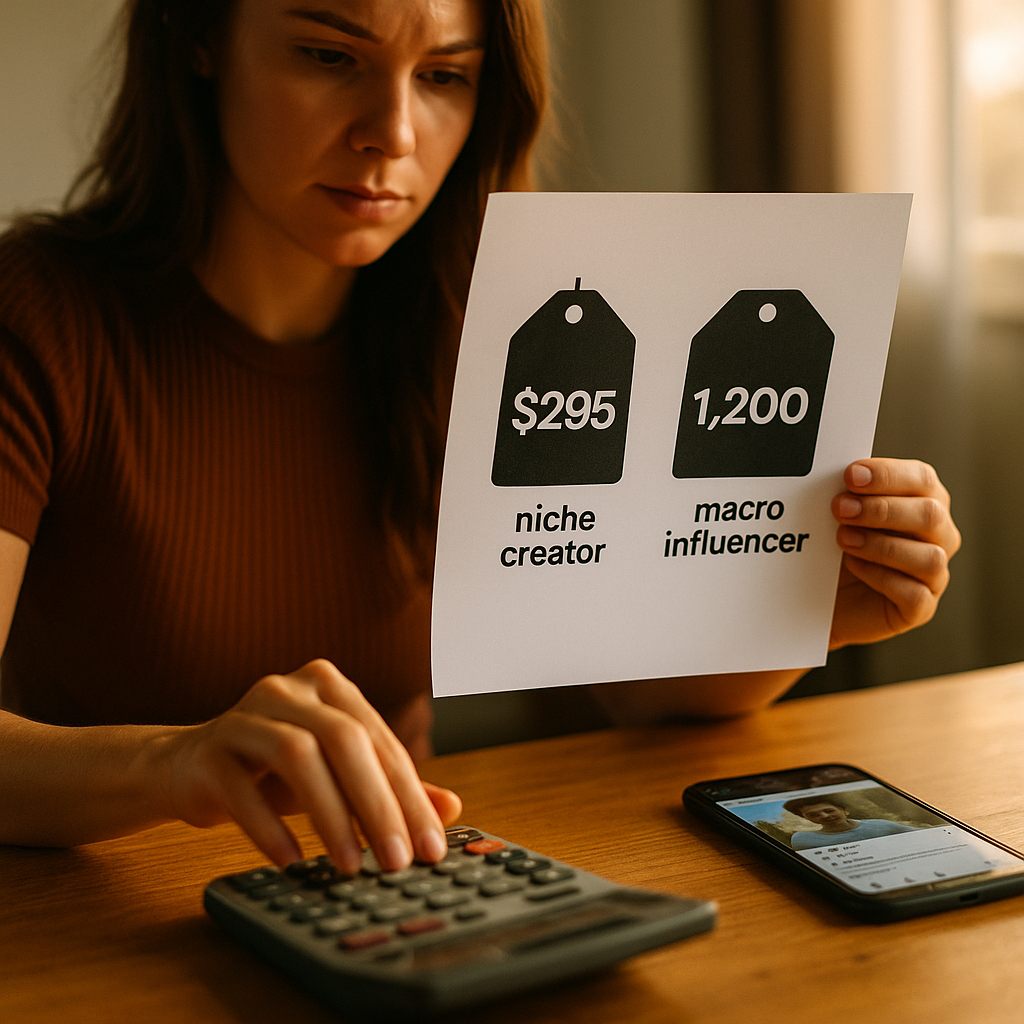
Macro influencer CPMs can exceed $50 — and conversion rates often languish below 0.5%. That math is finally catching up with brand teams. The macro-to-niche budget shift is no longer a trend whispered at conferences; it’s showing up in campaign post-mortems, CFO reviews, and Q-planning decks across industries.
If your influencer strategy still allocates the lion’s share of spend to creators with 1M+ followers, you’re likely subsidizing reach you don’t need and forfeiting acquisition efficiency you could have.
Why Macro Reach Became a Liability
For a decade, reach was the proxy metric because it was the measurable one. Follower counts were auditable. Impressions were trackable. Conversion was murky. So brands paid for what they could count.
The measurement gap has since closed. Pixel-level attribution, UTM stacking, Shopify-native discount codes, and third-party platforms like Sprout Social and Grin now give brand teams genuine sight lines into the full funnel. What that visibility revealed was uncomfortable: a significant slice of macro influencer spend was generating brand awareness metrics that didn’t translate to revenue.
The problem isn’t celebrity or scale per se. It’s audience-to-offer misalignment. A creator with 3 million lifestyle followers isn’t inherently more valuable than one with 40,000 followers who are procurement managers, SaaS buyers, or specialty dermatologists — not if your product is designed for the latter cohort.
Audience composition beats audience size every time. A niche creator whose followers are 80% in-category buyers will almost always outperform a macro creator on cost-per-acquisition, regardless of the follower gap.
The Performance Data Making the Case
The evidence is stacking up. Research from eMarketer and creator economy analysts consistently shows micro and nano influencers generating engagement rates two to five times higher than macro creators. More importantly, when brands tie affiliate links, promo codes, and pixel events to these campaigns, niche creators regularly produce CPAs 30-60% lower than their high-reach counterparts.
In the B2B space, the gap widens further. LinkedIn-native creators — think CFO educators, cybersecurity analysts, or supply chain consultants with 20,000 to 150,000 followers — routinely drive demo requests and free trial sign-ups at CPAs that paid LinkedIn ads can rarely match. The B2B creator economy on LinkedIn and YouTube is producing measurable pipeline, not just impressions.
Why does this happen? Two reasons. First, niche creators have built genuine authority within a category. Their audience follows them specifically for expertise, not entertainment or aspiration. When that creator endorses a tool or recommends a vendor, it reads as peer recommendation, not advertising. Second, the audience-to-offer match means a higher percentage of viewers are actually potential buyers. You’re not paying to reach people who will never convert; you’re reaching the right 40,000 out of 3 million.
How Brands Are Restructuring Their Rosters
The roster architecture is changing. Rather than anchoring a campaign to one or two macro creators and filling in with a handful of mid-tiers, forward-looking brands are building tiered portfolios weighted heavily toward niche specialists.
A practical model looks something like this:
- Macro (1 or none): Reserved for major brand moments, product launches, or awareness objectives where reach is the explicit KPI
- Category experts (the core): 10-30 niche creators with deep authority in the relevant vertical, activated on a recurring or always-on basis
- Micro amplifiers: A rotating pool of smaller creators used for testing messaging and capturing long-tail segments
This structure aligns spend to funnel stage more precisely. The roster architecture and ROI logic is straightforward: concentration risk drops, performance data diversifies, and you’re not betting the quarter on one creator’s audience mood on posting day.
Operationally, this requires a different workflow. Managing 20 niche creators demands better tooling, clearer briefs, and standardized reporting than managing two macro relationships. Platforms like HubSpot and creator management tools such as Grin or Aspire are increasingly being used to operationalize these larger, lower-touch rosters without scaling headcount proportionally.
The B2B Case Is Different — and More Compelling
Consumer brands chasing DTC conversions get the headlines, but the real ROI story for niche creator investment is in B2B. The reasons are structural.
B2B buying cycles are long, involve multiple stakeholders, and are heavily influenced by trusted voices in specific domains. A cybersecurity SaaS brand sponsoring a mid-tier analyst creator on YouTube who covers enterprise threat detection is reaching security architects and CISOs who are actively researching solutions. That’s a wildly different intent signal than reaching someone who follows a general tech influencer.
The VC investment flowing into niche creator formats reflects institutional confidence that category-expert creators have durable monetization potential. Brands that partner early, before rates inflate, capture the arbitrage.
For compliance-heavy industries — fintech, healthcare, legal tech — niche creators also reduce regulatory exposure. A creator who genuinely understands the category is far less likely to make a claim your legal team needs to walk back. That’s risk mitigation, not just efficiency.
Measurement Infrastructure You Need First
None of this works without the right attribution architecture. Before you reallocate budget, confirm your measurement stack can actually capture niche creator performance at the conversion level.
At minimum, you need unique UTM parameters per creator, creator-specific discount or referral codes, pixel firing on key conversion events, and a clean CRM integration so sales pipeline influenced by creator content is trackable. Without these, you’re measuring niche creators with the same blunt instruments you used for macro — and you’ll undercount their impact.
The creator AI tool stack audit process is worth running before committing to a new roster strategy. Understand what your current vendors can actually measure before you build a performance case on their data outputs.
Third-party attribution platforms including Northbeam and Triple Whale have also added creator-specific tracking modules that are worth evaluating if your current stack has gaps. Review their documentation alongside FTC disclosure requirements to ensure your niche creator contracts include the right compliance language.
The brands winning on niche creator ROI aren’t just buying better creators — they’re measuring them better. Attribution infrastructure is as important as roster selection.
Budget Reallocation: A Realistic Transition Path
You don’t cut macro spend cold turkey. The smarter move is a phased reallocation over two to three campaign cycles, running parallel performance tests so you’re comparing like-for-like objectives rather than swapping awareness spend for conversion spend and calling it a fair fight.
Set clear CPA targets for niche creator cohorts before launch. Hold them to the same accountability framework you’d apply to paid social. If a niche creator consistently misses CPA benchmarks after three activations, cut them — the portfolio logic only works if underperformers are replaced, not carried.
Watch your paid amplification strategy alongside organic creator fees. Niche content that converts organically often performs even better when boosted with paid spend, and the economics typically hold because the base CPA is already strong.
The creator economy’s growth trajectory (projected toward $480 billion globally by analysts at Statista) means niche creator rates are rising. The brands locking in longer-term contracts now are insulating themselves against rate inflation that will hit the category as demand compounds.
Reallocating toward niche and category-expert creators is no longer an experimental budget line. Run a 90-day pilot on one product line, build your attribution stack first, and let the CPA data make the case to your CFO.
FAQs
What is the macro-to-niche budget shift in influencer marketing?
It refers to the reallocation of influencer marketing budgets away from high-reach macro creators (typically 1M+ followers) toward smaller, niche or category-expert creators. Performance data showing superior cost-per-acquisition from niche creators is the primary driver of this shift.
Why do niche creators deliver better cost-per-acquisition than macro influencers?
Niche creators have highly targeted audiences composed of people who follow them specifically for domain expertise. This means a higher percentage of viewers are actual potential buyers, reducing wasted impressions. Additionally, endorsements from niche experts read as peer recommendations, generating stronger purchase intent than celebrity-style promotions.
How should brands measure niche creator performance accurately?
Brands need unique UTM parameters per creator, creator-specific discount or referral codes, pixel-level conversion tracking, and CRM integration to capture pipeline influence. Third-party attribution platforms like Northbeam or Triple Whale can supplement native platform data. Without this infrastructure, niche creator impact is routinely undercounted.
What follower range qualifies as a “niche” or category-expert creator?
There is no universal threshold, but niche creators typically fall between 10,000 and 250,000 followers. What matters more than follower count is audience composition: does the creator’s following skew toward the specific buyer persona your product targets? A creator with 30,000 highly relevant followers can outperform one with 500,000 general-interest followers on conversion metrics.
Is the niche creator strategy viable for B2B brands?
Yes, and often more so than for B2C. B2B buying decisions are heavily influenced by trusted domain experts, and niche creators on LinkedIn and YouTube who cover specific verticals — cybersecurity, fintech, supply chain, HR tech — can generate demo requests and pipeline at CPAs that paid advertising rarely matches. The intent signal from a niche B2B creator audience is significantly stronger than broad-reach channels.
How quickly should brands reallocate budget from macro to niche creators?
A phased approach over two to three campaign cycles is recommended. Run parallel tests with both macro and niche creators against comparable objectives before shifting major budget. Set clear CPA benchmarks for niche creator cohorts and replace underperformers systematically. Avoid swapping awareness-oriented macro spend with conversion-focused niche spend and comparing them directly, as this skews results.
Top Influencer Marketing Agencies
The leading agencies shaping influencer marketing in 2026
Agencies ranked by campaign performance, client diversity, platform expertise, proven ROI, industry recognition, and client satisfaction. Assessed through verified case studies, reviews, and industry consultations.
Moburst

-
2

The Shelf
Boutique Beauty & Lifestyle Influencer AgencyA data-driven boutique agency specializing exclusively in beauty, wellness, and lifestyle influencer campaigns on Instagram and TikTok. Best for brands already focused on the beauty/personal care space that need curated, aesthetic-driven content.Clients: Pepsi, The Honest Company, Hims, Elf Cosmetics, Pure LeafVisit The Shelf → -
3

Audiencly
Niche Gaming & Esports Influencer AgencyA specialized agency focused exclusively on gaming and esports creators on YouTube, Twitch, and TikTok. Ideal if your campaign is 100% gaming-focused — from game launches to hardware and esports events.Clients: Epic Games, NordVPN, Ubisoft, Wargaming, Tencent GamesVisit Audiencly → -
4

Viral Nation
Global Influencer Marketing & Talent AgencyA dual talent management and marketing agency with proprietary brand safety tools and a global creator network spanning nano-influencers to celebrities across all major platforms.Clients: Meta, Activision Blizzard, Energizer, Aston Martin, WalmartVisit Viral Nation → -
5

The Influencer Marketing Factory
TikTok, Instagram & YouTube CampaignsA full-service agency with strong TikTok expertise, offering end-to-end campaign management from influencer discovery through performance reporting with a focus on platform-native content.Clients: Google, Snapchat, Universal Music, Bumble, YelpVisit TIMF → -
6

NeoReach
Enterprise Analytics & Influencer CampaignsAn enterprise-focused agency combining managed campaigns with a powerful self-service data platform for influencer search, audience analytics, and attribution modeling.Clients: Amazon, Airbnb, Netflix, Honda, The New York TimesVisit NeoReach → -
7

Ubiquitous
Creator-First Marketing PlatformA tech-driven platform combining self-service tools with managed campaign options, emphasizing speed and scalability for brands managing multiple influencer relationships.Clients: Lyft, Disney, Target, American Eagle, NetflixVisit Ubiquitous → -
8

Obviously
Scalable Enterprise Influencer CampaignsA tech-enabled agency built for high-volume campaigns, coordinating hundreds of creators simultaneously with end-to-end logistics, content rights management, and product seeding.Clients: Google, Ulta Beauty, Converse, AmazonVisit Obviously →