


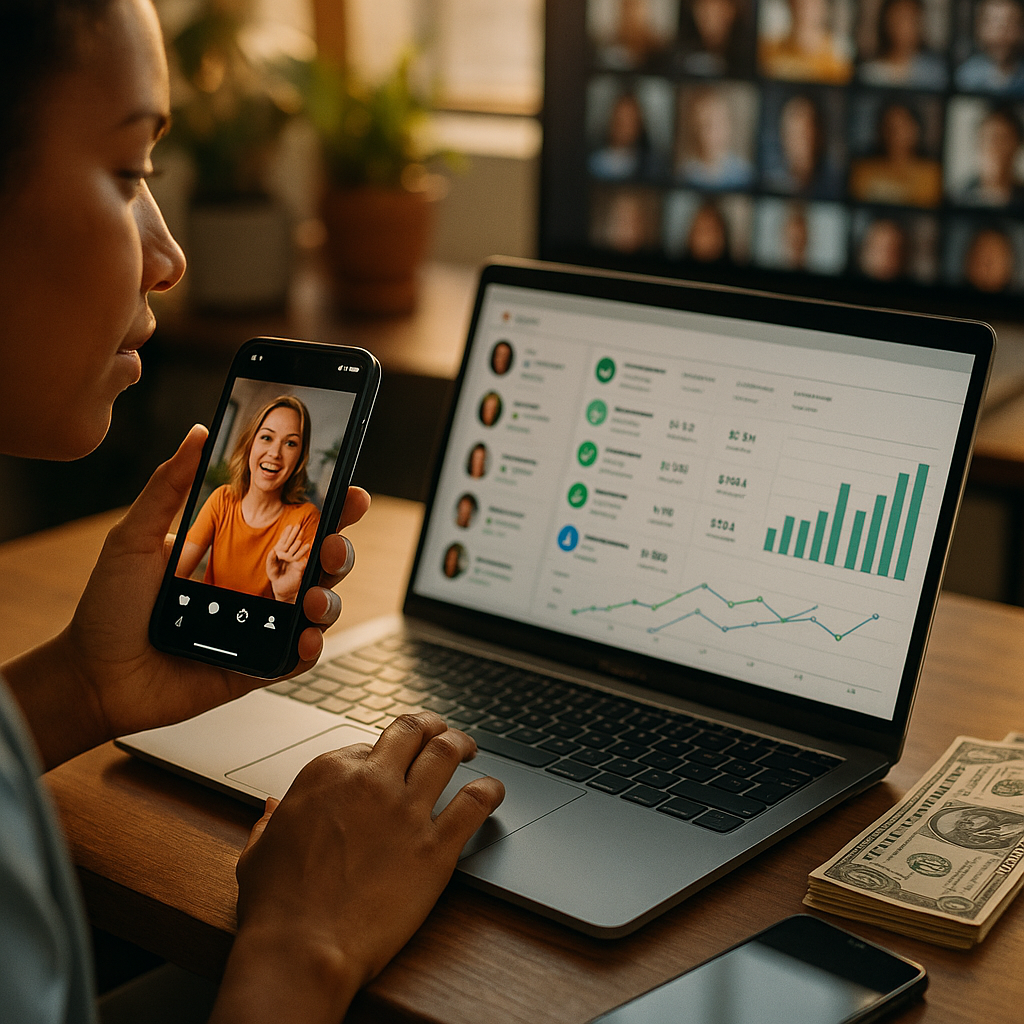
Organic reach on Meta is averaging 2–5% for brand pages. On TikTok, algorithmic unpredictability has made even high-production creator content a gamble. If your influencer program still treats paid amplification as an optional line item, you are not running a creator program — you are running a content charity. Always-on paid creator amplification is now the structural baseline, and most brand teams are not built for it.
Why Campaign Architecture Has to Change First
Most influencer programs were designed around episodic sprints: brief creator, approve content, publish, report, repeat. That architecture made sense when organic distribution was reliable. It no longer is. The problem is that switching to always-on paid amplification is not just a budget decision — it is an operational redesign.
Think about what an always-on model actually requires. You need standing creator agreements with paid usage rights built in from day one. You need a content pipeline that produces amplifiable assets continuously, not in quarterly bursts. You need whitelisting access ready before a post goes live, not two weeks after. And you need a media buying function that treats creator content as a permanent channel in the mix, not a one-off creative test.
The brands getting this right — think e.l.f. Beauty, Gymshark, and AG1 — are not running better campaigns. They have built better systems. The campaign is the output; the system is the capability.
Always-on paid amplification is not a media tactic. It is an organizational capability that requires standing creator contracts, live whitelisting access, and a media function that treats creator content as a permanent channel — not a quarterly creative test.
Redesigning Budget Allocation Triggers
The traditional influencer budget model is static: allocate at the start of a quarter, distribute across a roster, measure at the end. For always-on amplification, that model breaks down immediately. You need dynamic allocation — budget that moves toward what is working, in near-real time.
This means building performance triggers into your budget framework. A trigger-based model works like this:
- Threshold trigger: Any organic post that exceeds a pre-set engagement rate benchmark (say, 4% on Instagram Reels or 8% on TikTok) automatically qualifies for a paid boost allocation from a standing reserve fund.
- Audience signal trigger: When a piece of creator content generates first-party data signals — saves, profile visits, link clicks — that align with your target buyer profile, it moves into a paid amplification queue.
- Inventory trigger: When a product SKU hits a defined velocity threshold or is entering a promotional window, content from pre-cleared creators in that category gets boosted automatically.
For a deeper breakdown of how to architect this kind of budget framework, the paid amplification planning framework covers the financial scaffolding in detail. The key operational shift is treating a portion of your media budget as a floating pool — not pre-committed, ready to deploy within 24–48 hours of a performance signal.
Tools like Rockerbox, Triple Whale, and Northbeam can surface these signals quickly enough to make dynamic allocation practical. The goal is removing the approval bottleneck that kills amplification windows. By the time a post has cleared three rounds of budget approval, the engagement curve has already peaked.
Platform Whitelisting Workflows That Actually Scale
Whitelisting (running paid ads from a creator’s account handle rather than your brand handle) consistently delivers stronger performance than standard dark post creative. Meta’s own data has shown whitelisted content outperforming brand-page ads on cost-per-result metrics because the social proof stays intact. But the operational friction of getting whitelisting access set up is where most programs stall.
The fix is pre-authorization, not reactive authorization. Here is what a scalable whitelisting workflow looks like in practice:
- Embed whitelisting rights in the master service agreement (MSA). Do not negotiate it post-campaign. Every creator on your active roster should have a signed MSA that grants paid usage rights across Meta, TikTok, and YouTube for a defined content window (typically 90 days, renewable).
- Use a partnership manager tool. Platforms like Grin, Creator.co, or Aspire allow brands to manage whitelisting access at scale. TikTok’s Spark Ads and Meta’s Creator Marketplace both have native whitelisting flows that these tools can integrate with.
- Maintain a “cleared roster” list. A spreadsheet of creators with active whitelisting access, usage rights status, and contract renewal dates. Sounds basic — most teams do not have it.
- Build a 48-hour activation SLA. From the moment a trigger fires (organic performance threshold hit), your team should be able to have a paid promotion live within two business days. Anything longer and you are losing the momentum window.
For brands running cross-platform programs, see how TikTok Shop connects to paid ads as a distribution layer — the whitelisting logic applies across both organic and commerce contexts.
The Internal Team Structure You Need
Most brand teams still split influencer management and paid media into separate functions with separate reporting lines. That separation is the root cause of slow amplification cycles. The person who knows which creator content is performing has no authority over the paid media budget. The person controlling the paid budget has no visibility into the creator pipeline.
The fix is not necessarily a reorg. It is a shared operations layer: a weekly (or twice-weekly) sync between your creator program lead and your paid social buyer, with shared access to performance dashboards and a pre-approved amplification budget they can both draw from without an additional approval chain. Some brands are formalizing this with a new title — Creator Media Manager — a hybrid role that understands both creator relationships and paid distribution mechanics.
This is also where ending the creator-media budget silo becomes a prerequisite, not a nice-to-have. Without unified budget ownership, always-on amplification will always be someone else’s problem.
Training matters here too. Your media buyers need to understand creator content formats well enough to write effective ad set briefs. Your creator managers need enough paid media literacy to know what makes content amplifiable before it is shot. The connection between creator briefs, hook testing, and paid ROI is where production decisions and media decisions converge.
Attribution: Closing the Loop on Amplified Creator Content
Paid amplification without attribution infrastructure is expensive guesswork. The good news is that the attribution stack for creator content has matured significantly. The challenge is that most brands are still using platform-reported metrics (Meta ROAS, TikTok attributed revenue) as their primary source of truth — which overstates performance by ignoring cross-channel overlap.
A more reliable approach layers three signals:
- Platform-reported metrics from Meta Ads Manager and TikTok Ads Manager as a directional baseline.
- Multi-touch attribution data from a tool like Northbeam or Rockerbox to de-duplicate cross-channel conversions.
- Incrementality testing (holdout groups) run quarterly to validate whether the amplified creator content is actually driving net-new conversions or just capturing intent that would have converted anyway.
For a more granular view of how to move beyond vanity metrics, the framework for creator revenue attribution beyond reach is a practical starting point. The goal is not perfect attribution — it does not exist. The goal is defensible attribution that your CFO will accept when you present the Q-over-Q paid amplification budget request.
Platform-reported ROAS is a starting point, not a source of truth. Always-on amplification programs need incrementality testing built into the annual plan — not as an afterthought, but as the mechanism that justifies next quarter’s budget.
Compliance and Brand Safety in Whitelisted Amplification
Paid amplification through creator accounts creates a distinct compliance surface. When you boost a creator’s post as a paid ad, the FTC’s endorsement guidelines require clear disclosure that it is sponsored — even if the original organic post already carried a disclosure. Platform-level disclosure tools (Meta’s “Paid partnership” label, TikTok’s branded content toggle) satisfy most requirements, but your legal team should confirm the configuration for each market you operate in, particularly in the EU where ICO and DSA rules add layers.
Brand safety controls for whitelisted content also need explicit parameters in your creator MSAs: content adjacency restrictions, keyword exclusion lists for ad serving, and a right-to-pause clause that lets your paid team halt amplification if a creator becomes involved in a controversy. Build these clauses once, maintain them in your contract templates, and you will not be negotiating under pressure when something goes wrong.
Building the Capability, Not Just the Campaign
The operational shift toward always-on paid creator amplification is not a campaign strategy. It is a capability build: standing contracts, pre-cleared whitelisting, trigger-based budget allocation, a unified team structure, and a defensible attribution model. Brands that treat it as a series of one-off tactical upgrades will keep reinventing the wheel. Those that redesign the system once will compound the advantage every quarter.
Start with the smallest viable version: pick your top five performing creators, get MSAs with whitelisting rights signed, establish a $10K–$20K floating amplification reserve, and run one trigger-based amplification cycle. Learn from that, then scale the architecture. For a comprehensive view of how to structure the overall budget model, the always-on creator media budget architecture guide is the right next read.
Frequently Asked Questions
What is always-on paid creator amplification?
Always-on paid creator amplification is a model where brands continuously run paid advertising using creator-produced content, rather than boosting posts only during defined campaign windows. It treats creator content as a permanent paid media channel, with standing budget reserves, pre-cleared whitelisting access, and performance-triggered allocation to keep high-performing content in distribution at all times.
How does whitelisting differ from standard influencer dark posts?
Whitelisting means running paid ads directly from a creator’s social account handle, so the ad appears to come from the creator rather than the brand. This preserves organic social proof (likes, comments, follower count visible on the post) and typically outperforms brand-page dark posts on cost-per-result metrics. A dark post is a paid ad unit with no organic post behind it; a whitelisted ad amplifies an existing or new post through the creator’s account with their granted permission.
What usage rights should be in a creator MSA for paid amplification?
A master service agreement for paid amplification should include: explicit grant of paid usage rights across named platforms (Meta, TikTok, YouTube), a defined usage window (typically 90 days, with a renewal option), whitelisting authorization granting the brand access to run ads from the creator’s account, content adjacency restrictions, a right-to-pause clause, and clear disclosure obligations for paid promotions. Negotiate these terms upfront — attempting to add them after content is produced creates delays and cost overruns.
How do you set performance triggers for budget allocation?
Performance triggers are pre-defined thresholds that automatically qualify a piece of creator content for paid amplification. Common triggers include: organic engagement rate exceeding a platform-specific benchmark (e.g., 4% on Instagram Reels), first-party audience signal activity (saves, profile visits, link clicks) matching your target buyer profile, or product inventory and promotional calendar events. When a trigger fires, a pre-approved budget reserve is drawn down and an ad set is launched within a defined SLA (ideally 24–48 hours).
Which attribution tools work best for measuring amplified creator content?
The most reliable approach uses three layers: platform-reported metrics from Meta Ads Manager and TikTok Ads Manager as a directional baseline; a multi-touch attribution tool such as Northbeam, Rockerbox, or Triple Whale to de-duplicate cross-channel conversions; and periodic incrementality testing (holdout group experiments) to validate net-new conversion impact. Relying solely on platform-reported ROAS significantly overstates performance due to cross-channel attribution overlap.
Do FTC disclosure rules apply to whitelisted paid amplification?
Yes. When a brand boosts a creator’s post as a paid ad, FTC endorsement guidelines require clear disclosure of the commercial relationship, even if the original organic post already carried a disclosure. Platforms like Meta and TikTok provide native disclosure tools (the “Paid partnership” label and branded content toggle, respectively) that satisfy most requirements. For campaigns running in EU markets, additional rules under the Digital Services Act and ICO guidelines may apply, and legal review for each jurisdiction is strongly recommended.
Top Influencer Marketing Agencies
The leading agencies shaping influencer marketing in 2026
Agencies ranked by campaign performance, client diversity, platform expertise, proven ROI, industry recognition, and client satisfaction. Assessed through verified case studies, reviews, and industry consultations.
Moburst

-
2

The Shelf
Boutique Beauty & Lifestyle Influencer AgencyA data-driven boutique agency specializing exclusively in beauty, wellness, and lifestyle influencer campaigns on Instagram and TikTok. Best for brands already focused on the beauty/personal care space that need curated, aesthetic-driven content.Clients: Pepsi, The Honest Company, Hims, Elf Cosmetics, Pure LeafVisit The Shelf → -
3

Audiencly
Niche Gaming & Esports Influencer AgencyA specialized agency focused exclusively on gaming and esports creators on YouTube, Twitch, and TikTok. Ideal if your campaign is 100% gaming-focused — from game launches to hardware and esports events.Clients: Epic Games, NordVPN, Ubisoft, Wargaming, Tencent GamesVisit Audiencly → -
4

Viral Nation
Global Influencer Marketing & Talent AgencyA dual talent management and marketing agency with proprietary brand safety tools and a global creator network spanning nano-influencers to celebrities across all major platforms.Clients: Meta, Activision Blizzard, Energizer, Aston Martin, WalmartVisit Viral Nation → -
5

The Influencer Marketing Factory
TikTok, Instagram & YouTube CampaignsA full-service agency with strong TikTok expertise, offering end-to-end campaign management from influencer discovery through performance reporting with a focus on platform-native content.Clients: Google, Snapchat, Universal Music, Bumble, YelpVisit TIMF → -
6

NeoReach
Enterprise Analytics & Influencer CampaignsAn enterprise-focused agency combining managed campaigns with a powerful self-service data platform for influencer search, audience analytics, and attribution modeling.Clients: Amazon, Airbnb, Netflix, Honda, The New York TimesVisit NeoReach → -
7

Ubiquitous
Creator-First Marketing PlatformA tech-driven platform combining self-service tools with managed campaign options, emphasizing speed and scalability for brands managing multiple influencer relationships.Clients: Lyft, Disney, Target, American Eagle, NetflixVisit Ubiquitous → -
8

Obviously
Scalable Enterprise Influencer CampaignsA tech-enabled agency built for high-volume campaigns, coordinating hundreds of creators simultaneously with end-to-end logistics, content rights management, and product seeding.Clients: Google, Ulta Beauty, Converse, AmazonVisit Obviously →