


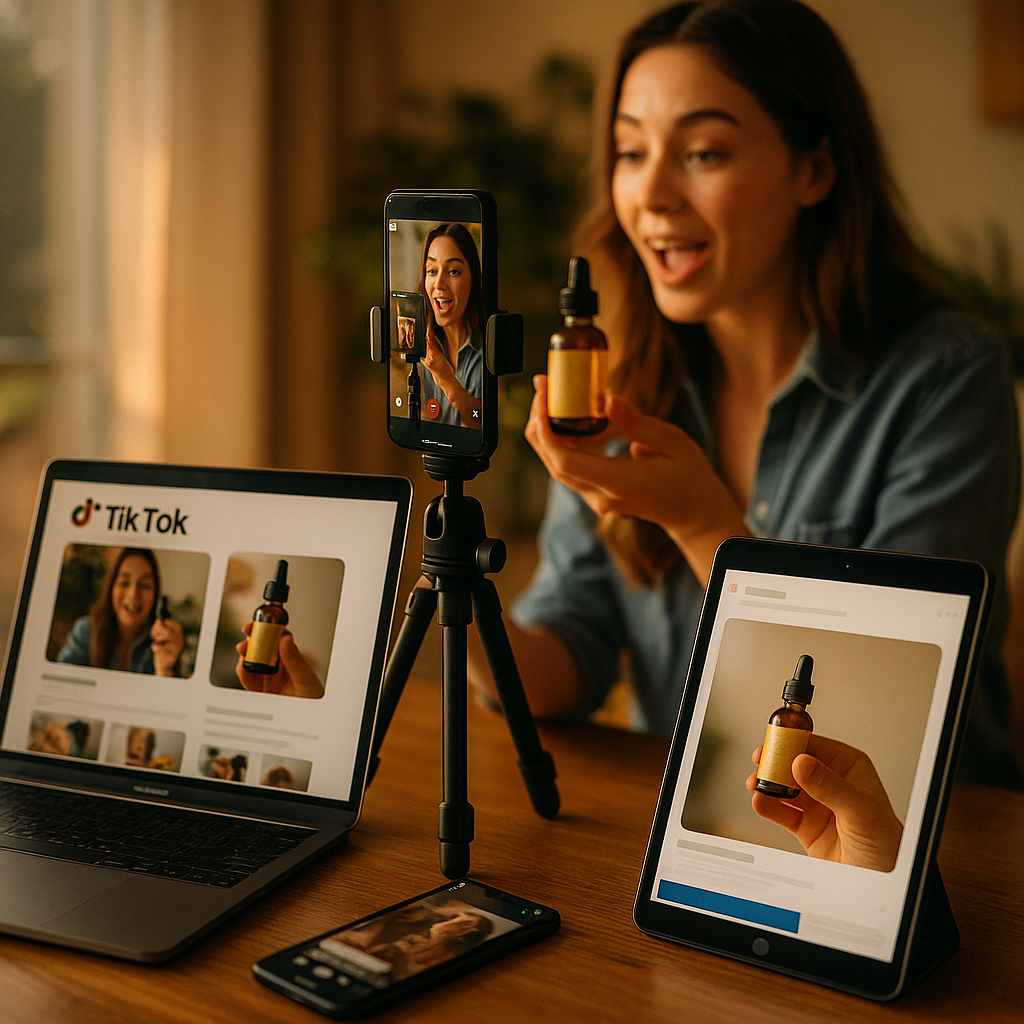
Brands running creator programs on three platforms with three separate budgets and three different measurement frameworks aren’t running a commerce strategy. They’re running three disconnected experiments. Here’s how to design a cross-platform creator distribution plan that treats TikTok Shop, Instagram Shoppable, and paid amplification as one revenue system.
The Silo Problem Is Costing You More Than You Think
Most brand marketing teams inherited their channel structures from a media-buying era that predates social commerce entirely. TikTok Shop sits in the performance budget. Instagram Shoppable content gets managed by the influencer team. Paid amplification lives with the media agency. Nobody owns the full funnel. Nobody is accountable for the gap between a creator’s organic post and the final purchase event.
The result is predictable: duplicated creator fees, inconsistent attribution windows, and content assets that perform on one platform but never get deployed on another. According to data tracked by eMarketer, social commerce revenue is now measured in the hundreds of billions globally, yet most brand measurement stacks still can’t connect a TikTok Shop affiliate sale to the Instagram Reels ad that reinforced it three days earlier. That’s not a technology problem. That’s an organizational design problem.
When TikTok Shop, Instagram Shoppable, and paid amplification are measured in separate budget lines with separate KPIs, you’re not running a unified commerce system. You’re funding three teams to optimize against each other.
What a Unified Creator Commerce System Actually Looks Like
Start with the architecture before you touch the creative brief. A unified system has four components working in sequence: content creation, native distribution, paid amplification, and consolidated attribution. None of these is optional. Remove one and the system breaks.
Content creation means commissioning assets from creators that are platform-native but structurally portable. A TikTok video shot vertically with a strong hook in the first two seconds also works as an Instagram Reel. A product walkthrough designed for TikTok Shop can be repurposed as a Meta Advantage+ Shopping creative. Brands that brief creators for a single platform are paying full production cost for partial utility.
Native distribution means letting creators publish organically first, on their primary platform, before your media team touches anything. Organic performance data is your signal layer. High-view, high-save content tells you which assets deserve paid amplification budget. Low performers get retired. This sequencing is deliberate and matters for hook testing and paid distribution ROI because you’re using real audience behavior, not panel data, to make amplification decisions.
Paid amplification is the multiplier, not the foundation. When brands push paid spend behind organic content that hasn’t been validated, they’re paying to distribute guesses. When they amplify proven content, they’re paying to scale certainty. This distinction is worth writing into your agency contracts explicitly.
Consolidated attribution is where most programs fall apart operationally. You need a single data layer that captures TikTok Shop affiliate conversions, Instagram Shoppable checkout events, and paid ad click-throughs under one creator campaign ID. Triple Whale, Northbeam, and Rockerbox all offer cross-channel views, but they require consistent UTM discipline and creator-level tracking parameters that most influencer managers never set up correctly.
Platform Roles: What Each Channel Should Actually Own
Not all platforms serve the same function in a commerce system, and pretending otherwise leads to misallocated budget.
TikTok Shop is your discovery-to-purchase engine. The platform’s native checkout flow, combined with affiliate creator structures, compresses the funnel in a way no other platform currently matches. Creators with TikTok Shop affiliate links generate direct, attributable revenue without requiring a brand ad account. This is also where impulse categories (beauty, apparel, home goods) convert fastest. If you’re not already using TikTok Shop’s affiliate program, the zero ad spend creator model is worth studying before you layer in paid spend on top.
Instagram Shoppable serves a different function. Instagram’s audience skews toward considered purchases, and the platform’s product tagging infrastructure integrates more cleanly with DTC brand catalogs. It’s better suited for mid-funnel reinforcement: the second or third touchpoint after a consumer has already seen your product on TikTok. Treat it as your credibility channel, not your discovery channel.
Paid amplification (Meta Ads, TikTok Spark Ads, YouTube pre-roll) is the connective tissue. It re-serves high-performing organic creator content to warmed audiences, extends reach beyond a creator’s follower base, and enables retargeting sequences that native organic distribution can’t execute. A Spark Ad on TikTok runs from the creator’s account handle, preserving social proof. That’s a meaningful conversion rate advantage over standard brand-account ads.
Budget Architecture for a Unified System
The most common question practitioners ask: how do you split budget across organic creator fees, TikTok Shop affiliate margins, and paid amplification? There’s no universal ratio, but a functional starting framework allocates roughly 50% to creator fees and content production, 20-30% to paid amplification, and the remainder to platform commerce fees and measurement infrastructure. For brands leaning heavily into TikTok Shop, affiliate commission structures can shift some of that creator fee cost to performance-based payouts, which changes the risk profile significantly.
What matters more than the ratio is the governance structure. Paid amplification budget should report to the same team that manages creator relationships, or at minimum, operate under a shared KPI. If your media agency is optimizing for CPM and your influencer team is optimizing for EMV, the two budgets will work against each other. For a more detailed framework on aligning these budget lines, the paid amplification planning guide covers the operational mechanics of keeping these investments coordinated.
One structural move that consistently improves performance: give your creator commerce lead approval authority over which organic posts get amplified. Not the media planner. Not the brand manager. The person closest to the content quality decision should control the amplification gate.
Attribution: The Technical Problem You Can’t Skip
Cross-platform attribution in social commerce is genuinely hard. TikTok Shop has its own attribution window (default 7-day click). Meta’s Advantage Shopping campaigns use a different window. Organic creator posts tracked via affiliate links report differently than paid click-through conversions. When you stack all three, you get overlapping credit claims that overstate total revenue and make ROAS calculations unreliable.
The practical fix is to standardize on last-touch attribution for commerce conversions while running a parallel incrementality test to understand true lift. Tools like Northbeam or Triple Whale can normalize attribution windows across platforms. For brands running significant paid volume, a holdout test structure (suppressing paid amplification for a defined audience segment) gives you the cleanest read on whether the paid layer is actually driving incremental sales or just claiming credit for organic-driven purchases.
This is also where clean first-party data becomes non-negotiable. If your customer data platform isn’t receiving purchase events from both TikTok Shop and Instagram Shoppable checkouts, you’re flying attribution blind. Revenue attribution beyond reach requires a data infrastructure decision before it becomes a reporting decision.
Operational Pitfalls Brands Hit at Scale
A few patterns that consistently break unified commerce systems when brands try to scale them:
- Creator whitelisting rights not secured upfront. If you can’t run a Spark Ad from a creator’s handle, you lose the social proof advantage of paid amplification entirely. Build usage and whitelisting rights into every creator contract before content goes live.
- Platform-specific briefs that produce non-portable content. A creator who shoots 60-second horizontal content for YouTube Shorts can’t be repurposed on TikTok Shop. Brief for the system, not the platform.
- Attribution tool fragmentation. Running Triple Whale for DTC revenue and a separate influencer platform for EMV tracking creates two disconnected performance narratives. Consolidate into one source of truth.
- Treating paid amplification as a rescue mechanism. Some teams only push paid spend behind underperforming organic content to “save” a campaign. This is backwards. Amplify your best content, not your struggling content.
For a broader look at how silo destruction applies across the entire creator economy investment structure, the CMO-level silo playbook addresses the organizational redesign required to make unified systems sustainable. And if you’re building the operational workflow layer, the creator workflow and commerce attribution guide is a practical operational reference.
The brands winning at social commerce aren’t spending more. They’re spending in a system. Every creator asset, every organic post, every paid dollar is part of a single coordinated play with one attribution spine running through all of it.
For compliance and disclosure requirements as you scale cross-platform creator programs, the FTC endorsement guidelines apply across all three channel types, including TikTok Shop affiliate links, which require clear and conspicuous disclosure regardless of platform.
Your immediate next step: audit your current creator program to identify whether TikTok Shop, Instagram Shoppable, and paid amplification share a single campaign ID and attribution window. If they don’t, that’s the first structural fix. Everything else is optimization on top of a broken foundation.
FAQs
What is a cross-platform creator distribution plan?
A cross-platform creator distribution plan is a structured approach to deploying creator content across multiple social commerce platforms (such as TikTok Shop, Instagram Shoppable, and paid amplification channels) under a single strategic framework, shared budget governance, and unified attribution system, rather than managing each platform as a separate investment.
How should brands split budget between TikTok Shop, Instagram Shoppable, and paid amplification?
A functional starting allocation is approximately 50% to creator fees and content production, 20-30% to paid amplification, and the remainder to platform commerce fees and measurement infrastructure. For TikTok Shop-heavy programs, affiliate commission structures can shift some creator fee cost to performance-based payouts, reducing upfront risk.
How do you attribute revenue across TikTok Shop and Instagram Shoppable simultaneously?
Standardize on a single attribution window across platforms using a cross-channel analytics tool such as Triple Whale or Northbeam. Run a parallel holdout or incrementality test to separate true incremental lift from credit overlap between organic affiliate conversions and paid ad click-throughs. Ensure your customer data platform is receiving purchase events from both platforms.
Why does paid amplification need to be part of a creator commerce system?
Paid amplification extends the reach of high-performing organic creator content beyond a creator’s follower base, enables retargeting sequences, and re-serves validated content to warmed audiences. Without it, organic content reaches only the creator’s existing audience. With it, proven content scales to net-new potential buyers with measurable ROAS.
What is creator whitelisting and why does it matter for cross-platform distribution?
Creator whitelisting (also called allowlisting) gives brands permission to run paid ads directly from a creator’s social account handle rather than a brand account. On TikTok, this is done through Spark Ads. Whitelisted ads retain the creator’s social proof (follower count, organic comments, likes), which typically improves conversion rates compared to standard brand-account ads. Usage and whitelisting rights must be secured in the creator contract before content is published.
Top Influencer Marketing Agencies
The leading agencies shaping influencer marketing in 2026
Agencies ranked by campaign performance, client diversity, platform expertise, proven ROI, industry recognition, and client satisfaction. Assessed through verified case studies, reviews, and industry consultations.
Moburst

-
2

The Shelf
Boutique Beauty & Lifestyle Influencer AgencyA data-driven boutique agency specializing exclusively in beauty, wellness, and lifestyle influencer campaigns on Instagram and TikTok. Best for brands already focused on the beauty/personal care space that need curated, aesthetic-driven content.Clients: Pepsi, The Honest Company, Hims, Elf Cosmetics, Pure LeafVisit The Shelf → -
3

Audiencly
Niche Gaming & Esports Influencer AgencyA specialized agency focused exclusively on gaming and esports creators on YouTube, Twitch, and TikTok. Ideal if your campaign is 100% gaming-focused — from game launches to hardware and esports events.Clients: Epic Games, NordVPN, Ubisoft, Wargaming, Tencent GamesVisit Audiencly → -
4

Viral Nation
Global Influencer Marketing & Talent AgencyA dual talent management and marketing agency with proprietary brand safety tools and a global creator network spanning nano-influencers to celebrities across all major platforms.Clients: Meta, Activision Blizzard, Energizer, Aston Martin, WalmartVisit Viral Nation → -
5

The Influencer Marketing Factory
TikTok, Instagram & YouTube CampaignsA full-service agency with strong TikTok expertise, offering end-to-end campaign management from influencer discovery through performance reporting with a focus on platform-native content.Clients: Google, Snapchat, Universal Music, Bumble, YelpVisit TIMF → -
6

NeoReach
Enterprise Analytics & Influencer CampaignsAn enterprise-focused agency combining managed campaigns with a powerful self-service data platform for influencer search, audience analytics, and attribution modeling.Clients: Amazon, Airbnb, Netflix, Honda, The New York TimesVisit NeoReach → -
7

Ubiquitous
Creator-First Marketing PlatformA tech-driven platform combining self-service tools with managed campaign options, emphasizing speed and scalability for brands managing multiple influencer relationships.Clients: Lyft, Disney, Target, American Eagle, NetflixVisit Ubiquitous → -
8

Obviously
Scalable Enterprise Influencer CampaignsA tech-enabled agency built for high-volume campaigns, coordinating hundreds of creators simultaneously with end-to-end logistics, content rights management, and product seeding.Clients: Google, Ulta Beauty, Converse, AmazonVisit Obviously →