


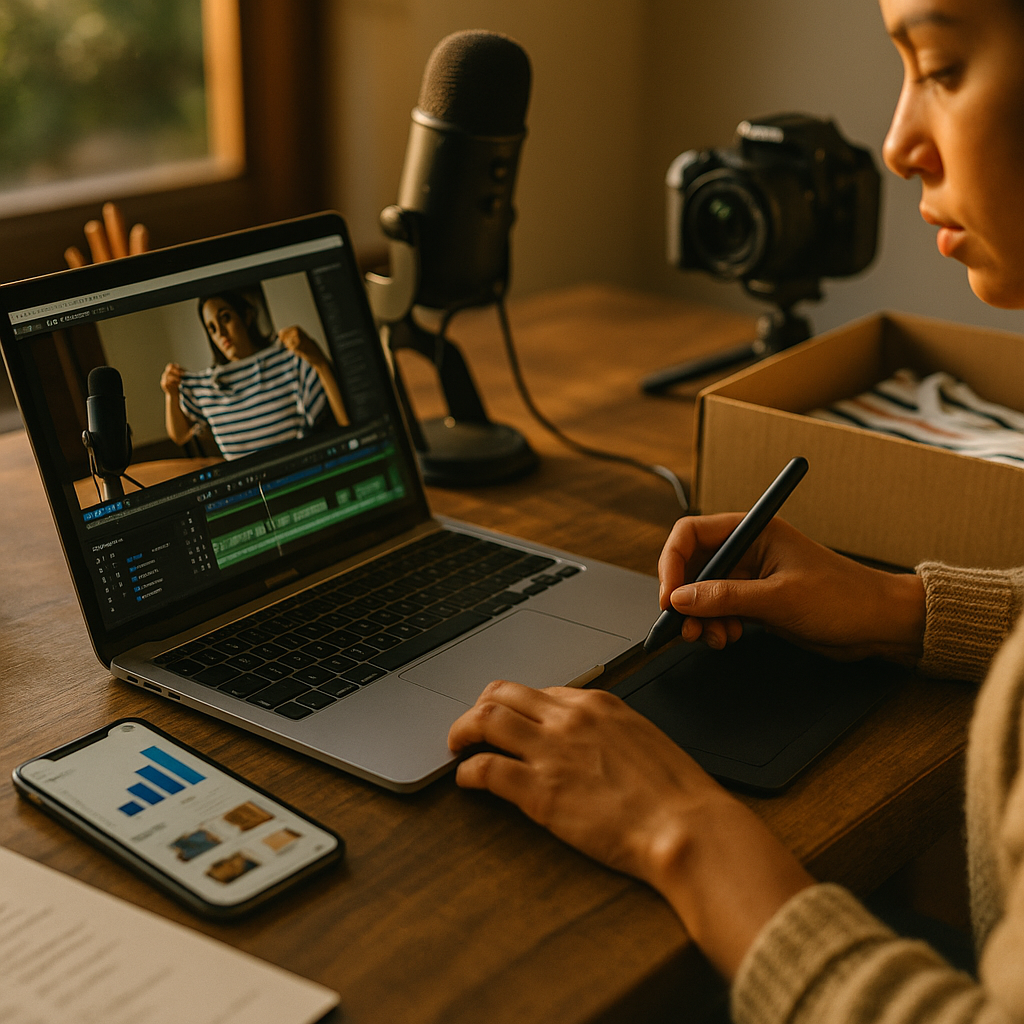
Only 23% of brands can directly attribute revenue to a specific creator activation. That gap isn’t a measurement problem. It’s a structural one. The brands closing it have stopped treating creativity, distribution, and commerce as separate workstreams — and built a unified operating model instead.
Why Three Silos Are Killing Your Creator ROI
The typical brand runs creator programs across three disconnected teams: the creative team briefs the creator, the media team decides where to amplify, and the analytics team scrambles to connect the dots after the fact. By the time attribution reports land, the campaign is over. The learnings arrive too late to matter.
This is the creator spend silo problem in practice. And it’s expensive. Brands lose compounding value when creative decisions are made without distribution context, when distribution is bought without commerce hooks, and when commerce data never feeds back into the next creative brief. Each handoff creates latency, dilution, and misalignment.
The unified workflow fixes this by collapsing those handoffs into a single operating model where each function informs the others in real time.
What the Unified Workflow Actually Looks Like
This isn’t a theory. It’s an operating architecture with three interdependent layers.
Layer 1: Creative Planning With Distribution Intent. Every creator brief is written with platform destination and paid amplification potential baked in. That means a long-form YouTube review isn’t just a brand awareness play. It’s structured to yield a 15-second hook for TikTok, a carousel for LinkedIn (if B2B), and a testimonial clip for paid retargeting. The creator is briefed on all three outputs upfront. Understanding hook testing and paid distribution ROI at the brief stage is what separates programs that scale from ones that stall.
Layer 2: Multi-Platform Distribution Mapped to Funnel Stage. Distribution is no longer a post-production decision. Platform selection is made during campaign architecture, based on where target audiences sit in the purchase funnel. Awareness content goes wide on TikTok and YouTube Shorts. Consideration content gets amplified through Meta’s paid channels using creator whitelisting. Conversion content lives on TikTok Shop or lands on brand.com with tracked UTMs and first-party pixels.
Layer 3: Commerce Attribution Wired From Day One. Attribution parameters are set before the creator hits record. Promo codes, affiliate links, pixel events, and UTM structures are pre-assigned to each asset and each platform destination. There’s no reverse-engineering after launch. The active partnership model for UGC and paid distribution depends entirely on this pre-wiring. Without it, the unified workflow is just a better-organized version of the old silo model.
Attribution isn’t a reporting function. It’s a campaign design function. Brands that instrument commerce tracking before creative production begins consistently outperform those that add it post-launch.
The Operational Infrastructure Required
Building this model requires investment in three areas that most brands underestimate.
MarTech stack integration. Your creator management platform, your paid media DSP, and your e-commerce analytics layer need to talk to each other. Tools like Sprout Social for organic performance monitoring, combined with platforms like Triple Whale or Northbeam for multi-touch attribution, give brands the signal fidelity needed to close the loop. Without clean data pipelines, the workflow collapses into opinion-based decision-making. That’s why clean MarTech data is foundational, not optional.
Creator contracts that include distribution rights. The unified workflow requires licensing clarity upfront. Whitelisting rights, paid amplification permissions, and cross-platform usage rights must be negotiated before activation. Retroactive rights clearance kills campaign velocity and inflates costs. When you’re managing a scaled program, standardized contract terms for distribution rights should be part of every deal structure.
Internal alignment between creative, media, and performance teams. This is often the hardest part. Most organizations have incentive structures that reward each team for different KPIs: creative for engagement rates, media for reach and frequency, performance for ROAS. The unified workflow requires a shared KPI framework where all three teams are accountable to a common commercial outcome. Some brands have achieved this by creating a dedicated “creator growth” function that sits across all three disciplines.
Commerce Attribution: The Piece Most Brands Get Wrong
Let’s be specific. Brands running this model correctly are using a layered attribution approach: last-click for direct conversion content, view-through for awareness-stage creator content, and incrementality testing for always-on programs. No single model works across all creator content types because the purchase journey varies by funnel stage and platform.
The episodic sponsorship attribution guide is particularly relevant here. Brands running serialized creator content (recurring integrations across podcast episodes, weekly YouTube series, or ongoing TikTok partnerships) see attribution complexity compound over time. A viewer who converted in week six was likely influenced by weeks one through five. Single-event attribution misses that entirely.
The solution: cohort-based attribution that tracks audience behavior from first creator touchpoint to conversion, across platforms, over a defined window. Platforms like eMarketer have documented that multi-touch attribution models outperform last-click by a significant margin in creator-led campaigns precisely because creator content’s influence window is longer than a paid ad’s.
Scaling the Model Without Losing Creative Quality
Scale is where unified workflows break down if not designed properly. When brands try to systematize creative at volume, they often strip out the authenticity that made the original content perform. The answer isn’t to ignore process. It’s to protect creative latitude while systematizing everything around it.
Practically, this means building modular brief templates that define the commercial and distribution parameters but leave the creative execution open. Define the call-to-action, the platform destinations, the attribution hooks, and the performance floor for paid amplification eligibility. Leave the format, tone, and story to the creator.
For brands scaling to hundreds of activations per quarter, an always-on creator media model provides the budget architecture to support this systematization. It also makes the unified workflow financially sustainable rather than a campaign-by-campaign exercise.
The brands winning the creator economy aren’t running better campaigns. They’re running better operating systems. Creativity is the input; the unified workflow is the engine that converts it into compounding commercial returns.
A Real-World Pattern Worth Watching
Several DTC brands in the beauty and wellness space have implemented versions of this model by partnering with a small roster of creators (10 to 20) who operate almost like embedded media partners. Each creator produces content on a defined cadence. Each piece of content is pre-structured for multi-platform deployment. Attribution is tracked from first organic post through paid amplification to conversion event.
The result: significantly lower CAC on paid amplification of creator content versus brand-produced paid creative, and a measurable lift in organic search and social following attributable to ongoing creator activity. Creator co-ownership partnerships take this a step further by aligning incentives structurally, turning creators into stakeholders in the commercial outcome rather than just content suppliers.
The brands that will dominate creator-led growth over the next 18 months aren’t the ones with the biggest creator budgets. They’re the ones who’ve built the infrastructure to extract maximum value from each activation. Start by auditing one campaign for all three layers: did creative planning include distribution intent? Was attribution wired before launch? Were commerce results fed back into the next brief? If the answer to any of those is no, you’ve found your starting point.
Frequently Asked Questions
What is a unified creativity-distribution-commerce workflow for creator marketing?
It’s an operating model that integrates creative brief development, multi-platform distribution planning, and commercial attribution into a single, coordinated process rather than treating each as a sequential, siloed function. The goal is to maximize ROI from each creator activation by ensuring that content is designed for distribution and attribution from the start.
Why do most brands struggle with creator attribution?
Most brands set up attribution measurement after a campaign launches, which means they’re reverse-engineering tracking onto content that wasn’t built with commerce instrumentation in mind. UTM structures, affiliate links, promo codes, and pixel events need to be assigned before the creator begins production. Post-launch attribution setup is the most common cause of unreliable creator ROI data.
Which tools support a unified creator workflow?
The stack varies by brand size, but a functional setup typically includes a creator management platform (such as Grin, Aspire, or Creator.co), a multi-touch attribution tool (such as Triple Whale, Northbeam, or Rockerbox), a paid media platform for creator whitelisting (Meta Ads Manager, TikTok Ads), and a first-party data layer connected to your e-commerce platform. The key requirement is that data flows between all layers without manual export.
How do you maintain creative quality when systematizing creator programs at scale?
By building modular brief templates that lock down commercial and distribution parameters while leaving creative execution open to the creator. Define the call-to-action, the platform destinations, the attribution hooks, and the minimum performance threshold for paid amplification. Leave format, tone, storytelling, and delivery to the creator. Systematize the infrastructure, not the creativity.
How does multi-platform distribution fit into creator campaign planning?
Platform selection should happen at the campaign architecture stage, not post-production. Each creator asset should be mapped to a specific funnel stage and platform: awareness content distributed organically and via paid reach on short-form video platforms, consideration content amplified through whitelisted paid social, and conversion content directed to commerce-enabled destinations such as TikTok Shop, brand landing pages, or retailer PDPs with full UTM tracking.
Top Influencer Marketing Agencies
The leading agencies shaping influencer marketing in 2026
Agencies ranked by campaign performance, client diversity, platform expertise, proven ROI, industry recognition, and client satisfaction. Assessed through verified case studies, reviews, and industry consultations.
Moburst

-
2

The Shelf
Boutique Beauty & Lifestyle Influencer AgencyA data-driven boutique agency specializing exclusively in beauty, wellness, and lifestyle influencer campaigns on Instagram and TikTok. Best for brands already focused on the beauty/personal care space that need curated, aesthetic-driven content.Clients: Pepsi, The Honest Company, Hims, Elf Cosmetics, Pure LeafVisit The Shelf → -
3

Audiencly
Niche Gaming & Esports Influencer AgencyA specialized agency focused exclusively on gaming and esports creators on YouTube, Twitch, and TikTok. Ideal if your campaign is 100% gaming-focused — from game launches to hardware and esports events.Clients: Epic Games, NordVPN, Ubisoft, Wargaming, Tencent GamesVisit Audiencly → -
4

Viral Nation
Global Influencer Marketing & Talent AgencyA dual talent management and marketing agency with proprietary brand safety tools and a global creator network spanning nano-influencers to celebrities across all major platforms.Clients: Meta, Activision Blizzard, Energizer, Aston Martin, WalmartVisit Viral Nation → -
5

The Influencer Marketing Factory
TikTok, Instagram & YouTube CampaignsA full-service agency with strong TikTok expertise, offering end-to-end campaign management from influencer discovery through performance reporting with a focus on platform-native content.Clients: Google, Snapchat, Universal Music, Bumble, YelpVisit TIMF → -
6

NeoReach
Enterprise Analytics & Influencer CampaignsAn enterprise-focused agency combining managed campaigns with a powerful self-service data platform for influencer search, audience analytics, and attribution modeling.Clients: Amazon, Airbnb, Netflix, Honda, The New York TimesVisit NeoReach → -
7

Ubiquitous
Creator-First Marketing PlatformA tech-driven platform combining self-service tools with managed campaign options, emphasizing speed and scalability for brands managing multiple influencer relationships.Clients: Lyft, Disney, Target, American Eagle, NetflixVisit Ubiquitous → -
8

Obviously
Scalable Enterprise Influencer CampaignsA tech-enabled agency built for high-volume campaigns, coordinating hundreds of creators simultaneously with end-to-end logistics, content rights management, and product seeding.Clients: Google, Ulta Beauty, Converse, AmazonVisit Obviously →