


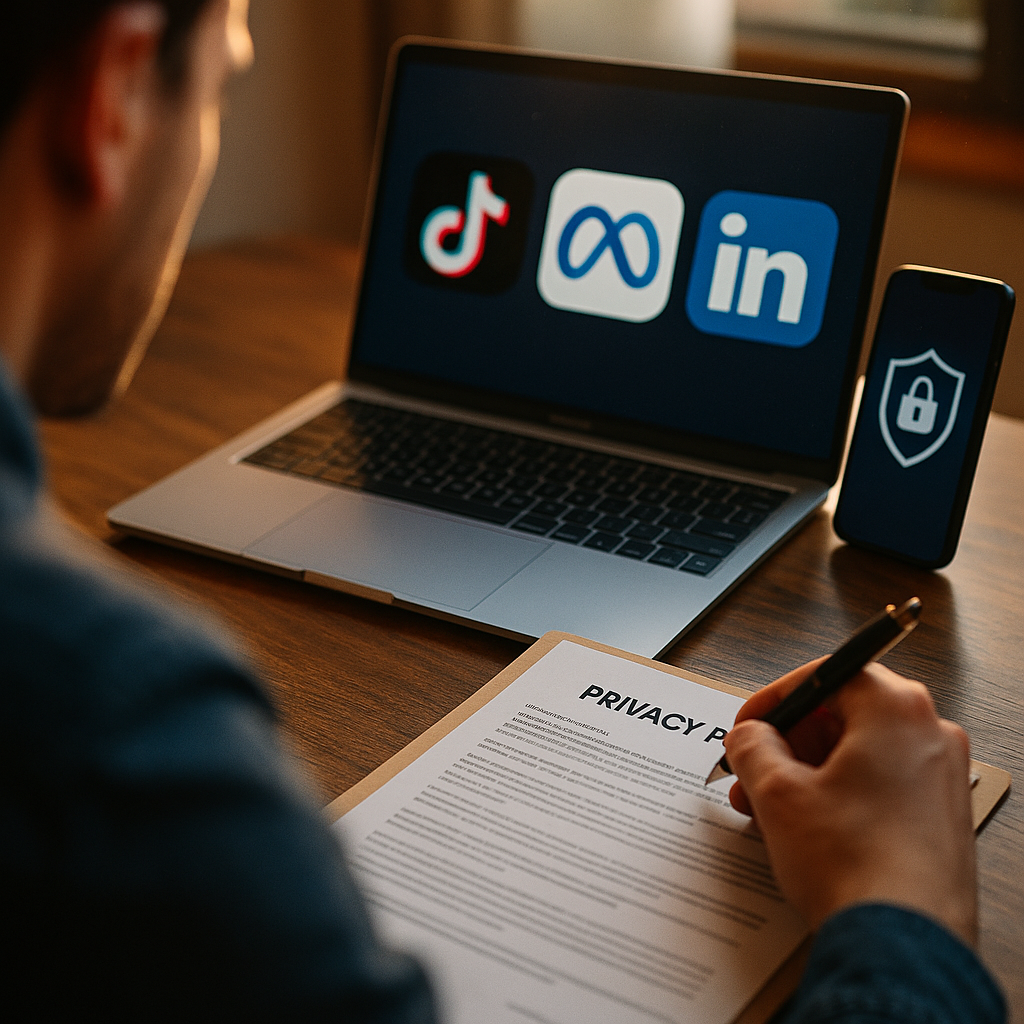
Social commerce generated over $600 billion globally, and regulators are now auditing exactly how brands collect, store, and share the audience data powering those transactions. If your compliance stack treats TikTok Shop, Instagram Shoppable, and LinkedIn Ads as interchangeable data pipes, you have a serious gap — and the social commerce privacy compliance stack your team builds today will determine your legal exposure tomorrow.
Why Platform-Level Identifier Differences Actually Matter to Compliance Teams
Most brand teams think about privacy compliance at the campaign level: get consent, run the ad, move on. That mental model breaks down the moment you operate across multiple social commerce platforms simultaneously, because each platform collects meaningfully different audience identifier data — and that difference drives entirely different compliance obligations.
TikTok Shop collects device identifiers (OAID, device fingerprint), behavioral signals tied to video engagement, in-app purchase history, and increasingly, biometric-adjacent data like voice patterns from TikTok Live shopping events. The data architecture here is unusually opaque, which is why brands working in this ecosystem should already be familiar with TikTok’s data transparency risks before building consent flows around it.
Instagram Shoppable collects Meta pixel data, social graph identifiers, cross-app behavioral data (including WhatsApp and Messenger activity if the user is linked), and purchase intent signals from product tag interactions. Meta’s Business Tools Terms impose specific obligations on brands that send customer data back through the Conversions API — obligations most marketing teams have not fully actioned.
LinkedIn Ads collects professional identity data: job title, company size, seniority, industry, and inferred career transitions. That professional context makes LinkedIn identifiers uniquely sensitive under B2B data regulations, particularly where EU GDPR, UK GDPR, and emerging state-level US privacy laws treat employment-related data with heightened scrutiny.
Running the same consent banner across all three platforms is not a compliance strategy. It is a liability. Each platform’s identifier taxonomy requires a distinct consent disclosure, a distinct data retention schedule, and a distinct opt-out mechanism.
Consent Mechanism Configuration: What “Valid Consent” Looks Like Per Platform
Consent under GDPR Article 7 must be specific, informed, and unambiguous. That means your consent banner cannot say “we use your data to improve your experience” and call it done. For social commerce, specificity requires naming the data types being collected on each platform and the downstream purposes for which they are used.
For TikTok Shop integrations, consent disclosures need to reference device-level identifiers and the possibility of cross-border data transfers, given FTC and international regulatory scrutiny of TikTok’s data residency practices. Brands using TikTok’s Events API to pass conversion data must disclose that server-side data sharing explicitly, separate from client-side pixel consent.
For Instagram Shoppable, the Meta Pixel and Conversions API create a layered consent problem. Client-side consent (cookie banner) covers browser-level tracking, but server-side Conversions API flows can transmit hashed email addresses and phone numbers even after a user has declined cookies. That gap is now an active enforcement area for the UK ICO and EU Data Protection Authorities. Brands must audit whether their CAPI implementation honors consent signals passed through the Meta Consent Mode integration.
LinkedIn Ads operates under a different consent framework because its core data is professional rather than behavioral. However, LinkedIn’s Insight Tag still functions as a tracking pixel, and brands running retargeting campaigns against website visitors must disclose that tracking under GDPR and under CCPA/CPRA for California users. LinkedIn’s Campaign Manager provides a Conversion Tracking consent mode, but it is not enabled by default — your team must configure it.
Data Retention Policies Across Three Different Data Architectures
Here is where most brand compliance programs fail. Consent is documented. Retention is not.
Each platform retains audience identifier data on different schedules, and your internal data retention policy must map to the shortest defensible window, not the most convenient one. TikTok’s ad platform retains Custom Audience data for up to 180 days; Instagram’s Meta Business Suite retains Custom Audiences indefinitely unless manually deleted; LinkedIn’s Matched Audiences expire after 90 days of no activity but can be refreshed automatically through CRM integrations if you have not explicitly disabled that feature.
The practical implication: if a user exercises a right-to-erasure request under GDPR or a deletion request under CCPA, your team needs documented workflows that reach into all three platforms simultaneously. A deletion from your CRM does not cascade automatically to Meta Custom Audiences or LinkedIn Matched Audiences. That requires manual action or API-driven deletion workflows — and the audit trail to prove it.
Brands building privacy-centric marketing operations are already treating data retention as a scheduled compliance event, not a reactive one. Quarterly audience list audits, documented deletion logs, and platform-specific retention schedules mapped to your privacy policy are the operational minimum.
User Choice Controls: The Gap Between What Platforms Offer and What Brands Must Implement
Each platform provides opt-out mechanisms, but none of them are sufficient on their own to satisfy brand-level compliance obligations — particularly under the EU’s Digital Services Act and CPRA’s expanded opt-out rights for sensitive personal information.
For an overview of how DSA obligations specifically affect brand campaigns run through European audiences, the EU DSA compliance guide for US brands provides a solid operational framework. The short version: if your social commerce campaign reaches EU users, the platform’s built-in opt-out controls are a floor, not a ceiling.
Your brand needs to implement:
- A unified preference center that lets users opt out of data sharing with TikTok, Meta, and LinkedIn simultaneously, with a single interaction. Fragmented platform-by-platform opt-outs create user experience friction that regulators increasingly treat as a dark pattern.
- Signal propagation workflows that push opt-out signals from your preference center to each platform’s API in real time, not in batch updates. LinkedIn’s Conversions API, Meta’s Conversions API, and TikTok’s Events API all accept consent signal parameters — configure them.
- Documented consent versioning so that when your privacy policy or data sharing practices change, you can identify which users consented under which version and trigger re-consent flows where required.
The FTC’s existing disclosure guidance and its current enforcement priorities around social commerce (see the relevant framework for TikTok Shop and Instagram Shoppable disclosures) signal that user choice controls will face increasing scrutiny as a component of unfair or deceptive practices enforcement, not just a GDPR concern.
User choice controls are not a UX feature. They are a legal mechanism. If users cannot exercise meaningful opt-out rights across your entire social commerce stack with a single, clear action, your compliance posture is incomplete.
Building the Stack: A Practical Configuration Sequence
Start with a data mapping exercise that inventories every identifier type flowing into and out of each platform integration. Map identifiers to their legal basis (consent, legitimate interest, or contract performance), their retention schedule, and their deletion pathway. This does not need to be a six-month project — a focused two-week audit with your legal, martech, and media buying teams can produce a defensible baseline.
Next, implement a Consent Management Platform (CMP) that integrates with all three platforms via their respective APIs. OneTrust, Usercentrics, and Cookiebot are the enterprise-grade options; each has pre-built connectors for Meta, TikTok, and LinkedIn. The CMP must be configured to pass consent signals server-side, not just client-side, to close the Conversions API gap described above.
Then build your data subject request (DSR) workflows. Every deletion request, access request, and portability request must have a documented response workflow that includes platform-level actions. Log everything. Regulators want to see evidence of process, not just policy documents.
Finally, schedule quarterly compliance reviews tied to platform policy updates. All three platforms have updated their data policies significantly over the past eighteen months. Brands that set their compliance configuration once and walk away will find themselves out of alignment with updated platform terms — and potentially out of alignment with updated regulatory guidance from the FTC and EU authorities.
Brands managing creator partnerships alongside paid social commerce should also ensure that AI-generated UGC disclosure requirements are incorporated into the same compliance framework. The data and disclosure compliance stacks are increasingly interdependent.
Your next step: schedule a 90-minute cross-functional session with legal, martech, and media buying to map your current consent flows against each platform’s identifier data types. That session will surface the gaps faster than any compliance audit.
FAQs
Does each social commerce platform require a separate consent disclosure?
Yes. Because TikTok Shop, Instagram Shoppable, and LinkedIn Ads collect materially different types of audience identifier data, GDPR’s specificity requirement means your consent disclosure must accurately describe each platform’s data collection practices. A single generic consent banner covering all three is unlikely to satisfy regulators, particularly EU Data Protection Authorities who have issued guidance requiring platform-specific disclosures for advertising trackers.
What happens if a user opts out on one platform but not the others?
The opt-out applies only to the platform where it was exercised, unless your brand has implemented a unified preference center with cross-platform signal propagation. Brands are responsible for ensuring that consent signals passed through TikTok Events API, Meta Conversions API, and LinkedIn Conversions API reflect each user’s current preference. A fragmented opt-out experience can constitute a dark pattern under DSA and CPRA enforcement frameworks.
How long can brands retain social commerce audience data?
Retention periods must be tied to the original purpose for which data was collected and must be documented in your privacy policy. As a practical guideline, audience lists used for retargeting should not exceed 90-180 days without a documented business justification and a re-consent mechanism. LinkedIn Matched Audiences auto-expire at 90 days; Meta Custom Audiences do not auto-expire, which means brands must implement manual or API-driven deletion workflows to comply with GDPR and CCPA retention limits.
Does CCPA apply to LinkedIn Ads audience data?
Yes, if your LinkedIn Ads campaigns target California residents and your brand meets CCPA/CPRA revenue or data volume thresholds. CPRA expanded the definition of sensitive personal information to include certain professional and employment-related data, which means LinkedIn’s professional identifier data may trigger heightened opt-out rights for California users, specifically the right to limit use and disclosure of sensitive personal information.
What is the biggest compliance gap brands miss in social commerce?
The most common gap is failing to extend consent signals to server-side API integrations. Brands configure cookie consent banners for client-side tracking but continue to pass hashed customer data through Meta’s Conversions API or TikTok’s Events API regardless of whether consent was granted. This creates a direct conflict with GDPR and CCPA, and it is an active enforcement focus for EU Data Protection Authorities and the UK ICO.
Top Influencer Marketing Agencies
The leading agencies shaping influencer marketing in 2026
Agencies ranked by campaign performance, client diversity, platform expertise, proven ROI, industry recognition, and client satisfaction. Assessed through verified case studies, reviews, and industry consultations.
Moburst

-
2

The Shelf
Boutique Beauty & Lifestyle Influencer AgencyA data-driven boutique agency specializing exclusively in beauty, wellness, and lifestyle influencer campaigns on Instagram and TikTok. Best for brands already focused on the beauty/personal care space that need curated, aesthetic-driven content.Clients: Pepsi, The Honest Company, Hims, Elf Cosmetics, Pure LeafVisit The Shelf → -
3

Audiencly
Niche Gaming & Esports Influencer AgencyA specialized agency focused exclusively on gaming and esports creators on YouTube, Twitch, and TikTok. Ideal if your campaign is 100% gaming-focused — from game launches to hardware and esports events.Clients: Epic Games, NordVPN, Ubisoft, Wargaming, Tencent GamesVisit Audiencly → -
4

Viral Nation
Global Influencer Marketing & Talent AgencyA dual talent management and marketing agency with proprietary brand safety tools and a global creator network spanning nano-influencers to celebrities across all major platforms.Clients: Meta, Activision Blizzard, Energizer, Aston Martin, WalmartVisit Viral Nation → -
5

The Influencer Marketing Factory
TikTok, Instagram & YouTube CampaignsA full-service agency with strong TikTok expertise, offering end-to-end campaign management from influencer discovery through performance reporting with a focus on platform-native content.Clients: Google, Snapchat, Universal Music, Bumble, YelpVisit TIMF → -
6

NeoReach
Enterprise Analytics & Influencer CampaignsAn enterprise-focused agency combining managed campaigns with a powerful self-service data platform for influencer search, audience analytics, and attribution modeling.Clients: Amazon, Airbnb, Netflix, Honda, The New York TimesVisit NeoReach → -
7

Ubiquitous
Creator-First Marketing PlatformA tech-driven platform combining self-service tools with managed campaign options, emphasizing speed and scalability for brands managing multiple influencer relationships.Clients: Lyft, Disney, Target, American Eagle, NetflixVisit Ubiquitous → -
8

Obviously
Scalable Enterprise Influencer CampaignsA tech-enabled agency built for high-volume campaigns, coordinating hundreds of creators simultaneously with end-to-end logistics, content rights management, and product seeding.Clients: Google, Ulta Beauty, Converse, AmazonVisit Obviously →