


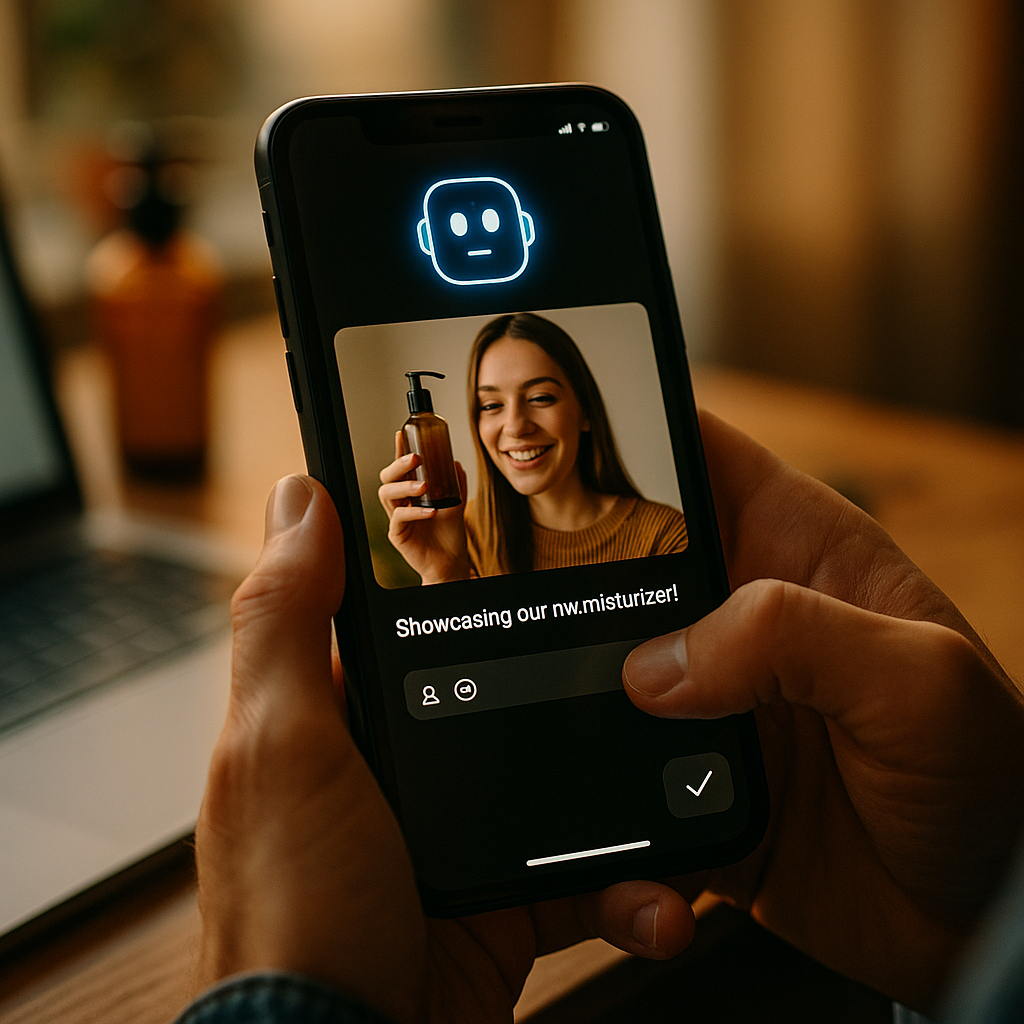
Your Editing Time Is Irrelevant to the FTC
Nearly 62% of marketers now use some form of AI assistance when producing or repurposing user-generated content for paid social campaigns, according to data from Influencer Marketing Hub. Yet most brand legal teams are still asking the wrong compliance question: how much did a human touch this? The FTC’s evolving standard for AI-generated UGC disclosure doesn’t care about your editing hours. It cares about what a reasonable consumer would believe.
The Audience-Perception Trigger, Explained
Under the FTC’s current endorsement and testimonial guidance, the disclosure obligation activates when the nature of a communication would not be clear to a reasonable consumer without a disclosure. That framing was written before generative AI became a production tool, but its logic maps cleanly onto AI-assisted content. The question regulators apply is not “was this generated by a machine?” but rather “would a reasonable person, seeing this content, understand it was AI-generated or AI-modified to the extent that its authenticity as organic consumer experience is in question?”
That is a materially different compliance test than the one most brand teams are using. Plenty of brand-side workflows today involve a real consumer submitting a genuine review, a copywriter tightening the language with an AI writing tool, and a designer polishing the visual with an AI image enhancer before it goes live as a shoppable TikTok asset. The brand’s instinct is: a real person wrote it, we just cleaned it up. The FTC’s question is: would the consumer viewing that asset believe it represents unmediated human experience?
The disclosure trigger is not the degree of AI involvement in production. It is whether a reasonable audience member would be deceived about the human authenticity of the content they are seeing.
This distinction matters enormously in social commerce, where the persuasive power of testimonials and reviews derives almost entirely from their perceived authenticity. An AI-polished quote displayed as a “real customer review” on a TikTok Shop product page carries a different deception risk than the same text in a clearly labeled sponsored post. Platform context changes the audience-perception calculus.
What “AI-Assisted” Actually Covers
The spectrum is wider than most brand teams acknowledge. AI assistance in UGC workflows now includes: automated sentiment scoring that selects which reviews surface in campaigns, large language models that rewrite or expand submitted reviews for length or tone, image generation tools that replace a customer’s actual product photo with an AI render of the same product, voice synthesis that converts a written testimonial into a voiceover without the original submitter recording anything, and video avatar tools that put words in a real person’s likeness.
Some of these uses are obviously high-risk. A synthetic voiceover or avatar testimonial from a “customer” who never recorded anything is the most straightforward case for mandatory disclosure. But brands consistently underweight the middle cases. Rewriting a submitted review with GPT-4o or a similar tool, even lightly, changes the content from what the consumer actually said. When that rewritten text runs in a paid shoppable ad framed as authentic customer voice, the gap between consumer perception and reality is exactly what the FTC’s endorsement rules are designed to close.
Understanding how AI provisions in creator contracts intersect with UGC rights is a necessary first step before any AI-assisted testimonial touches a paid placement.
Platform Policies Are Stricter Than You Think
The FTC standard is the floor, not the ceiling. TikTok’s branded content policy requires disclosure of “digitally altered or AI-generated content” within the asset itself, not buried in a caption. Meta’s ad policies require AI-generated or significantly digitally altered imagery in certain ad categories to carry an “AI-generated” label visible to users. These policies apply regardless of whether a human reviewed and approved the output before publishing.
For brands running social commerce through TikTok Shop specifically, the compliance surface is even more complex, because the same UGC asset may simultaneously trigger TikTok’s AI labeling policy, the FTC’s material connection disclosure requirement, and the disclosure rules governing social commerce on that platform. These are three separate obligations that can stack on a single piece of content.
The risks compound when brands operate across the EU. The Digital Services Act imposes transparency requirements on recommender systems and advertising that can require additional disclosure when AI is used to personalize which testimonials a specific user sees, even if the testimonials themselves are organically sourced. This is an operational layer most US-centric brand teams are not yet tracking.
The Practical Risk Brands Are Underestimating
Consumer backlash risk is not a secondary concern. Research from Edelman’s Trust Barometer data series consistently shows that consumers rank authenticity deception as more damaging to brand trust than price or quality failures. An AI-polished testimonial that a user later discovers was machine-edited can become a much larger brand problem than the original compliance exposure ever would have been.
Separately, the FTC has demonstrated willingness to treat AI disclosure violations as unfair or deceptive acts under Section 5 of the FTC Act, not merely as technical endorsement rule violations. That distinction matters for potential civil penalty exposure. The agency’s recent enforcement actions against companies using fake or manipulated reviews confirm that the staff reading those cases is applying audience-perception logic: the consumer saw what they thought was real human endorsement, and it wasn’t.
For brands already running employee-generated content programs or using AI to scale UGC for performance campaigns, this is a live exposure area. A quick internal audit of where AI touches review and testimonial content before paid amplification is not optional risk management any more.
Brands that treat AI disclosure as a production checklist item rather than a consumer-trust obligation are building campaigns on a foundation the FTC can pull at any time.
Building a Compliant AI-Assisted UGC Workflow
The goal is not to eliminate AI from testimonial production. It is to disclose appropriately at every point where AI use could change a consumer’s perception of authenticity. Operationally, that means classifying AI involvement by risk tier rather than by tool.
- Tier 1 (Low risk, likely no disclosure required): AI tools used only for internal review routing, sentiment filtering, or content moderation that do not touch the consumer-facing text, voice, or image.
- Tier 2 (Moderate risk, evaluate case-by-case): AI tools that adjust formatting, correct grammar, or auto-translate submitted reviews without changing meaning or tone materially. Document the original submission alongside the published version.
- Tier 3 (High risk, disclosure required): AI tools that generate, substantially rewrite, synthesize voice, or render likeness. Any content in this tier running as a paid testimonial requires a visible, unambiguous disclosure in the asset itself, not just in ad metadata.
When working with creators on AI-assisted testimonial content, the contractual layer matters as much as the disclosure layer. Auditing creator content for FTC compliance should include reviewing how creators are using platform-native AI tools before content goes into paid amplification. And reviewing disclosure placement rules for sponsored content ensures that even correctly worded disclosures appear where regulators and consumers can actually see them.
Brands using AI image tools for UGC should also review the California deepfake ad law, which imposes state-level requirements that can apply independently of FTC enforcement.
The FTC’s endorsement guides and the agency’s supplemental AI guidance published in coordination with the White House AI initiative are the primary regulatory sources. Cross-referencing those with the UK ICO’s guidance on AI transparency is relevant for any brand operating in both markets. For platform-specific requirements, TikTok’s advertising policies and Meta’s ad standards are the operative documents, and both are updated more frequently than most brand legal teams track.
Start by mapping every point in your current UGC workflow where AI touches consumer-facing content, assigning it a risk tier, and drafting a disclosure standard for Tier 3 assets before the next campaign brief hits your desk.
Frequently Asked Questions
Does using AI to fix typos in a customer review require FTC disclosure?
Generally, no. Minor corrections like typo fixes or punctuation that do not change the substance, tone, or meaning of a review are unlikely to trigger audience-perception concerns. The risk rises when AI edits change how the review reads in terms of enthusiasm, specificity, or length. Document what was changed and retain the original submission.
What does “reasonable consumer” mean in the FTC’s AI disclosure context?
The FTC applies a reasonable consumer standard, meaning the typical person in the target audience, not the most skeptical or most credulous one. For social commerce audiences who expect influencer and UGC content to be genuine consumer experience, any AI modification that makes machine-processed content appear more authentic than it is will likely meet that threshold.
If a real customer submitted the original review, do we still need to disclose AI edits?
Yes, if the AI edits are substantial enough that a reasonable consumer would consider the published version materially different from what the customer actually said. The authenticity of the original submission does not immunize later AI modifications from disclosure requirements when those modifications affect how the content would be perceived.
Are platform AI labeling requirements separate from FTC disclosure requirements?
Yes. TikTok, Meta, and YouTube all have their own AI content labeling policies that apply independently of FTC rules. Compliance with one does not guarantee compliance with the other. Brands must assess both the platform’s technical labeling requirement and the FTC’s disclosure obligation for the same piece of content.
What’s the safest disclosure language for AI-assisted testimonials?
The FTC has not prescribed specific language, but clear and conspicuous is the standard. Phrases like “AI-enhanced” or “AI-assisted content” placed prominently within the asset, not just in hashtags or fine print, are more defensible than vague terms like “produced with technology.” Consult legal counsel for language that fits your specific use case and platform.
Top Influencer Marketing Agencies
The leading agencies shaping influencer marketing in 2026
Agencies ranked by campaign performance, client diversity, platform expertise, proven ROI, industry recognition, and client satisfaction. Assessed through verified case studies, reviews, and industry consultations.
Moburst

-
2

The Shelf
Boutique Beauty & Lifestyle Influencer AgencyA data-driven boutique agency specializing exclusively in beauty, wellness, and lifestyle influencer campaigns on Instagram and TikTok. Best for brands already focused on the beauty/personal care space that need curated, aesthetic-driven content.Clients: Pepsi, The Honest Company, Hims, Elf Cosmetics, Pure LeafVisit The Shelf → -
3

Audiencly
Niche Gaming & Esports Influencer AgencyA specialized agency focused exclusively on gaming and esports creators on YouTube, Twitch, and TikTok. Ideal if your campaign is 100% gaming-focused — from game launches to hardware and esports events.Clients: Epic Games, NordVPN, Ubisoft, Wargaming, Tencent GamesVisit Audiencly → -
4

Viral Nation
Global Influencer Marketing & Talent AgencyA dual talent management and marketing agency with proprietary brand safety tools and a global creator network spanning nano-influencers to celebrities across all major platforms.Clients: Meta, Activision Blizzard, Energizer, Aston Martin, WalmartVisit Viral Nation → -
5

The Influencer Marketing Factory
TikTok, Instagram & YouTube CampaignsA full-service agency with strong TikTok expertise, offering end-to-end campaign management from influencer discovery through performance reporting with a focus on platform-native content.Clients: Google, Snapchat, Universal Music, Bumble, YelpVisit TIMF → -
6

NeoReach
Enterprise Analytics & Influencer CampaignsAn enterprise-focused agency combining managed campaigns with a powerful self-service data platform for influencer search, audience analytics, and attribution modeling.Clients: Amazon, Airbnb, Netflix, Honda, The New York TimesVisit NeoReach → -
7

Ubiquitous
Creator-First Marketing PlatformA tech-driven platform combining self-service tools with managed campaign options, emphasizing speed and scalability for brands managing multiple influencer relationships.Clients: Lyft, Disney, Target, American Eagle, NetflixVisit Ubiquitous → -
8

Obviously
Scalable Enterprise Influencer CampaignsA tech-enabled agency built for high-volume campaigns, coordinating hundreds of creators simultaneously with end-to-end logistics, content rights management, and product seeding.Clients: Google, Ulta Beauty, Converse, AmazonVisit Obviously →