


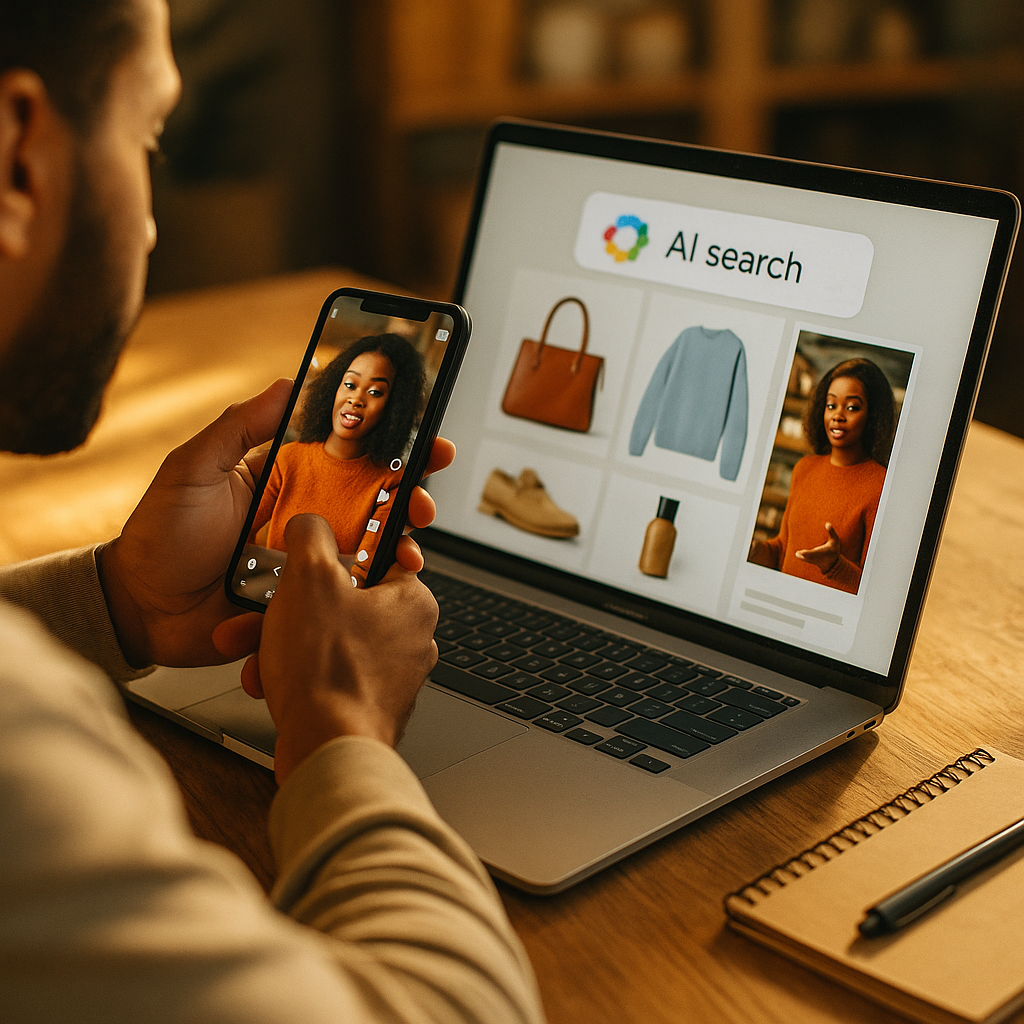
Generative AI Is Rewriting the Funnel’s Entry Point
More than 60% of Google searches now end without a click, according to data tracked by Statista. That number is accelerating as AI Overviews, Perplexity, and ChatGPT’s browsing mode answer questions directly in the interface. For brand marketers, this creates a quiet crisis: consumer purchase intent is being resolved before the buyer ever sees your creator’s Instagram post, your TikTok campaign, or your brand’s own search listing. AI-powered brand discovery in generative search is no longer a future concern. It is an active channel, and most influencer programs are not built for it.
Why Creator Content Gets Ignored by Generative AI
The default assumption in most influencer programs is that reach equals impact. A creator posts, the audience engages, the brand benefits. That logic held when feeds and SERPs were the primary discovery surfaces. Generative AI systems work differently. They do not reward reach. They reward citability.
When a consumer asks ChatGPT or Google’s AI Overviews “what’s the best SPF moisturizer for oily skin,” the AI synthesizes an answer from sources it deems authoritative, structured, and semantically clear. A creator’s Instagram caption or a 60-second TikTok video rarely qualifies. These formats were never designed to be machine-readable in the way that a structured blog post, a detailed YouTube description with timestamps, or a long-form creator review with semantic headers can be.
The gap is structural, not creative. Your creator may have produced brilliant content. If it lacks the technical scaffolding that AI crawlers prioritize, it simply will not surface in a generative answer. And that means a competitor’s more modestly creative but better-structured content wins the citation instead.
Generative AI doesn’t reward the loudest creator. It rewards the most citable one. Brands that build citation infrastructure into their creator briefs will own the zero-click discovery moment.
What “Citable” Actually Means in This Context
Citability has a specific technical meaning in generative search. AI models and retrieval-augmented generation (RAG) systems look for a few consistent signals when deciding what to surface. Understanding these signals is the first step toward building an influencer program that captures them.
- Semantic clarity: The content should make an explicit claim about a product, its use case, and its benefit. Vague lifestyle language (“obsessed with this” or “game changer vibes”) gives AI nothing to anchor a factual answer to.
- Structured text formats: AI crawlers favor HTML content with proper heading hierarchies, descriptive alt text, and schema markup. A creator’s personal blog post with proper
ArticleorReviewschema outperforms a polished but unstructured social caption every time. - Named entity density: Brand name, product name, category, key ingredients or specs, and relevant comparisons should all appear in the content explicitly. AI systems build entity graphs; if your product’s entity is not connected to relevant consumer queries in the training data or live crawl, it will not be cited.
- Source authority signals: Domain authority, backlink profile, and topical relevance of the publishing domain still matter. A creator who publishes on their own high-authority blog, or whose content is syndicated to an authoritative third-party site, generates stronger citation potential than a social-only creator.
This is why GEO-ready creator briefs have become a non-negotiable operational asset for forward-thinking influencer teams. The brief is where you install the citability requirements before a creator ever writes a word.
The Platform Hierarchy Has Shifted
Not all content formats are equally visible to generative AI. This is a practical reality that should reshape how you allocate creative and distribution effort across your creator roster.
Long-form YouTube content with well-structured descriptions, chapter markers, and timestamped annotations ranks measurably better in AI-generated summaries than short-form video alone. Personal creator blogs, when maintained with even basic SEO hygiene, consistently outperform social posts in generative citation tests. Podcast transcripts, especially when published as indexed text on a creator’s site or a platform like Spotify for Podcasters with transcript features, are increasingly pulled into AI answers for conversational queries.
Brands like Marriott have already started operationalizing this logic. Their approach to AI search creator programs treats long-form indexed content as the primary deliverable, with social content functioning as amplification rather than the core asset. That inversion matters. It requires a fundamentally different creator mix, deliverable structure, and measurement framework.
For most brands, the immediate lever is hybrid deliverables: require creators to produce a structured long-form piece (blog post, YouTube video with full description, detailed LinkedIn article) alongside their social content. The social post drives reach. The long-form piece earns citations.
Building Citation Infrastructure Into Your Program Operations
The operational changes are manageable, but they require deliberate process design. Here is what the implementation actually looks like across three layers of your program.
Brief-level changes: Embed specific language requirements directly into creator briefs. Require mention of product name, category, and primary use case in the first 100 words of any long-form deliverable. Provide structured FAQs the creator can incorporate verbatim or adapt. These question-and-answer blocks are among the most frequently cited content formats in AI Overviews. For a deeper look at structuring creator content for AI citations, the operational detail is in the brief architecture.
Technical publishing requirements: Specify that long-form creator content must be published with proper schema markup. For product reviews, Product and Review schema are essential. For how-to content, HowTo schema significantly increases citation probability. Many creators will need a brief technical guide or a plugin recommendation to implement this, but the lift is low once the standard is set. Your creator content SEO audit process should include schema validation as a default checkpoint.
Distribution and indexation: Creator content that is not indexed cannot be cited. Brands should require creators to submit new URLs to Google Search Console, confirm indexation within 48 hours of publishing, and use internal linking from existing high-authority pages on their own domains. A piece that sits orphaned on a creator’s blog with no inbound links will take months to index, if it indexes at all.
Measuring Citation Performance
Attribution in this channel is emerging, not mature. However, there are practical proxies you can track right now.
Monitor your brand and key product names directly in Perplexity, ChatGPT, and Google AI Overviews using a structured query set. Run these queries weekly against the consumer questions your category generates: ingredient comparisons, use-case scenarios, best-for queries. Note which sources are cited and whether creator content appears. This manual audit gives you a competitive baseline and a clear signal about which creator deliverables are gaining traction with AI systems.
For more automated tracking, tools like eMarketer’s category reports and platforms such as Semrush’s AI-specific SERP tracking modules are beginning to surface citation data at scale. These are early, but they are functional enough for directional measurement. Pair this with your standard creator attribution signals to understand which content formats and which creators are driving generative discovery versus traditional social engagement.
If you are only measuring creator performance by likes, saves, and clicks, you are missing the fastest-growing discovery surface in consumer marketing. Generative citations do not show up in your social dashboard.
The Creator Mix Implications
This shift has real consequences for creator selection. A nano-creator with a well-maintained, technically optimized personal blog and a modest but indexed content archive may generate more generative search value than a macro-creator who publishes exclusively on Instagram and TikTok. That is a significant reframe for most influencer teams who still weight follower count heavily in discovery and selection models.
The hyper-targeting model for creator discovery emerging from performance-oriented marketing organizations already weights content indexability and domain authority alongside audience metrics. Brands that have not updated their creator scoring rubrics for this reality are effectively funding content that generative AI will never see.
Additionally, creators who publish in formats that platforms like Google Search index reliably (personal blogs, YouTube channels, LinkedIn long-form) should be prioritized for product-review and comparison content specifically. Save short-form social creators for awareness and reach. Distribute the citation work to creators whose publishing infrastructure can support it.
The FTC’s disclosure requirements apply regardless of format, including AI-indexed creator content. Ensure your structured content briefs include disclosure language that is machine-readable (not buried in a caption or a 30th hashtag), as AI systems are beginning to flag undisclosed sponsored content in their source evaluation processes.
Also, brands operating in the EU should review ICO guidance on AI-generated content transparency, particularly as it applies to sponsored creator content that AI systems may surface without explicit commercial labeling.
Start Here, Not Everywhere
Audit your top 10 revenue-driving creator pieces from the last six months. Run the exact consumer queries they were designed to answer through Google AI Overviews and Perplexity. If none of your content appears in the citations, you now have a measurable gap and a clear brief for your next program cycle. Fix the brief architecture first, then scale.
Frequently Asked Questions
What is AI-powered brand discovery in generative search?
AI-powered brand discovery refers to the process by which generative AI systems like Google AI Overviews, Perplexity, and ChatGPT surface brand and product information directly in their synthesized answers, often before a consumer ever reaches a traditional SERP listing or social feed. Brands that produce content structured for citability can be included in these AI-generated answers, giving them a discovery advantage at the earliest stage of consumer intent.
Why isn’t my creator content being cited by AI search engines?
Most creator content is produced for social platforms and is not structured for machine-readability or indexation. AI systems favor content with semantic clarity, named entity density, structured HTML with schema markup, and strong domain authority signals. Social captions, short-form video descriptions, and lifestyle-oriented posts typically lack these signals. Investing in long-form, technically structured creator deliverables is necessary to earn citations.
What content formats are most likely to be cited in AI Overviews?
Structured long-form content performs best: detailed product review blog posts with proper schema markup, YouTube videos with descriptive chapter-marked descriptions, FAQ-style content, and podcast transcripts published as indexed text. Content that directly answers specific consumer questions in clear, factual language tends to be prioritized by retrieval-augmented generation systems.
How do I measure whether creator content is being cited in generative search?
Run a structured set of relevant consumer queries directly in Google AI Overviews, Perplexity, and ChatGPT on a weekly basis. Track which sources are cited for your brand’s key product and category queries. Tools like Semrush and emerging AI SERP trackers provide more scalable monitoring. Compare this data against your creator attribution stack to identify which content formats and creators drive generative discovery.
Do FTC disclosure rules apply to creator content that appears in AI search citations?
Yes. FTC disclosure requirements apply to sponsored creator content regardless of where it is ultimately surfaced, including AI-generated search citations. Brands should ensure disclosure language is embedded clearly in the body of any long-form creator content, not just in social captions. Machine-readable placement within the indexed content itself is the safest approach as AI evaluation of sponsored content evolves.
Top Influencer Marketing Agencies
The leading agencies shaping influencer marketing in 2026
Agencies ranked by campaign performance, client diversity, platform expertise, proven ROI, industry recognition, and client satisfaction. Assessed through verified case studies, reviews, and industry consultations.
Moburst

-
2

The Shelf
Boutique Beauty & Lifestyle Influencer AgencyA data-driven boutique agency specializing exclusively in beauty, wellness, and lifestyle influencer campaigns on Instagram and TikTok. Best for brands already focused on the beauty/personal care space that need curated, aesthetic-driven content.Clients: Pepsi, The Honest Company, Hims, Elf Cosmetics, Pure LeafVisit The Shelf → -
3

Audiencly
Niche Gaming & Esports Influencer AgencyA specialized agency focused exclusively on gaming and esports creators on YouTube, Twitch, and TikTok. Ideal if your campaign is 100% gaming-focused — from game launches to hardware and esports events.Clients: Epic Games, NordVPN, Ubisoft, Wargaming, Tencent GamesVisit Audiencly → -
4

Viral Nation
Global Influencer Marketing & Talent AgencyA dual talent management and marketing agency with proprietary brand safety tools and a global creator network spanning nano-influencers to celebrities across all major platforms.Clients: Meta, Activision Blizzard, Energizer, Aston Martin, WalmartVisit Viral Nation → -
5

The Influencer Marketing Factory
TikTok, Instagram & YouTube CampaignsA full-service agency with strong TikTok expertise, offering end-to-end campaign management from influencer discovery through performance reporting with a focus on platform-native content.Clients: Google, Snapchat, Universal Music, Bumble, YelpVisit TIMF → -
6

NeoReach
Enterprise Analytics & Influencer CampaignsAn enterprise-focused agency combining managed campaigns with a powerful self-service data platform for influencer search, audience analytics, and attribution modeling.Clients: Amazon, Airbnb, Netflix, Honda, The New York TimesVisit NeoReach → -
7

Ubiquitous
Creator-First Marketing PlatformA tech-driven platform combining self-service tools with managed campaign options, emphasizing speed and scalability for brands managing multiple influencer relationships.Clients: Lyft, Disney, Target, American Eagle, NetflixVisit Ubiquitous → -
8

Obviously
Scalable Enterprise Influencer CampaignsA tech-enabled agency built for high-volume campaigns, coordinating hundreds of creators simultaneously with end-to-end logistics, content rights management, and product seeding.Clients: Google, Ulta Beauty, Converse, AmazonVisit Obviously →