


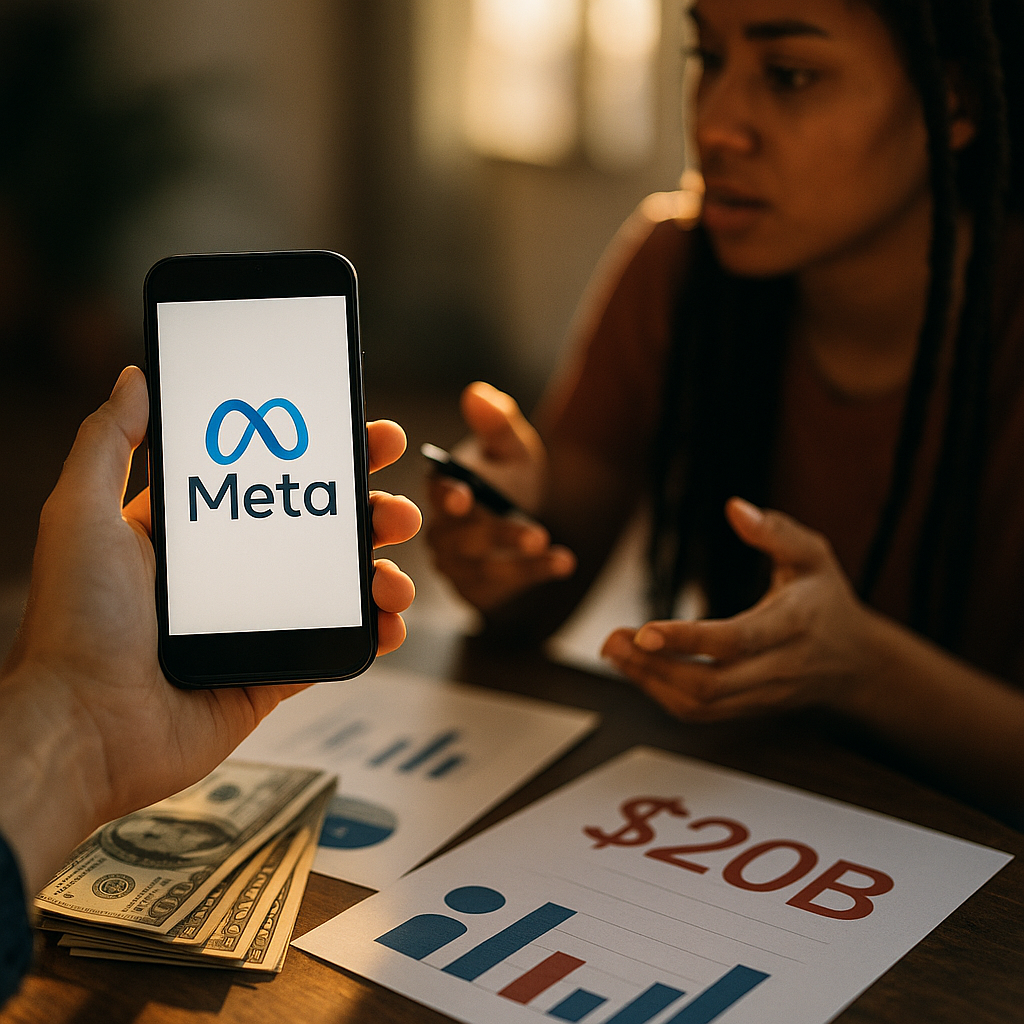
Meta Is No Longer Just an Ad Platform
Meta’s subscription revenue has crossed $20 billion. If your influencer strategy still treats Instagram and Facebook purely as paid-media channels, you’re operating on a model the platform itself has already moved past. Creator monetization is being restructured from the ground up, and the brands that adapt their partnership economics now will hold significant leverage over those that don’t.
What the $20 Billion Number Actually Means
Meta’s diversification into subscription-based revenue, through Meta Verified, premium creator tools, and paid access features, represents a structural shift in how the platform generates money. Advertising still dominates, but subscription income introduces a second revenue logic: retain users deeply enough that they’ll pay directly. That changes everything about what Meta optimizes for.
When a platform earns from subscriptions, it has a direct financial incentive to increase the quality of creator output, not just the volume of ad impressions. Creators who retain paying followers become more valuable to Meta as a product. That’s a fundamental realignment of incentives, and it flows directly into how brands should value creator partnerships.
When platforms monetize through subscriptions, creator quality and audience loyalty become revenue inputs for the platform itself — not just metrics for brand campaigns. That changes the bargaining position of high-retention creators significantly.
According to Statista, subscription-based digital revenue models have grown consistently across major tech platforms, with user willingness to pay for creator content increasing year-over-year. Meta is not an outlier here. It’s catching up to a pattern YouTube, Patreon, and Substack pioneered.
The Creator Tier Problem Brands Haven’t Solved
Here’s the practical tension: as platforms diversify revenue, creator tiers are fragmenting faster than most brand teams can track. You now have creators who earn primarily from brand deals, creators who earn primarily from platform subscriptions and tips, and a growing middle tier earning meaningfully from both. Each group has different negotiation leverage, different audience relationships, and different content incentives.
Brands that still apply a flat CPM or engagement-rate model to all three tiers are systematically mispricing partnerships. A creator with 200,000 paying subscribers on Meta Verified has an audience relationship that no engagement-rate calculation captures. That audience has demonstrated financial commitment. That’s a fundamentally different commercial asset than a creator with 2 million passive followers and a 2% like rate.
Understanding creator rate benchmarks has always been important, but the subscription layer makes legacy benchmarks actively misleading. You need rate frameworks that account for subscriber monetization, not just follower counts or even engagement.
Platform Revenue Diversification Is Reshaping Partnership Architecture
Meta isn’t alone. YouTube’s channel membership and Super Thanks features now represent meaningful creator income for mid-tier and large creators. TikTok’s Series product lets creators paywall episodic content. The economics of TikTok paid series and Meta Series Hubs are evolving rapidly, and brands that understand these formats gain access to creators who are building subscription-first content strategies, not ad-first ones.
That distinction matters operationally. A creator building a subscription business will protect their editorial voice more aggressively. Their content standards are higher because a paying audience holds them accountable in ways a passive follower base doesn’t. Brands get better creative output, but they also need to negotiate differently. More lead time, more collaborative briefs, clearer exclusivity terms.
The creator partnership architecture is being redesigned in real time. Brand teams that are still using 2022-era deal structures are creating friction with the exact creators they most want.
What This Means for Budget Allocation
The ad-revenue model trained brands to think about creator partnerships as a subset of media spend: negotiate the rate, place the content, measure impressions. Subscription-era platform economics require a different budget logic entirely.
First, brands need to separate “media value” from “creator equity value.” A creator with a loyal subscription audience delivers something closer to a brand ambassador arrangement than a media placement. That should be budgeted and evaluated differently, with longer contract windows, performance bonuses tied to community growth, and options for deeper co-creation.
Second, as platform algorithms increasingly favor content that drives subscriptions and paid engagement (because that’s what now serves the platform’s revenue), organic reach for brand-sponsored content will continue to shift. Brands need to restructure amplification budgets to support creator-led subscription content, not just boost traditional sponsored posts.
Third, the subscription model creates new co-monetization opportunities. Brands can sponsor exclusive subscriber content, fund paid series, or offer subscriber-only offers through creator channels. These aren’t standard influencer deal line items. They require new contract language, new compliance thinking under FTC disclosure guidelines, and new measurement frameworks.
Brands that treat subscription-tier creator content as just another sponsored post will both underpay for the access and underperform on results. This format requires a distinct commercial and creative approach.
Operational Implications for Brand and Agency Teams
The legal and contractual infrastructure most brand teams have in place was built for a world where creators earned from ad-supported platforms and brand sponsorships. The institutionalization of creator contracts is accelerating, but most standard agreements still don’t account for subscription content rights, platform revenue sharing disclosures, or the exclusivity complications that arise when a creator’s paid subscribers have an expectation of unbranded, independent content.
Agencies need to get ahead of this. The brands winning on Meta’s creator ecosystem right now are the ones who’ve given creators meaningful creative latitude within defined brand guardrails, rather than pushing rigid scripts that clash with the editorial trust a creator has built with their paying audience.
Platform-side, Meta has been expanding its analytics standards in ways that are starting to surface subscription and paid engagement data to brand partners. That’s useful, but only if your measurement team knows what to do with it. Most brand teams currently lack the internal capability to translate subscription engagement metrics into campaign value. Building that capability, or finding a vendor partner who has it, is now a competitive differentiator.
The Strategic Reframe Brands Need Now
Stop thinking about creators as media inventory. Start thinking about them as subscription businesses you can partner with. The platform revenue model shift isn’t happening to creators. Creators are driving it, and platforms are following because it’s working.
Meta’s $20 billion subscription signal is an instruction: the platforms of the next five years will reward depth of audience relationship over breadth of reach. Brands that align their partnership economics with that logic, by valuing loyalty, investing in co-creation, and building deals that serve subscription-first creators, will outperform those still chasing impression volume on channels that have already moved on.
Your next step is concrete: audit your current creator roster and identify which partners have meaningful subscription or paid-tier audiences. Reprice those relationships using loyalty-adjusted value models, not legacy CPM logic. Then update your contracts to reflect the new content architecture before your competitors do.
Frequently Asked Questions
How does Meta’s subscription revenue affect brand influencer partnerships?
Meta’s subscription revenue growth signals that the platform now optimizes for creator quality and audience loyalty, not just ad impression volume. This shifts the value of influencer partnerships: creators with paying subscriber audiences command higher partnership rates and require more collaborative deal structures because their audiences hold them to a higher editorial standard.
How should brands reprice creator partnerships in a subscription-driven platform economy?
Brands should move away from flat CPM or engagement-rate models and adopt loyalty-adjusted value frameworks. A creator’s subscriber count, subscriber retention rate, and paid content performance should factor into partnership pricing alongside traditional reach and engagement metrics. This typically results in higher rates for mid-tier creators with loyal subscription audiences.
What new contract terms do brands need for subscription-tier creator content?
Standard influencer agreements need to be updated to cover subscription content rights, platform revenue sharing disclosures, exclusivity clauses that account for subscriber expectations, and FTC compliance requirements for paywalled sponsored content. Brands should work with legal teams experienced in creator economy contracts to close these gaps before executing subscription-format deals.
Which platforms are leading the subscription monetization shift for creators?
Meta (through Meta Verified and paid creator tools), YouTube (channel memberships, Super Thanks), TikTok (Series paywalled content), and Patreon remain the primary platforms driving subscription revenue for creators. Each platform structures the economics differently, so brand partnership strategy should be tailored to each platform’s specific subscription architecture.
How does subscription-driven creator content change brand measurement frameworks?
Brands need to add subscription engagement metrics — paid subscriber growth, subscriber retention, and paid content completion rates — to their campaign measurement frameworks. These metrics indicate audience depth and commercial intent that traditional impression and engagement data doesn’t capture. Platform analytics tools like those available through Meta Business Suite are beginning to surface this data for brand partners.
Top Influencer Marketing Agencies
The leading agencies shaping influencer marketing in 2026
Agencies ranked by campaign performance, client diversity, platform expertise, proven ROI, industry recognition, and client satisfaction. Assessed through verified case studies, reviews, and industry consultations.
Moburst

-
2

The Shelf
Boutique Beauty & Lifestyle Influencer AgencyA data-driven boutique agency specializing exclusively in beauty, wellness, and lifestyle influencer campaigns on Instagram and TikTok. Best for brands already focused on the beauty/personal care space that need curated, aesthetic-driven content.Clients: Pepsi, The Honest Company, Hims, Elf Cosmetics, Pure LeafVisit The Shelf → -
3

Audiencly
Niche Gaming & Esports Influencer AgencyA specialized agency focused exclusively on gaming and esports creators on YouTube, Twitch, and TikTok. Ideal if your campaign is 100% gaming-focused — from game launches to hardware and esports events.Clients: Epic Games, NordVPN, Ubisoft, Wargaming, Tencent GamesVisit Audiencly → -
4

Viral Nation
Global Influencer Marketing & Talent AgencyA dual talent management and marketing agency with proprietary brand safety tools and a global creator network spanning nano-influencers to celebrities across all major platforms.Clients: Meta, Activision Blizzard, Energizer, Aston Martin, WalmartVisit Viral Nation → -
5

The Influencer Marketing Factory
TikTok, Instagram & YouTube CampaignsA full-service agency with strong TikTok expertise, offering end-to-end campaign management from influencer discovery through performance reporting with a focus on platform-native content.Clients: Google, Snapchat, Universal Music, Bumble, YelpVisit TIMF → -
6

NeoReach
Enterprise Analytics & Influencer CampaignsAn enterprise-focused agency combining managed campaigns with a powerful self-service data platform for influencer search, audience analytics, and attribution modeling.Clients: Amazon, Airbnb, Netflix, Honda, The New York TimesVisit NeoReach → -
7

Ubiquitous
Creator-First Marketing PlatformA tech-driven platform combining self-service tools with managed campaign options, emphasizing speed and scalability for brands managing multiple influencer relationships.Clients: Lyft, Disney, Target, American Eagle, NetflixVisit Ubiquitous → -
8

Obviously
Scalable Enterprise Influencer CampaignsA tech-enabled agency built for high-volume campaigns, coordinating hundreds of creators simultaneously with end-to-end logistics, content rights management, and product seeding.Clients: Google, Ulta Beauty, Converse, AmazonVisit Obviously →