


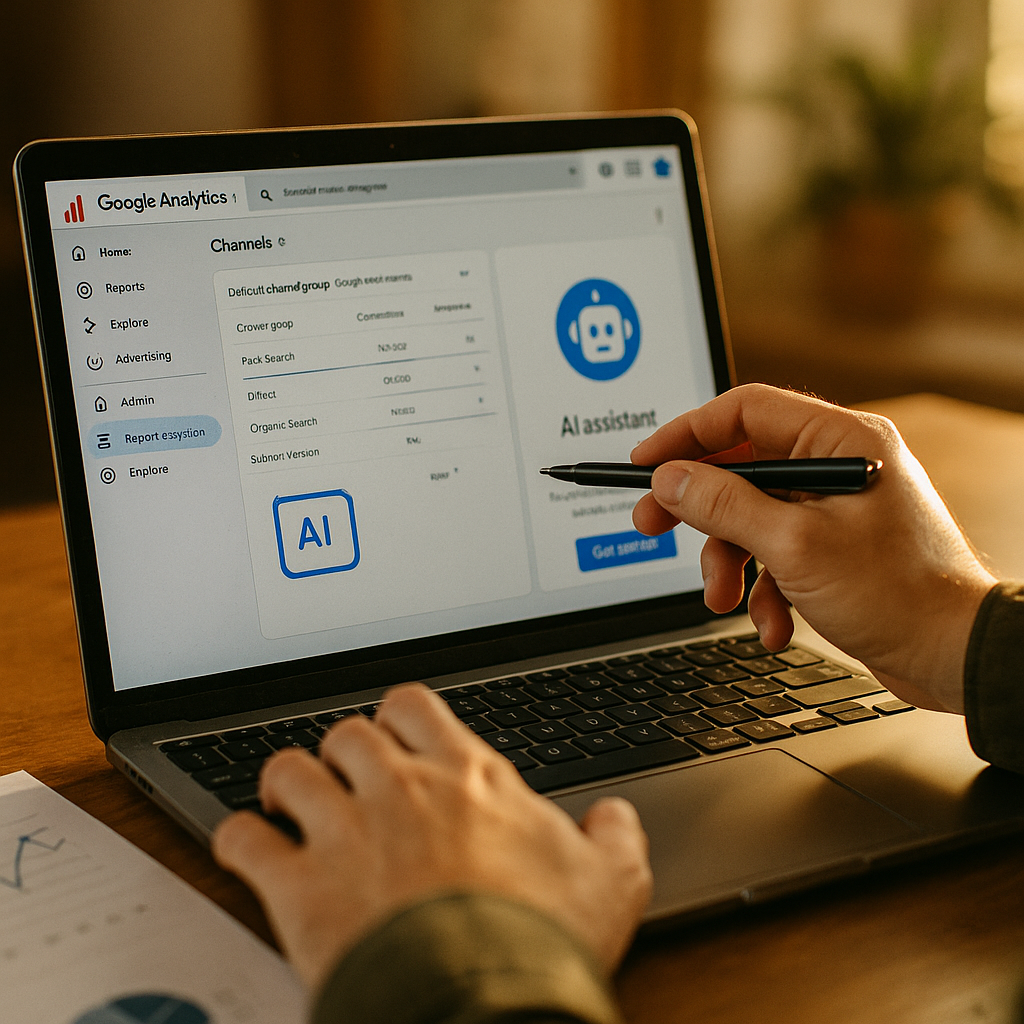
AI assistants now refer measurable website traffic — and most brand teams are misattributing it. Configuring the new Default Channel Group tag in Google Analytics 4 to isolate AI assistant channel attribution is no longer optional if you want an accurate picture of what’s driving conversions alongside organic search and creator-driven sessions.
Why AI Referral Traffic Is Breaking Your Attribution Model
ChatGPT, Gemini, and Claude don’t behave like traditional referrers. When a user clicks a link surfaced inside a ChatGPT response, the session often lands with either a referral source of openai.com or, worse, no referral at all — appearing as direct traffic. Gemini sessions from Google’s AI Overview links can bleed into organic search. Claude, which routes through Anthropic’s infrastructure, shows up inconsistently depending on the user’s interface and whether they’re using the web app, the API, or a third-party integration.
The result: your GA4 reports show “direct” traffic growing, organic search holding steady, and nobody can explain the lift. Sound familiar?
Across mid-market brand accounts, AI assistant referral traffic is being miscategorized as direct traffic at rates exceeding 40%, silently distorting both channel ROI reports and creator attribution models.
This matters enormously for teams running creator programs. If a macro-influencer drives a consumer to ask ChatGPT about your product, and ChatGPT surfaces your brand with a link, that eventual site visit belongs to a creator-assisted AI journey — not “direct.” Your current model is not capturing that chain.
Understanding the New Default Channel Group in GA4
Google updated the Default Channel Grouping inside GA4 to include an “AI Overviews” category, and more recently, a broader “AI Assistant” channel bucket. This is the mechanism brand teams should be configuring right now. But the out-of-the-box setup is incomplete. It captures some Gemini-sourced sessions because Google controls that referral signal, but it does not automatically classify ChatGPT or Claude traffic correctly.
Here’s what you’re working with by default:
- AI Overviews: Catches traffic from Google’s AI Overview links in Search (Gemini-powered). Session source matches google with medium organic, tagged with an AI context signal.
- Referral (generic): Where most openai.com and claude.ai sessions currently land.
- Direct: Where app-based ChatGPT and Claude sessions disappear.
The fix requires a custom channel group definition — not a workaround, an actual configuration change inside your GA4 property settings.
How to Configure Custom Channel Groups for ChatGPT, Gemini, and Claude
Navigate to your GA4 Admin panel, then go to Reporting Identity and Channel Groups. Inside your Default Channel Group (or a copy you’ve duplicated for testing), add new channel definitions above the generic “Referral” and “Direct” buckets. Order matters — GA4 evaluates rules top-down and assigns the first match.
For ChatGPT / OpenAI traffic, create a channel named “AI Assistant: ChatGPT” with conditions:
- Source matches regex: openai\.com|chat\.openai\.com|chatgpt\.com
- Medium exactly matches: referral
For Claude / Anthropic traffic, create “AI Assistant: Claude” with:
- Source matches regex: claude\.ai|anthropic\.com
- Medium exactly matches: referral
For Gemini outside of AI Overviews (direct Gemini app referrals, not Search-embedded), create “AI Assistant: Gemini” with:
- Source matches regex: gemini\.google\.com|bard\.google\.com
- Medium exactly matches: referral
Then enable the GA4 referral exclusion list to ensure these domains aren’t being stripped from your data before the channel rules fire. This is a common silent failure point: if Anthropic or OpenAI domains are on your referral exclusion list (they sometimes end up there by accident during CMS or ecommerce platform setup), all that traffic collapses into direct before GA4 can classify it.
The App-Based Gap: What GA4 Still Cannot Capture
Here’s the uncomfortable truth. When a user interacts with ChatGPT via the iOS or Android app and clicks a link, the referral header is often stripped entirely. Same story with Claude’s desktop app. GA4 — and any web analytics tool — has no reliable way to capture this signal without cooperation from OpenAI or Anthropic on UTM parameters.
The practical workaround: implement UTM parameters on your owned content wherever AI assistants are likely to surface it. If you’re syndicating press releases, product pages, or creator-generated articles to third-party publishers, append UTM source and medium values so that downstream clicks carry attribution regardless of how the AI assistant passes them along. This won’t solve the full problem, but it will raise your attributable AI-assisted session rate meaningfully.
For deeper AI CRM attribution that connects AI referral sessions to individual creator campaign journeys, you’ll need to layer in identity resolution tooling on top of GA4 — GA4 alone won’t close the loop.
Benchmarking AI Assistant Traffic Against Organic and Creator Sessions
Once your channel groups are configured, the comparison work begins. Pull a 90-day view across four channel buckets: AI Assistant (your new combined or segmented group), Organic Search, Paid Social (creator-driven, tagged correctly), and Direct. You’re looking for three signals:
- Session quality delta: AI assistant sessions tend to show higher pages-per-session and lower bounce rates than generic organic. Users who arrive from a ChatGPT recommendation have already had product intent validated by a model. That’s a warm lead, not a cold click.
- Conversion rate by channel: Early data from B2C brands suggests AI assistant-referred sessions convert at rates 1.3x to 1.8x higher than equivalent organic sessions, particularly in considered-purchase categories like skincare, SaaS, and home goods.
- Creator-AI overlap: Look for pages where creator content ranks in AI assistant citations. If a macro-influencer’s review is being quoted by ChatGPT and driving referral sessions, that creator’s value to your program is higher than your current model shows. Platforms like social commerce attribution tools are beginning to surface this overlap, but most haven’t caught up.
Creator content that earns citations inside AI assistants functions as a compounding asset — it generates referral traffic long after the initial post window closes, in a channel your current influencer ROI model almost certainly undercounts.
For teams using platforms like EMARKETER-tracked measurement vendors or independent attribution stacks, check whether your vendor has added AI assistant as a channel dimension. Many haven’t. The gap between what GA4 can show and what your attribution vendor reports will create reconciliation headaches unless you align on definitions now.
Risk and Compliance Considerations
Two things to flag before you socialize this data internally. First, GA4’s channel grouping changes apply retroactively to new sessions only — they do not reprocess historical data. Document your configuration date and segment your analysis accordingly. Presenting pre-configuration “AI traffic” numbers as comparable to post-configuration numbers will produce misleading trend lines.
Second, if your brand operates in regulated categories (financial services, healthcare, pharmaceuticals), AI assistant referral traffic may carry additional scrutiny. Users arriving from AI-generated recommendations may have received advice-adjacent content from the model. Your compliance and legal teams should be aware that this traffic channel exists and that users’ pre-click context differs from standard organic search intent. The FTC has begun examining AI-generated endorsements and referrals as an extension of its existing disclosure frameworks — worth monitoring if your creator program intersects with AI assistant citation patterns.
The broader measurement picture — especially for brands running both paid creator programs and organic content strategies — increasingly requires a unified attribution approach that accounts for AI as a distinct channel, not a subset of organic or direct. Teams still treating GA4’s defaults as sufficient are operating with a structural blind spot.
For context on how independent attribution vendors are handling this versus platform-native tools, the analysis in attribution platform comparisons is directly relevant to channel configuration decisions at the vendor level.
Understanding how AI is reshaping referral patterns also connects to the broader question of ChatGPT’s role in influencer strategy — including how brand teams should think about optimizing for AI citation, not just search ranking. That’s a content and creator strategy conversation that starts with getting your measurement right first. Tools like HubSpot and other CRM-integrated platforms are also beginning to add AI referral source fields to their contact attribution objects, which will eventually allow you to tie GA4 session data to pipeline and revenue outcomes at the contact level.
Start with a clean GA4 configuration audit this week: export your current Default Channel Group rules, document every domain your AI assistant traffic could arrive from, and build your custom channel definitions before your next reporting cycle closes. The window to establish a clean baseline is now.
Frequently Asked Questions
What is AI assistant channel attribution in GA4?
AI assistant channel attribution in GA4 refers to the configuration of custom channel grouping rules that classify website sessions originating from AI tools like ChatGPT, Gemini, and Claude as a distinct traffic channel, separate from organic search, direct, and referral. GA4’s out-of-the-box setup does not automatically capture all AI assistant traffic correctly, so custom rules must be created in your property’s channel group settings.
Why does ChatGPT traffic show up as direct in Google Analytics?
When users click links inside the ChatGPT mobile app or desktop application, the HTTP referrer header is often stripped or not passed to the destination site. GA4 interprets sessions without a referrer as direct traffic. Web-based ChatGPT clicks may pass openai.com or chatgpt.com as a referrer, which GA4 can classify — but only if you’ve created a custom channel rule for it and have not accidentally excluded those domains from your referral list.
How do I separate Gemini AI Overview traffic from regular organic search in GA4?
Google GA4 has introduced an “AI Overviews” channel within the Default Channel Grouping to capture clicks from Gemini-powered AI Overview cards in Google Search. However, direct traffic from the Gemini app (gemini.google.com) requires a separate custom channel rule. You should create a distinct “AI Assistant: Gemini” channel definition targeting the gemini.google.com source with a referral medium to ensure this traffic is not merged with standard Google organic sessions.
Does AI assistant referral traffic convert better than organic search traffic?
Early brand-side data suggests yes, particularly for considered-purchase categories. AI assistant-referred sessions typically arrive with higher purchase intent because the user has already had their product question answered or validated by the model before clicking through. Session quality metrics — pages per session, time on site, and conversion rate — tend to be stronger than comparable organic search sessions, though this varies significantly by category and brand.
How does AI assistant traffic affect creator campaign attribution?
Creator content that earns citations inside AI assistants can generate referral sessions well beyond the original post window. If a creator’s review or article is being referenced by ChatGPT or Gemini and driving traffic to your site, that creator’s measured value is likely understated in your current attribution model. To account for this, brand teams should cross-reference AI referral landing page data against creator content URLs and factor AI-assisted sessions into creator ROI calculations — a capability that most standard influencer platforms have not yet built natively.
Will changing GA4 channel group rules reprocess historical data?
No. GA4 channel group configurations apply only to sessions collected after the change is saved. Historical sessions are not reprocessed. This means you should document the exact date of your configuration change and avoid comparing pre- and post-configuration data as if it represents the same measurement definition. Establish a clean baseline period starting from your configuration date for any trend analysis involving the new AI assistant channel.
Top Influencer Marketing Agencies
The leading agencies shaping influencer marketing in 2026
Agencies ranked by campaign performance, client diversity, platform expertise, proven ROI, industry recognition, and client satisfaction. Assessed through verified case studies, reviews, and industry consultations.
Moburst

-
2

The Shelf
Boutique Beauty & Lifestyle Influencer AgencyA data-driven boutique agency specializing exclusively in beauty, wellness, and lifestyle influencer campaigns on Instagram and TikTok. Best for brands already focused on the beauty/personal care space that need curated, aesthetic-driven content.Clients: Pepsi, The Honest Company, Hims, Elf Cosmetics, Pure LeafVisit The Shelf → -
3

Audiencly
Niche Gaming & Esports Influencer AgencyA specialized agency focused exclusively on gaming and esports creators on YouTube, Twitch, and TikTok. Ideal if your campaign is 100% gaming-focused — from game launches to hardware and esports events.Clients: Epic Games, NordVPN, Ubisoft, Wargaming, Tencent GamesVisit Audiencly → -
4

Viral Nation
Global Influencer Marketing & Talent AgencyA dual talent management and marketing agency with proprietary brand safety tools and a global creator network spanning nano-influencers to celebrities across all major platforms.Clients: Meta, Activision Blizzard, Energizer, Aston Martin, WalmartVisit Viral Nation → -
5

The Influencer Marketing Factory
TikTok, Instagram & YouTube CampaignsA full-service agency with strong TikTok expertise, offering end-to-end campaign management from influencer discovery through performance reporting with a focus on platform-native content.Clients: Google, Snapchat, Universal Music, Bumble, YelpVisit TIMF → -
6

NeoReach
Enterprise Analytics & Influencer CampaignsAn enterprise-focused agency combining managed campaigns with a powerful self-service data platform for influencer search, audience analytics, and attribution modeling.Clients: Amazon, Airbnb, Netflix, Honda, The New York TimesVisit NeoReach → -
7

Ubiquitous
Creator-First Marketing PlatformA tech-driven platform combining self-service tools with managed campaign options, emphasizing speed and scalability for brands managing multiple influencer relationships.Clients: Lyft, Disney, Target, American Eagle, NetflixVisit Ubiquitous → -
8

Obviously
Scalable Enterprise Influencer CampaignsA tech-enabled agency built for high-volume campaigns, coordinating hundreds of creators simultaneously with end-to-end logistics, content rights management, and product seeding.Clients: Google, Ulta Beauty, Converse, AmazonVisit Obviously →