


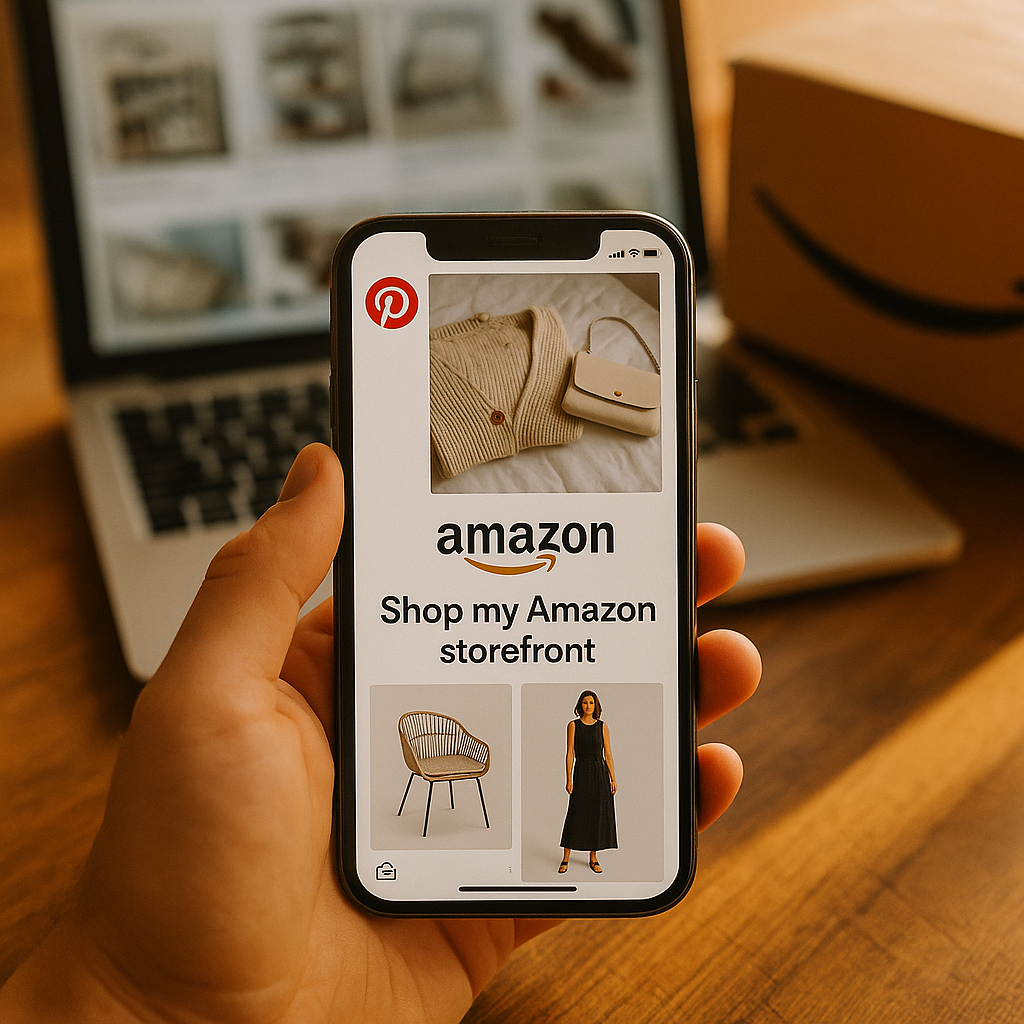
Pinterest drives more purchase intent per session than any other social platform, yet most brands waste that signal by failing to connect it to a shoppable endpoint. The Pinterest Amazon integration creator brief closes that gap — but only if you know how to write one that actually directs creator behavior.
Why This Channel Combination Deserves Its Own Brief Format
Pinterest and Amazon look like an odd couple on paper. One is a visual search engine built on aspiration and slow discovery. The other is a high-intent purchase environment. Together, they form a funnel that most DTC brands and Amazon sellers are leaving entirely unbriefed.
According to Statista, Pinterest reaches over 570 million monthly active users, with a significant share actively searching for products. Amazon’s affiliate and storefront infrastructure already supports deep-link attribution. The integration means creators can now pin directly to shoppable Amazon storefront links, and brands can track that referral path with real attribution data. That changes the brief requirements entirely.
Generic lifestyle content won’t move the needle here. The brief must specify visual format, search intent alignment, storefront link placement, and the conversion signal you’re actually measuring. If you’re already developing Pinterest Amazon creator briefs for DTC contexts, this framework extends that foundation with deeper attribution logic.
Understanding the Attribution Path Before You Brief
Before you write a single creative direction, your team needs to map the attribution path the content will create. This isn’t optional. Creators who don’t understand the destination can’t build content that supports it.
The path looks like this: a creator publishes a Pin (static image, idea Pin, or video Pin) with a product link that routes to their Amazon storefront or a specific ASIN via an affiliate tag or brand-assigned tracking parameter. When a Pinterest user clicks, saves, or engages with that Pin and subsequently visits the Amazon page, that session carries attribution data. Amazon Attribution (available through Amazon Ads) captures the source, giving you click-through rate, detail page views, add-to-cart events, and purchases tied to that specific Pin.
The brief must specify which storefront URL the creator is linking to, which UTM or Amazon Attribution tag is assigned to that creator, and what the click-through destination looks like on mobile. Creators should not be choosing their own affiliate links. You control the attribution architecture; they control the visual execution.
Attribution breaks when creators freelance their own tracking links. Centralize link assignment in the brief, not in a follow-up Slack message after the Pin goes live.
The Four Visual Signals Pinterest’s Algorithm Rewards
Pinterest’s content distribution isn’t arbitrary. The platform’s Smart Feed rewards four specific content signals, and your brief should instruct creators on all four.
- Vertical format (2:3 ratio): Pins in this ratio take up more feed space and receive preferential distribution. Brief creators on exact pixel dimensions, not just “vertical.”
- Text overlay with search-intent language: Pinterest functions as a visual search engine. A Pin with a text overlay reading “minimalist kitchen organizers under $40” will surface in search results that a no-text image never reaches.
- High-contrast product staging: Products shot against clean, light backgrounds with clear focal points outperform lifestyle-only images in click-through data. This doesn’t mean removing lifestyle context — it means ensuring the product is unambiguously visible.
- Save-worthy composition: Saves are Pinterest’s strongest engagement signal. Creators should be briefed to produce content that prompts users to save for later reference, not just immediate clicks. “Board-worthy” curation aesthetics drive saves; urgency-based copy drives clicks. You want both.
This is where brief quality separates performant programs from noise. Creators who excel on Instagram Reels often produce content that performs poorly on Pinterest because the visual grammar is entirely different. For context on how brief design shifts across platforms, the approach to shoppable Instagram Reels briefs illustrates how platform-specific the instructions need to be.
Writing the Brief: Section by Section
A Pinterest Amazon integration brief has five required sections. Don’t consolidate them.
1. Campaign objective (with the specific Amazon metric): State whether you’re optimizing for detail page views, add-to-cart rate, or completed purchases. Creators who understand the downstream metric make different creative choices. “Drive awareness” is not a Pinterest Amazon brief objective.
2. Assigned attribution links: Provide the exact Amazon storefront URL with embedded tracking tag. One link per creator, pre-built by your team using Amazon Attribution. Include the mobile preview so creators can verify the destination before publishing.
3. Visual content specifications: Image dimensions, minimum text overlay requirements, color palette guidance (especially if the product has brand color standards), and prohibited visual elements. Be specific. “High quality images” is meaningless instruction.
4. Pinterest SEO requirements: This section is frequently omitted, and it’s a significant revenue leak. Specify the exact keywords the Pin title and description should contain. Use Pinterest Business trend data or a tool like Semrush to identify high-volume, transactional search terms in your category. Creators are not SEO practitioners — give them the exact phrases to include.
5. Board placement and profile context: Specify which board the Pin should be published to (or provide naming conventions if creators are creating new boards). Pinterest’s algorithm weighs board relevance when distributing Pins. A kitchen gadget Pin saved to a board titled “random stuff” will underperform versus one in a board titled “kitchen organization ideas.”
Creator Selection Criteria for This Format
Not every influencer who performs well on other platforms belongs in a Pinterest Amazon program. The selection criteria here are different.
Pinterest’s organic reach rewards accounts with consistent aesthetic niches and strong save rates, not accounts built on follower counts or viral moments. A micro-creator with 15,000 Pinterest followers and a 12% save rate will generate more attributable storefront traffic than a 200,000-follower Instagram creator who treats Pinterest as an afterthought repost destination.
Screen creator candidates on: monthly Pinterest impressions (not just followers), average Pin save rate, board organization quality, and whether they already use affiliate or product links in their Pins. Creators already comfortable with Amazon Associates or the Amazon Influencer Program onboard faster and produce attribution-ready content without hand-holding on the link mechanics.
The same creator concentration risk logic that applies to Instagram and YouTube applies here. Relying on a single high-performing Pinterest creator for your storefront traffic creates fragility. For a framework on managing that risk, the analysis of creator concentration risk applies directly to Pinterest program design.
Measurement Framework: What You’re Actually Tracking
Pinterest analytics and Amazon Attribution need to be read together, not separately. Neither dataset alone gives you the full picture.
From Pinterest Analytics (or a third-party tool like Sprout Social): track impressions, saves, outbound clicks, and click-through rate by Pin. From Amazon Attribution: track clicks, detail page views, add-to-cart, and purchases by the assigned tag. The connection between those two data sets is your attribution chain.
The metric that matters most in the first 30 days is outbound click-to-detail-page-view conversion rate. If clicks from Pinterest are landing on the Amazon storefront but bouncing without viewing a product detail page, the storefront itself is the problem, not the Pin content. This is diagnostic data that most programs ignore.
Pinterest content has a compounding lifespan. A well-optimized Pin can drive Amazon storefront traffic for 6-18 months after publication — which means attribution windows need to be set accordingly in Amazon Attribution dashboards.
Set a 90-day review cadence for Pin performance. Unlike TikTok or Instagram Reels where content has a short half-life, Pinterest organic content compounds. Pins that gain saves in month one continue surfacing in search results and Smart Feed recommendations for months. Build your reporting cadence to capture that long tail.
For programs that also run shoppable content on other platforms, cross-channel attribution context matters. The engagement concentration patterns in Instagram shoppable programs offer useful benchmarks for how diversified your Pinterest channel needs to be relative to total program volume.
Compliance and Disclosure in This Channel Combination
FTC disclosure requirements apply to every Pin that includes an affiliate link or paid placement, regardless of platform. Pinterest’s own policies require disclosure for paid partnerships. The brief must specify the exact disclosure language and placement: “Paid partnership with [Brand]” in the Pin description is not optional, and affiliate relationship disclosure should accompany any Amazon affiliate link.
Review FTC endorsement guidelines before finalizing your brief template. Creators should not be determining their own disclosure language. Standardize it, include it in the brief, and require pre-approval of Pin descriptions before publication. This protects both the brand and the creator.
Audit published Pins within 48 hours of go-live to confirm disclosure compliance. This is a brief enforcement step that most brands skip and regulators are increasingly prioritizing.
Your next step: pull your last three months of Amazon Attribution data and identify which referral sources are producing the highest add-to-cart rate. If Pinterest isn’t in the top five, you don’t have a Pinterest performance problem — you have a brief quality problem. Fix the brief first.
Frequently Asked Questions
What is a Pinterest Amazon integration creator brief?
It is a structured document brands use to direct influencers to create Pinterest content (static Pins, Idea Pins, or video Pins) that links to a brand’s Amazon storefront or specific product ASINs using trackable attribution links. The brief specifies visual requirements, Pinterest SEO instructions, assigned tracking URLs, and the Amazon metrics being optimized, so creator output can be tied to measurable commerce outcomes.
How does Amazon Attribution work with Pinterest content?
Amazon Attribution allows brands to create unique tracking tags for external traffic sources, including Pinterest. When a creator publishes a Pin containing an Amazon storefront link with an embedded Attribution tag, Amazon records downstream activity: clicks, product detail page views, add-to-cart events, and purchases. This data surfaces in the Amazon Attribution dashboard and can be linked to specific creator campaigns or individual Pins.
Which creators perform best in Pinterest Amazon programs?
Creators with consistently high Pinterest save rates, organized niche-specific boards, and existing experience using Amazon affiliate or storefront links tend to outperform high-follower-count creators who treat Pinterest as a secondary channel. Monthly Pinterest impressions and average save rate are more predictive of program performance than follower count alone.
How long does Pinterest content drive Amazon referral traffic?
Well-optimized Pins can generate outbound clicks and Amazon storefront referrals for six to eighteen months after publication, significantly longer than content on Instagram Reels or TikTok. This extended lifespan means brands should set Amazon Attribution windows accordingly and review Pin performance on 90-day cycles rather than standard 30-day campaign windows.
What disclosures are required when a creator links to Amazon from Pinterest?
Both FTC endorsement guidelines and Pinterest’s platform policies require disclosure when a Pin contains paid partnership content or affiliate links. Creators must include clear disclosure language in the Pin description. Brands should standardize that language in the creator brief and require pre-publication approval of Pin descriptions to ensure compliance before content goes live.
Top Influencer Marketing Agencies
The leading agencies shaping influencer marketing in 2026
Agencies ranked by campaign performance, client diversity, platform expertise, proven ROI, industry recognition, and client satisfaction. Assessed through verified case studies, reviews, and industry consultations.
Moburst

-
2

The Shelf
Boutique Beauty & Lifestyle Influencer AgencyA data-driven boutique agency specializing exclusively in beauty, wellness, and lifestyle influencer campaigns on Instagram and TikTok. Best for brands already focused on the beauty/personal care space that need curated, aesthetic-driven content.Clients: Pepsi, The Honest Company, Hims, Elf Cosmetics, Pure LeafVisit The Shelf → -
3

Audiencly
Niche Gaming & Esports Influencer AgencyA specialized agency focused exclusively on gaming and esports creators on YouTube, Twitch, and TikTok. Ideal if your campaign is 100% gaming-focused — from game launches to hardware and esports events.Clients: Epic Games, NordVPN, Ubisoft, Wargaming, Tencent GamesVisit Audiencly → -
4

Viral Nation
Global Influencer Marketing & Talent AgencyA dual talent management and marketing agency with proprietary brand safety tools and a global creator network spanning nano-influencers to celebrities across all major platforms.Clients: Meta, Activision Blizzard, Energizer, Aston Martin, WalmartVisit Viral Nation → -
5

The Influencer Marketing Factory
TikTok, Instagram & YouTube CampaignsA full-service agency with strong TikTok expertise, offering end-to-end campaign management from influencer discovery through performance reporting with a focus on platform-native content.Clients: Google, Snapchat, Universal Music, Bumble, YelpVisit TIMF → -
6

NeoReach
Enterprise Analytics & Influencer CampaignsAn enterprise-focused agency combining managed campaigns with a powerful self-service data platform for influencer search, audience analytics, and attribution modeling.Clients: Amazon, Airbnb, Netflix, Honda, The New York TimesVisit NeoReach → -
7

Ubiquitous
Creator-First Marketing PlatformA tech-driven platform combining self-service tools with managed campaign options, emphasizing speed and scalability for brands managing multiple influencer relationships.Clients: Lyft, Disney, Target, American Eagle, NetflixVisit Ubiquitous → -
8

Obviously
Scalable Enterprise Influencer CampaignsA tech-enabled agency built for high-volume campaigns, coordinating hundreds of creators simultaneously with end-to-end logistics, content rights management, and product seeding.Clients: Google, Ulta Beauty, Converse, AmazonVisit Obviously →