


Your Analytics Are Already Tracking AI Traffic. Most Teams Aren’t Reading It Right.
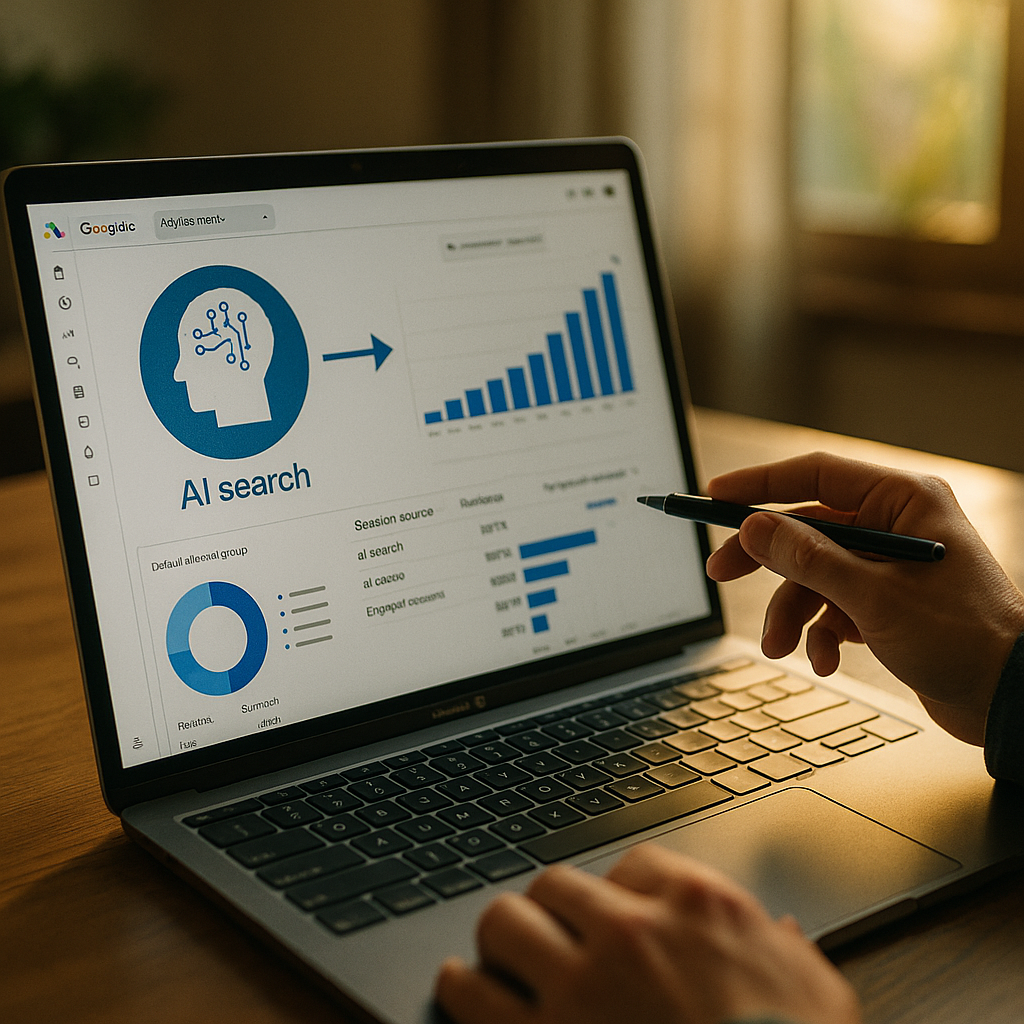
Somewhere between 15 and 20 percent of branded referral traffic at major consumer brands now originates from AI assistants, according to early benchmarking data from digital analytics consultancies. The AI search traffic channel is no longer a rounding error. It’s a measurable, isolatable signal inside GA4’s default channel groupings, and the brands treating it like organic search are misallocating resources in ways they won’t catch until Q4 review.
What Changed in the Default Channel Groupings
Google’s default channel groupings inside GA4 were updated to recognize referral traffic from AI assistant domains, specifically chat.openai.com, gemini.google.com, and claude.ai, as a discrete channel rather than lumping them into “Referral” or “Organic Search.” This is a significant architectural shift. For years, practitioners debated whether dark social or zero-click traffic was bleeding into direct. Now you have the inverse problem: AI-sourced visits were being silently absorbed into channels with completely different intent profiles, conversion benchmarks, and optimization levers.
The mechanics matter here. When a user asks ChatGPT a product research question and clicks a cited link, the referrer string passes through as chat.openai.com. GA4’s updated regex logic catches that. Same for Gemini responses that link out and Claude’s browsing-enabled sessions. What this means operationally: if you’re running GA4 without a custom channel grouping audit post-update, you may already have clean AI channel data sitting in your reports, unexamined.
AI referral visits convert at a different rate than organic search — often higher intent on research-phase queries, but requiring different landing page architecture to capture that intent before the user bounces back to the assistant interface.
Intent Signature Is Not the Same as Organic Search
This is the part most digital teams miss. They see “AI Search” appearing in channel reports, benchmark it against organic search CPCs and conversion rates, find it underperforms, and mentally file it as a secondary channel. Wrong frame entirely.
Users arriving from AI assistants have already been pre-qualified by a generative response. They didn’t see ten blue links and pick yours. The assistant cited your brand as part of a synthesized answer to a specific question. That means the user arrives with context, often product-specific context, they don’t have when landing cold from a keyword-triggered organic result. The first-session behavior differs: longer time-on-page on product detail pages, lower exit rates on comparison content, higher rates of email capture when the landing page reinforces the specific answer the assistant gave.
The implication for brand teams: your AI referral channel needs its own conversion benchmarks, its own landing page variants, and its own attribution logic. Measuring it against organic search KPIs is like judging paid social by email open rate standards.
For a deeper look at how attribution models need to evolve to handle this split, the dual attribution stack for AI referrals framework is worth working through with your analytics team.
How to Isolate and Audit the Channel Correctly
Start with a GA4 channel grouping audit. Navigate to Admin, then Data Settings, then Channel Groups. Confirm that the “AI Search” default group exists and that its regex rules correctly capture the major assistant domains. As of now, the standard list should include:
- chat.openai.com (ChatGPT web interface and browsing-enabled sessions)
- gemini.google.com (Gemini responses with cited links)
- claude.ai (Anthropic’s Claude with web citations)
- perplexity.ai (Perplexity’s cited answer engine, frequently omitted from default configs)
- copilot.microsoft.com (Bing’s AI interface, which often routes through different referrer strings)
Perplexity in particular is underrepresented in default groupings. It generates a meaningful volume of cited traffic for brands in technology, finance, and health categories, and it frequently gets misclassified under “Referral.” Check your referral source list manually and pull sessions from these domains before assuming your AI channel report is complete.
Next, build a comparison segment in GA4: AI Search channel versus Organic Search channel, same date range, same landing pages where possible. Look specifically at engaged sessions per user, scroll depth on long-form product pages, and goal completions tied to consideration-stage actions like demo requests or product comparison downloads. The patterns you find should directly inform landing page prioritization. For the broader identity resolution piece that makes this attribution defensible, see how teams are handling AI referral traffic and CRM attribution.
What the Data Is Actually Telling You About Content Performance
High AI referral volume to a specific page tells you something important: an AI assistant is citing that content in response to a query your audience is actually asking. That is free market research on what your brand is being associated with in generative responses.
Low AI referral volume to pages you expected to rank well in assistants? That’s a content structure problem, not a traffic problem. AI assistants favor content that is structured for direct answer extraction: short declarative paragraphs, named entities, specific claims with supporting context. If your cornerstone product pages are written for keyword density rather than answer completeness, they won’t get cited even if they rank in traditional search.
This is where the analytics channel data feeds back into your content strategy in a direct loop. Brands that are structured for generative AI search citations tend to see their AI referral channel grow quarter-over-quarter as assistant models update their training and retrieval indexes. Brands that aren’t see the channel plateau or decline.
High AI referral volume to a specific page is market research. It tells you exactly what your brand is being cited for inside generative assistant responses — use it to audit your content strategy, not just celebrate the traffic.
Connecting AI Channel Data to Influencer and Creator Programs
Here’s a signal most brand teams aren’t acting on yet. When AI referral volume spikes to a category or product page following a creator campaign, you’re seeing evidence that the creator’s content is being indexed and cited by AI assistants. This is not theoretical. Creators who publish structured, citation-worthy content on platforms that AI models crawl — YouTube descriptions, long-form LinkedIn posts, Substack, dedicated blog content — generate a downstream AI referral lift that doesn’t show up in traditional influencer attribution windows.
The operational implication: your creator brief needs to account for structured content outputs that feed AI citation likelihood, not just engagement rate optimization. The work on GEO-ready creator briefs is directly relevant here. Pair that with analytics monitoring of your AI Search channel in the weeks following a creator campaign launch, and you have a new attribution signal that most competitors aren’t measuring.
For brands building out the organizational capacity to act on this data systematically, the AI marketing org structure question becomes unavoidable. Someone needs to own the AI channel in analytics the same way someone owns paid search or email. Right now, at most brands, it’s nobody’s job specifically.
Reporting Up: Framing AI Channel Data for Budget Conversations
When you take AI Search channel data to a CMO or VP-level budget conversation, the framing that lands is not “we’re getting traffic from ChatGPT.” The framing that lands is: “We have a zero-cost earned channel that is growing, has higher consideration-stage engagement than organic search, and is currently unmanaged. Here’s what it would take to actively invest in it.”
Concrete budget asks that follow from this data include: landing page personalization by AI referral source, structured content investment for pages receiving AI citations, and creator brief evolution to include GEO-structured deliverables. All of these have measurable return loops back to the channel data in GA4. That’s what makes it a defensible ask, not just a trend narrative.
External benchmarking resources like HubSpot’s marketing data and eMarketer’s channel research are starting to publish AI traffic benchmarks by vertical. Use those to contextualize your own numbers before the conversation. Google’s GA4 documentation on default channel groupings is also regularly updated and worth bookmarking as assistant domains expand. Additionally, Statista’s AI usage data provides supporting context on generative search adoption rates that strengthen the business case.
Start this week: pull your AI Search channel data from GA4 for the last 90 days, segment by landing page, and rank pages by engaged session rate. That single report will tell you which content is earning citations and which needs restructuring. From there, every other decision follows.
Frequently Asked Questions
What is the AI Search traffic channel in GA4?
The AI Search channel is a default channel grouping in Google Analytics 4 that isolates referral traffic originating from AI assistant platforms such as ChatGPT, Gemini, Claude, and Perplexity. When users click a link cited in an AI assistant response, the session is tagged under this channel rather than grouped with traditional organic search or general referral traffic.
Is AI Search traffic different from organic search in terms of user intent?
Yes, meaningfully so. Users arriving via AI assistant citations have already received a synthesized answer to a specific query and clicked through for deeper engagement. This often correlates with higher consideration-stage intent, longer page engagement, and different conversion behavior compared to cold organic search arrivals. Benchmarking the two channels against the same KPIs will produce misleading conclusions.
How do I make sure my GA4 setup is correctly capturing AI referral traffic?
Navigate to Admin, then Data Settings, then Channel Groups in GA4. Verify that AI assistant domains including chat.openai.com, gemini.google.com, claude.ai, perplexity.ai, and copilot.microsoft.com are included in the AI Search channel definition. Also manually review your Referral source report for these domains to catch any sessions that may have been misclassified before the default grouping update was applied.
Can creator and influencer campaigns increase AI search referral traffic?
Yes. Creator content published on crawlable platforms with structured, citation-worthy formatting can increase the likelihood that AI assistants cite those materials in responses. This generates downstream AI referral traffic to brand pages. Monitoring your AI Search channel in the weeks following a creator campaign launch gives you an attribution signal most competitors are not currently measuring.
How should I report AI Search channel performance to senior leadership?
Frame it as a growing zero-cost earned channel with measurable engagement advantages over organic search at the consideration stage. Bring 90-day trend data, engagement comparisons versus organic search, and a clear list of investment areas: landing page optimization for AI-referred visitors, structured content development, and creator brief evolution to include GEO-ready outputs. Tie every ask back to a metric that the channel data already tracks.
Top Influencer Marketing Agencies
The leading agencies shaping influencer marketing in 2026
Agencies ranked by campaign performance, client diversity, platform expertise, proven ROI, industry recognition, and client satisfaction. Assessed through verified case studies, reviews, and industry consultations.
Moburst

-
2

The Shelf
Boutique Beauty & Lifestyle Influencer AgencyA data-driven boutique agency specializing exclusively in beauty, wellness, and lifestyle influencer campaigns on Instagram and TikTok. Best for brands already focused on the beauty/personal care space that need curated, aesthetic-driven content.Clients: Pepsi, The Honest Company, Hims, Elf Cosmetics, Pure LeafVisit The Shelf → -
3

Audiencly
Niche Gaming & Esports Influencer AgencyA specialized agency focused exclusively on gaming and esports creators on YouTube, Twitch, and TikTok. Ideal if your campaign is 100% gaming-focused — from game launches to hardware and esports events.Clients: Epic Games, NordVPN, Ubisoft, Wargaming, Tencent GamesVisit Audiencly → -
4

Viral Nation
Global Influencer Marketing & Talent AgencyA dual talent management and marketing agency with proprietary brand safety tools and a global creator network spanning nano-influencers to celebrities across all major platforms.Clients: Meta, Activision Blizzard, Energizer, Aston Martin, WalmartVisit Viral Nation → -
5

The Influencer Marketing Factory
TikTok, Instagram & YouTube CampaignsA full-service agency with strong TikTok expertise, offering end-to-end campaign management from influencer discovery through performance reporting with a focus on platform-native content.Clients: Google, Snapchat, Universal Music, Bumble, YelpVisit TIMF → -
6

NeoReach
Enterprise Analytics & Influencer CampaignsAn enterprise-focused agency combining managed campaigns with a powerful self-service data platform for influencer search, audience analytics, and attribution modeling.Clients: Amazon, Airbnb, Netflix, Honda, The New York TimesVisit NeoReach → -
7

Ubiquitous
Creator-First Marketing PlatformA tech-driven platform combining self-service tools with managed campaign options, emphasizing speed and scalability for brands managing multiple influencer relationships.Clients: Lyft, Disney, Target, American Eagle, NetflixVisit Ubiquitous → -
8

Obviously
Scalable Enterprise Influencer CampaignsA tech-enabled agency built for high-volume campaigns, coordinating hundreds of creators simultaneously with end-to-end logistics, content rights management, and product seeding.Clients: Google, Ulta Beauty, Converse, AmazonVisit Obviously →