


Social commerce conversion rates still hover around 1-3% globally, and checkout abandonment is the primary culprit. Meta’s virtual banking card feature, which generates one-time card numbers from existing Mastercard and Visa accounts for in-app purchases, is a direct attack on that friction. For brand strategists running creator-linked commerce programs, this changes the security architecture conversation entirely.
What Meta Is Actually Building Here
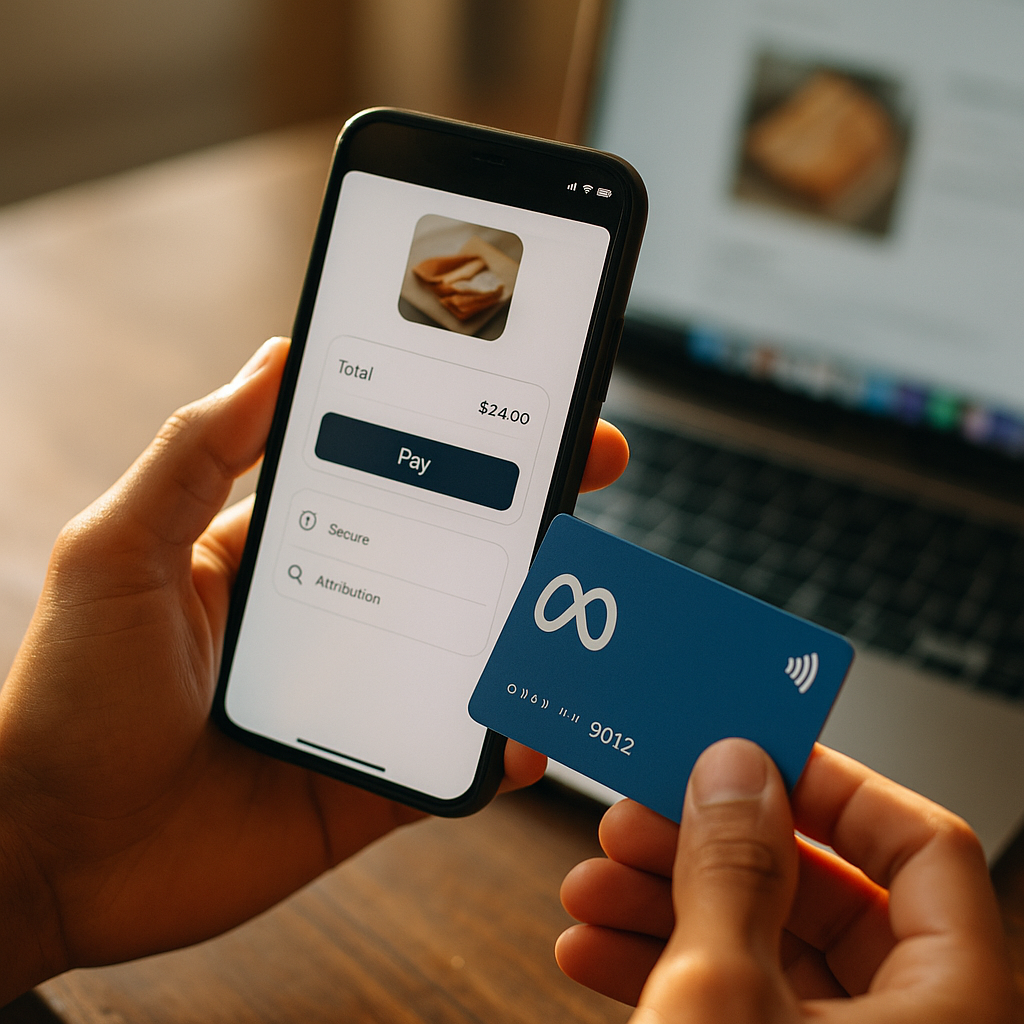
Strip away the payments jargon and this is straightforward: a consumer links their existing Visa or Mastercard to Meta’s system. When they tap “Buy” inside Instagram or Facebook, Meta generates a single-use virtual card number, processes the transaction, and the consumer’s real card details never touch a third-party merchant server. The underlying card network handles settlement. Meta acts as the tokenization layer.
This isn’t novel technology. Apple Pay, Google Pay, and privacy-focused services like Privacy.com have operated on similar tokenization logic for years. What’s different is the context: this lives natively inside the social discovery and creator content environment, where purchase intent is highest and drop-off has historically been worst.
For brands, the operative question isn’t “how does this work?” It’s “what does this do to our attribution model, our fraud exposure, and our creator commerce ROI?”
The Security Architecture Shift Brands Need to Audit Now
When a consumer completes a purchase through a creator’s affiliate link using a Meta-generated virtual card number, the transaction path changes materially. The brand’s merchant processor receives a tokenized card number, not the consumer’s real PAN (primary account number). This has three immediate implications for your security team.
Reduced chargeback exposure. One-time card numbers limit the window for card-not-present fraud because the number is invalid after a single use. Brands selling through Instagram Shops or Facebook Checkout have historically absorbed chargeback rates that run higher than direct-to-consumer channels. Tokenization compresses that risk.
Compliance posture changes. Your PCI DSS scope for Meta-processed transactions narrows when Meta holds the cardholder data environment. That’s not a reason to de-prioritize compliance reviews, it’s a reason to re-scope them. Brands with enterprise security teams should update their third-party risk assessments for Meta as a payments processor, not just an ad platform. The FTC’s guidelines on consumer financial data sharing mean your legal team needs to be in this conversation from day one.
Data access trade-off. Here’s the friction point that senior brand strategists need to flag internally: when Meta tokenizes the transaction, you get the sale. You may not get the granular purchase data you’d receive through a first-party checkout on your own DTC site. Depending on your Meta Commerce integration tier, post-purchase data richness can vary significantly. Review your data sharing agreements with Meta Business before assuming parity with native checkout.
Virtual card tokenization reduces your fraud exposure on social commerce transactions, but it simultaneously narrows the first-party data signal you’d otherwise capture through a DTC checkout flow. That trade-off needs explicit sign-off from both your security and data teams before you scale creator-linked campaigns through Meta’s in-app checkout.
Creator-Linked Purchase Friction: What Actually Changes
The creator commerce funnel has a specific drop-off problem. A consumer watches a creator’s video, clicks an affiliate link, gets redirected to a mobile browser or a slow-loading product page, hits a checkout form, abandons. Meta’s in-app checkout with virtual card generation collapses that entire redirect sequence. The consumer stays in the app. Their payment credentials are pre-stored and tokenized. One-time number generation happens invisibly in the background.
For brands running creator programs tied to CPA metrics, this is consequential. If the checkout friction reduction drives even a 15-20% lift in conversion on creator-tagged traffic, your CPA calculations need immediate revision. Finance teams that approved creator budgets based on historical social commerce conversion benchmarks are working with stale models.
There’s also a creator compensation dimension. If Meta’s checkout captures the purchase event natively, affiliate tracking through third-party tools like Impact or ShareASale needs to be validated against Meta’s own attribution. Attribution and contract architecture for creator partnerships should explicitly address which system of record governs commission payouts when Meta’s in-app purchase data and your affiliate platform data diverge.
Platform Dependency Risk Is Real
Every time Meta adds a native capability that replaces a third-party tool in your stack, you gain efficiency and cede leverage. Virtual card checkout is no different. Brands that migrate significant creator commerce volume into Meta’s native checkout are implicitly betting on platform stability, policy continuity, and Meta’s willingness to share transaction data at the granularity you need.
That’s not a reason to avoid the feature. It’s a reason to architect your program with explicit exit criteria. What percentage of your social commerce GMV are you comfortable running through a single platform’s checkout? What’s your contingency if Meta adjusts its data sharing terms or increases its take rate? These are operational questions worth resolving before a campaign goes live at scale.
Brands investing in AI-first program infrastructure should treat Meta’s checkout as one node in a multi-platform commerce architecture, not a replacement for a resilient DTC channel. The brands most exposed are those who let social platform convenience substitute for owned infrastructure investment.
What This Means for Multi-Platform Social Commerce Strategy
TikTok Shop has demonstrated that native checkout with reduced friction drives meaningful GMV. TikTok for Business has published case studies showing double-digit conversion lifts when users complete purchases without leaving the app. Meta is now pursuing the same architecture with the added trust signal of Mastercard and Visa network tokenization, which carries more consumer confidence than a newer payments rail.
For brand strategists allocating across platforms, this creates a new variable in the platform selection calculus. Instagram’s audience skews older and higher-income than TikTok’s in most Western markets. If Meta’s virtual card checkout converts that audience more efficiently, the ROI argument for Instagram creator campaigns strengthens, particularly for categories like beauty, fashion, and home goods where Instagram creator content already drives strong purchase intent.
Separately, the competitive pressure on Pinterest, Snapchat, and YouTube to offer comparable checkout infrastructure intensifies. Brands running video budget reallocation decisions should factor payment infrastructure maturity into platform scoring, not just audience reach and creative format.
Meta’s Visa and Mastercard tokenization layer doesn’t just reduce checkout friction. It signals that Meta is competing directly with Shopify and Stripe for the social commerce transaction layer, with creator content as the acquisition channel.
Operational Checklist Before You Scale Into Meta’s In-App Checkout
Before committing significant creator campaign budget to a checkout flow built on Meta’s virtual card infrastructure, run through these operational gates:
- Update your third-party risk register. Meta now holds a payments processor role, not just a media partner role. Your security and procurement teams should reflect this.
- Validate attribution parity. Run a controlled test comparing affiliate platform attribution versus Meta’s native purchase event data. Understand the discrepancy rate before you restructure creator commission agreements.
- Review data sharing agreements. Confirm what post-purchase consumer data Meta shares back under your current Commerce API integration. Adjust if necessary before scaling.
- Revise CPA benchmarks. If historical social commerce CPA was calculated on redirected checkout flows, your new baseline should account for friction reduction. Don’t hold the new channel to outdated cost expectations, or you’ll underfund it.
- Assess creator contract terms. Does your current affiliate agreement specify which platform’s purchase data governs payouts? If not, update it. The compliance layer in creator contracts needs to evolve alongside the commerce infrastructure.
- Monitor Mastercard and Visa policy updates. Mastercard’s tokenization standards and Visa’s network rules for virtual card issuance will govern how Meta’s feature evolves. Changes at the network level will cascade to your checkout architecture.
The brand teams that move deliberately here, auditing before scaling, will avoid the compliance surprises and attribution disputes that tend to emerge when commerce infrastructure changes faster than internal processes.
Your next concrete step: schedule a working session with your security, finance, and creator partnerships leads to re-evaluate your Meta Commerce integration tier and update creator commission agreements to specify attribution source of record before your next major campaign launch.
FAQs
How does Meta’s virtual banking card work for in-app purchases?
Meta generates a one-time virtual card number drawn from a consumer’s linked Mastercard or Visa account. When a user taps “Buy” inside Instagram or Facebook, Meta tokenizes the transaction using this single-use number, processes the payment, and the consumer’s actual card details are never shared with the merchant. The Visa or Mastercard network handles settlement in the background.
What are the security benefits for brands using Meta’s in-app checkout?
Because each transaction uses a single-use tokenized card number, brands receive reduced exposure to card-not-present fraud and chargeback risk. The brand’s merchant processor never handles the consumer’s real PAN. Brands should update their PCI DSS scope assessments to reflect Meta’s role as a cardholder data environment holder, not just an advertising platform.
How does this affect creator affiliate attribution?
When purchases complete natively inside Meta’s app, the transaction data may originate from Meta’s Commerce API rather than third-party affiliate platforms like Impact or ShareASale. Brands need to validate discrepancy rates between the two systems and update creator commission agreements to specify which data source governs payouts.
Does Meta’s virtual card checkout affect first-party data collection?
Yes. When Meta tokenizes and processes the transaction, brands may receive less granular post-purchase consumer data compared to a first-party DTC checkout. The degree of data access depends on your Meta Commerce integration tier and your data sharing agreement terms. Brands should audit this before migrating significant checkout volume to Meta’s native flow.
Should brands move all creator commerce to Meta’s in-app checkout?
No. Concentrating checkout volume on a single platform creates dependency risk around data access, policy changes, and take rate adjustments. Meta’s in-app checkout should be treated as one channel in a multi-platform commerce architecture, not a replacement for a resilient owned DTC channel. Brands should define what percentage of social commerce GMV they’re comfortable routing through any single platform’s native checkout.
Top Influencer Marketing Agencies
The leading agencies shaping influencer marketing in 2026
Agencies ranked by campaign performance, client diversity, platform expertise, proven ROI, industry recognition, and client satisfaction. Assessed through verified case studies, reviews, and industry consultations.
Moburst

-
2

The Shelf
Boutique Beauty & Lifestyle Influencer AgencyA data-driven boutique agency specializing exclusively in beauty, wellness, and lifestyle influencer campaigns on Instagram and TikTok. Best for brands already focused on the beauty/personal care space that need curated, aesthetic-driven content.Clients: Pepsi, The Honest Company, Hims, Elf Cosmetics, Pure LeafVisit The Shelf → -
3

Audiencly
Niche Gaming & Esports Influencer AgencyA specialized agency focused exclusively on gaming and esports creators on YouTube, Twitch, and TikTok. Ideal if your campaign is 100% gaming-focused — from game launches to hardware and esports events.Clients: Epic Games, NordVPN, Ubisoft, Wargaming, Tencent GamesVisit Audiencly → -
4

Viral Nation
Global Influencer Marketing & Talent AgencyA dual talent management and marketing agency with proprietary brand safety tools and a global creator network spanning nano-influencers to celebrities across all major platforms.Clients: Meta, Activision Blizzard, Energizer, Aston Martin, WalmartVisit Viral Nation → -
5

The Influencer Marketing Factory
TikTok, Instagram & YouTube CampaignsA full-service agency with strong TikTok expertise, offering end-to-end campaign management from influencer discovery through performance reporting with a focus on platform-native content.Clients: Google, Snapchat, Universal Music, Bumble, YelpVisit TIMF → -
6

NeoReach
Enterprise Analytics & Influencer CampaignsAn enterprise-focused agency combining managed campaigns with a powerful self-service data platform for influencer search, audience analytics, and attribution modeling.Clients: Amazon, Airbnb, Netflix, Honda, The New York TimesVisit NeoReach → -
7

Ubiquitous
Creator-First Marketing PlatformA tech-driven platform combining self-service tools with managed campaign options, emphasizing speed and scalability for brands managing multiple influencer relationships.Clients: Lyft, Disney, Target, American Eagle, NetflixVisit Ubiquitous → -
8

Obviously
Scalable Enterprise Influencer CampaignsA tech-enabled agency built for high-volume campaigns, coordinating hundreds of creators simultaneously with end-to-end logistics, content rights management, and product seeding.Clients: Google, Ulta Beauty, Converse, AmazonVisit Obviously →