


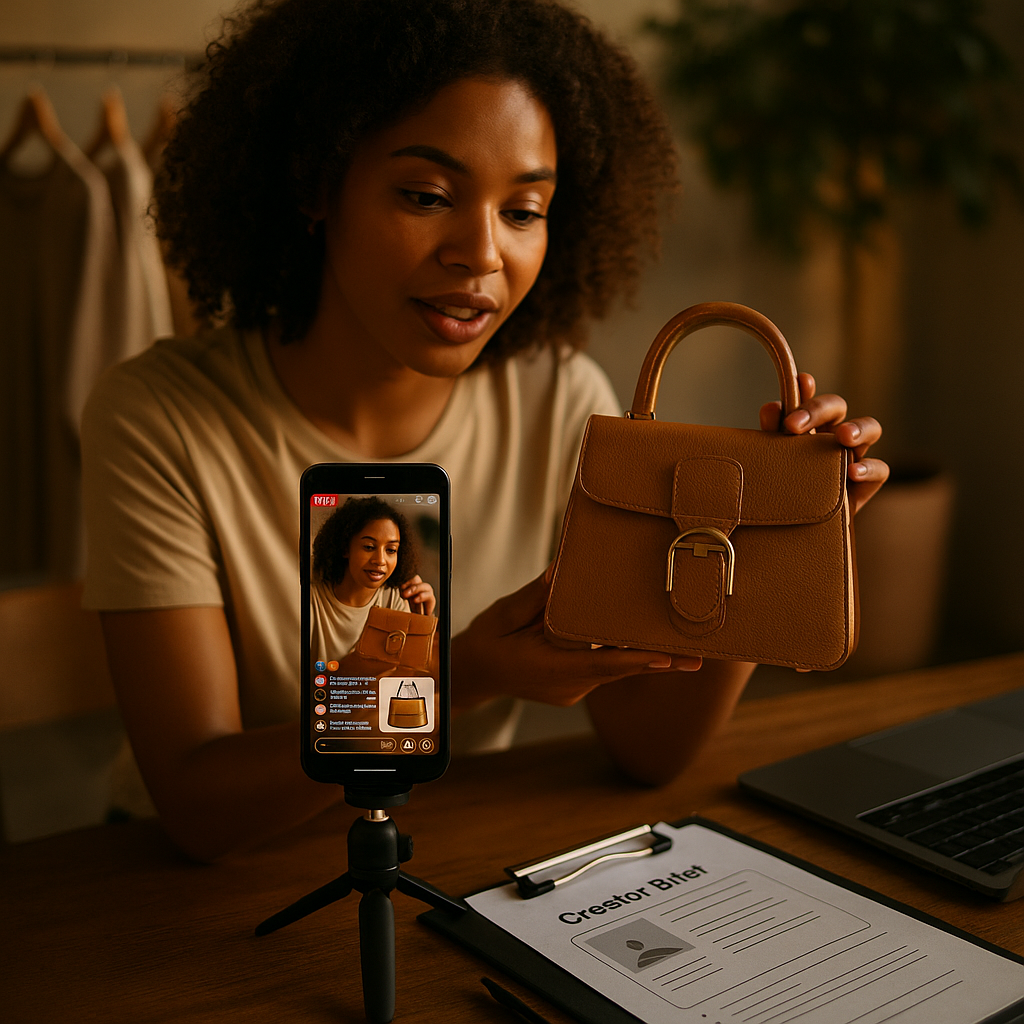
Live commerce now drives over $35 billion in annual GMV across Western markets, and Instagram’s native Live Shopping tools are about to make creator-hosted selling a serious line item in your influencer budget. If you haven’t built an operational framework for it yet, you’re already behind.
What Instagram Live Shopping Actually Does (and Doesn’t Do)
The core mechanic is straightforward: a creator goes live, pins products from a connected Instagram Shop to the stream, and viewers tap to purchase without exiting the app. No link-in-bio friction. No browser redirect. The full discovery-to-checkout loop happens inside a single session.
What brands often miss is the backend complexity. The feature integrates with Meta’s Commerce Manager, meaning your product catalog, inventory sync, and checkout flow all need to be in good standing before a creator can tag a single SKU. If your catalog has compliance flags or pricing inconsistencies, those surface in real-time, in front of a live audience. That’s a risk management problem, not just an ops issue.
Instagram also surfaces active livestreams algorithmically in the Reels tab and through personalized notifications, so reach is not purely dependent on a creator’s existing follower count. This changes the calculus for creator selection. Engagement rate and audience overlap still matter, but discoverability during the live window matters equally. For brands already working on Instagram paid reach strategy, this is an extension of existing logic, not a separate playbook.
Structuring a Creator-Hosted Live Shopping Event That Actually Converts
Most brand-side livestream failures come from treating the format like a televised ad. It isn’t. It’s closer to a staffed pop-up where the creator is both the floor associate and the entertainment. That distinction should drive every structural decision.
Pre-event setup (the 72-hour window): Confirm product tagging access with the creator’s account at least three days before the event. Meta’s Commerce Manager permissions require admin approval, and this step fails more often than it should. Simultaneously, run a test session in a restricted broadcast to verify the checkout flow end-to-end. One broken payment step during a live event is difficult to recover from.
Creator briefing: Your brief needs to specify product sequencing, not just talking points. Structure the session in three acts: a hook segment (first 10 minutes) featuring your highest-interest product, a deep-dive segment for products requiring demonstration, and a close segment with urgency levers like limited inventory callouts or exclusive live-only pricing. Pair this with a clear disclosure protocol. The FTC’s guidelines on sponsored content apply fully to live commerce, and the creator needs a scripted disclosure moment, not an afterthought. You can adapt elements from frameworks built for TikTok Shop creator briefs since the structural logic of hook, demonstrate, and convert translates across platforms.
Moderator role: Assign a brand-side moderator to the comments in real-time. This person surfaces questions for the creator to answer on air, flags compliance issues (pricing claims, unsupported efficacy statements), and monitors viewer sentiment. Without this role, comment sections become a liability.
Creator-hosted livestreams with a dedicated brand moderator see up to 40% fewer compliance incidents and significantly higher Q&A conversion rates compared to unmonitored sessions. This is one operational cost that pays for itself.
Technical floor: Require a minimum upload speed of 25 Mbps, wired or 5G connectivity, and a ring light or equivalent. Stream quality directly affects perceived product quality. A pixelated beauty product demo is a brand equity problem.
The Attribution Problem Nobody Wants to Talk About
Here is where live commerce exposes a structural gap in most brand measurement stacks. Standard influencer attribution relies on UTM parameters, affiliate links, or promo codes. None of those translate cleanly into a closed in-app purchase flow. When the transaction completes inside Instagram’s native checkout, you’re depending entirely on Meta’s own attribution reporting via Commerce Manager and Ads Manager.
That means your attribution data lives inside Meta’s ecosystem. You can verify order volume, revenue, and product-level performance through Commerce Manager. What you can’t easily do is reconcile that against your own first-party data or your brand’s MTA (multi-touch attribution) model without an additional data pipeline.
The practical fix for this cycle: build a post-event reconciliation process. Export Commerce Manager order data within 24 hours of the event, cross-reference it against any promo code usage (even within the native checkout, you can embed creator-specific codes as an additional signal), and map it to your CRM if your email capture is enabled at checkout. This won’t give you perfect attribution parity, but it gives you defensible data to take into a budget review.
For brands already navigating attribution complexity, the analytical frameworks covered in Instagram shoppable creator briefs provide a useful foundation for structuring measurement before the event, not after it.
The broader industry signal here: eMarketer projects that social commerce attribution will remain fragmented for the foreseeable future precisely because each platform operates its own closed checkout. Brands that build platform-specific reconciliation workflows now will have a material analytical advantage.
Creator Selection Criteria Specific to Live Commerce
Not every high-performing Instagram creator is a strong live commerce host. The skill set is genuinely different. You need someone who can speak fluently on-camera for 30-60 minutes, handle product questions in real-time, pivot without losing narrative momentum, and maintain energy through the close segment when viewer counts typically dip.
Evaluation criteria to add to your vetting process:
- Live history: Review the creator’s past 5-10 Instagram Lives. Completion rate matters more than view count. Does the audience stay?
- Commerce experience: Prioritize creators who have previously run affiliate or Shop campaigns. Comfort with selling language on camera is not universal.
- Audience purchase behavior: Request Creator Marketplace data showing shopping engagement metrics, not just reach and impressions.
- Brand safety in live context: Live content is inherently uncontrolled. Review prior lives for off-script moments, comment management, and general brand fit under pressure.
This is adjacent to the creator vetting rigor that applies in B2B contexts, such as what’s detailed in LinkedIn creator vetting frameworks, but the behavioral indicators in a live format are distinct enough to require their own rubric.
What This Means for Live Commerce Attribution Standards Going Forward
Instagram’s tooling raises a real industry question: will platforms be pressured to provide third-party verifiable attribution for in-app commerce events? Right now, the answer is no. Meta controls the checkout, the reporting, and the data export. That’s the same structural tension brands face on TikTok Shop, where TikTok Shop sponsored video measurement also runs through proprietary analytics.
The likely evolution is toward platform-certified third-party integrations, similar to how Meta allows certified measurement partners like Nielsen and DoubleVerify to validate ad delivery. Live commerce measurement will probably follow the same path, with brands needing to contract with approved partners to get attribution data that sits outside the platform’s own interface.
For now, brands should document their measurement methodology explicitly in every live commerce campaign brief. Define what counts as a conversion (native checkout order, promo code redemption, or post-event website purchase attributed to the creator’s audience). Define the attribution window (same-session only, or 7-day post-event). Get agency and brand sign-off before the event. This prevents post-campaign disputes about whether a program “worked.”
The brands that will win in live commerce are the ones treating attribution methodology as a pre-campaign deliverable, not a post-campaign explanation.
Compliance deserves a separate flag here. The FTC’s disclosure requirements apply to live sponsored content, and the spontaneous, unscripted nature of live formats makes compliance harder to enforce. Your legal team should review the creator agreement to include explicit disclosure timing requirements, not just a general obligation to disclose.
Finally, cross-platform context matters. Brands running parallel live commerce strategies on TikTok Shop can use learnings from TikTok’s TopReach sequencing to understand how pre-event paid amplification affects live event attendance and conversion. The mechanics differ, but the principle of warming an audience before asking them to buy applies directly to Instagram Live Shopping.
Start by running one creator-hosted live event with a single SKU, a closed-loop attribution setup, and a post-event reconciliation process. Measure session completion rate, conversion rate per viewer, and average order value. Use those numbers to build your internal benchmark before scaling the format into your influencer program budget.
Frequently Asked Questions
How does Instagram Live Shopping attribution work for brands?
Attribution for Instagram Live Shopping runs through Meta’s Commerce Manager, which records native checkout transactions tied to the live session and tagged products. Brands can export order-level data after the event and cross-reference it with creator-specific promo codes for additional signal. Because the checkout is closed within the app, external MTA models cannot capture these transactions without a manual reconciliation process or a certified Meta measurement partner integration.
What should a creator brief include for an Instagram Live Shopping event?
A live shopping brief should specify product sequencing across three structured segments (hook, demonstration, and close), disclosure timing and language that complies with FTC guidelines, technical requirements for stream quality, and a moderation protocol for the comments section. It should also define the creator’s authority to make pricing claims and establish the escalation path if a compliance issue arises during the live session.
How do brands select creators for live commerce on Instagram?
Selection should go beyond standard reach and engagement metrics. Evaluate the creator’s live completion rate across past sessions, prior commerce experience (affiliate campaigns, Shop collabs), audience shopping behavior data from Creator Marketplace, and their track record managing unscripted moments on camera. Live commerce requires a specific on-air selling skill set that doesn’t automatically correlate with a creator’s performance in static or short-form formats.
Can brands run paid promotion alongside an Instagram Live Shopping event?
Yes. Brands can run Instagram ad campaigns that drive traffic to a creator’s upcoming or active live session. This is particularly effective as a pre-event awareness tactic using Stories or Reels placements. Meta’s Ads Manager allows you to target audiences likely to engage with shopping content, and the live session itself benefits from algorithmic amplification in the Reels tab. Combining organic creator reach with paid promotion is the most effective structure for maximizing live viewership.
What are the FTC requirements for sponsored content in Instagram Live Shopping sessions?
The FTC requires that material connections between a brand and creator be disclosed clearly and conspicuously, and this applies fully to live sponsored commerce. Creators must verbally disclose the sponsorship at the beginning of the session and ideally at regular intervals throughout, given that viewers join at different points. Written disclosures in the stream title or description are insufficient on their own. Brand agreements should contractually specify the timing and format of disclosure to protect both parties.
Top Influencer Marketing Agencies
The leading agencies shaping influencer marketing in 2026
Agencies ranked by campaign performance, client diversity, platform expertise, proven ROI, industry recognition, and client satisfaction. Assessed through verified case studies, reviews, and industry consultations.
Moburst

-
2

The Shelf
Boutique Beauty & Lifestyle Influencer AgencyA data-driven boutique agency specializing exclusively in beauty, wellness, and lifestyle influencer campaigns on Instagram and TikTok. Best for brands already focused on the beauty/personal care space that need curated, aesthetic-driven content.Clients: Pepsi, The Honest Company, Hims, Elf Cosmetics, Pure LeafVisit The Shelf → -
3

Audiencly
Niche Gaming & Esports Influencer AgencyA specialized agency focused exclusively on gaming and esports creators on YouTube, Twitch, and TikTok. Ideal if your campaign is 100% gaming-focused — from game launches to hardware and esports events.Clients: Epic Games, NordVPN, Ubisoft, Wargaming, Tencent GamesVisit Audiencly → -
4

Viral Nation
Global Influencer Marketing & Talent AgencyA dual talent management and marketing agency with proprietary brand safety tools and a global creator network spanning nano-influencers to celebrities across all major platforms.Clients: Meta, Activision Blizzard, Energizer, Aston Martin, WalmartVisit Viral Nation → -
5

The Influencer Marketing Factory
TikTok, Instagram & YouTube CampaignsA full-service agency with strong TikTok expertise, offering end-to-end campaign management from influencer discovery through performance reporting with a focus on platform-native content.Clients: Google, Snapchat, Universal Music, Bumble, YelpVisit TIMF → -
6

NeoReach
Enterprise Analytics & Influencer CampaignsAn enterprise-focused agency combining managed campaigns with a powerful self-service data platform for influencer search, audience analytics, and attribution modeling.Clients: Amazon, Airbnb, Netflix, Honda, The New York TimesVisit NeoReach → -
7

Ubiquitous
Creator-First Marketing PlatformA tech-driven platform combining self-service tools with managed campaign options, emphasizing speed and scalability for brands managing multiple influencer relationships.Clients: Lyft, Disney, Target, American Eagle, NetflixVisit Ubiquitous → -
8

Obviously
Scalable Enterprise Influencer CampaignsA tech-enabled agency built for high-volume campaigns, coordinating hundreds of creators simultaneously with end-to-end logistics, content rights management, and product seeding.Clients: Google, Ulta Beauty, Converse, AmazonVisit Obviously →