


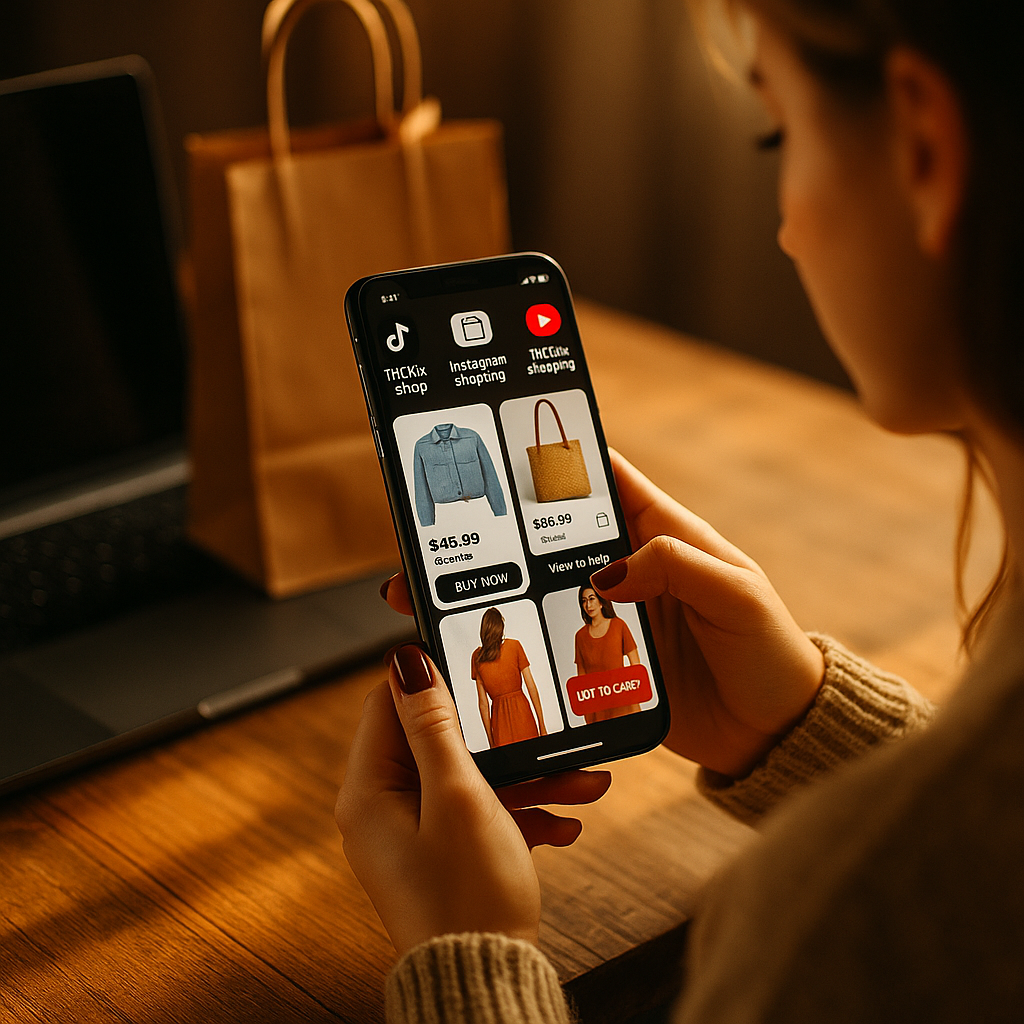
Three platforms, three checkout flows, one brutal question: where does your commerce budget actually convert? TikTok Shop vs Instagram Shopping vs YouTube Shopping isn’t a theoretical debate anymore — it’s a line-item decision brands are making every quarter, and the wrong call burns real spend on the wrong funnel.
None of these platforms built their shopping stack the same way. That’s the part most comparison charts miss.
Why This Comparison Matters More Than It Used To
Two years ago, “social commerce” mostly meant a link in bio and a prayer. Now it means native checkout, in-feed product tags, live shopping events, and creator affiliate programs that pay out on attributed sales. According to eMarketer, social commerce sales in the U.S. are projected to keep climbing past $100 billion, and the platform you pick as your primary channel now shapes your entire content production calendar, not just your ad budget.
The stakes are operational, not just creative. Pick TikTok Shop and you’re building for short-form, high-frequency drops. Pick YouTube Shopping and you’re briefing longer, trust-building content. Pick Instagram and you’re threading tags across Reels, Stories, and Live with a much more fragmented discovery engine. Get the platform-content match wrong, and your creators produce assets that never see a for-you page.
Brands that treat TikTok Shop, Instagram Shopping, and YouTube Shopping as interchangeable checkout buttons are leaving conversion rate on the table — each platform rewards a different creative format and a different trust signal.
TikTok Shop: Built for Speed, Not Patience
TikTok Shop’s whole architecture is optimized for impulse. Checkout happens without leaving the app, product cards appear mid-video, and the affiliate marketplace lets creators claim commission on items they never had to pitch to a brand manager first. Our own coverage of speed to checkout found TikTok consistently shaves seconds off the path from view to purchase compared to Instagram’s tag-to-browser handoff.
That speed is the entire value proposition. But it comes with tradeoffs.
Live shopping is where TikTok separates itself. The platform’s move toward 24/7 livestream infrastructure means brands can no longer treat live commerce as a one-off event — it’s becoming a staffing and inventory problem as much as a marketing one. Brands running TikTok Shop seriously now need dedicated live hosts, rotating schedules, and real-time inventory sync, which is a very different operational lift than a quarterly Instagram campaign.
The affiliate layer deserves its own mention. TikTok’s affiliate leaderboard system turns creator seeding into a competitive, gamified channel where top performers get visibility boosts. That’s powerful for scale, but it also means brand safety and vetting matter more, not less — a creator chasing leaderboard rank has incentive to overstate claims. Compliance teams should treat TikTok Shop affiliate terms the way they’d treat any performance-based endorsement: disclosure requirements apply regardless of who initiated the commission.
One operational headache: verification. Brands and creators alike have run into friction with document mismatch issues during seller onboarding, which can stall a launch by days if legal entity names don’t line up across tax and business registration paperwork. Build in a verification buffer before any major drop.
Discovery Still Rules the Feed
TikTok Shop only works if the content gets seen, and TikTok’s algorithm has shifted hard toward trust signals over raw volume. The platform now ranks creator trust over post volume, meaning a brand’s shop performance is downstream of creator credibility, not just how many videos got posted this week. Local discovery features are compounding this: location-based discovery is now pulling live commerce into physical retail attribution, letting brick-and-mortar brands tie TikTok Shop activity to in-store foot traffic in a way that wasn’t measurable before.
Instagram Shopping: The Trust Layer, Slower Checkout
Instagram Shopping was arguably the first mover in this space, and it still holds an advantage in one area: brand trust and aesthetic control. Product tags in Reels and feed posts look native, curated, on-brand. But the checkout experience routes through a browser more often than TikTok’s in-app flow, and that extra tap costs conversions. Meta’s own Meta for Business platform continues to push checkout improvements, but the friction gap versus TikTok Shop hasn’t closed.
Where Instagram wins is discovery quality for considered purchases — apparel, beauty, home goods — where a shopper wants to browse a creator’s aesthetic before buying, not just impulse-tap a product card mid-scroll.
Instagram’s algorithm changes are also reshaping what “discoverable” content looks like. The platform’s credibility-weighted distribution model now favors creators with established trust signals, and AI-driven discovery is forcing brands to rebrief Reels content that was built for the old engagement-first ranking. If your creative team is still briefing for likes and comments instead of watch-through and save rate, expect your Instagram Shopping tags to underperform regardless of product quality.
There’s also a privacy wrinkle worth flagging for compliance leads. Instagram’s move toward end-to-end encryption on DMs has reshaped how sponsored content distributes and gets tracked, particularly for affiliate links shared privately between creators and followers. And features like Notes and Close Friends introduce their own disclosure risk if creators tag products in semi-private spaces without proper FTC-compliant labeling.
Instagram’s aesthetic advantage is real, but its checkout friction means brands running performance-driven campaigns often see stronger ROAS on TikTok Shop for the same ad spend, even with a smaller reach.
YouTube Shopping: Slow Burn, High Trust
YouTube Shopping plays a completely different game. Nobody impulse-buys off a 12-minute review video the way they impulse-buy off a 15-second TikTok. What YouTube offers instead is depth: product placements inside long-form reviews, shoppable end cards, and increasingly, shoppable Shorts that borrow TikTok’s short-form energy while keeping YouTube’s trust-heavy audience relationship.
That Shorts push is the real story right now. YouTube’s shopping-ready Shorts weighting has become a new ranking signal, and brands that haven’t adjusted their briefs are losing visibility to creators who have. A companion piece on the new ranking signal makes clear this isn’t a minor tweak — Shorts formatted for shopping now get algorithmic preference over Shorts that aren’t, which means your brief needs an explicit shopping-tag requirement, not an optional add-on.
YouTube is also leaning into loyalty and comment engagement as trust proxies. The platform’s move to weight loyalty over raw view count means a creator with a smaller, highly engaged subscriber base can outperform a bigger channel with passive viewers. Similarly, the comment signal update is forcing brands to rebrief creators toward content that invites discussion, not just views. And the broader shift toward trust over volume mirrors what’s happening on TikTok and Instagram: platforms are converging on credibility as the primary ranking currency, even if the mechanics differ.
For high-consideration categories, tech, finance, home appliances, automotive, YouTube Shopping still converts better per-viewer than TikTok, even with lower total reach. It’s just a slower, more expensive funnel to build.
Side-by-Side: What Actually Differs
- Checkout speed: TikTok Shop wins on native in-app checkout; Instagram often routes to a browser; YouTube’s shoppable end cards sit somewhere in between depending on the surface.
- Content format fit: TikTok rewards short, high-frequency drops; YouTube rewards long-form trust-building plus shoppable Shorts; Instagram sits in the middle with Reels and Stories.
- Live commerce maturity: TikTok is furthest ahead, with near-24/7 livestream infrastructure; Instagram Live shopping exists but gets far less brand investment; YouTube Live shopping is still early.
- Affiliate/creator payout systems: TikTok’s leaderboard model is the most gamified and scale-friendly; Instagram and YouTube rely more on direct brand deals and bonus programs.
- Attribution and SEO: TikTok Shop’s expansion into web storefronts is forcing brands to rethink SEO and cross-platform attribution in ways that didn’t matter when TikTok was purely an in-app closed loop.
- Trust ranking mechanics: All three platforms have moved toward what’s broadly being called discovery-over-reach ranking, meaning raw follower count matters less than it did two years ago across the board.
What About Checkout Friction, Really?
Checkout speed sounds like a minor UX detail until you look at cart abandonment data. Every extra step between “want it” and “bought it” costs conversion. TikTok Shop’s checkout speed advantage has forced brands to rebuild creative around a shorter path, cutting explainer content in favor of faster hooks, because viewers can act on impulse within the app itself. Instagram and YouTube don’t offer that same frictionless jump as consistently, which is why performance marketers still lean TikTok-first for pure conversion campaigns even when brand-building dollars go elsewhere.
Building a Multi-Platform Commerce Strategy
Most mature brands aren’t choosing one platform. They’re sequencing them. A common pattern: use YouTube long-form and Shorts for consideration-stage trust-building, use Instagram for aesthetic mid-funnel retargeting, and use TikTok Shop for the final conversion push with live shopping and affiliate seeding. That’s not a hedge, it’s a funnel.
Budget allocation should follow content cost and expected ROAS, not platform popularity. TikTok Shop campaigns tend to be cheaper to produce and faster to test, so it’s reasonable to allocate more experimental budget there. YouTube requires heavier upfront production investment but pays off over a longer content shelf life, since evergreen review videos keep converting for months. Instagram sits in between, benefiting most from brands with existing aesthetic equity and a warm, established audience.
Vetting matters across all three, and it’s converging on similar criteria: engagement quality over follower count, disclosure compliance, and platform-specific trust signals. Resources like Sprout Social’s creator analytics tools and the FTC’s endorsement guidelines remain the baseline compliance references regardless of which platform you’re running commerce on. Don’t skip the paperwork because the checkout button feels seamless.
Local and geo-targeted commerce is also worth building into any multi-platform plan. TikTok’s geolocation discovery features are rewriting how local and regional brands vet creators, since proximity now factors into discoverability in a way it never did on Instagram or YouTube.
Next Step
Don’t pick a winner, pick a role for each platform based on where your funnel actually leaks, then audit your creator briefs quarterly since all three platforms are still actively rewriting their ranking signals. The brands winning right now are the ones treating TikTok Shop, Instagram Shopping, and YouTube Shopping as three distinct funnel stages, not three competing checkout buttons.
FAQs
Which platform has the fastest checkout: TikTok Shop, Instagram Shopping, or YouTube Shopping?
TikTok Shop generally offers the fastest, most native in-app checkout, letting shoppers complete purchases without leaving the platform. Instagram often routes to an external browser, adding friction, while YouTube’s shoppable end cards and Shorts tags vary by surface.
Is TikTok Shop only good for impulse purchases?
Mostly, yes, though live shopping events are extending its reach into higher-consideration categories. TikTok’s speed advantage suits low-to-mid price point impulse buys best, while YouTube still outperforms for high-consideration purchases like electronics or finance products.
How is Instagram Shopping different from the other two platforms?
Instagram’s strength is aesthetic trust and mid-funnel retargeting rather than raw checkout speed. Brands with existing visual brand equity tend to see stronger performance there, particularly for apparel, beauty, and home goods.
Do I need different creators for each platform’s shopping features?
Not necessarily different creators, but definitely different briefs. A creator producing a 12-minute YouTube review needs a different content structure than the same creator doing a 15-second TikTok Shop drop, even if the product is identical.
What compliance risks are unique to shoppable content?
Affiliate commission structures on platforms like TikTok Shop increase the risk of overstated claims from creators chasing leaderboard rank or bonus payouts. Brands should apply FTC disclosure standards regardless of which platform hosts the transaction, and monitor semi-private features like Instagram Notes for undisclosed tagging.
Visible FAQ Section
Top Influencer Marketing Agencies
The leading agencies shaping influencer marketing in 2026
Agencies ranked by campaign performance, client diversity, platform expertise, proven ROI, industry recognition, and client satisfaction. Assessed through verified case studies, reviews, and industry consultations.
Moburst

-
2

The Shelf
Boutique Beauty & Lifestyle Influencer AgencyA data-driven boutique agency specializing exclusively in beauty, wellness, and lifestyle influencer campaigns on Instagram and TikTok. Best for brands already focused on the beauty/personal care space that need curated, aesthetic-driven content.Clients: Pepsi, The Honest Company, Hims, Elf Cosmetics, Pure LeafVisit The Shelf → -
3

Audiencly
Niche Gaming & Esports Influencer AgencyA specialized agency focused exclusively on gaming and esports creators on YouTube, Twitch, and TikTok. Ideal if your campaign is 100% gaming-focused — from game launches to hardware and esports events.Clients: Epic Games, NordVPN, Ubisoft, Wargaming, Tencent GamesVisit Audiencly → -
4

Viral Nation
Global Influencer Marketing & Talent AgencyA dual talent management and marketing agency with proprietary brand safety tools and a global creator network spanning nano-influencers to celebrities across all major platforms.Clients: Meta, Activision Blizzard, Energizer, Aston Martin, WalmartVisit Viral Nation → -
5

The Influencer Marketing Factory
TikTok, Instagram & YouTube CampaignsA full-service agency with strong TikTok expertise, offering end-to-end campaign management from influencer discovery through performance reporting with a focus on platform-native content.Clients: Google, Snapchat, Universal Music, Bumble, YelpVisit TIMF → -
6

NeoReach
Enterprise Analytics & Influencer CampaignsAn enterprise-focused agency combining managed campaigns with a powerful self-service data platform for influencer search, audience analytics, and attribution modeling.Clients: Amazon, Airbnb, Netflix, Honda, The New York TimesVisit NeoReach → -
7

Ubiquitous
Creator-First Marketing PlatformA tech-driven platform combining self-service tools with managed campaign options, emphasizing speed and scalability for brands managing multiple influencer relationships.Clients: Lyft, Disney, Target, American Eagle, NetflixVisit Ubiquitous → -
8

Obviously
Scalable Enterprise Influencer CampaignsA tech-enabled agency built for high-volume campaigns, coordinating hundreds of creators simultaneously with end-to-end logistics, content rights management, and product seeding.Clients: Google, Ulta Beauty, Converse, AmazonVisit Obviously →