


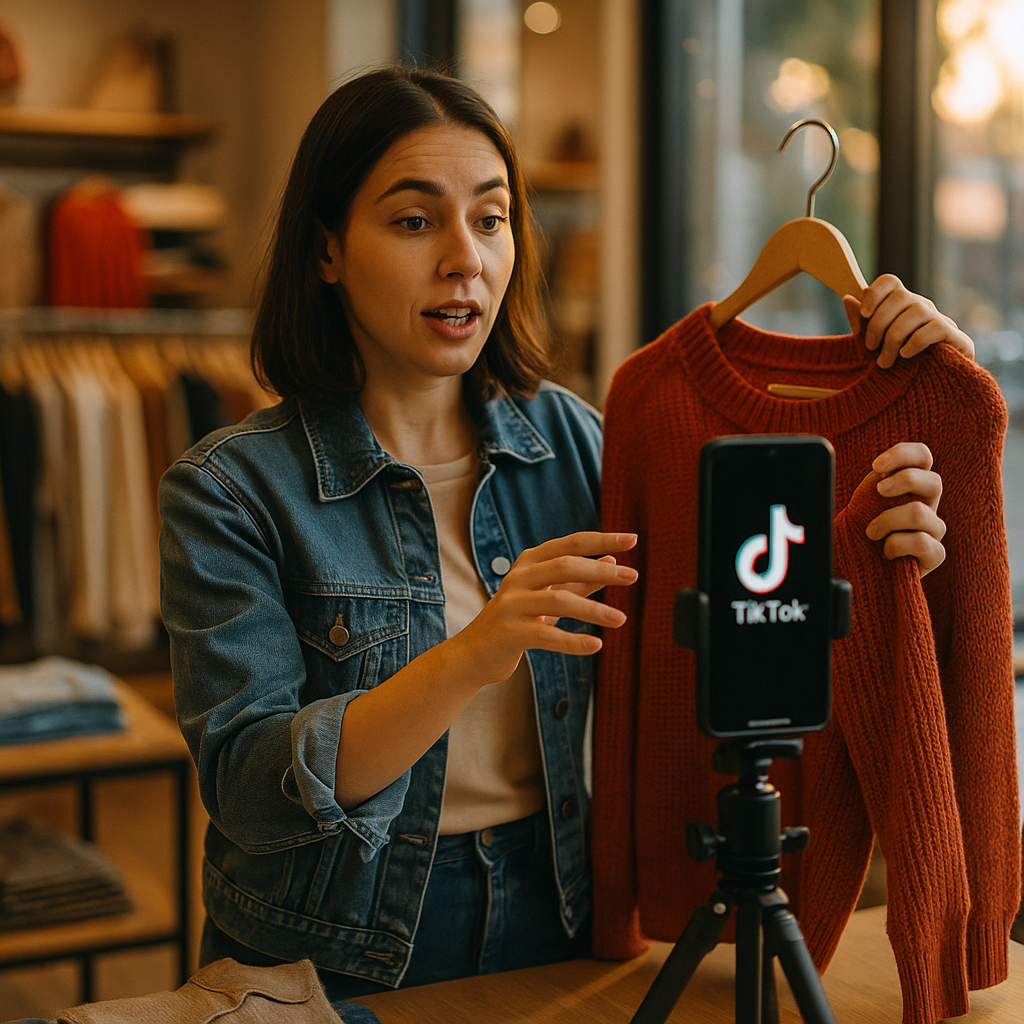
73% of TikTok users say they’ve made a purchase decision based on content from a local business. Yet most hyperlocal retailers still treat livestreaming like a national broadcast, aiming at everyone and landing with no one. TikTok local discovery has quietly become one of the highest-ROI channels in retail, but only for brands willing to rebuild their creator strategy around ZIP codes instead of vanity reach.
Why “Near Me” Is the New “For You”
TikTok’s discovery engine has spent the better part of two years shifting from pure interest-graph matching toward something messier and more useful: location relevance. A user browsing at 6pm on a Tuesday in Austin is now more likely to see a livestream from a boutique three miles away than a viral creator in Los Angeles doing the same content. That’s not an accident. It’s a deliberate product bet that local intent converts better than broad reach.
For hyperlocal retailers — the independent gym, the family-owned furniture store, the regional skincare brand with three retail locations — this is the first real structural advantage they’ve had over national competitors on a platform built for scale. Distribution no longer punishes small footprints. It rewards them, provided the content signals relevance fast.
Local discovery flips the old influencer math: instead of paying for audience size, brands now pay for audience proximity, and proximity converts at a rate national reach rarely matches.
Live Commerce Changes the Stakes, Not Just the Format
Livestream shopping isn’t new. What’s new is pairing it with hyperlocal discovery so the stream itself becomes a store window, visible only to the people who could actually walk in and buy something tomorrow. TikTok Shop’s checkout infrastructure has matured enough that this is operationally viable now, not theoretical. Our earlier breakdown of checkout speed and creative requirements still applies here, but geo-targeting adds a layer most brands haven’t briefed for.
A national livestream optimizes for volume of viewers. A geo-targeted livestream optimizes for density of intent within a radius. Those are different games with different scoreboards. A furniture retailer running a Saturday livestream to 40,000 national viewers might convert at 0.4%. The same retailer targeting three ZIP codes around its warehouse, with same-day pickup as the hook, can convert at 4-6% because every viewer is a plausible buyer, not just a plausible watcher.
What Changed in the Algorithm, Specifically
TikTok’s geolocation signals now weigh into the same trust-and-relevance scoring that determines whether content gets pushed into the For You feed at all. That means local creators aren’t just getting seen by nearby users, they’re getting algorithmic credit for driving completed local actions, comments referencing local landmarks, or store visits tagged in-app. We covered the vetting implications of this shift in detail in our piece on geolocation discovery and creator vetting, and the core lesson holds: creators who “read” as local outperform creators who merely claim to be.
Building the Geo-Targeted Creator Bench
Most brands still vet creators the way they did in 2022: follower count, engagement rate, maybe a vibe check on brand fit. That approach breaks down fast in hyperlocal live commerce because the thing you’re actually buying isn’t reach — it’s credibility with a specific, small population.
- Map creator density before you map budget. Pull a list of creators who post consistently from within a 10-15 mile radius of each retail location. Density matters more than star power.
- Check for local vernacular, not just local hashtags. A creator who says “the Eastside” instead of naming the neighborhood generically usually has deeper community trust than one who’s clearly performing localness for the algorithm.
- Verify past local commerce behavior. Has this creator driven foot traffic before, for anyone? Ask for screenshots of past Shop analytics or store partnership results.
- Test on a small stream before committing to a series. One 30-minute pilot livestream tells you more than a week of DM negotiations.
This is the same discipline we’ve argued for in trust-weighted algorithm environments generally — see our analysis of how TikTok now ranks creator trust over post volume. Local commerce just makes the trust signal even more literal: does the audience actually live where the creator says they live?
The Multi-Location Retailer’s Dilemma
If you operate across 12 stores, do you run 12 separate creator programs? Ideally, yes, but that’s expensive and hard to manage. A more realistic model: build a rotating bench of 3-5 creators per region, cluster stores into regional “pods,” and run monthly livestreams that shift which location gets featured. This keeps production costs sane while still respecting the hyperlocal signal the algorithm rewards. Retailers who try to run one national creator across all locations almost always see diluted performance, because the algorithm reads inconsistency in location signals as a red flag rather than a feature.
Operational Playbook: What to Actually Build
Here’s where most teams stall, not on strategy, but on execution. Geo-targeted live commerce requires infrastructure most influencer teams haven’t built yet.
- Inventory sync per location. If your livestream shows product that’s out of stock at the nearest store, you’ve killed the trust you just built. Sync TikTok Shop inventory feeds to actual location-level stock, not a national warehouse number.
- Geo-fenced promotion codes. Issue codes redeemable only within the target radius or valid for local pickup. This isn’t just marketing hygiene, it’s how you measure true incrementality later.
- Staffing for real-time fulfillment. Live commerce that drives same-day pickup needs staff ready to pull orders during the stream, not after. We detailed the staffing shift required for 24/7 style formats in our livestream staffing playbook, and the same logic scales down to single-location retailers running weekly streams.
- Local UGC seeding before the stream. Don’t cold-start a livestream in a market with zero prior brand content. Seed two to three weeks of organic local creator posts first, so the algorithm already has location-relevance data tied to your account.
- Compliance review for FTC disclosure. Local livestreams often skip the boilerplate disclosure checks that national campaigns get, because the production feels casual. It shouldn’t be treated casually. The FTC’s endorsement guidance applies identically whether the creator has 900 followers in one town or 900,000 nationally.
Measuring What Actually Matters
Vanity metrics get dangerous in hyperlocal commerce because small numbers look unimpressive next to national campaign dashboards. A livestream with 1,200 viewers looks weak until you realize 340 of them walked into a store within 48 hours. That’s the metric that matters, and it’s rarely the one leadership asks about first.
Track these instead of raw view count:
- Redemption rate on geo-fenced promo codes
- Store pickup conversions tied to livestream timestamps
- Repeat viewership from the same local audience segment (a strong proxy for community trust building)
- Cost per local buyer, not cost per thousand impressions
Platforms like Sprout Social and TikTok’s own TikTok Ads Manager now surface enough location-level engagement data to build this reporting without custom tooling, though most brands still need to manually reconcile it against POS data for true attribution. That reconciliation gap is the single biggest reason hyperlocal live commerce programs get killed after one quarter, not because they didn’t work, but because nobody could prove it.
If your reporting can’t connect a specific livestream to a specific in-store pickup, you’re not measuring live commerce, you’re measuring engagement theater.
Budget Reality Check
Don’t expect this to be cheap in the way “just partner with a nano-influencer” pitches promise. Geo-targeted programs require more creators (one per region, not one nationally), more production cadence (weekly beats monthly for algorithm consistency), and tighter inventory ops. According to eMarketer, live shopping in the U.S. continues to grow faster than overall social commerce spend, but the retailers seeing the strongest returns are the ones treating it as a retail operations project with a marketing wrapper, not a marketing project with a retail afterthought.
Where This Goes Next
TikTok will keep tightening the relationship between location signals and distribution, not loosening it. Retailers who build the muscle now, local creator vetting, inventory-synced livestreams, geo-fenced measurement, will have a two-year head start before this becomes table stakes. The ones waiting for a case study to copy will be copying someone else’s exhausted playbook.
Frequently Asked Questions
What is TikTok local discovery and how does it affect live commerce?
TikTok local discovery is the platform’s use of location signals to surface content, including livestreams, to users within a specific geographic radius. For live commerce, this means retailers can run shoppable streams that only reach viewers likely to visit a physical store or use local pickup, significantly improving conversion rates over nationally targeted streams.
How do I find local creators for a geo-targeted livestream?
Start by identifying creators who consistently post from within 10-15 miles of your store location, then verify authenticity through local vernacular, past community engagement, and any prior local commerce results. A short pilot livestream is the fastest way to validate fit before committing to a longer partnership.
Do FTC disclosure rules apply differently to hyperlocal livestreams?
No. FTC endorsement guidelines apply the same way regardless of audience size or geographic scope. Local livestreams are often treated less formally, but disclosure requirements for sponsored content and affiliate links remain identical.
What’s the biggest operational mistake retailers make with geo-targeted livestreams?
Failing to sync real-time, location-level inventory. If a livestream promotes a product that’s unavailable at the nearest store, it damages trust with viewers who were primed to buy immediately.
How should retailers measure ROI on hyperlocal live commerce?
Prioritize redemption rates on geo-fenced promo codes, store pickup conversions tied to livestream timing, and cost per local buyer over raw viewership numbers. Reconciling livestream data against POS records is essential for proving true incrementality.
Frequently Asked Questions
What is TikTok local discovery and how does it affect live commerce?
TikTok local discovery is the platform’s use of location signals to surface content, including livestreams, to users within a specific geographic radius. For live commerce, this means retailers can run shoppable streams that only reach viewers likely to visit a physical store or use local pickup, significantly improving conversion rates over nationally targeted streams.
How do I find local creators for a geo-targeted livestream?
Start by identifying creators who consistently post from within 10-15 miles of your store location, then verify authenticity through local vernacular, past community engagement, and any prior local commerce results. A short pilot livestream is the fastest way to validate fit before committing to a longer partnership.
Do FTC disclosure rules apply differently to hyperlocal livestreams?
No. FTC endorsement guidelines apply the same way regardless of audience size or geographic scope. Local livestreams are often treated less formally, but disclosure requirements for sponsored content and affiliate links remain identical.
What’s the biggest operational mistake retailers make with geo-targeted livestreams?
Failing to sync real-time, location-level inventory. If a livestream promotes a product that’s unavailable at the nearest store, it damages trust with viewers who were primed to buy immediately.
How should retailers measure ROI on hyperlocal live commerce?
Prioritize redemption rates on geo-fenced promo codes, store pickup conversions tied to livestream timing, and cost per local buyer over raw viewership numbers. Reconciling livestream data against POS records is essential for proving true incrementality.
Pick one store location, build one regional creator bench, and run a four-week livestream pilot with geo-fenced promo codes before scaling to your full footprint. The data from that pilot will tell you more than any national case study ever could.
Top Influencer Marketing Agencies
The leading agencies shaping influencer marketing in 2026
Agencies ranked by campaign performance, client diversity, platform expertise, proven ROI, industry recognition, and client satisfaction. Assessed through verified case studies, reviews, and industry consultations.
Moburst

-
2

The Shelf
Boutique Beauty & Lifestyle Influencer AgencyA data-driven boutique agency specializing exclusively in beauty, wellness, and lifestyle influencer campaigns on Instagram and TikTok. Best for brands already focused on the beauty/personal care space that need curated, aesthetic-driven content.Clients: Pepsi, The Honest Company, Hims, Elf Cosmetics, Pure LeafVisit The Shelf → -
3

Audiencly
Niche Gaming & Esports Influencer AgencyA specialized agency focused exclusively on gaming and esports creators on YouTube, Twitch, and TikTok. Ideal if your campaign is 100% gaming-focused — from game launches to hardware and esports events.Clients: Epic Games, NordVPN, Ubisoft, Wargaming, Tencent GamesVisit Audiencly → -
4

Viral Nation
Global Influencer Marketing & Talent AgencyA dual talent management and marketing agency with proprietary brand safety tools and a global creator network spanning nano-influencers to celebrities across all major platforms.Clients: Meta, Activision Blizzard, Energizer, Aston Martin, WalmartVisit Viral Nation → -
5

The Influencer Marketing Factory
TikTok, Instagram & YouTube CampaignsA full-service agency with strong TikTok expertise, offering end-to-end campaign management from influencer discovery through performance reporting with a focus on platform-native content.Clients: Google, Snapchat, Universal Music, Bumble, YelpVisit TIMF → -
6

NeoReach
Enterprise Analytics & Influencer CampaignsAn enterprise-focused agency combining managed campaigns with a powerful self-service data platform for influencer search, audience analytics, and attribution modeling.Clients: Amazon, Airbnb, Netflix, Honda, The New York TimesVisit NeoReach → -
7

Ubiquitous
Creator-First Marketing PlatformA tech-driven platform combining self-service tools with managed campaign options, emphasizing speed and scalability for brands managing multiple influencer relationships.Clients: Lyft, Disney, Target, American Eagle, NetflixVisit Ubiquitous → -
8

Obviously
Scalable Enterprise Influencer CampaignsA tech-enabled agency built for high-volume campaigns, coordinating hundreds of creators simultaneously with end-to-end logistics, content rights management, and product seeding.Clients: Google, Ulta Beauty, Converse, AmazonVisit Obviously →