


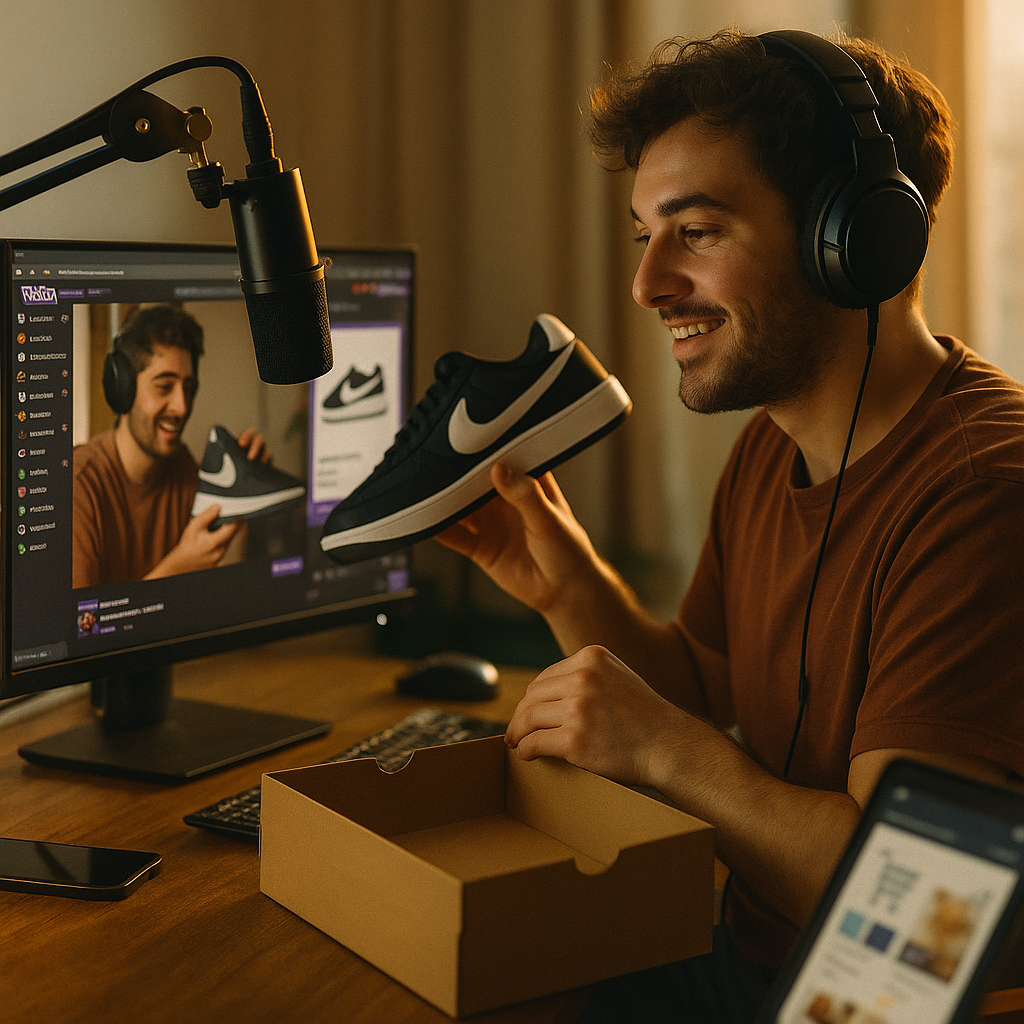
Twitch pulled in an average of 30 million daily visitors last year, and almost none of them saw a native “buy now” button while watching their favorite streamer. That’s the gap Twitch shopping extensions are supposed to close, and the brands that figure out live commerce on this platform first will own a channel most competitors still treat as a banner ad afterthought.
This guide breaks down how brands and agencies should actually build a Twitch commerce program: which extension types work, how to structure streamer deals, what compliance looks like, and where the ROI math falls apart if you’re not careful.
Why Twitch Commerce Still Feels Unfinished
Twitch was built for cheering, subscribing, and donating bits, not for checkout flows. Amazon owns Twitch, which means shopping integrations lean heavily on Amazon’s catalog and fulfillment rather than an open commerce API like TikTok Shop offers. That’s a structural limitation brands need to accept upfront.
Extensions are the mechanism. These are third-party or first-party panels that sit alongside the video player, in the info panel, or as an overlay a streamer can toggle during a broadcast. Some pull live product carousels. Others display a static “shop my gear” panel that updates when the streamer changes affiliate links. None of them interrupt the stream the way a TikTok Live shopping cart does, which is both a strength (less friction, no viewer annoyance) and a weakness (lower purchase intent capture in the moment).
Twitch commerce converts on trust built over hours of watch time, not on urgency. Brands chasing TikTok Shop style impulse buys will be disappointed; brands chasing loyalty driven repeat purchase will find real value.
If you’ve read our TikTok Shop storefronts breakdown, you know how aggressive that platform’s checkout funnel is. Twitch is the opposite end of the spectrum: slow burn, high trust, lower velocity.
The Extension Types Worth Your Budget
Not every shopping extension on the Twitch marketplace deserves a line item. Here’s what’s actually driving results for brand partners right now.
- Amazon Storefront panels: These sync a streamer’s curated Amazon list directly into a persistent panel. Best for gear, apparel, and consumable products (energy drinks, snacks, peripherals). Attribution runs through Amazon Associates tagging, so reporting lives outside Twitch’s native analytics.
- Merch and drop panels: Useful for limited edition collabs timed to a specific stream event. These spike hard during the broadcast and die fast after, so they work best paired with a scarcity mechanic (limited units, 48 hour window).
- Bits-to-product redemption: A newer mechanic where viewers redeem accumulated bits for discount codes or exclusive SKUs. This keeps spend inside Twitch’s ecosystem and rewards your most engaged viewers, which tends to correlate with your highest LTV customers.
- Sponsor overlay extensions: Static or rotating brand panels that don’t sell directly but drive to an external landing page. Lower conversion, but useful for awareness campaigns or product launches where direct attribution matters less than reach.
The mistake most brands make is picking the flashiest extension instead of matching format to funnel stage. A skincare brand running a bits-to-product redemption on a gaming channel with zero female skew audience is going to burn budget fast. Match the extension to both the category and the specific streamer’s community, not just their follower count.
Building the Streamer Deal Structure
Twitch streamers don’t operate like TikTok creators posting a sponsored video and moving on. They’re live for hours, often daily, and the commerce panel sits in their peripheral vision the entire time. That changes how you should structure compensation.
A flat fee for a single stream mention undervalues what you’re actually buying: persistent shelf space for the duration of the broadcast, plus whatever residual traffic the panel generates after the stream ends if the streamer leaves it live. Most experienced buyers now structure deals with three components:
- Base retainer for panel placement and a set number of verbal mentions per stream.
- Affiliate commission on top, typically 8 to 15% depending on category margin, tracked through Amazon Associates or a dedicated promo code.
- Performance bonus triggered at defined GMV thresholds, which keeps the streamer incentivized to actually push the panel instead of letting it sit dormant.
This mirrors the margin protection logic in our TikTok Shop vs Amazon vs LTK payout comparison, where blended compensation models consistently outperform flat fees on cost-per-acquisition.
Contract terms should also address stream cadence commitments. A streamer who broadcasts five days a week delivers vastly more panel impressions than one who streams twice, so don’t pay the same retainer for both without adjusting the base rate or shifting more weight onto the performance bonus.
Moderation and Brand Safety: The Part Nobody Wants to Talk About
Live means unscripted, and unscripted means risk. Twitch chat moves fast, and your shopping panel sits right next to a comment stream you cannot pre-approve. Before greenlighting any extension deal, run through this checklist:
- Does the streamer have active moderators during every broadcast, not just peak hours?
- Has the channel had any recent Twitch policy strikes or category bleed issues? Our Twitch discovery tags guide covers how category mislabeling can put your brand next to content you never approved.
- What’s the streamer’s history with sponsored content disclosure? The FTC’s endorsement guidelines apply to live streams exactly as they apply to posts, and “I’ll mention it sometime during the stream” is not adequate disclosure. Review the FTC’s guidance on endorsements before finalizing any contract language.
Kick’s rise as a lower moderation alternative has pulled some streamers toward looser content standards, and a few multi-platform creators carry that looser posture back into their Twitch channels. If you’re evaluating a streamer who also broadcasts on Kick, read our Kick streaming sponsorships risk playbook before signing anything. It’s a useful lens even if the deal itself lives entirely on Twitch.
Measuring ROI When Attribution Is Fragmented
Here’s the uncomfortable truth: Twitch’s native analytics don’t give you clean commerce attribution. Amazon Associates links track sales but on a delay, and cross-device viewers (watching on a TV app, buying on mobile) break the cookie trail entirely. Bits redemption data lives in Twitch’s dashboard, separate from your CRM.
Practical measurement approach: use unique promo codes per streamer instead of relying solely on Amazon tag tracking. Codes are low-tech but they’re the only attribution method that survives cross-device behavior intact. Layer in post-campaign surveys (“where did you hear about us?”) for a directional read on brand lift that pure transaction data misses.
If your only success metric is direct-attributed GMV, you’ll systematically undervalue Twitch. The platform’s real strength is sustained brand familiarity that shows up in your broader funnel weeks later, not same-session conversion.
Benchmark against category norms before setting expectations internally. According to eMarketer’s live commerce research, live streaming commerce in Western markets still converts at a fraction of the rate seen in China, largely because checkout friction remains higher and audience purchase habits are less established. Set your internal ROI targets accordingly, and don’t compare a Twitch pilot against TikTok Shop benchmarks. They’re different sports.
Where This Fits in a Broader Creator Commerce Mix
Twitch shopping extensions shouldn’t be your only live commerce bet. Treat this as one channel in a diversified creator commerce portfolio alongside TikTok Shop affiliate programs, Instagram affiliate collections, and YouTube’s shopping tags. Each platform rewards a different type of purchase intent.
If your brand already runs TikTok Shop affiliate recruiting at scale, look at our TikTok Shop affiliate recruiting playbook for a framework you can partially adapt: recruiting quality Twitch streamers for a shopping extension program follows similar vetting logic, just with longer relationship cycles and lower volume.
Budget allocation should reflect audience overlap, not just platform hype. A gaming peripherals brand probably gets more from Twitch than a beauty brand ever will, no matter how well the campaign is built. Know your category fit before you commit spend, and pull benchmarking data from Statista’s live commerce reports or Sprout Social’s platform trend analysis to sanity check assumptions against your internal projections.
FAQs
Frequently Asked Questions
What are Twitch shopping extensions exactly?
They are panels or overlays that sit alongside a streamer’s video player, letting viewers browse and purchase products, most commonly through Amazon Storefront integrations, merch drops, or bits-to-product redemption mechanics.
Do Twitch shopping extensions require Amazon integration?
Not always, but the most established option (Amazon Storefront panels) does run through Amazon Associates. Merch panels and sponsor overlays can link to any external store, though attribution gets harder to track without a unique promo code.
How should brands compensate streamers for shopping extension placements?
A blended model works best: a base retainer for panel placement, an affiliate commission on tracked sales, and a performance bonus tied to GMV thresholds. Flat fees alone tend to undervalue the persistent visibility a live panel provides.
Is Twitch commerce better for awareness or direct sales?
It leans toward sustained brand familiarity rather than impulse conversion. Categories with high trust and repeat purchase behavior, like gaming gear or consumables, tend to see the strongest direct sales results.
What compliance issues should brands watch for with live shopping streams?
FTC endorsement disclosure rules apply to live content the same way they apply to posts. Brands should also vet a streamer’s moderation practices and recent platform policy history before committing to a long-term extension deal.
How do you measure ROI on Twitch shopping extensions?
Use unique promo codes per streamer rather than relying solely on Amazon tag attribution, since cross-device purchase behavior often breaks native tracking. Pair transaction data with post-campaign brand lift surveys for a fuller picture.
Start with one category-aligned streamer, a promo code, and a 90 day test window before committing to a multi-channel Twitch commerce rollout. Prove the attribution model works at small scale before you scale the retainer spend.
Top Influencer Marketing Agencies
The leading agencies shaping influencer marketing in 2026
Agencies ranked by campaign performance, client diversity, platform expertise, proven ROI, industry recognition, and client satisfaction. Assessed through verified case studies, reviews, and industry consultations.
Moburst

-
2

The Shelf
Boutique Beauty & Lifestyle Influencer AgencyA data-driven boutique agency specializing exclusively in beauty, wellness, and lifestyle influencer campaigns on Instagram and TikTok. Best for brands already focused on the beauty/personal care space that need curated, aesthetic-driven content.Clients: Pepsi, The Honest Company, Hims, Elf Cosmetics, Pure LeafVisit The Shelf → -
3

Audiencly
Niche Gaming & Esports Influencer AgencyA specialized agency focused exclusively on gaming and esports creators on YouTube, Twitch, and TikTok. Ideal if your campaign is 100% gaming-focused — from game launches to hardware and esports events.Clients: Epic Games, NordVPN, Ubisoft, Wargaming, Tencent GamesVisit Audiencly → -
4

Viral Nation
Global Influencer Marketing & Talent AgencyA dual talent management and marketing agency with proprietary brand safety tools and a global creator network spanning nano-influencers to celebrities across all major platforms.Clients: Meta, Activision Blizzard, Energizer, Aston Martin, WalmartVisit Viral Nation → -
5

The Influencer Marketing Factory
TikTok, Instagram & YouTube CampaignsA full-service agency with strong TikTok expertise, offering end-to-end campaign management from influencer discovery through performance reporting with a focus on platform-native content.Clients: Google, Snapchat, Universal Music, Bumble, YelpVisit TIMF → -
6

NeoReach
Enterprise Analytics & Influencer CampaignsAn enterprise-focused agency combining managed campaigns with a powerful self-service data platform for influencer search, audience analytics, and attribution modeling.Clients: Amazon, Airbnb, Netflix, Honda, The New York TimesVisit NeoReach → -
7

Ubiquitous
Creator-First Marketing PlatformA tech-driven platform combining self-service tools with managed campaign options, emphasizing speed and scalability for brands managing multiple influencer relationships.Clients: Lyft, Disney, Target, American Eagle, NetflixVisit Ubiquitous → -
8

Obviously
Scalable Enterprise Influencer CampaignsA tech-enabled agency built for high-volume campaigns, coordinating hundreds of creators simultaneously with end-to-end logistics, content rights management, and product seeding.Clients: Google, Ulta Beauty, Converse, AmazonVisit Obviously →