


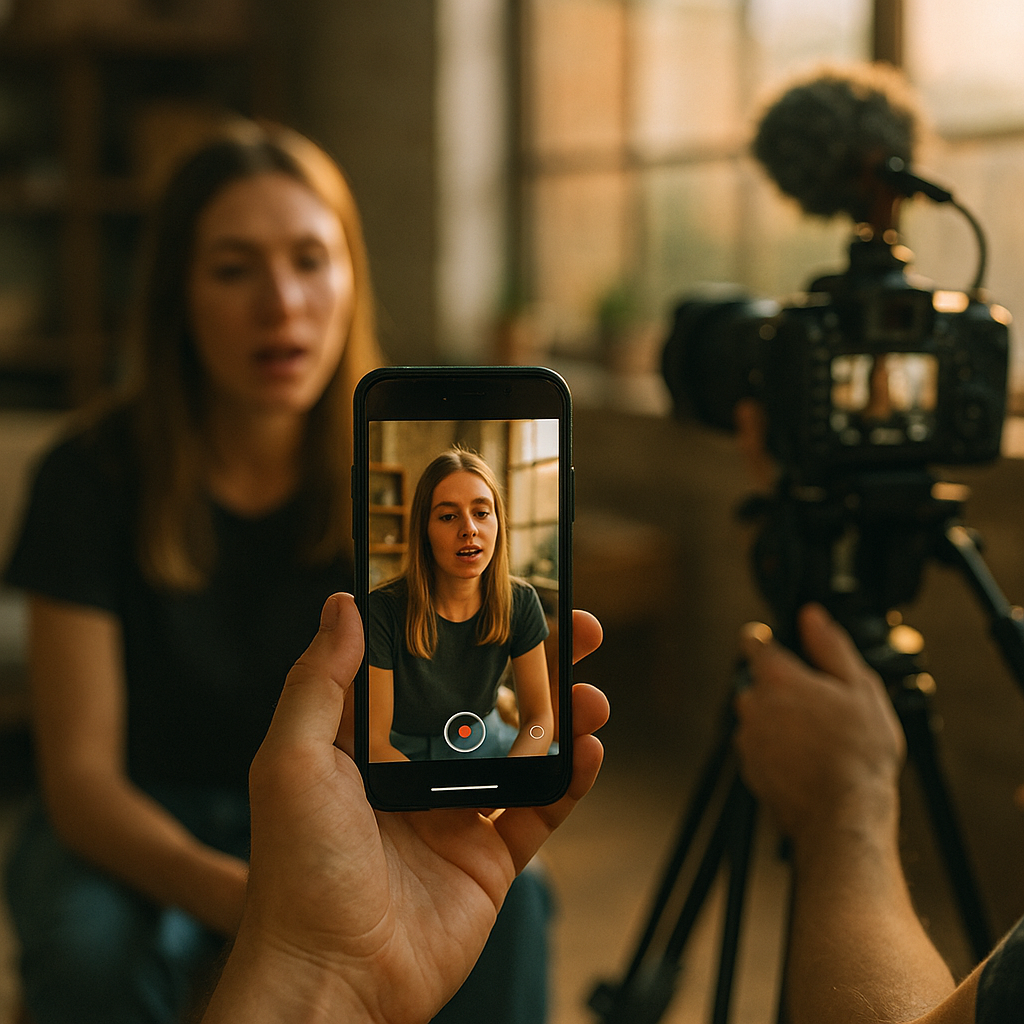
Consumers spend an average of 8.5 seconds deciding whether to trust a piece of branded content, and polished production is starting to work against you. Audiences have seen enough studio lighting and scripted testimonials to smell them from a mile away. Behind the scenes content, the raw footage of how a product gets made, tested, or shot, is quietly becoming the highest trust format in a creator’s toolkit. For brands trying to close the gap between reach and belief, that shift matters more than any new platform algorithm.
Why Polish Is Losing to Process
Here’s the uncomfortable truth for anyone running a creator program: the more finished your content looks, the more your audience assumes something is being hidden. A glossy 30 second spot signals “ad.” A shaky clip of a creator setting up a camera rig, flubbing a line, or comparing three takes signals “real.” That signal is worth money.
Sprout Social’s own consumer trust research has repeatedly found that authenticity ranks above production value when audiences decide whether to engage with branded content. Creators who show the mess, the retakes, the lighting setup, the awkward pause before a good line, are borrowing something scripted content can’t buy: proof of process.
Behind the scenes content works because it removes the question “is this staged?” before the viewer even asks it.
What Behind the Scenes Content Actually Builds
This isn’t just a content trend, it’s a trust mechanism. Three things happen when a creator studio pulls back the curtain:
- Perceived objectivity rises. Viewers assume a creator showing their process has less to gain from deception.
- Parasocial connection deepens. Watching someone work is more intimate than watching them perform.
- Skepticism toward the final product drops. If you trust how something was made, you’re more likely to trust the claim being made about it.
Brands that get this right treat BTS as a distinct deliverable, not a leftover clip from the editing bay. That distinction matters for budgeting and for briefing, which we’ll get to shortly.
A Quick Example
A skincare brand running influencer seeding noticed something odd in its performance data: the creators whose “how I film my reviews” clips outperformed their actual product reviews by nearly 3x on watch time. The brand leaned in, started requesting dual deliverables (final review plus a 15 second process clip) and saw a measurable lift in comment sentiment tied to trust language (“this feels real,” “she’s not just reading a script”). That’s the kind of signal that should reshape a brief.
The Anatomy of a Trust Building BTS Clip
Not every behind the scenes shot earns trust. Some just look like filler. The clips that work tend to share a few structural traits, and brands can brief for these deliberately rather than hoping a creator stumbles into them.
- Show a decision, not just an action. A creator explaining why they chose one angle, one take, or one prop reads as more credible than just showing them holding equipment.
- Leave in a small imperfection. A retake, a dropped line, a “let’s try that again.” Perfection kills the format’s entire value proposition.
- Keep it short. Ten to twenty seconds. BTS content is a garnish, not the main course, and it should never outpace the primary asset in length.
- Tie it back to the claim. If the main content makes a performance claim, the BTS clip should visually reinforce how that claim was tested or verified.
This last point connects directly to a format gaining traction across CPG and tech brands: overlaying real data on top of process footage. The data overlay vlog format pairs raw testing footage with on screen numbers, which is arguably BTS content’s more rigorous cousin.
Where Brands Get This Wrong
Most brands either skip BTS entirely or ruin it by over producing it. Both mistakes come from the same misunderstanding: treating behind the scenes content as a marketing asset instead of a trust asset.
Common failure patterns:
- Scripting the “unscripted” moment. If a creator’s stumble is written into the brief, it stops working. Audiences can tell.
- Cutting it too tight in editing. Over-editing removes the very imperfection that makes the format credible. This is a real tension point with AI assisted reel editing tools, which are great for retention but can accidentally sand down the rough edges that make BTS content believable.
- Treating it as B-roll instead of a deliverable. If BTS footage isn’t in the brief with its own success metric, it gets deprioritized in editing and never ships.
- Ignoring disclosure requirements. Even process footage that includes a product mention needs proper disclosure under FTC guidelines. Legal review shouldn’t stop at the polished final cut.
Building BTS Into the Creator Brief
If behind the scenes content is going to work, it needs to be planned, not improvised after the fact. That means writing it into the brief with the same specificity you’d apply to a hero asset.
A workable structure looks like this:
- Define the deliverable separately: “one 15 to 20 second process clip, unscripted, showing setup or testing.”
- Specify what “unscripted” means operationally. Creators need permission to leave in imperfections, not just tolerance for them.
- Set a pairing rule: BTS clip publishes alongside or shortly after the primary content, not months later as filler.
- Include a tracking field so performance can be attributed separately from the main asset. Brands already doing this well tend to borrow structure from UGC briefs with tracking fields, which force attribution discipline into the creative process instead of bolting it on after the campaign ends.
This is also where founder led content and factory footage overlap with the BTS trend. Brands using founder led video or factory tour videos are essentially running BTS at the corporate level. The same trust mechanics apply: showing the how builds belief in the what.
Measuring Whether It’s Working
You can’t manage what you don’t track, and BTS content resists the usual vanity metrics. View count tells you almost nothing here. What matters more:
- Comment sentiment shift. Look for trust language: “real,” “not staged,” “she actually tried it.”
- Save and share rate relative to the main asset. BTS clips that outperform the hero content on saves are doing real trust work.
- Downstream conversion lift. Compare conversion rates for audiences exposed to both assets versus the hero content alone.
- Repeat engagement. Does the same audience come back for a creator’s next process clip? That’s a durability signal most brands underweight.
According to eMarketer’s ongoing research into creator marketing effectiveness, engagement quality metrics like saves and comment sentiment are increasingly better predictors of purchase intent than raw reach. That’s a strong argument for building BTS measurement into your existing dashboard rather than treating it as a soft, unmeasurable extra.
If your reporting only tracks the hero asset, you’re measuring half the trust equation and missing the half that’s actually converting.
There’s also a production efficiency angle worth mentioning to anyone holding the budget. BTS content is cheap. It doesn’t need a second shoot day, a separate crew, or additional creator fees in most cases. It’s often just a phone propped up during the actual production process. That makes it one of the highest ROI additions available to a creator program, assuming someone remembers to brief for it and capture it deliberately, similar to the discipline brands apply to hybrid UGC templates that blend brand control with creator authenticity.
Frequently Asked Questions
What counts as behind the scenes content in an influencer campaign?
Any footage showing the process of creating the primary deliverable: setup, testing, retakes, product handling, or the creator explaining their creative decisions. It’s distinct from the polished final asset and typically shorter, rougher, and less scripted.
Does behind the scenes content need FTC disclosure?
Yes, if the product or brand is identifiable and the creator has a material connection to the brand, standard disclosure rules apply regardless of how raw or unscripted the footage looks. Check current guidance at the FTC’s website before publishing.
How long should a BTS clip be?
Ten to twenty seconds is the sweet spot for most platforms. Longer clips start to compete with the primary asset instead of supporting it, which dilutes the effect.
Can BTS content be scripted at all?
Some structure is fine, like directing a creator to show their setup process, but scripting specific “candid” moments or fake mistakes tends to backfire once audiences catch on. The format’s value depends on genuine imperfection.
How do brands measure the ROI of behind the scenes content?
Track comment sentiment for trust language, save and share rates relative to the hero asset, and any conversion lift among audiences exposed to both pieces. Reach and view count are weak indicators for this specific format.
Take the Next Step
Add a BTS deliverable line to your next three creator briefs, keep it under twenty seconds, and require it to publish alongside the hero asset so you can measure the trust lift directly rather than guessing at it later.
Frequently Asked Questions
What counts as behind the scenes content in an influencer campaign?
Any footage showing the process of creating the primary deliverable: setup, testing, retakes, product handling, or the creator explaining their creative decisions. It’s distinct from the polished final asset and typically shorter, rougher, and less scripted.
Does behind the scenes content need FTC disclosure?
Yes, if the product or brand is identifiable and the creator has a material connection to the brand, standard disclosure rules apply regardless of how raw or unscripted the footage looks. Check current guidance at the FTC’s website before publishing.
How long should a BTS clip be?
Ten to twenty seconds is the sweet spot for most platforms. Longer clips start to compete with the primary asset instead of supporting it, which dilutes the effect.
Can BTS content be scripted at all?
Some structure is fine, like directing a creator to show their setup process, but scripting specific “candid” moments or fake mistakes tends to backfire once audiences catch on. The format’s value depends on genuine imperfection.
How do brands measure the ROI of behind the scenes content?
Track comment sentiment for trust language, save and share rates relative to the hero asset, and any conversion lift among audiences exposed to both pieces. Reach and view count are weak indicators for this specific format.
Top Influencer Marketing Agencies
The leading agencies shaping influencer marketing in 2026
Agencies ranked by campaign performance, client diversity, platform expertise, proven ROI, industry recognition, and client satisfaction. Assessed through verified case studies, reviews, and industry consultations.
Moburst

-
2

The Shelf
Boutique Beauty & Lifestyle Influencer AgencyA data-driven boutique agency specializing exclusively in beauty, wellness, and lifestyle influencer campaigns on Instagram and TikTok. Best for brands already focused on the beauty/personal care space that need curated, aesthetic-driven content.Clients: Pepsi, The Honest Company, Hims, Elf Cosmetics, Pure LeafVisit The Shelf → -
3

Audiencly
Niche Gaming & Esports Influencer AgencyA specialized agency focused exclusively on gaming and esports creators on YouTube, Twitch, and TikTok. Ideal if your campaign is 100% gaming-focused — from game launches to hardware and esports events.Clients: Epic Games, NordVPN, Ubisoft, Wargaming, Tencent GamesVisit Audiencly → -
4

Viral Nation
Global Influencer Marketing & Talent AgencyA dual talent management and marketing agency with proprietary brand safety tools and a global creator network spanning nano-influencers to celebrities across all major platforms.Clients: Meta, Activision Blizzard, Energizer, Aston Martin, WalmartVisit Viral Nation → -
5

The Influencer Marketing Factory
TikTok, Instagram & YouTube CampaignsA full-service agency with strong TikTok expertise, offering end-to-end campaign management from influencer discovery through performance reporting with a focus on platform-native content.Clients: Google, Snapchat, Universal Music, Bumble, YelpVisit TIMF → -
6

NeoReach
Enterprise Analytics & Influencer CampaignsAn enterprise-focused agency combining managed campaigns with a powerful self-service data platform for influencer search, audience analytics, and attribution modeling.Clients: Amazon, Airbnb, Netflix, Honda, The New York TimesVisit NeoReach → -
7

Ubiquitous
Creator-First Marketing PlatformA tech-driven platform combining self-service tools with managed campaign options, emphasizing speed and scalability for brands managing multiple influencer relationships.Clients: Lyft, Disney, Target, American Eagle, NetflixVisit Ubiquitous → -
8

Obviously
Scalable Enterprise Influencer CampaignsA tech-enabled agency built for high-volume campaigns, coordinating hundreds of creators simultaneously with end-to-end logistics, content rights management, and product seeding.Clients: Google, Ulta Beauty, Converse, AmazonVisit Obviously →