


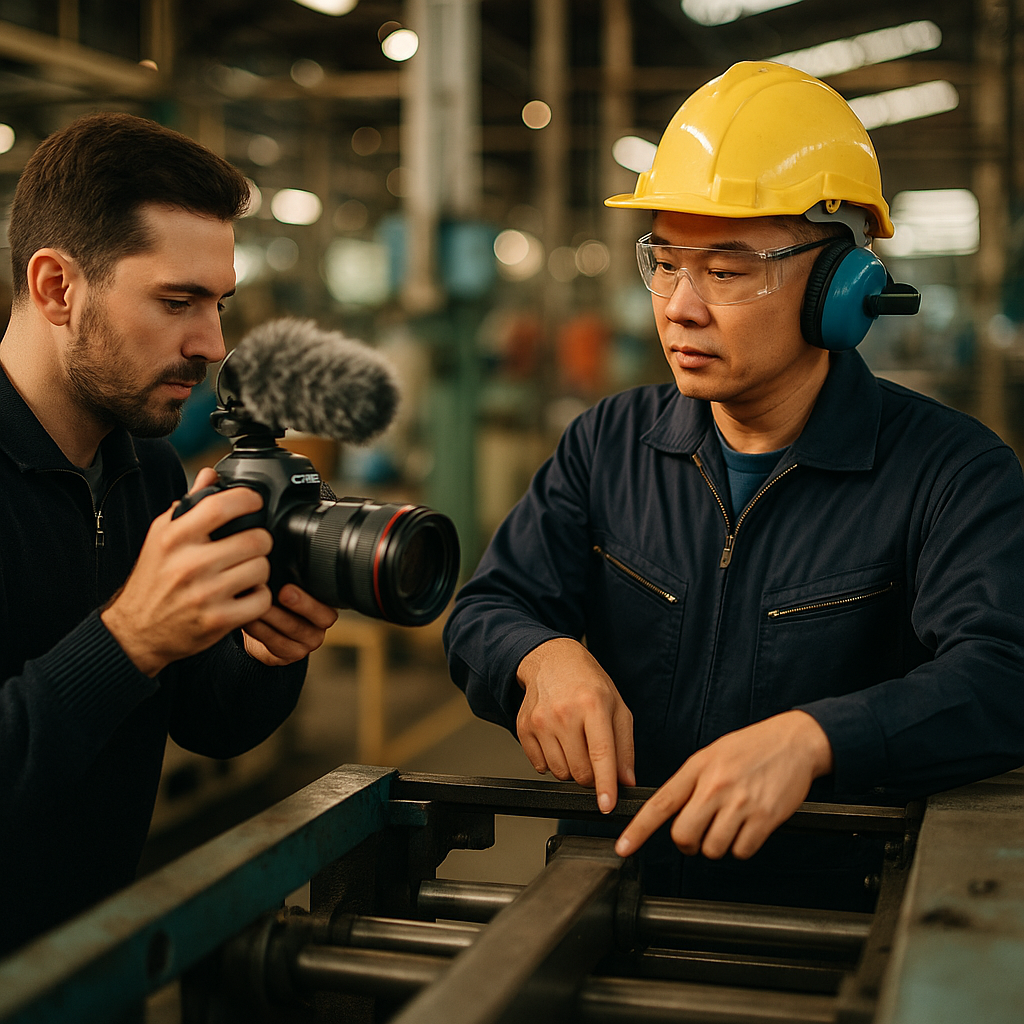
Consumers now spend an average of 19 seconds deciding whether to trust a brand’s product claims, and most of them fail that test. That’s why a growing share of marketing budgets are shifting toward factory tour videos, the format that shows the receipts instead of reciting a mission statement. Brands aren’t asking creators to sell anymore. They’re asking them to witness.
Why “Show, Don’t Tell” Became a Budget Line Item
Factory tour videos aren’t new. What’s new is brands treating them as a core creator deliverable rather than a one-off PR stunt. Skincare brands are inviting creators to their labs. Furniture companies are opening up their workshops. Even fast fashion, the category with the most to hide, is starting to experiment with partial transparency tours as a defensive move against greenwashing accusations.
The logic is simple. Claims are cheap. Proof is expensive to fake. When a creator walks a factory floor with a handheld camera, asks unscripted questions, and gets an answer from a line worker instead of a PR rep, that footage carries a credibility signal that no studio-shot ad can replicate. It’s the same instinct behind documentary process content, just applied to physical manufacturing instead of software workflows.
A factory tour video doesn’t need to be flattering to be effective. Brands that allow creators to show minor imperfections (a busy warehouse, an imperfect stitch) tend to earn more trust than those that stage a spotless set.
What Makes This Format Different From Standard Brand UGC
Most creator briefs ask for a finished opinion: “here’s why I love this product.” Factory tour briefs ask for an unfinished process: “here’s how this thing came to exist.” That distinction matters for three reasons.
- Verification over persuasion. The creator’s job shifts from advocate to witness. Their credibility comes from access, not enthusiasm.
- Operational exposure. Brands are opening supply chains to a third party with a camera, which means legal, ops, and comms teams need a seat at the briefing table, not just marketing.
- Longer shelf life. Unlike a trend-driven format, factory footage doesn’t age out in a news cycle. A tour filmed this quarter can still run as an ad a year from now, provided nothing in the facility has materially changed.
This is also why the format pairs well with founder led video cadences. A founder walking the same floor adds a layer of accountability a hired creator can’t replicate on their own.
Who’s Actually Testing This, and Why It’s Working
Direct-to-consumer brands in categories with trust deficits (supplements, skincare, mattresses, sneakers) are leading the experiment. These are categories where “made in a facility you’ll never see” has historically meant “made cheaply, priced high.” A factory tour flips that assumption on its head, provided the facility actually supports the story the brand wants to tell.
B2B manufacturers are testing it too, often with less fanfare but arguably more upside. A mid-size industrial supplier that lets a creator document a production run for a niche trade audience isn’t chasing virality. They’re building a trust asset that a procurement team can reference eighteen months later during a vendor evaluation. That’s closer in spirit to mini documentary briefs than to typical influencer marketing.
According to eMarketer, trust and authenticity now rank among the top factors influencing purchase decisions for younger buyers, ahead of price in several categories. Factory tours are one of the few formats built specifically to answer that demand instead of just asserting it.
The Brief: What to Actually Give a Creator
A factory tour brief fails when it’s treated like a standard sponsored post. It needs more structure, not less, because the stakes for what gets shown on camera are higher. Here’s what a working brief usually includes:
- A pre-approved walking route. Not scripted dialogue, but a map of what areas are shootable and what’s off-limits for safety, IP, or competitive reasons.
- Three unscripted questions the creator must ask. These should be genuinely open-ended, not leading. “How long does this process take?” beats “Isn’t this process amazing?”
- A designated on-camera subject matter expert. Not a marketing rep. Someone who actually runs the line and can answer questions in plain language.
- A no-retouch clause on the raw footage. Brands can still edit for length and clarity, but altering the physical reality of the facility (lighting tricks aside) undermines the entire premise.
- A disclosure line that matches FTC guidance. Paid access still requires clear disclosure, even when the content reads as journalistic.
Skipping the SME requirement is the most common mistake. A creator interviewing a PR handler instead of a floor supervisor collapses the entire trust premise of the format in about four seconds of screen time.
Compliance Isn’t Optional Here
Factory tours sit at the intersection of marketing, safety, and legal in a way most creator formats don’t. Brands need to think through liability waivers for creators on-site, NDAs around proprietary processes, and whether footage inadvertently reveals information competitors could use. None of this is a reason to avoid the format. It’s a reason to loop in the right stakeholders before a single camera enters the building.
There’s also a subtler compliance issue: worker consent and portrayal. Line workers appearing on camera should know they’re being filmed, understand how footage will be used, and ideally have the option to opt out without professional consequence. Brands that skip this step risk a labor-relations story overshadowing the trust story they were trying to tell in the first place.
Disclosure standards matter just as much here as they do in AI avatar brand host content or any other format where the line between editorial and paid content can blur. The FTC’s endorsement guidelines don’t make an exception for content that feels like journalism. If the creator was compensated for access, that needs to be clear to the viewer within the first few seconds.
Measuring ROI on a Format That Isn’t Built for Direct Response
Factory tours rarely drive an immediate spike in conversion the way a product demo does. Their value shows up further down the funnel: in branded search lift, in reduced return rates for products where quality perception was the friction point, and in sentiment shifts on review platforms. Brands running these campaigns should track:
- Branded search volume in the weeks following release
- Sentiment and keyword shifts in product reviews (look for words like “quality,” “surprised,” “didn’t expect”)
- Watch-through rate on long-form cuts versus short cutdowns
- Sales team feedback if the content gets used in B2B pitch decks
Repurposing matters too. A well-shot factory tour can be cut into a long-form YouTube explainer, several vertical cutdowns for social, and even a podcast clip style audio piece if the SME interview is strong enough to stand alone. Treating the shoot as a single-use asset wastes most of its value.
For brands running longer explainer content off the same footage, the structural lessons from chaptered long form explainers apply directly. Chapter markers around “sourcing,” “production,” and “quality check” let viewers skip to what they care about, which keeps watch time healthy even on a ten-minute cut.
When This Format Backfires
Not every facility should be filmed. If the honest version of the tour undermines the brand story (outdated equipment, safety concerns, visible labor issues), no amount of clever editing fixes that. Brands sometimes discover this only after a creator has already shot footage, which is an expensive and reputationally risky way to learn it. A pre-shoot facility audit, even an informal one, should be standard practice before committing budget to this format.
The other failure mode is over-control. Brands that hover too closely, feeding creators lines and vetoing every unscripted moment, end up with something that looks like a tour but feels like a commercial. Audiences can tell the difference, and the format only works if it retains its documentary texture. That tension is worth reading against Sprout Social’s research on what drives perceived authenticity in branded content: control and authenticity tend to move in opposite directions.
Frequently Asked Questions
Visible FAQ
What is a factory tour video in influencer marketing?
It’s a creator-led video format where a brand invites an influencer or content creator into a manufacturing facility to document how a product is made, typically with unscripted interviews and minimal staging.
How is a factory tour video different from a product demo?
A product demo focuses on the finished product and its benefits. A factory tour focuses on process and provenance, aiming to build trust through transparency rather than persuasion through features.
Do factory tour videos require FTC disclosure?
Yes. If a creator was compensated or given paid access to the facility, that relationship needs to be disclosed clearly, following the same standards outlined in FTC endorsement guidance, regardless of how editorial the content feels.
What size brands can realistically use this format?
Any brand with a physical facility can test it, but it works best for brands in categories with a trust or quality perception gap: skincare, supplements, furniture, apparel, and industrial B2B suppliers.
How do you measure ROI on factory tour content?
Track branded search lift, sentiment shifts in product reviews, watch-through rates on long-form cuts, and downstream usage in sales enablement or pitch materials rather than expecting immediate direct-response conversion.
What’s the biggest risk with this format?
Filming a facility that doesn’t support the brand’s quality story, or over-controlling the creator’s access to the point that the footage loses its documentary credibility.
Before booking a creator, run the facility audit first: if the honest footage wouldn’t survive scrutiny, no brief will fix it. If it would, treat that raw access as the asset and build the trust content around it.
Top Influencer Marketing Agencies
The leading agencies shaping influencer marketing in 2026
Agencies ranked by campaign performance, client diversity, platform expertise, proven ROI, industry recognition, and client satisfaction. Assessed through verified case studies, reviews, and industry consultations.
Moburst

-
2

The Shelf
Boutique Beauty & Lifestyle Influencer AgencyA data-driven boutique agency specializing exclusively in beauty, wellness, and lifestyle influencer campaigns on Instagram and TikTok. Best for brands already focused on the beauty/personal care space that need curated, aesthetic-driven content.Clients: Pepsi, The Honest Company, Hims, Elf Cosmetics, Pure LeafVisit The Shelf → -
3

Audiencly
Niche Gaming & Esports Influencer AgencyA specialized agency focused exclusively on gaming and esports creators on YouTube, Twitch, and TikTok. Ideal if your campaign is 100% gaming-focused — from game launches to hardware and esports events.Clients: Epic Games, NordVPN, Ubisoft, Wargaming, Tencent GamesVisit Audiencly → -
4

Viral Nation
Global Influencer Marketing & Talent AgencyA dual talent management and marketing agency with proprietary brand safety tools and a global creator network spanning nano-influencers to celebrities across all major platforms.Clients: Meta, Activision Blizzard, Energizer, Aston Martin, WalmartVisit Viral Nation → -
5

The Influencer Marketing Factory
TikTok, Instagram & YouTube CampaignsA full-service agency with strong TikTok expertise, offering end-to-end campaign management from influencer discovery through performance reporting with a focus on platform-native content.Clients: Google, Snapchat, Universal Music, Bumble, YelpVisit TIMF → -
6

NeoReach
Enterprise Analytics & Influencer CampaignsAn enterprise-focused agency combining managed campaigns with a powerful self-service data platform for influencer search, audience analytics, and attribution modeling.Clients: Amazon, Airbnb, Netflix, Honda, The New York TimesVisit NeoReach → -
7

Ubiquitous
Creator-First Marketing PlatformA tech-driven platform combining self-service tools with managed campaign options, emphasizing speed and scalability for brands managing multiple influencer relationships.Clients: Lyft, Disney, Target, American Eagle, NetflixVisit Ubiquitous → -
8

Obviously
Scalable Enterprise Influencer CampaignsA tech-enabled agency built for high-volume campaigns, coordinating hundreds of creators simultaneously with end-to-end logistics, content rights management, and product seeding.Clients: Google, Ulta Beauty, Converse, AmazonVisit Obviously →