


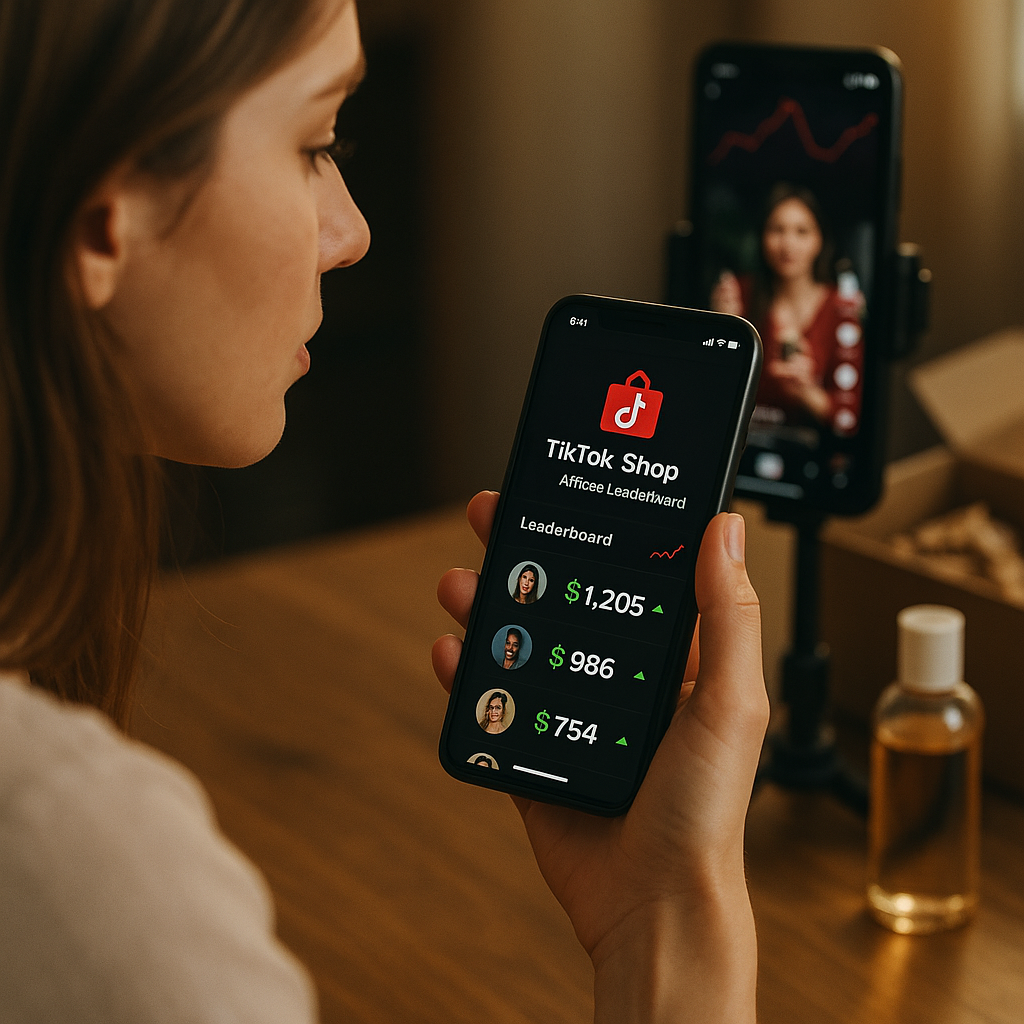
Top TikTok Shop affiliates earned a combined $2 billion in commissions last year, and the ones climbing the leaderboard fastest all shared one habit: they chased visible rank, not just payout. The TikTok Shop affiliate leaderboard has quietly become one of the most underused growth levers in creator seeding programs. Most brands still treat it as a vanity dashboard. That’s a mistake.
Leaderboards aren’t just bragging rights for creators. They’re a public, real-time signal of who’s converting, who’s trending, and who’s worth a seeding slot before your competitor locks them down.
Why the Leaderboard Matters More Than Your CRM
Every brand running affiliate seeding has a spreadsheet somewhere: creator names, follower counts, past GMV, maybe a gut-feel “vibe” score. That spreadsheet is always stale. TikTok Shop’s public and category leaderboards update constantly, reflecting live commission data, unit sales velocity, and category-specific momentum. It’s the closest thing to a real-time creator scouting report that brands get for free.
Here’s the part most marketers miss: creators watch these rankings obsessively. Rank isn’t just a metric to them, it’s a status symbol and a negotiating chip. A creator who cracks the top 100 in “Beauty & Personal Care” will use that badge in every brand pitch email for the next month. Smart brands flip the script and reach out first.
A public rank isn’t just a badge for the creator — it’s a live signal to brands about who’s converting right now, before the CPM catches up to the trend.
How the Ranking Actually Works
TikTok Shop’s affiliate leaderboards typically rank creators by commission earned, GMV generated, or units sold, segmented by category and time window (weekly, monthly). Some views surface “rising” creators, those with sudden spikes in sales velocity, separately from established top earners. That distinction matters enormously for seeding strategy.
Established top earners are safe bets, but expensive and often already juggling five brand deals. Rising creators are the arbitrage opportunity. They’re proving conversion ability in real time, before their rate cards catch up to their performance. If you’ve read our breakdown of commission tiers built to beat fast-fashion rivals, you already know margin pressure makes early identification of undervalued creators a real competitive edge.
- Category leaderboards reveal who’s dominating your specific vertical, not just overall platform stars.
- Weekly movers flag creators with sudden GMV spikes, often tied to a single viral video worth studying.
- Regional splits matter for brands running localized seeding, since a top UK home goods affiliate may be invisible in the US market.
Turning Rankings Into a Seeding Pipeline
Most affiliate programs are reactive. A creator applies, someone on the team eyeballs their profile, product gets shipped, and everyone hopes for the best. Leaderboard-driven seeding flips that into a proactive pipeline with actual prioritization logic.
Start by pulling category leaderboard data weekly, not monthly. Rankings shift fast, and a creator who was 40th last week might be 8th this week off one viral unboxing. Build a simple scoring model: rank position, rank velocity (are they climbing or falling?), and category overlap with your product line. Weight velocity heavily. A creator climbing fast is more valuable to seed early than one who’s been stable at rank 15 for two quarters — stable creators are already saturated with brand deals and negotiating from strength.
Once you’ve identified targets, move fast. Seeding windows on TikTok Shop are short; a creator riding a trend cools off in weeks, not months. This is where operational speed becomes a genuine ROI lever. Brands that can approve, ship, and brief within 48 hours of spotting a leaderboard mover consistently outperform those stuck in a two-week procurement cycle.
This connects directly to the platform’s broader shift toward trust-based distribution and creator vetting rules. TikTok isn’t just rewarding reach anymore, it’s rewarding demonstrated conversion trust, and leaderboard rank is one of the clearest public proxies for that trust score.
The Competitive Angle Nobody Talks About
Here’s a scenario every brand manager has lived through: you finally sign a promising mid-tier creator, brief them, ship product, and three weeks later they’re doing a near-identical unboxing for your direct competitor. Frustrating? Absolutely. Preventable? Mostly, yes.
Leaderboards give you competitive intelligence you’d otherwise pay an agency for. Watching category rankings shows you exactly which creators are being seeded by rivals, because their GMV in that category spikes right after a competitor product drop. If a creator suddenly jumps 30 spots in “Skincare” the same week your competitor launches a new SPF line, that’s not a coincidence. That’s a seeding campaign you weren’t invited to.
Use that intelligence two ways. First, defensively: lock in exclusivity clauses with your top-performing affiliates before a competitor even knows they exist. Second, offensively: study which creators are converting for rivals and pitch them a better commission tier or a more flexible content brief. Creators rarely have deep brand loyalty at the affiliate tier. They follow whichever program pays better and ships faster.
If a competitor’s product launch correlates with a creator’s leaderboard jump, you’re not looking at luck — you’re looking at their seeding strategy in plain sight.
Compliance Still Comes First
None of this leaderboard chasing matters if your program falls apart on compliance. High-velocity seeding, especially around trending or regulated categories like beauty and skincare, invites exactly the kind of scrutiny that’s tripped up brands before. If you’re seeding into livestream-heavy categories, revisit the guidance in TikTok Shop beauty livestream compliance and the related piece on age-gating rules for alcohol-adjacent skincare products, particularly if you’re targeting the UK market.
Speed and compliance aren’t actually in tension, despite what a lot of growth-stage teams assume. The FTC’s disclosure guidance applies just as much to a creator you signed yesterday off a leaderboard spike as it does to a long-term ambassador. Build disclosure language into your rapid-response seeding kit from day one, not as an afterthought once legal flags it.
Also worth checking: creators climbing category leaderboards fast sometimes have shaky verification status, especially newer sellers-turned-affiliates. Our guide on fixing mismatched TikTok Shop verification documents is worth a read before you lock in a rushed contract with someone who can’t actually get paid out on time.
What Good Leaderboard Monitoring Actually Looks Like
You don’t need an expensive enterprise tool to start. A weekly manual pull of your top three category leaderboards, tracked in a shared spreadsheet with rank-over-time columns, gets you 80% of the value. For brands scaling this across multiple categories or regions, third-party creator marketing platforms increasingly offer leaderboard-tracking integrations, and it’s worth asking your current tech stack vendor whether that’s on their roadmap.
Track these fields at minimum:
- Creator handle and category rank, checked weekly
- Rank velocity (up, down, flat) over a rolling four-week window
- Estimated GMV band (leaderboards often show tiers rather than exact figures)
- Existing brand deals visible in their content (competitive intel)
- Outreach status and response time
Pair this with broader platform trend monitoring. TikTok’s algorithm shifts affect which content formats even get surfaced to leaderboard-worthy audiences in the first place. If you haven’t adjusted briefs since the platform’s watch-time changes, read up on how the watch-time algorithm shift is tanking old briefs, because a creator’s leaderboard momentum can stall fast if their content format falls out of algorithmic favor.
Data on affiliate and creator commerce growth backs up why this matters. Industry trackers like eMarketer and Statista have both flagged social commerce as one of the fastest-growing retail channels globally, and affiliate-driven discovery is a huge part of that growth curve. Ignoring a free, public ranking signal in that environment isn’t cautious. It’s just leaving money on the table.
Where This Fits Into Live Shopping Strategy
Leaderboard-identified creators aren’t just good for pre-recorded content and affiliate links. They’re prime candidates for live shopping slots, too. TikTok’s push into always-on commerce formats means a creator with strong affiliate conversion data is a lower-risk bet for a livestream booking than an unproven name.
If you’re building out a live shopping calendar, cross-reference your leaderboard shortlist against the staffing and format guidance in our TikTok-QVC 24/7 livestream integration playbook. The overlap between “who’s converting on affiliate links” and “who should be hosting your next live shopping segment” is bigger than most brands realize, and it’s an efficient way to get more mileage out of the same vetting process.
The Bottom Line
Treat the leaderboard as a live scouting report, not a scoreboard to admire. Set a weekly cadence to review category rankings, build a fast-track approval process for rising creators, and bake compliance checks into that speed rather than around it. The brands winning affiliate seeding right now aren’t the ones with the biggest budgets. They’re the ones who saw the rank movement first and moved faster than the competitor watching the same public data and doing nothing with it.
FAQs
What is the TikTok Shop affiliate leaderboard?
It’s a public ranking system within TikTok Shop that ranks creators by performance metrics like commission earned, GMV generated, or units sold, typically segmented by product category and time period.
How often do TikTok Shop affiliate rankings update?
Rankings generally refresh on a rolling basis, with weekly and monthly views common. Category-specific and “rising creator” views can shift much faster, sometimes within days, based on a single viral video or product spike.
Can brands use leaderboard data for competitive intelligence?
Yes. Tracking sudden rank jumps in a specific category often reveals when a competitor has launched a seeding campaign, since affiliate GMV spikes typically correlate with new product drops from a rival brand.
Is chasing leaderboard rank riskier than traditional creator vetting?
Not if compliance is built into the process from the start. The speed of leaderboard-driven seeding creates risk only when disclosure requirements and verification checks are skipped to move faster.
Do rising creators convert better than established top-ranked affiliates?
Rising creators often offer better ROI per dollar spent because their rates haven’t caught up to their proven conversion ability yet. Established top earners are safer but typically more expensive and less exclusive.
What’s the biggest mistake brands make with leaderboard monitoring?
Checking it too infrequently. Monthly reviews miss the short seeding windows where a creator is trending but not yet flooded with competing brand offers.
FAQs
What is the TikTok Shop affiliate leaderboard?
It’s a public ranking system within TikTok Shop that ranks creators by performance metrics like commission earned, GMV generated, or units sold, typically segmented by product category and time period.
How often do TikTok Shop affiliate rankings update?
Rankings generally refresh on a rolling basis, with weekly and monthly views common. Category-specific and “rising creator” views can shift much faster, sometimes within days, based on a single viral video or product spike.
Can brands use leaderboard data for competitive intelligence?
Yes. Tracking sudden rank jumps in a specific category often reveals when a competitor has launched a seeding campaign, since affiliate GMV spikes typically correlate with new product drops from a rival brand.
Is chasing leaderboard rank riskier than traditional creator vetting?
Not if compliance is built into the process from the start. The speed of leaderboard-driven seeding creates risk only when disclosure requirements and verification checks are skipped to move faster.
Do rising creators convert better than established top-ranked affiliates?
Rising creators often offer better ROI per dollar spent because their rates haven’t caught up to their proven conversion ability yet. Established top earners are safer but typically more expensive and less exclusive.
What’s the biggest mistake brands make with leaderboard monitoring?
Checking it too infrequently. Monthly reviews miss the short seeding windows where a creator is trending but not yet flooded with competing brand offers.
Top Influencer Marketing Agencies
The leading agencies shaping influencer marketing in 2026
Agencies ranked by campaign performance, client diversity, platform expertise, proven ROI, industry recognition, and client satisfaction. Assessed through verified case studies, reviews, and industry consultations.
Moburst

-
2

The Shelf
Boutique Beauty & Lifestyle Influencer AgencyA data-driven boutique agency specializing exclusively in beauty, wellness, and lifestyle influencer campaigns on Instagram and TikTok. Best for brands already focused on the beauty/personal care space that need curated, aesthetic-driven content.Clients: Pepsi, The Honest Company, Hims, Elf Cosmetics, Pure LeafVisit The Shelf → -
3

Audiencly
Niche Gaming & Esports Influencer AgencyA specialized agency focused exclusively on gaming and esports creators on YouTube, Twitch, and TikTok. Ideal if your campaign is 100% gaming-focused — from game launches to hardware and esports events.Clients: Epic Games, NordVPN, Ubisoft, Wargaming, Tencent GamesVisit Audiencly → -
4

Viral Nation
Global Influencer Marketing & Talent AgencyA dual talent management and marketing agency with proprietary brand safety tools and a global creator network spanning nano-influencers to celebrities across all major platforms.Clients: Meta, Activision Blizzard, Energizer, Aston Martin, WalmartVisit Viral Nation → -
5

The Influencer Marketing Factory
TikTok, Instagram & YouTube CampaignsA full-service agency with strong TikTok expertise, offering end-to-end campaign management from influencer discovery through performance reporting with a focus on platform-native content.Clients: Google, Snapchat, Universal Music, Bumble, YelpVisit TIMF → -
6

NeoReach
Enterprise Analytics & Influencer CampaignsAn enterprise-focused agency combining managed campaigns with a powerful self-service data platform for influencer search, audience analytics, and attribution modeling.Clients: Amazon, Airbnb, Netflix, Honda, The New York TimesVisit NeoReach → -
7

Ubiquitous
Creator-First Marketing PlatformA tech-driven platform combining self-service tools with managed campaign options, emphasizing speed and scalability for brands managing multiple influencer relationships.Clients: Lyft, Disney, Target, American Eagle, NetflixVisit Ubiquitous → -
8

Obviously
Scalable Enterprise Influencer CampaignsA tech-enabled agency built for high-volume campaigns, coordinating hundreds of creators simultaneously with end-to-end logistics, content rights management, and product seeding.Clients: Google, Ulta Beauty, Converse, AmazonVisit Obviously →