


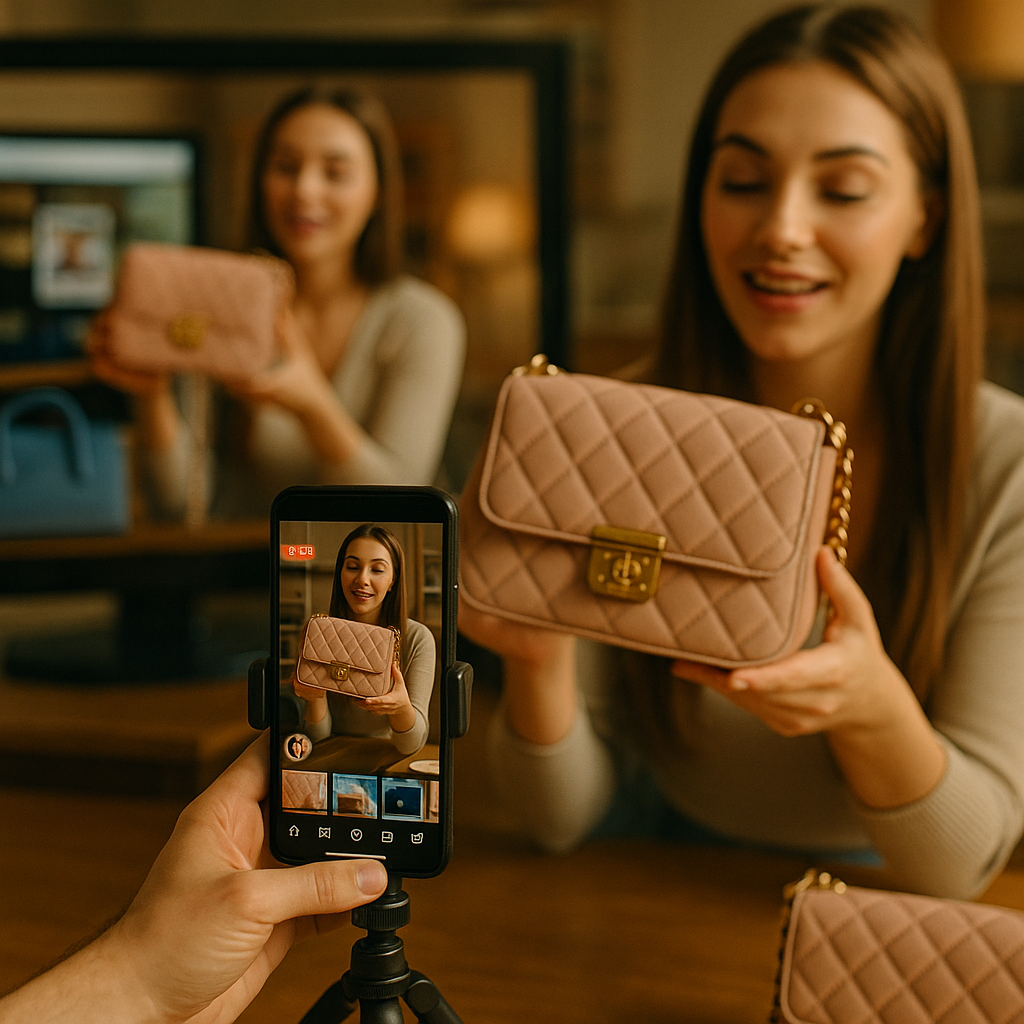
QVC sold home goods on cable for over four decades. Now that model is fused directly into TikTok’s feed, running continuously, no channel surfing required. The TikTok-QVC 24/7 livestream integration isn’t a gimmick — it’s a signal that always-on commerce is becoming the default expectation, not a seasonal stunt. Brands that treat this as a one-off activation will miss the bigger shift underway.
What Actually Launched, and Why It Matters
TikTok and QVC (via its parent Qurate Retail Group) rolled out dedicated, continuously streaming shopping channels inside the TikTok Shop ecosystem. Unlike a brand’s typical hour-long livestream event, this is programmed like a television network: scheduled segments, rotating hosts, themed blocks, all running around the clock without gaps.
For brands, the significance isn’t the novelty of live shopping. TikTok Shop already normalized that. The significance is duration and continuity. A 24/7 stream changes the math on production costs, host scheduling, inventory logistics, and how you measure success. It also legitimizes live commerce for categories that were previously skeptical — home, appliances, wellness, categories QVC built its business on.
Continuous livestreaming shifts the unit of measurement from “campaign performance” to “channel performance” — and most brand teams aren’t structured to think that way yet.
The Operational Shift Brands Need to Understand
A single livestream event is a project. A 24/7 channel is a program. That distinction changes everything about how you staff and budget it.
- Staffing becomes a rotation problem, not a booking problem. You need hosts across time zones, not just a creator available Tuesday at 7pm.
- Inventory has to be live-synced. Continuous selling means stockouts happen faster and more visibly than in scheduled drops.
- Content can’t be scripted end-to-end. Hosts need modular talking points they can loop, extend, or compress depending on real-time viewer behavior.
- Moderation runs nonstop. Comment sections on a 24/7 stream never close, which means compliance and community management need shift coverage too.
This is closer to running a QVC-style broadcast operation than managing an influencer partnership. Brands used to booking one creator for one drop will need to rethink their vendor relationships entirely, likely working with agencies or MCNs that already run multi-host rotations.
Who Should Actually Pilot This First?
Not every brand needs to be on a 24/7 channel. Frankly, most don’t. This model favors:
- High-SKU catalogs — home goods, beauty, apparel with frequent restocks and variant depth.
- Impulse-friendly price points — items under $75 tend to convert better in continuous, low-friction formats.
- Brands with existing UGC or creator libraries to draw from for B-roll and repurposed segments.
- Retailers already running TikTok Shop at scale, since the infrastructure (fulfillment, affiliate commissions, catalog sync) is already built.
If your brand runs seasonal drops or low-frequency, high-consideration purchases (think furniture over $2,000, or B2B software), a 24/7 stream is the wrong format. Save the budget for scheduled events instead. Brands already running category-specific commission strategies, like those detailed in our breakdown of TikTok Shop commission tiers for home goods, are well-positioned to extend into continuous formats because the affiliate math already works.
Building the Business Case: What ROI Actually Looks Like Here
Live commerce ROI conversations usually collapse into two extremes: “it’s the future of retail” or “it’s a vanity metric trap.” Neither is useful. Here’s what the numbers actually tend to show.
eMarketer and Statista have both tracked steady growth in U.S. live shopping adoption, though it still trails China’s market by a wide margin. The opportunity for brands isn’t matching Taobao-style GMV overnight — it’s capturing the attention-to-purchase compression that live formats create. A viewer watching a demo and buying within the same session skips several funnel stages that a static product page can’t replicate.
For a 24/7 channel specifically, track these metrics differently than a standard campaign:
- Average watch time per hour block, not per stream, since viewers drop in and out constantly.
- Conversion rate by daypart. Early morning and late-night slots often convert differently than prime evening hours, mirroring old QVC data.
- Repeat purchase rate from returning viewers, a metric almost impossible to isolate in one-off livestream events.
- Cost per hour of programming versus cost per acquisition, since continuous content changes the denominator entirely.
Run the math before committing budget. A 24/7 slot might cost less per hour than a single high-production event, but the cumulative spend across a month can dwarf a quarterly campaign budget if you’re not disciplined about it.
Compliance Doesn’t Sleep Either
This is where a lot of brands will get burned. Continuous streaming means continuous disclosure obligations, continuous claims monitoring, and continuous risk exposure. The FTC’s endorsement guidance doesn’t pause because your stream runs at 3am. Neither does the UK’s ASA or ICO if you’re streaming to UK audiences.
Brands already navigating this in adjacent categories should look closely at how beauty and skincare live commerce handles regulatory pressure. Our coverage of FTC compliance risk in beauty livestreams and age-gating for alcohol-adjacent skincare in UK livestreams both apply directly here, just stretched across a nonstop broadcast window instead of a single event.
A single missed disclosure in a one-hour stream is a mistake. The same gap repeated across a 24/7 channel becomes a pattern — and patterns are what regulators actually pursue.
Build compliance checkpoints into every shift handoff. Whoever moderates the overnight block needs the same disclosure training as your flagship daytime host. Document it. Consistency across hosts and hours is the difference between a defensible program and a liability waiting for an FTC complaint.
Verification and Vendor Vetting: Don’t Skip This Step
Running a continuous channel means working with more vendors, more hosts, and more third-party fulfillment partners than a typical campaign. That expands your documentation burden significantly. Brands that have struggled with TikTok Shop’s verification requirements already know how unforgiving mismatched paperwork can be. If you’re scaling into 24/7 programming, revisit your seller documentation now, not after launch. Our guide on fixing mismatched TikTok Shop documents is worth reviewing before you sign a single host contract for a continuous channel.
Similarly, onboarding creators and hosts at the volume a 24/7 channel requires means you can’t manually vet every partner the way you might for a single campaign. Templated onboarding, like the category-based systems covered in our piece on faster creator onboarding templates, becomes essential infrastructure rather than a nice-to-have.
How This Fits the Broader Algorithm Shifts on TikTok
None of this happens in isolation. TikTok’s watch-time and trust-based distribution changes have already forced brands to rebrief creators across standard content formats. The same underlying signals, watch time, completion rate, trust scoring, likely extend into how the platform decides which live channels get feed placement and which get buried.
If you’re not already tracking how watch-time algorithm shifts are affecting distribution, a 24/7 stream will expose those gaps fast. Continuous content lives or dies on whether the algorithm decides to surface it, and that decision is increasingly driven by trust signals rather than raw spend. Review the platform’s own guidance for live and shopping features directly through TikTok’s advertiser resources before finalizing a media plan, since eligibility requirements for shopping features shift frequently.
A Realistic Pilot Framework
Don’t jump straight to 24/7. Very few brand teams have the operational maturity to do that safely on day one. Instead:
- Run a 72-hour pilot around a single product launch or restock event, staffed in three shifts.
- Measure daypart performance to identify which hours actually justify continuous coverage versus scheduled blocks.
- Audit compliance across every shift before scaling, using a single documented disclosure standard.
- Negotiate host and MCN contracts based on pilot data, not projected assumptions.
- Scale to a rolling weekly channel only after the pilot proves conversion consistency across at least two dayparts.
This mirrors how smart brands approached Instagram Live Shopping when it first launched, treating it as a test-and-learn channel rather than an all-in bet. For teams building that muscle, our Instagram live shopping playbook outlines a similar phased approach that translates well to TikTok’s continuous format.
For broader context on where live commerce spend is heading industry-wide, HubSpot’s research on social commerce trends and Sprout Social’s data on platform engagement benchmarks are both useful for building the internal business case with finance stakeholders who need more than platform hype to approve budget.
FAQs
Frequently Asked Questions
What is the TikTok-QVC 24/7 livestream integration?
It’s a continuous, always-on shopping channel built into TikTok Shop through a partnership with QVC’s parent company, Qurate Retail Group. It runs programmed shopping segments around the clock, similar to a television shopping network, rather than scheduled one-off livestream events.
Do brands need their own 24/7 channel to participate?
No. Most brands can participate through hosted segments, affiliate partnerships, or product placements within the broader QVC-TikTok channel rather than building an independent continuous stream, which requires significantly more staffing and budget.
What products perform best in continuous live commerce formats?
Impulse-friendly items under roughly $75, high-SKU catalogs with frequent restocks, and categories with strong demo value (home goods, beauty, kitchen gadgets) tend to outperform high-consideration or low-frequency purchase categories.
How does compliance risk change with a 24/7 stream versus a single event?
Disclosure and claims monitoring obligations apply continuously, across every host and every shift, including overnight hours. A single missed disclosure in one stream is a mistake; repeated gaps across a nonstop channel can be treated as a pattern by regulators like the FTC.
What metrics should brands track differently for continuous livestreams?
Track average watch time per hour block, conversion rate by daypart, repeat purchase rate among returning viewers, and cost per hour of programming, rather than relying solely on single-event campaign metrics.
Should smaller brands attempt 24/7 livestreaming?
Generally no. Most brands are better served piloting a short, multi-shift livestream event (48-72 hours) before considering a fully continuous channel, which requires broadcast-level staffing and inventory infrastructure.
Start small: run a 72-hour, multi-shift pilot tied to a single restock before committing to anything resembling a full 24/7 channel. Let daypart data, not platform hype, decide whether continuous commerce earns a permanent line in next year’s budget.
Top Influencer Marketing Agencies
The leading agencies shaping influencer marketing in 2026
Agencies ranked by campaign performance, client diversity, platform expertise, proven ROI, industry recognition, and client satisfaction. Assessed through verified case studies, reviews, and industry consultations.
Moburst

-
2

The Shelf
Boutique Beauty & Lifestyle Influencer AgencyA data-driven boutique agency specializing exclusively in beauty, wellness, and lifestyle influencer campaigns on Instagram and TikTok. Best for brands already focused on the beauty/personal care space that need curated, aesthetic-driven content.Clients: Pepsi, The Honest Company, Hims, Elf Cosmetics, Pure LeafVisit The Shelf → -
3

Audiencly
Niche Gaming & Esports Influencer AgencyA specialized agency focused exclusively on gaming and esports creators on YouTube, Twitch, and TikTok. Ideal if your campaign is 100% gaming-focused — from game launches to hardware and esports events.Clients: Epic Games, NordVPN, Ubisoft, Wargaming, Tencent GamesVisit Audiencly → -
4

Viral Nation
Global Influencer Marketing & Talent AgencyA dual talent management and marketing agency with proprietary brand safety tools and a global creator network spanning nano-influencers to celebrities across all major platforms.Clients: Meta, Activision Blizzard, Energizer, Aston Martin, WalmartVisit Viral Nation → -
5

The Influencer Marketing Factory
TikTok, Instagram & YouTube CampaignsA full-service agency with strong TikTok expertise, offering end-to-end campaign management from influencer discovery through performance reporting with a focus on platform-native content.Clients: Google, Snapchat, Universal Music, Bumble, YelpVisit TIMF → -
6

NeoReach
Enterprise Analytics & Influencer CampaignsAn enterprise-focused agency combining managed campaigns with a powerful self-service data platform for influencer search, audience analytics, and attribution modeling.Clients: Amazon, Airbnb, Netflix, Honda, The New York TimesVisit NeoReach → -
7

Ubiquitous
Creator-First Marketing PlatformA tech-driven platform combining self-service tools with managed campaign options, emphasizing speed and scalability for brands managing multiple influencer relationships.Clients: Lyft, Disney, Target, American Eagle, NetflixVisit Ubiquitous → -
8

Obviously
Scalable Enterprise Influencer CampaignsA tech-enabled agency built for high-volume campaigns, coordinating hundreds of creators simultaneously with end-to-end logistics, content rights management, and product seeding.Clients: Google, Ulta Beauty, Converse, AmazonVisit Obviously →