


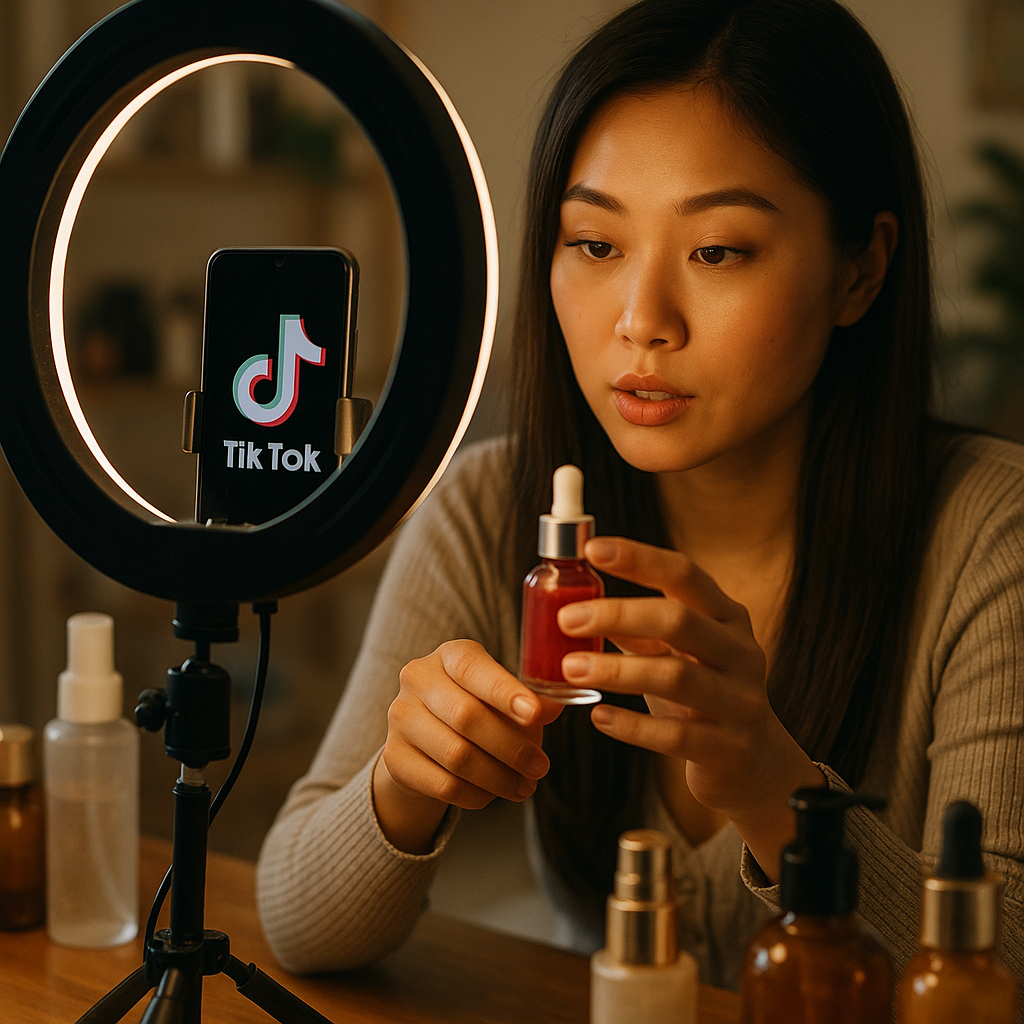
A “24-hour flash sale” banner and an unverified age gate can turn a six-figure livestream into an FTC complaint. TikTok Shop’s beauty category now drives some of the platform’s highest live-selling GMV, but countdown-timer urgency tactics and lax age verification are exactly the two things regulators are circling. If your brand runs beauty livestreams with a clock ticking in the corner, this is the playbook for doing it without becoming a case study in what not to do.
Why Beauty Livestreams Are a Regulatory Minefield
Beauty is TikTok Shop’s most scrutinized category for a reason. It sits at the intersection of three compliance triggers: age-restricted ingredients (retinol, hydroquinone, certain acids), health-adjacent claims (anti-aging, acne “cure,” skin barrier repair), and impulse-purchase urgency mechanics. Stack a countdown timer on top of that, and you’ve built a funnel that regulators are primed to examine.
The FTC’s stance on manufactured urgency isn’t new, but enforcement against livestream commerce is accelerating. The agency’s guidance on dark patterns explicitly calls out fake scarcity, false countdown timers, and pressure tactics that don’t reflect actual inventory or time constraints. A countdown clock that resets after every stream, or one not tied to real stock levels, is a textbook violation waiting to happen.
If your countdown timer doesn’t correspond to an actual, verifiable constraint, you’re not creating urgency, you’re creating liability.
The Age-Gating Problem Nobody Wants to Talk About
TikTok skews young. TikTok Shop’s beauty buyers skew younger still. That’s a problem when you’re selling exfoliating acids, prescription-adjacent skincare dupes, or anything with an age-restriction requirement in your product category templates. Most brands treat age-gating as a checkbox: a pop-up asking “are you 18+” that anyone can click through in half a second.
That’s not compliance. That’s theater.
Real age-gating in a live-selling context means the verification happens before the checkout event fires, not as a cosmetic overlay. TikTok Shop’s own commerce policies require accurate category tagging for age-restricted items, and brands that mis-tag products to avoid friction are setting themselves up for account-level penalties, not just individual video takedowns. We’ve covered the mechanics of this in detail in our breakdown of age-gating alcohol-adjacent skincare livestreams in the UK market, where the enforcement bar is even higher than in the US.
What Actual Age Verification Looks Like Mid-Stream
- Pre-stream registration gates: Require viewers to confirm age via TikTok’s account-level data (birthdate on file) before the shop tab activates for restricted SKUs.
- Product-tier segmentation: Separate your catalog so age-restricted items only surface in the shop tab for verified accounts, not the general livestream audience.
- Host scripting: Train hosts to verbally flag restricted items (“this one’s 18+ only, check the tag”) rather than relying solely on backend gating.
- Documented audit trail: Keep timestamped records of what gating mechanism was live during each stream. If the FTC or a state AG comes asking, “we assumed TikTok handled it” is not a defense.
Structuring the Countdown Without Faking Scarcity
Here’s the tension: countdown events convert. Data from live commerce platforms consistently shows conversion lift when a genuine time constraint is visible on screen. But “genuine” is the operative word. The FTC doesn’t ban urgency, it bans manufactured urgency that misrepresents reality.
The fix is structural, not cosmetic. Build your countdown around a constraint that’s actually true.
- Inventory-linked timers: Tie the countdown to real stock depletion, not a clock. If you have 500 units of a limited palette, the timer ends when units hit zero or the stream ends, whichever comes first, and you disclose both conditions on screen.
- Fixed-window events with public start/end times: Announce the live-selling window in advance across your TikTok Shop storefront and organic posts. A countdown to a pre-announced, honored end time is defensible. A countdown that mysteriously extends when sales are slow is not.
- Price-anchored urgency instead of time-only urgency: “This price returns to $42 after the stream” is more defensible than “only 3 minutes left” if the price change is actually scheduled and enforced in your TikTok Shop pricing rules.
- No countdown resets across sessions: If Tuesday’s stream had a countdown that expired, Thursday’s stream needs a fresh, independently justified countdown. Reusing the same “urgency” across multiple events is the pattern regulators flag first.
This is the same logic we’ve applied when breaking down live shopping playbooks that actually convert without gimmicks: the mechanic has to reflect an operational reality, not just a UI trick borrowed from a template.
Commission Structure Shapes Host Behavior, So Design It Carefully
Here’s something brands underweight: your commission tiers directly influence how aggressively a host pushes urgency language. If a creator earns a flat percentage regardless of speed, they have less incentive to manufacture false pressure. If your tiered structure rewards hosts for hitting velocity thresholds in the first ten minutes, you’re implicitly training them to lean into “hurry, almost gone” language, whether or not it’s true.
We’ve written extensively about how commission tiers shape creator behavior across categories, and beauty is arguably the highest-risk vertical for this dynamic because the products themselves often carry restriction requirements. Pair an aggressive velocity bonus with an age-restricted retinol serum, and you’ve built a system that financially rewards a host for glossing over both the urgency disclosure and the age gate in the same ten-second pitch.
Commission design isn’t just a payout mechanic. It’s a compliance lever most brands forget they’re pulling.
The fix: build compliance checkpoints into the commission agreement itself. Hosts who skip disclosed age-gating language or use banned urgency phrases (verbatim scripts flagged in your brand’s legal review) should forfeit the bonus tier for that stream, full stop. Tie the incentive to compliant behavior, not just GMV.
Pre-Stream Checklist: The Fifteen Minutes That Save You a Legal Headache
Every beauty livestream event should run through this before the shop tab goes live:
- Confirm age-restricted SKUs are correctly tagged in your category templates and not miscategorized to dodge friction.
- Verify the countdown timer is linked to a real constraint (inventory count or scheduled price change) and document it.
- Confirm host scripts avoid absolute claims (“guaranteed results,” “cures acne”) that trigger FTC substantiation requirements separate from the urgency issue.
- Test the age verification flow as an unverified user would experience it, not as an internal QA account that’s already flagged as an adult.
- Set an internal cutoff: if inventory runs out before the announced end time, end the stream segment for that SKU rather than letting the countdown run on empty stock, which is itself a form of the “low stock” dark pattern the FTC has warned against.
None of this is glamorous. But the brands getting burned right now aren’t the ones running sloppy creative, they’re the ones running slick creative with a broken compliance backbone underneath it.
What This Means for Q1 Planning
If you’re building out a beauty live-selling calendar, treat compliance review as a line item, not an afterthought bolted on after legal flags something. Budget time for a compliance pass on every countdown script, every commission structure, every age-gate flow, before the stream goes live, not after a complaint lands. Platforms like TikTok’s ad and commerce policy center update restricted-category rules more often than most brand teams realize; a quarterly policy audit should be standard practice, not optional.
It’s also worth benchmarking against how other social commerce channels are handling similar urgency and disclosure questions. Amazon’s Inspire feed and YouTube Shopping have both tightened rules around unsubstantiated claims and disclosure timing, which suggests platform-wide convergence on stricter urgency standards is coming, not just a TikTok-specific crackdown. Resources like the FTC’s official guidance portal and eMarketer’s social commerce data are worth monitoring quarterly if you’re running live-selling at scale.
FAQs
Frequently Asked Questions
What counts as a “false urgency” violation under FTC rules for livestream shopping?
A false urgency violation occurs when a countdown timer, low-stock warning, or “sale ending soon” message doesn’t reflect an actual, verifiable constraint. If the timer resets, the inventory claim is inaccurate, or the deadline isn’t honored, it qualifies as a deceptive practice under FTC guidance on dark patterns.
Does TikTok Shop require age verification for beauty livestreams?
TikTok Shop requires accurate category tagging for age-restricted products, and brands are responsible for ensuring restricted SKUs aren’t surfaced to unverified accounts. Cosmetic pop-ups that anyone can click through don’t meet a defensible compliance standard; verification needs to happen before checkout access is granted.
Can we still use countdown timers in beauty livestreams if we do it correctly?
Yes. Countdown timers are legal and effective when tied to a real constraint, such as actual inventory depletion or a pre-announced, honored price change. The issue isn’t urgency itself, it’s manufactured urgency that misrepresents reality to pressure a purchase.
How does commission structure affect compliance risk in live selling?
Commission tiers that reward speed or volume in a short window can incentivize hosts to skip disclosures, exaggerate claims, or ignore age-gating steps to close sales faster. Building compliance checkpoints into the commission agreement itself helps align creator incentives with regulatory requirements.
What’s the safest way to phrase urgency in a host’s live script?
Use language tied to a verifiable fact: “we have 40 units left” or “this price ends when the stream does” rather than vague pressure phrases like “almost gone” or “last chance” without backing data. Scripts should be legal-reviewed and hosts should be trained to avoid ad-libbing urgency claims.
Next step: Audit your last three beauty livestream recordings against the FTC’s dark pattern guidance and your own age-gate flow before scheduling another countdown event. If you can’t produce documentation showing the timer matched a real constraint, fix that before you scale spend.
Top Influencer Marketing Agencies
The leading agencies shaping influencer marketing in 2026
Agencies ranked by campaign performance, client diversity, platform expertise, proven ROI, industry recognition, and client satisfaction. Assessed through verified case studies, reviews, and industry consultations.
Moburst

-
2

The Shelf
Boutique Beauty & Lifestyle Influencer AgencyA data-driven boutique agency specializing exclusively in beauty, wellness, and lifestyle influencer campaigns on Instagram and TikTok. Best for brands already focused on the beauty/personal care space that need curated, aesthetic-driven content.Clients: Pepsi, The Honest Company, Hims, Elf Cosmetics, Pure LeafVisit The Shelf → -
3

Audiencly
Niche Gaming & Esports Influencer AgencyA specialized agency focused exclusively on gaming and esports creators on YouTube, Twitch, and TikTok. Ideal if your campaign is 100% gaming-focused — from game launches to hardware and esports events.Clients: Epic Games, NordVPN, Ubisoft, Wargaming, Tencent GamesVisit Audiencly → -
4

Viral Nation
Global Influencer Marketing & Talent AgencyA dual talent management and marketing agency with proprietary brand safety tools and a global creator network spanning nano-influencers to celebrities across all major platforms.Clients: Meta, Activision Blizzard, Energizer, Aston Martin, WalmartVisit Viral Nation → -
5

The Influencer Marketing Factory
TikTok, Instagram & YouTube CampaignsA full-service agency with strong TikTok expertise, offering end-to-end campaign management from influencer discovery through performance reporting with a focus on platform-native content.Clients: Google, Snapchat, Universal Music, Bumble, YelpVisit TIMF → -
6

NeoReach
Enterprise Analytics & Influencer CampaignsAn enterprise-focused agency combining managed campaigns with a powerful self-service data platform for influencer search, audience analytics, and attribution modeling.Clients: Amazon, Airbnb, Netflix, Honda, The New York TimesVisit NeoReach → -
7

Ubiquitous
Creator-First Marketing PlatformA tech-driven platform combining self-service tools with managed campaign options, emphasizing speed and scalability for brands managing multiple influencer relationships.Clients: Lyft, Disney, Target, American Eagle, NetflixVisit Ubiquitous → -
8

Obviously
Scalable Enterprise Influencer CampaignsA tech-enabled agency built for high-volume campaigns, coordinating hundreds of creators simultaneously with end-to-end logistics, content rights management, and product seeding.Clients: Google, Ulta Beauty, Converse, AmazonVisit Obviously →