


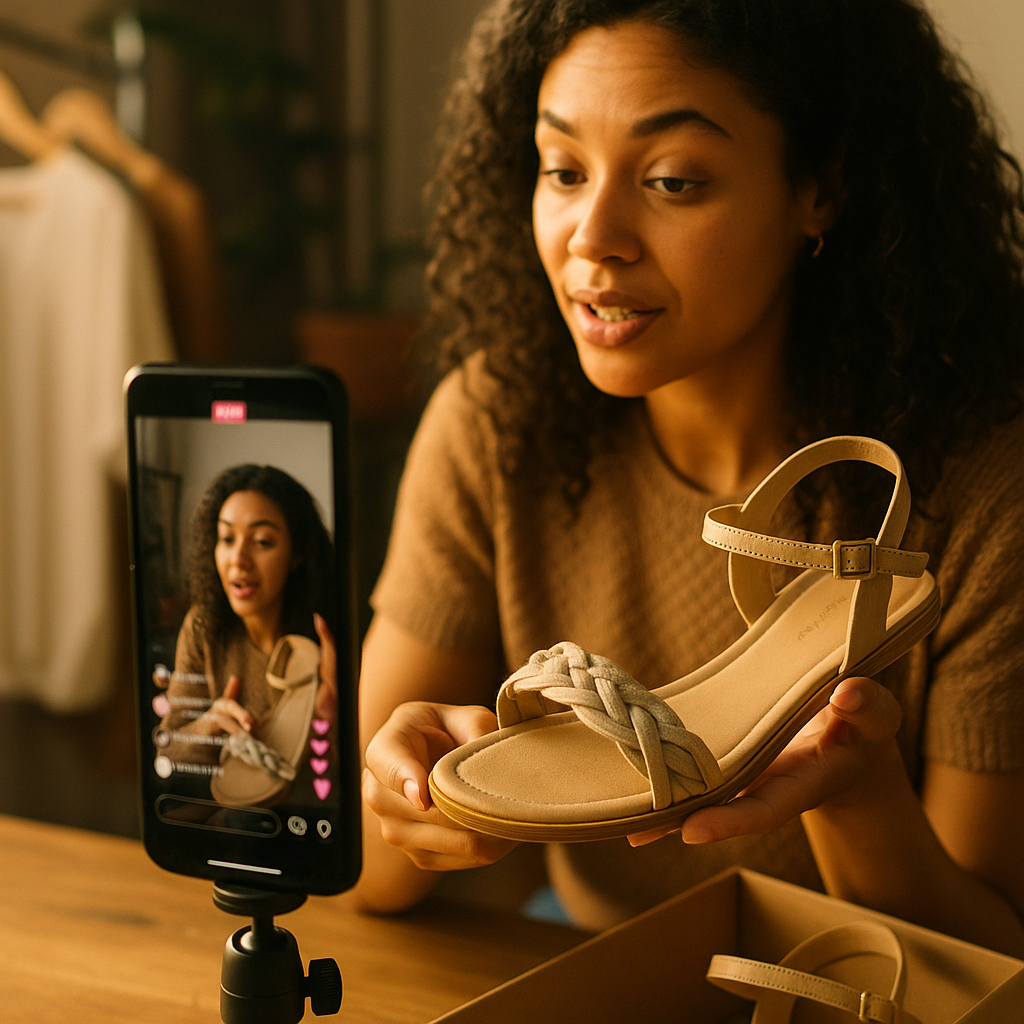
Meta says shoppers who watch a live shopping stream are far more likely to purchase than those scrolling static product posts. Yet most brands still treat Instagram Live Shopping like a webinar with a cart bolted on. That’s the gap this playbook closes.
Instagram’s rebuilt in-app checkout tools finally make live commerce operationally sane: real-time product pins, creator revenue splits, and post-stream shoppable replays. But tools don’t build strategy. Structure does.
Why Live Shopping Is Finally Worth the Calendar Slot
For years, brands avoided Instagram Live Shopping because the mechanics were clunky. Hosts had to manually tag products mid-stream, checkout redirected to third-party carts, and replay value was basically zero. That’s changed. Meta’s updated commerce stack now supports persistent product shelves during live video, native checkout without leaving the app, and automatic clip generation that turns a 45-minute stream into a week of shoppable Reels.
The timing matters. Livestream shopping in the US is projected to keep growing at double-digit rates annually, according to eMarketer estimates, and Instagram is positioning itself as the platform where that growth happens outside of TikTok Shop. If your brand has been sitting out live commerce waiting for “the tools to mature,” they have. The excuse is gone.
Live shopping isn’t a content format — it’s a checkout funnel with a host attached. Treat it like a QVC segment, not an IG Live with a link in bio.
Casting the Right Creator-Host, Not Just a Popular One
Follower count is the wrong first filter. What matters is whether a creator can hold a shopping narrative for 30-60 minutes without going flat. That’s a rare skill, closer to broadcast hosting than typical content creation.
Look for creators who already do some version of this organically: unboxing marathons, “get ready with me” hauls, or Q&A-heavy Stories. Those instincts translate directly to live selling. Micro and mid-tier creators (50K-300K followers) often outperform bigger names here because their audiences expect direct product talk, not polished brand-safe commentary.
- Test with a Story-based dry run. Have the creator field live product questions in Stories before committing to a full shopping event.
- Check comment engagement quality, not volume. Are followers asking sizing, price, or restock questions? That’s shopping intent.
- Confirm they can operate the seller tools. Pinning products live under pressure is a skill. Rehearse it.
Multi-creator formats work too, especially for category launches. Two hosts bouncing questions back and forth reduces dead air and gives you a natural good-cop/bad-cop dynamic for objection handling (“is this worth the price?” lands better from a peer than from brand copy).
Structuring the Event Like a Retail Floor, Not a Talk Show
The biggest mistake brands make: building a rundown that’s 80% talking and 20% selling. Flip that ratio. Every segment should map to a specific product moment, with clear checkout prompts at fixed intervals, not just whenever the host remembers.
A structure that’s worked well across CPG and beauty launches:
- Cold open (0-3 min): Host previews the full product lineup with pinned items visible immediately. No slow warm-up — viewers who join late need instant context.
- Hero product deep dive (3-15 min): One flagship SKU, live demo, direct pin-and-buy prompt every 3-4 minutes.
- Audience-driven segment (15-30 min): Pull live comments, answer questions, pin related products as they come up organically.
- Bundle or discount reveal (30-40 min): Time-boxed offer, visible countdown if the platform supports it, urgency without being manipulative.
- Rapid-fire close (40-50 min): Quick tour of remaining catalog, final pinned products, clear sign-off with replay availability mentioned.
Keep total runtime under an hour. Data across livestream shopping formats consistently shows a drop-off after the 45-minute mark unless there’s a major incentive keeping people around (flash pricing, giveaway reveal, etc.).
The Checkout Layer: What Actually Changed
Instagram’s native checkout update matters because it removes the two biggest friction points in live commerce: app-switching and delayed product tagging. Here’s what brands need to configure before the event, not during it.
- Pre-load your product catalog. Every SKU featured live needs to already exist in your Instagram Shop with accurate inventory sync. A pinned product that’s out of stock mid-stream kills momentum instantly.
- Set creator commission splits in advance. The new revenue-share settings let you assign different commission rates per product, which is useful if you’re pushing a lower-margin loss leader alongside higher-margin bundles.
- Enable saved payment defaults. Checkout speed is the entire point. If viewers still have to manually enter shipping and card details, you’ve recreated the old friction with new branding.
- Test the shoppable replay clip generation. Confirm which segments auto-convert into shoppable Reels post-stream. This is where a lot of the long-tail revenue actually shows up, often more than the live event itself.
This is the same operational discipline brands have had to build for other in-app commerce rollouts. If your team already has a process for syncing catalogs and briefing creators on checkout mechanics from TikTok Shop bulk listing work, most of it ports over directly.
Compliance Isn’t Optional Just Because It’s “Live”
Live format doesn’t exempt anyone from disclosure rules. If anything, it raises the risk, because there’s no editing pass to catch a missed #ad tag or an unsubstantiated health claim before it airs. The FTC’s endorsement guidance applies to live content exactly as it does to static posts, and Meta’s own Meta Business commerce policies require paid partnership labeling regardless of format.
Brief hosts explicitly: disclosure at the top of the stream, verbally and via the paid partnership tag, repeated after any break longer than a few minutes. Viewers joining mid-stream won’t see the opening disclosure, so a single mention isn’t enough.
Have a moderator briefed on comment moderation too. Live shopping comment sections attract scam links and impersonation attempts fast, particularly once a stream gets any real traction. Assign someone whose only job is watching the comment feed, not helping run the show.
Measuring Beyond “How Many Watched”
Peak concurrent viewers is a vanity metric if it’s the only one on your recap slide. The numbers that actually tell you whether to rebook the format:
- Checkout conversion rate during the live window versus your normal Instagram Shop conversion rate
- Average order value on live purchases compared to standard shop traffic — bundling often lifts this meaningfully
- Replay-driven revenue in the 7 days following the event
- Creator-attributed revenue share to evaluate commission structure ROI
- Return/refund rate on live-purchased items — impulse buys during hype segments sometimes return at higher rates, which affects true margin
Run this against a control: a standard shoppable Reel from the same creator, same product, same week if possible. That comparison is the only way to prove live shopping earns its production budget versus a simpler content format. It also mirrors how brands are learning to measure saves and DMs as stronger signals than surface-level engagement.
Where This Fits Alongside Other Platforms
Instagram Live Shopping shouldn’t run in isolation. Brands already running TikTok Shop creator programs or affiliate-driven YouTube shopping campaigns should treat Instagram’s live format as a complementary event layer, not a replacement channel. Use it for launches, restocks, and moments that benefit from real-time urgency; lean on evergreen shoppable content elsewhere for steady-state sales.
Cross-promote the event across owned channels 48 hours out. Email, Stories countdown stickers, and even a teaser on Sprout Social-managed community posts all help build the concurrent audience that makes live commerce worth the production lift in the first place.
Next step: Pick one upcoming product launch, cast a creator who’s already shown organic shopping-intent engagement, and run a 45-minute live shopping event with the structure above before committing budget to a recurring series. Measure against a control Reel, then decide if this earns a permanent slot on your content calendar.
FAQs
How long should an Instagram Live Shopping event run?
Most successful events run 45 to 60 minutes. Engagement and checkout activity typically taper after the 45-minute mark unless a time-boxed offer or giveaway is keeping viewers around.
Do creators need a minimum follower count to host live shopping events?
No. Mid-tier creators in the 50,000 to 300,000 follower range often convert better than larger accounts because their audiences expect direct, unpolished product talk rather than brand-safe commentary.
How does disclosure work during a live shopping stream?
Hosts should disclose the paid partnership verbally at the start of the stream and again after any extended break, since viewers joining mid-stream miss earlier disclosures. The paid partnership tag should also stay active throughout.
What happens to the content after the live event ends?
Instagram’s tools can auto-generate shoppable Reels from segments of the live stream, allowing the event to keep driving checkout traffic for days or weeks after it airs.
What’s the biggest operational risk in live shopping events?
Inventory and catalog sync issues. A pinned product going out of stock mid-stream, or checkout requiring extra manual steps, undermines the entire point of native in-app checkout.
FAQs
Top Influencer Marketing Agencies
The leading agencies shaping influencer marketing in 2026
Agencies ranked by campaign performance, client diversity, platform expertise, proven ROI, industry recognition, and client satisfaction. Assessed through verified case studies, reviews, and industry consultations.
Moburst

-
2

The Shelf
Boutique Beauty & Lifestyle Influencer AgencyA data-driven boutique agency specializing exclusively in beauty, wellness, and lifestyle influencer campaigns on Instagram and TikTok. Best for brands already focused on the beauty/personal care space that need curated, aesthetic-driven content.Clients: Pepsi, The Honest Company, Hims, Elf Cosmetics, Pure LeafVisit The Shelf → -
3

Audiencly
Niche Gaming & Esports Influencer AgencyA specialized agency focused exclusively on gaming and esports creators on YouTube, Twitch, and TikTok. Ideal if your campaign is 100% gaming-focused — from game launches to hardware and esports events.Clients: Epic Games, NordVPN, Ubisoft, Wargaming, Tencent GamesVisit Audiencly → -
4

Viral Nation
Global Influencer Marketing & Talent AgencyA dual talent management and marketing agency with proprietary brand safety tools and a global creator network spanning nano-influencers to celebrities across all major platforms.Clients: Meta, Activision Blizzard, Energizer, Aston Martin, WalmartVisit Viral Nation → -
5

The Influencer Marketing Factory
TikTok, Instagram & YouTube CampaignsA full-service agency with strong TikTok expertise, offering end-to-end campaign management from influencer discovery through performance reporting with a focus on platform-native content.Clients: Google, Snapchat, Universal Music, Bumble, YelpVisit TIMF → -
6

NeoReach
Enterprise Analytics & Influencer CampaignsAn enterprise-focused agency combining managed campaigns with a powerful self-service data platform for influencer search, audience analytics, and attribution modeling.Clients: Amazon, Airbnb, Netflix, Honda, The New York TimesVisit NeoReach → -
7

Ubiquitous
Creator-First Marketing PlatformA tech-driven platform combining self-service tools with managed campaign options, emphasizing speed and scalability for brands managing multiple influencer relationships.Clients: Lyft, Disney, Target, American Eagle, NetflixVisit Ubiquitous → -
8

Obviously
Scalable Enterprise Influencer CampaignsA tech-enabled agency built for high-volume campaigns, coordinating hundreds of creators simultaneously with end-to-end logistics, content rights management, and product seeding.Clients: Google, Ulta Beauty, Converse, AmazonVisit Obviously →