


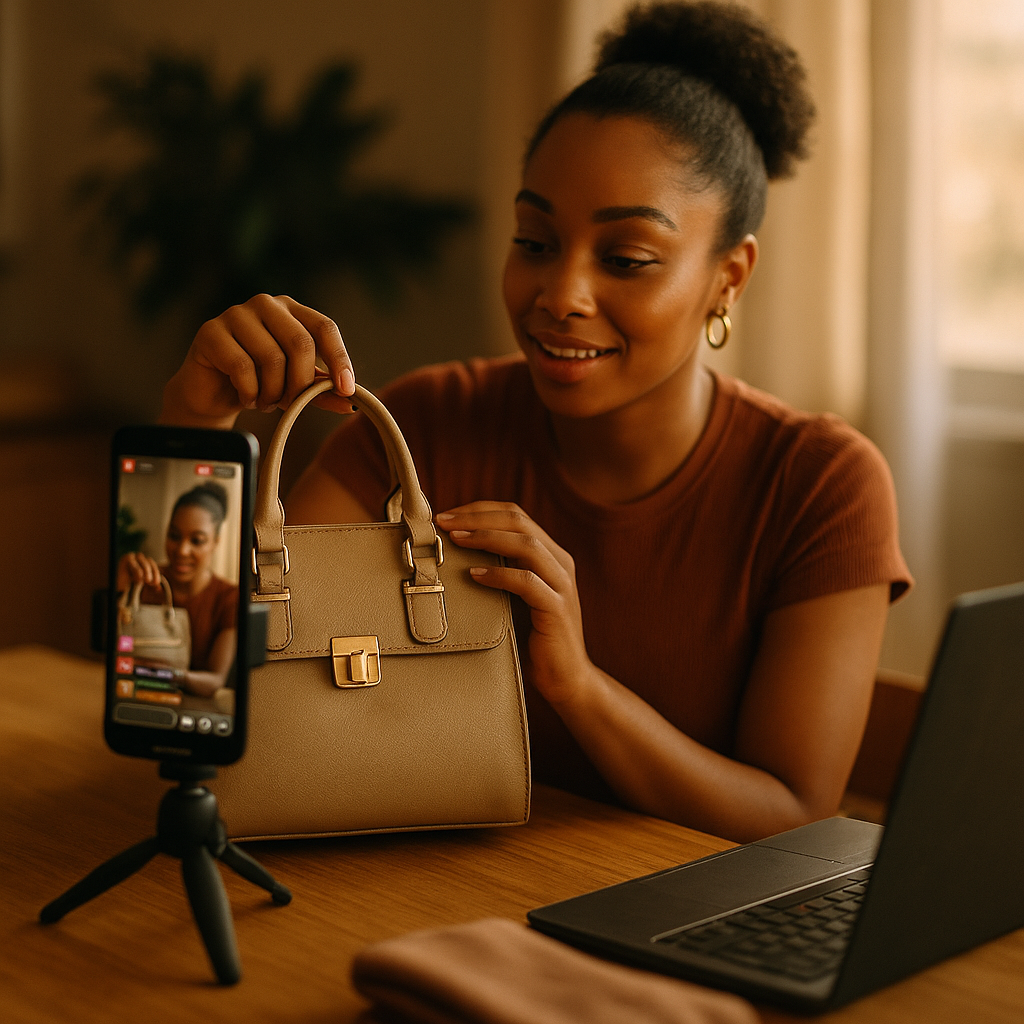
Live shopping in the U.S. is projected to top $55 billion by 2026, according to eMarketer estimates, and Instagram just handed brands a real reason to care. The new in-app checkout tools finally close the gap between “watch” and “buy” without forcing viewers to leave the stream. If your Instagram Live Shopping playbook still routes people to a bio link, you’re leaking sales in real time. Here’s how to structure creator-hosted browse-and-buy events that actually convert.
Why This Update Actually Matters
Instagram Live has existed for years. Shopping tags have existed for years. What’s new is the friction removal: checkout now happens inside the live player, with saved payment credentials, real-time inventory syncing, and multi-product carousels that update as the host talks. Previously, hosts had to verbally direct viewers to “tap the link in bio,” a step that killed conversion at the exact moment intent peaked.
Meta’s own commerce data has repeatedly shown that each additional tap between interest and purchase costs measurable conversion. Removing two taps (leaving the app, finding the product) is not a cosmetic fix. It’s the difference between a live stream that generates engagement and one that generates revenue.
The brands winning at live shopping aren’t the ones with the biggest creators. They’re the ones who’ve turned checkout friction into a solved operational problem.
Casting: Pick Hosts Who Can Sell in Real Time
Not every creator who’s good on camera is good at live selling. Live shopping demands a different skill: the ability to narrate product benefits, handle unscripted comments, and pace a show so viewers stay through multiple product drops. QVC hosts trained for this for decades. Your creator roster probably hasn’t.
- Test with a low-stakes dry run. Have shortlisted creators run a 10-minute unlisted live session narrating three SKUs before committing to a full event.
- Prioritize comment-reading speed. The best live sellers reference viewer questions by name within seconds, which builds the parasocial urgency that drives impulse buys.
- Check their past shopping tag usage. Creators already fluent in Instagram’s product tagging system will ramp faster than those new to commerce features.
This casting logic mirrors what we outlined in our Instagram Live Shopping playbook covering conversion fundamentals — but the new checkout layer raises the stakes on host selection, because a slow or confusing host now directly sits between the viewer and a completed transaction.
Structuring the Event: The 45-Minute Browse-and-Buy Format
Most brands over-plan the opening and under-plan the middle. Here’s a structure that’s held up across multiple creator-hosted tests:
- Minutes 0-5: Hook and agenda. Tell viewers what’s coming and when. “We’ve got four products, a discount that drops at minute 20, and a giveaway at the end.” This keeps people watching instead of buying-and-bouncing.
- Minutes 5-30: Product rotation. Feature one SKU at a time using the live product carousel. Give each item 4-6 minutes: demo, benefit framing, direct call-to-checkout, then a comment-reading beat before moving on.
- Minutes 30-35: Scarcity moment. Introduce a time-boxed discount or limited-stock flag. This is where the in-app checkout tools shine, because urgency only converts if the buy button is one tap away.
- Minutes 35-45: Q&A and replay tease. Close with unscripted questions and remind viewers the replay stays shoppable, since Instagram now preserves product tags on saved live replays.
Notice what’s missing: no “link in bio” moment anywhere in that structure. If your brief still contains that phrase, rewrite it.
Inventory and Ops: The Unglamorous Part That Determines Success
Live shopping fails more often from operational gaps than from weak hosts. Real-time inventory sync means a stockout during a live event is visible to every viewer instantly, and it looks bad. Before any event, confirm:
- Catalog feed is updated in Meta Commerce Manager with accurate stock counts, not batch-updated overnight.
- Pricing matches across the live catalog, your site, and any concurrent promotions (a common source of chargebacks and customer complaints).
- A dedicated person monitors fulfillment capacity in real time, especially for limited-run or scarcity-driven drops.
- Customer service is staffed for the 30-60 minutes post-event, when order confirmation and shipping questions spike.
This is the same operational discipline retailers apply to TikTok Shop drops. If you’ve built category templates for faster listing there, reuse that logic here. Our creator onboarding templates for TikTok Shop translate well to Instagram’s catalog structure with minor field adjustments.
Compliance: Don’t Skip This Section
In-app checkout means the brand, not just the platform, carries more direct responsibility for transaction accuracy, disclosure, and consumer protection. The FTC has been explicit that live shopping content is held to the same endorsement disclosure standards as any other sponsored content. A host casually mentioning “this is my favorite” during a paid live event without disclosure is a compliance risk, not a gray area.
Build these into your creator contract and pre-event briefing:
- Verbal disclosure requirement at the start of the stream and after any break longer than five minutes.
- On-screen “Paid Partnership” tag enabled for the entire live session, not toggled on and off.
- Price accuracy sign-off, since live-quoted prices that don’t match checkout prices create legal exposure beyond bad reviews.
- Age-gating protocols if the category requires it, similar to the framework we detailed in our alcohol age verification playbook, which applies conceptually to any restricted-category live event.
Brands running EU or UK audiences should also check current guidance from the ICO on data handling for in-app checkout, since payment credential storage inside live commerce flows touches consumer data regulations differently than a standard e-commerce checkout.
Measuring What Actually Matters
Live view count is vanity if you’re not tracking the metrics that connect to revenue. Prioritize:
- Checkout completion rate against total live viewers, not just clicks on the product carousel.
- Average order value during live windows versus the brand’s standard AOV, since bundling and scarcity often lift this.
- Replay-driven purchases in the 72 hours following the event, which Meta’s commerce dashboard now attributes separately from live-window sales.
- Creator-specific conversion rate if you’re testing multiple hosts, so casting decisions get backed by data instead of gut feel.
A live event with 50,000 viewers and a 0.3% checkout rate is a worse business outcome than 5,000 viewers converting at 4%. Optimize for the second number.
Compare this against benchmarks from adjacent formats. If you’re also running affiliate-driven shopping content on YouTube, the attribution logic in our YouTube shopping affiliate brief template offers a useful parallel for structuring reporting across platforms. For broader context on how commerce features are reshaping creator briefs across platforms, Sprout Social’s research on social commerce adoption is worth reviewing alongside your internal data.
Budgeting the Event
Creator-hosted live shopping typically costs more upfront than a standard sponsored post, because you’re paying for rehearsal time, a longer engagement window, and often a revenue-share structure on top of a flat fee. Structure the deal in three parts: a base hosting fee, a performance bonus tied to checkout completions (not just views), and a smaller replay-window bonus. This aligns creator incentives with the metric that actually matters to the brand, and it’s a more defensible budget line when finance asks why live shopping costs more than a Reel.
Where This Fits in Your Broader Content Calendar
Live shopping shouldn’t be a standalone event. Tease it across Reels and Stories in the 48 hours prior, similar to the priming approach in our Community Tab priming framework for YouTube. The mechanics differ, but the principle holds: audiences convert better when they arrive with context, not cold.
Next Step
Run one creator-hosted event this quarter using the 45-minute structure above, track checkout completion rate as your north star metric, and only scale the format once one host proves it converts. Everything else is theater.
FAQs
What are Instagram’s new in-app checkout tools for live shopping?
They allow viewers to complete a purchase directly inside the live video player, using saved payment credentials and a real-time product carousel, without leaving the app or visiting an external link.
Do creators need special approval to host live shopping events?
Creators need an active Instagram Shop or brand partnership tagging enabled through Meta Commerce Manager. Brands should also confirm the creator’s account meets Meta’s eligibility requirements for shopping features, which can vary by region.
How long should a creator-hosted live shopping event run?
Most effective events run 30-45 minutes. Shorter sessions don’t allow enough time for product rotation and scarcity moments; longer sessions risk viewer drop-off before checkout.
How is live shopping performance measured beyond views?
Focus on checkout completion rate, average order value during the live window, replay-driven purchases in the following days, and creator-specific conversion rates if testing multiple hosts.
What disclosure rules apply to paid live shopping events?
The same FTC endorsement guidelines that apply to any sponsored content apply here: hosts must clearly and repeatedly disclose the paid partnership, and the platform’s paid partnership tag should remain active throughout the stream.
Can brands reuse a live shopping event after it ends?
Yes. Instagram preserves shoppable product tags on saved replays, so purchases can continue to be attributed for days after the original broadcast.
Top Influencer Marketing Agencies
The leading agencies shaping influencer marketing in 2026
Agencies ranked by campaign performance, client diversity, platform expertise, proven ROI, industry recognition, and client satisfaction. Assessed through verified case studies, reviews, and industry consultations.
Moburst

-
2

The Shelf
Boutique Beauty & Lifestyle Influencer AgencyA data-driven boutique agency specializing exclusively in beauty, wellness, and lifestyle influencer campaigns on Instagram and TikTok. Best for brands already focused on the beauty/personal care space that need curated, aesthetic-driven content.Clients: Pepsi, The Honest Company, Hims, Elf Cosmetics, Pure LeafVisit The Shelf → -
3

Audiencly
Niche Gaming & Esports Influencer AgencyA specialized agency focused exclusively on gaming and esports creators on YouTube, Twitch, and TikTok. Ideal if your campaign is 100% gaming-focused — from game launches to hardware and esports events.Clients: Epic Games, NordVPN, Ubisoft, Wargaming, Tencent GamesVisit Audiencly → -
4

Viral Nation
Global Influencer Marketing & Talent AgencyA dual talent management and marketing agency with proprietary brand safety tools and a global creator network spanning nano-influencers to celebrities across all major platforms.Clients: Meta, Activision Blizzard, Energizer, Aston Martin, WalmartVisit Viral Nation → -
5

The Influencer Marketing Factory
TikTok, Instagram & YouTube CampaignsA full-service agency with strong TikTok expertise, offering end-to-end campaign management from influencer discovery through performance reporting with a focus on platform-native content.Clients: Google, Snapchat, Universal Music, Bumble, YelpVisit TIMF → -
6

NeoReach
Enterprise Analytics & Influencer CampaignsAn enterprise-focused agency combining managed campaigns with a powerful self-service data platform for influencer search, audience analytics, and attribution modeling.Clients: Amazon, Airbnb, Netflix, Honda, The New York TimesVisit NeoReach → -
7

Ubiquitous
Creator-First Marketing PlatformA tech-driven platform combining self-service tools with managed campaign options, emphasizing speed and scalability for brands managing multiple influencer relationships.Clients: Lyft, Disney, Target, American Eagle, NetflixVisit Ubiquitous → -
8

Obviously
Scalable Enterprise Influencer CampaignsA tech-enabled agency built for high-volume campaigns, coordinating hundreds of creators simultaneously with end-to-end logistics, content rights management, and product seeding.Clients: Google, Ulta Beauty, Converse, AmazonVisit Obviously →