


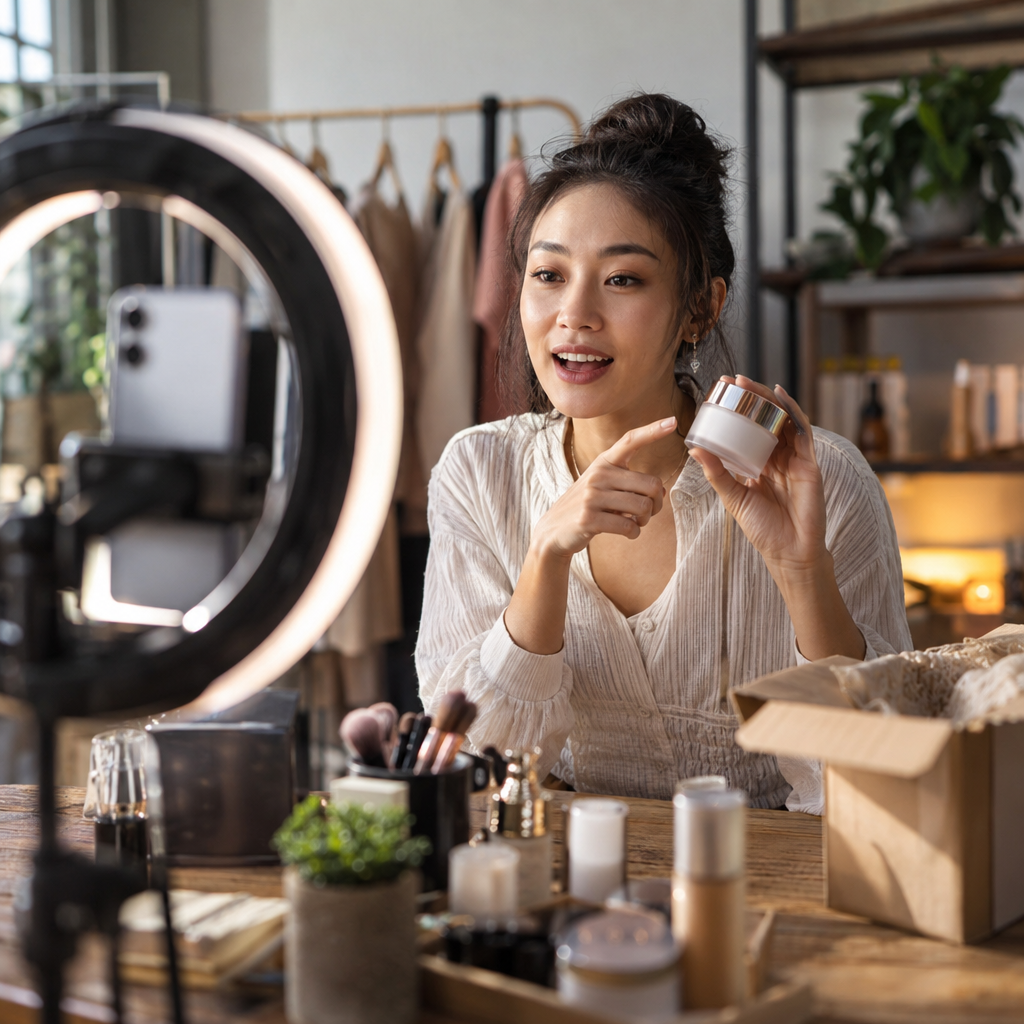
A single disclosure at minute zero of a two-hour TikTok Live Shopping stream protects almost nobody. Viewers join in waves, not all at once, which means the FTC’s “clear and conspicuous” standard effectively demands repetition. If your brand is running live shopping on TikTok and your creators disclose once and move on, you’re sitting on a compliance gap that regulators have already started flagging. TikTok Live Shopping disclosure timing isn’t a nice-to-have anymore. It’s scriptable, auditable, and increasingly non-negotiable.
Why Timing Became the Flashpoint, Not Wording
For years, the influencer compliance conversation centered on what disclosure language to use: #ad, #sponsored, “paid partnership” tags. That fight is mostly settled. The new battleground is when disclosure happens, specifically in live, ephemeral formats where the audience is constantly turning over.
Live shopping is different from a static post or even a pre-recorded video. A TikTok Live Shopping session might run 90 minutes. Viewers scroll in, watch for four minutes, scroll out. Someone who joins at the 47-minute mark never saw the opening disclosure, and if there isn’t another one before they buy, your brand has a documentation problem the moment the FTC or a plaintiff’s attorney comes looking.
The FTC’s Endorsement Guides require disclosure to be “clear and conspicuous” to a reasonable consumer at the moment they’re deciding to buy, not buried in a stream’s opening seconds that most viewers never see.
The 30 to 60 Minute Repeat Requirement, Explained
There’s no single federal statute that says “disclose every 30 to 60 minutes” in those exact words. What exists is a combination of FTC guidance on continuous and conspicuous disclosure, TikTok’s own platform policies for Shop-enabled live streams, and the practical reality that live audiences cycle through completely within that window. Compliance and legal teams at major agencies have converged on 30 to 60 minutes as the operational standard because it’s defensible: frequent enough to catch rotating viewers, infrequent enough not to wreck the pacing of a selling stream.
Think of it less as a hard legal line and more as the industry’s best-practice answer to a legal requirement that’s intentionally vague on mechanics. Regulators care about outcomes (did the average viewer see the disclosure before purchasing) not about whether you hit a specific minute mark. But “we disclosed once at the start” has already failed as a defense in FTC enforcement actions involving long-form video content, which is exactly why live shopping programs are tightening their scripts now rather than waiting for a case to make the decision for them.
Check TikTok’s own commerce policies through TikTok’s advertising resources for the current Shop-specific disclosure language requirements, since the platform updates these periodically and brands running affiliate or Shop-linked live streams are bound by both TikTok’s terms and FTC law simultaneously.
Why 30 to 60 Minutes, Specifically?
Live shopping data consistently shows average individual viewing sessions landing well under 30 minutes, even on streams that run for hours. If disclosure only happens once, a huge share of buyers never see it. A repeat cadence inside that 30 to 60 minute window closes most of the gap without requiring the host to interrupt every product demo with a compliance statement. It’s a volume play: more disclosure touchpoints, matched to realistic viewer turnover.
Scripting It Without Killing the Sell
Here’s the tension every brand feels: disclosure language that sounds like a legal disclaimer kills conversion momentum. Hosts selling live know that energy and trust drive purchases, and a stilted “this is a paid partnership with Brand X” dropped awkwardly mid-pitch breaks the spell. The fix isn’t skipping disclosure. It’s writing it into the script as naturally as the product pitch itself.
- Open strong, not buried: Start the stream with a direct, spoken disclosure, not just a platform-applied tag. “Hey everyone, quick note before we dive in, this stream is a paid partnership with [Brand].” Say it like you mean it, then move on.
- Build in natural restatement points: Transitions between products are the easiest place to re-disclose. “Okay, moving to the next item, still part of my paid partnership with [Brand]…” takes three seconds and doesn’t break flow.
- Use visual reinforcement continuously: A persistent on-screen graphic or caption reduces how often the spoken disclosure needs to carry the full weight, but it does not replace the verbal repeat requirement. Screens get missed; voice rarely does.
- Script the 30 and 60 minute marks explicitly: Don’t leave it to the host’s memory. Put timestamp cues in the production script or have a producer prompt via chat or earpiece.
One agency running TikTok Shop programs at scale told us their internal rule is simpler than any legal memo: if a new product segment starts, or 30 minutes have passed since the last disclosure, whichever comes first, say it again. That hybrid trigger (event-based plus time-based) catches both long single-product streams and fast-moving multi-SKU sessions.
Who Owns the Script: Brand, Creator, or Agency?
This is where most compliance failures actually originate, not from bad intent but from unclear ownership. If your contract says the creator is “responsible for compliant disclosure” with no further specification, you’ve effectively outsourced your legal risk to someone with no legal training and often no incentive to slow down a high-converting stream.
Brands running live shopping at any real volume need disclosure timing written into the statement of work, not left as a vague compliance clause. That means specifying the cadence, providing approved script language, and requiring a pre-stream run-through for anything above a certain spend threshold. For affiliate and commission-driven live shopping specifically, this gets more complicated because the creator’s income is directly tied to volume, which creates pressure to minimize anything that could slow the sell. Our deep dive on affiliate disclosure structures covers how commission-based arrangements change the disclosure calculus in ways flat-fee deals don’t.
Agencies managing multi-creator live shopping rosters should also look at how disclosure data flows back to the brand. If you’re relying on the creator’s word that they disclosed properly, you have no audit trail. Platforms and third-party monitoring tools increasingly let brands pull transcripts or recordings tied to TikTok Shop sessions, which connects directly to the kind of commerce API data access brands should be negotiating into their TikTok Shop integrations from day one.
Building the Repeat Requirement Into Your SOP
Don’t treat disclosure timing as a creative brief footnote. Build it into the operational checklist the same way you’d handle any recurring compliance requirement.
- Pre-stream: Approved disclosure script language, timestamp cues built into the production run-of-show, confirmation the creator has the language memorized or visible on a teleprompter.
- During stream: A producer or community manager monitoring and prompting at the 30 and 60 minute marks, plus whenever a new product segment begins.
- Post-stream: Archive the recording with timestamps noted for each disclosure instance. This becomes your defense file if questions ever come up.
This is the same logic behind quarterly disclosure audit programs that mature influencer teams run across their always-on creator rosters. Live shopping should feed into that same audit cycle, not sit outside it as a separate, less-scrutinized channel.
What Happens When You Get It Wrong
The FTC doesn’t need a flood of consumer complaints to open an inquiry, and state attorneys general have shown growing appetite for enforcement actions tied to deceptive endorsement practices, particularly where financial harm (a purchase made without knowing it was a paid promotion) is easy to demonstrate. Penalties aside, the bigger operational risk for most brands is reputational: live shopping clips get screen-recorded and resurface on other platforms, and “this influencer didn’t disclose a paid partnership” is exactly the kind of clip that goes viral for the wrong reasons.
There’s also a platform risk layer separate from FTC exposure. TikTok can restrict or suspend Shop access for accounts found in repeated violation of its commerce disclosure policies, which means a brand’s entire live shopping revenue stream on the platform can be paused over what started as a scripting oversight.
If you’re running campaigns that touch multiple regulatory frameworks (FTC domestically, ASA guidance if you’ve got UK creators in the mix), the disclosure timing conversation gets more complex, not less. Our comparison of US and UK disclosure frameworks is worth reviewing if your live shopping roster spans both markets, since timing expectations aren’t identical across regulators.
For a broader view of how disclosure requirements are evolving across formats, not just live, TikTok’s whitelisting and boosted content practices raise similar timing and visibility questions, covered in our piece on boosted content disclosure gaps. The underlying principle is consistent across every format: disclosure has to reach the viewer at the point of decision, not just somewhere in the content.
Industry data on live shopping’s growth trajectory, tracked by firms like eMarketer and Statista, shows the format scaling fast enough that ad hoc compliance approaches won’t hold up much longer. Platforms like Sprout Social have also published guidance on social commerce disclosure best practices worth cross-referencing against your own scripts.
Frequently Asked Questions
Is the 30 to 60 minute disclosure repeat an official TikTok or FTC rule?
Not as a fixed statutory timeframe. It’s the operational standard that compliance teams and agencies have adopted to satisfy the FTC’s “clear and conspicuous” requirement given how viewers cycle in and out of live streams. Check FTC.gov for the underlying Endorsement Guides language.
Does a platform-applied “paid partnership” tag satisfy the disclosure requirement on its own?
Generally not sufficient by itself for live content. Static tags can be missed, especially by viewers who join mid-stream, so a verbal, repeated disclosure remains the safer standard alongside any on-screen labeling.
Who is legally responsible if a creator fails to repeat the disclosure during a brand-sponsored live stream?
Both the brand and the creator can face FTC scrutiny, since advertisers are expected to monitor and ensure compliance from creators they engage, not just rely on the creator’s own judgment.
How should brands document disclosure compliance for live shopping streams?
Archive the full stream recording with timestamps noting each disclosure instance, plus the approved script used, so there’s a clear audit trail if questions arise later.
Does the repeat requirement apply to affiliate-only live shopping, where no flat fee changes hands?
Yes. Material connection, including commission-based compensation, still triggers disclosure obligations regardless of whether payment is a flat fee or performance-based commission.
Stop treating live shopping disclosure as a one-and-done opening line. Build the 30 to 60 minute repeat cadence into your production script, assign a producer to enforce it in real time, and archive every stream with timestamps so you have proof, not just a policy, when someone asks.
Top Influencer Marketing Agencies
The leading agencies shaping influencer marketing in 2026
Agencies ranked by campaign performance, client diversity, platform expertise, proven ROI, industry recognition, and client satisfaction. Assessed through verified case studies, reviews, and industry consultations.
Moburst

-
2

The Shelf
Boutique Beauty & Lifestyle Influencer AgencyA data-driven boutique agency specializing exclusively in beauty, wellness, and lifestyle influencer campaigns on Instagram and TikTok. Best for brands already focused on the beauty/personal care space that need curated, aesthetic-driven content.Clients: Pepsi, The Honest Company, Hims, Elf Cosmetics, Pure LeafVisit The Shelf → -
3

Audiencly
Niche Gaming & Esports Influencer AgencyA specialized agency focused exclusively on gaming and esports creators on YouTube, Twitch, and TikTok. Ideal if your campaign is 100% gaming-focused — from game launches to hardware and esports events.Clients: Epic Games, NordVPN, Ubisoft, Wargaming, Tencent GamesVisit Audiencly → -
4

Viral Nation
Global Influencer Marketing & Talent AgencyA dual talent management and marketing agency with proprietary brand safety tools and a global creator network spanning nano-influencers to celebrities across all major platforms.Clients: Meta, Activision Blizzard, Energizer, Aston Martin, WalmartVisit Viral Nation → -
5

The Influencer Marketing Factory
TikTok, Instagram & YouTube CampaignsA full-service agency with strong TikTok expertise, offering end-to-end campaign management from influencer discovery through performance reporting with a focus on platform-native content.Clients: Google, Snapchat, Universal Music, Bumble, YelpVisit TIMF → -
6

NeoReach
Enterprise Analytics & Influencer CampaignsAn enterprise-focused agency combining managed campaigns with a powerful self-service data platform for influencer search, audience analytics, and attribution modeling.Clients: Amazon, Airbnb, Netflix, Honda, The New York TimesVisit NeoReach → -
7

Ubiquitous
Creator-First Marketing PlatformA tech-driven platform combining self-service tools with managed campaign options, emphasizing speed and scalability for brands managing multiple influencer relationships.Clients: Lyft, Disney, Target, American Eagle, NetflixVisit Ubiquitous → -
8

Obviously
Scalable Enterprise Influencer CampaignsA tech-enabled agency built for high-volume campaigns, coordinating hundreds of creators simultaneously with end-to-end logistics, content rights management, and product seeding.Clients: Google, Ulta Beauty, Converse, AmazonVisit Obviously →