


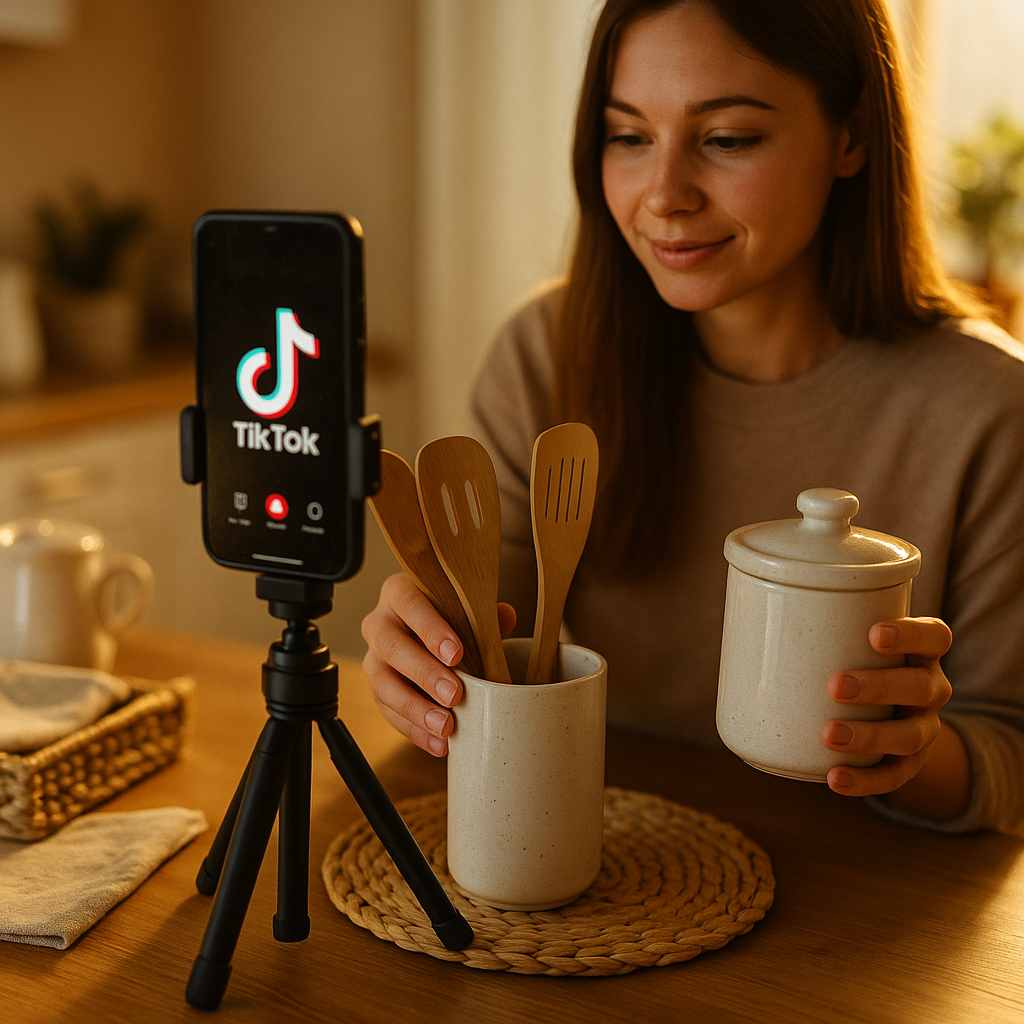
Home goods sellers on TikTok Shop are burning margin on flat commission rates while their skincare and apparel counterparts run circles around them with tiered structures. One flat-rate home brand we reviewed paid the same 12% to a creator who moved eight units and one who moved eight hundred. That’s not a strategy. That’s a leak. If you’re building a TikTok Shop category plan for home goods, the commission tier is where the real margin battle gets won or lost.
Why Home Goods Breaks the Standard Commission Playbook
Most commission frameworks floating around TikTok Shop were built for beauty and fashion — categories with low price points, impulse buys, and repeat purchase cycles measured in weeks. Home goods doesn’t behave that way. A $60 air fryer or a $140 weighted blanket has a longer consideration window, fewer repeat purchases, and margins that vary wildly by SKU (cookware runs thin, décor and organization products often run fat).
That means a single flat commission rate across your entire home catalog is almost always wrong. You’re either overpaying on thin-margin items or underpaying on the fat-margin ones that creators could be pushing harder. Sellers who’ve already solved this in other categories, like the approach outlined in commission tiers built to compete with fast fashion, prove the tiering logic works. The home vertical just needs its own math.
A flat commission rate across a home goods catalog with 40-point margin spread isn’t a pricing strategy — it’s a subsidy for your worst-margin products.
Segment Your Catalog Before You Touch Commission Rates
Before assigning a single percentage, split home goods SKUs into tiers based on margin and sell-through velocity, not just category labels. TikTok’s own seller data shows home and kitchen consistently ranks among the platform’s fastest-growing verticals, per eMarketer tracking of social commerce growth, but “home goods” is really five different businesses wearing one trench coat.
Here’s a workable segmentation:
- Tier A — Hero SKUs (high margin, high consideration): Furniture, smart home devices, premium bedding. These need creator storytelling, not just a quick unboxing.
- Tier B — Volume drivers (mid margin, impulse-adjacent): Kitchen gadgets, storage/organization, small appliances. High GMV potential, shorter content cycles.
- Tier C — Thin-margin utility (low margin, high frequency): Cleaning tools, basic textiles, disposables. Volume matters more than storytelling here.
- Tier D — Seasonal/trend spikes: Holiday décor, patio items, back-to-school organization. Time-boxed commission bumps only.
Once you’ve segmented, commission structure becomes a math problem instead of a guessing game. And that’s the whole point — you want creators optimizing toward what actually protects your P&L, not just what pays them the most per video.
What Commission Rates Actually Make Sense
Based on current TikTok Shop seller behavior and margin benchmarks reported across social commerce trackers, here’s a reasonable starting framework for home goods:
- Tier A (Hero SKUs): 8-12% base, with bonus tiers up to 15% for creators who hit sell-through thresholds
- Tier B (Volume drivers): 15-20% base — this is where TikTok Shop’s affiliate model performs best
- Tier C (Thin-margin utility): 5-8%, structured with volume bonuses rather than high base rates
- Tier D (Seasonal): Temporary 20%+ spikes during the trend window, reverting immediately after
Notice Tier B sits highest. That’s deliberate. Volume-driver SKUs are where TikTok Shop’s discovery algorithm and affiliate marketplace genuinely shine, and creators need enough margin headroom to justify the content investment without you bleeding on Tier A hero items that require longer sales cycles.
Build the Bonus Layer, Not Just the Base Rate
Base commission gets creators to say yes. Bonus structure gets them to actually post, and post again. Consider layering in:
- Milestone bonuses: +2-3% once a creator crosses a unit threshold (say, 50 units of a single SKU) within a 30-day window.
- Content cadence multipliers: Creators who post 3+ pieces of content per SKU per month get bumped a tier, rewarding the algorithmic benefit of repeat exposure.
- Live shopping kicker: Add a temporary 3-5% bump for creators who feature the SKU during live shopping events, where home goods conversion often spikes due to real-time demo value.
This layered approach mirrors what’s working in adjacent live-commerce formats — the incentive logic in creator-hosted checkout events shows that real-time demonstration commerce needs its own reward layer separate from standard video content.
Don’t Ignore the Return Rate Problem
Home goods has a return rate problem that beauty and apparel don’t share in the same way — furniture arrives damaged, appliances get returned for buyer’s remorse, and décor often doesn’t match the room the way the video implied. If your commission structure pays out on gross sales rather than net (post-return) sales, you’re paying creators to drive returns.
Structure payouts on a 14-21 day hold before commission clears, long enough to capture the bulk of return activity for most home SKUs. It’s not glamorous, but it protects margin at scale.
Onboarding Speed Matters More Than People Think
None of this tiering works if your product catalog and creator onboarding process is a mess. Home goods brands often carry hundreds of SKUs with inconsistent naming, sizing, and imagery — a nightmare for creators trying to figure out what to feature and at what commission level.
This is where category templates earn their keep. Using standardized creator onboarding templates cuts the time between “creator applies” and “creator posts first video” from weeks to days. Pair that with bulk listing templates so your Tier A/B/C/D structure is baked into the product feed itself, not managed manually in a spreadsheet that goes stale the moment you launch a new SKU.
If a creator can’t tell within 30 seconds what commission tier a product sits in, your onboarding system — not your commission math — is the bottleneck.
How Discovery Changes the Commission Math
TikTok’s shift toward rewarding discovery and completion rate over raw reach changes how you should think about commission allocation. Products that perform well in short-form discovery (the “oh that’s clever” home hack videos) don’t need the same commission incentive as products relying on long-form trust-building content like furniture assembly demos.
This lines up with what’s already been documented around TikTok’s discovery-first ranking shift and the platform’s growing emphasis on completion rate over reach. For home goods specifically, that means Tier B volume-driver SKUs (the ones suited to quick, snackable discovery content) should carry commission incentives tied to completion rate performance, not just units sold. Reward the format that the algorithm already rewards, and you compound the effect.
A Quick Gut-Check Before You Launch
Before rolling out a tiered structure, run this checklist:
- Have you mapped every SKU to a margin band, not just a product category?
- Does your payout schedule account for return windows on high-return items like furniture and appliances?
- Are bonus multipliers tied to measurable creator behavior (cadence, live participation, completion rate) rather than vague “performance”?
- Is your onboarding documentation fast enough that a new creator can start posting within 48 hours?
- Have you built a sunset date into seasonal Tier D bumps so they don’t quietly become permanent margin drains?
If you answered no to more than one of these, you’re not ready to launch the tiered structure yet — fix the operational gaps first, because a smart commission model bolted onto a broken onboarding process just creates confusion at scale.
Compliance and Disclosure, Don’t Skip This
Home goods creators frequently work across multiple competing brands in the same category (three different air fryer partnerships in one month isn’t rare). Make sure your creator agreements are explicit about disclosure requirements under FTC endorsement guidelines, and if you’re running UK-based creator programs, cross-check against ICO guidance on data handling for affiliate tracking. Commission structures that incentivize volume can inadvertently incentivize sloppy disclosure practices if you’re not building compliance checks into the onboarding flow itself.
For broader context on how TikTok Shop’s affiliate ecosystem is evolving, TikTok’s own TikTok for Business platform documentation is worth revisiting quarterly, since commission tools and reporting dashboards get updated more frequently than most brands track.
The bottom line: tiered commission in home goods isn’t about paying creators more or less — it’s about paying for the right behavior on the right SKU. Start with a two-tier pilot on your highest-volume category before rolling out the full four-tier structure, measure net margin (not GMV) after 30 days, and adjust before you scale it across the whole catalog.
FAQs
What’s a reasonable starting commission rate for TikTok Shop home goods creators?
Most home goods sellers see workable results starting between 8% and 20%, depending on SKU margin. High-margin volume drivers like kitchen gadgets can support 15-20%, while thin-margin utility items should stay closer to 5-8% with volume bonuses layered on top.
Should commission be paid on gross sales or net sales?
Net sales, after returns. Home goods carries a higher return rate than beauty or apparel due to damage, sizing mismatches, and buyer’s remorse on big-ticket items. Holding commission payout for 14-21 days protects margin from being eroded by returned units.
How many commission tiers should a home goods brand run?
Four tiers generally covers it: hero SKUs, volume drivers, thin-margin utility items, and seasonal/trend spikes. Fewer tiers oversimplifies margin differences; more than four tends to confuse creators and slow onboarding.
Do seasonal commission bumps need an end date?
Yes. Seasonal Tier D bumps (holiday décor, patio furniture) should have a hard sunset date built into the program from day one. Without it, temporary incentives quietly become permanent margin drains.
How does TikTok’s discovery algorithm affect commission strategy?
TikTok increasingly rewards completion rate and discovery performance over raw reach. Volume-driver SKUs suited to short, snackable content should have commission incentives tied to completion rate metrics, aligning creator payout with what the algorithm already favors.
Visible FAQ Section (JSON-LD Below)
Top Influencer Marketing Agencies
The leading agencies shaping influencer marketing in 2026
Agencies ranked by campaign performance, client diversity, platform expertise, proven ROI, industry recognition, and client satisfaction. Assessed through verified case studies, reviews, and industry consultations.
Moburst

-
2

The Shelf
Boutique Beauty & Lifestyle Influencer AgencyA data-driven boutique agency specializing exclusively in beauty, wellness, and lifestyle influencer campaigns on Instagram and TikTok. Best for brands already focused on the beauty/personal care space that need curated, aesthetic-driven content.Clients: Pepsi, The Honest Company, Hims, Elf Cosmetics, Pure LeafVisit The Shelf → -
3

Audiencly
Niche Gaming & Esports Influencer AgencyA specialized agency focused exclusively on gaming and esports creators on YouTube, Twitch, and TikTok. Ideal if your campaign is 100% gaming-focused — from game launches to hardware and esports events.Clients: Epic Games, NordVPN, Ubisoft, Wargaming, Tencent GamesVisit Audiencly → -
4

Viral Nation
Global Influencer Marketing & Talent AgencyA dual talent management and marketing agency with proprietary brand safety tools and a global creator network spanning nano-influencers to celebrities across all major platforms.Clients: Meta, Activision Blizzard, Energizer, Aston Martin, WalmartVisit Viral Nation → -
5

The Influencer Marketing Factory
TikTok, Instagram & YouTube CampaignsA full-service agency with strong TikTok expertise, offering end-to-end campaign management from influencer discovery through performance reporting with a focus on platform-native content.Clients: Google, Snapchat, Universal Music, Bumble, YelpVisit TIMF → -
6

NeoReach
Enterprise Analytics & Influencer CampaignsAn enterprise-focused agency combining managed campaigns with a powerful self-service data platform for influencer search, audience analytics, and attribution modeling.Clients: Amazon, Airbnb, Netflix, Honda, The New York TimesVisit NeoReach → -
7

Ubiquitous
Creator-First Marketing PlatformA tech-driven platform combining self-service tools with managed campaign options, emphasizing speed and scalability for brands managing multiple influencer relationships.Clients: Lyft, Disney, Target, American Eagle, NetflixVisit Ubiquitous → -
8

Obviously
Scalable Enterprise Influencer CampaignsA tech-enabled agency built for high-volume campaigns, coordinating hundreds of creators simultaneously with end-to-end logistics, content rights management, and product seeding.Clients: Google, Ulta Beauty, Converse, AmazonVisit Obviously →