


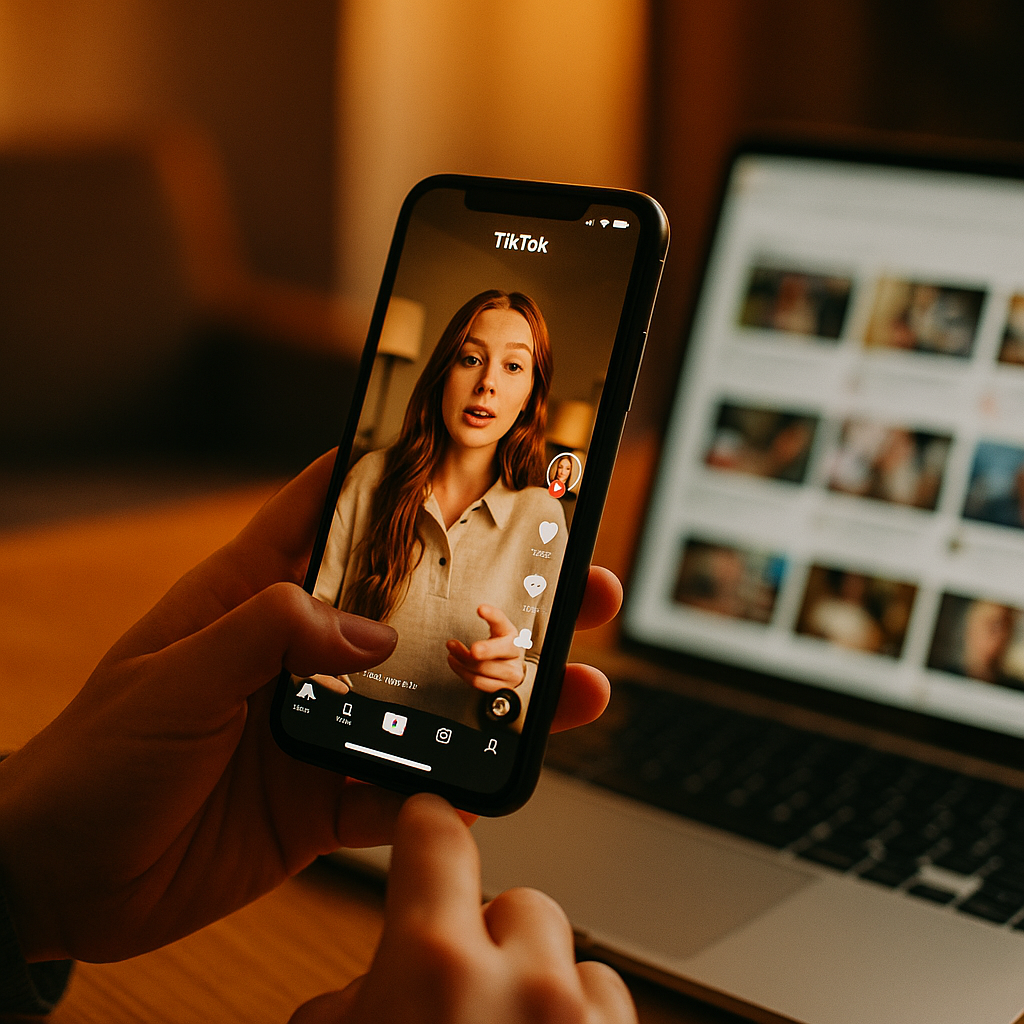
Only 10-30% of TikTok views now come from accounts a user follows. The rest? Pure algorithmic discovery. That single fact upends how brands should brief, budget, and measure creator content — because TikTok’s discovery-over-reach priority means follower count is quietly becoming the least important metric on the platform.
If your team is still buying influencer placements based on audience size, you’re optimizing for a signal TikTok barely uses anymore. Let’s unpack what’s actually happening inside the feed, and how to restructure content around it.
What “Discovery Over Reach” Actually Means
TikTok’s For You Page was never a reach engine in the traditional sense. Unlike Instagram or Facebook, where your existing audience was historically the primary distribution channel, TikTok’s recommendation system treats every post as a fresh audition. It doesn’t much care who posted it or how many followers they have. It cares whether the content matches viewer intent, signaled through watch time, replays, shares, and search behavior.
That’s the “discovery” part. The “over reach” part is the tradeoff: TikTok deliberately deprioritizes follower-based distribution in favor of interest-based distribution. A creator with 4,000 followers can outperform one with 4 million, if the content matches what the algorithm believes a niche audience wants right now.
For brands, this is both an opportunity and a risk. Opportunity, because small and mid-tier creators can deliver disproportionate reach. Risk, because past performance and audience size no longer guarantee future results.
Follower count on TikTok is now a vanity metric more than a distribution guarantee — the algorithm decides reach fresh, post by post, regardless of who’s posting.
How the AI-Curated Feed Actually Scores Content
TikTok’s recommendation model, often discussed publicly through its Symphony AI tooling, weighs a cluster of signals that have shifted meaningfully. We’ve covered the mechanics of the underlying matching engine in our Symphony AI playbook, but here’s the practitioner summary:
- Completion rate — did viewers watch to the end, or close to it?
- Replay behavior — did they watch it twice?
- Share-to-DM ratio — private shares now weigh heavier than public likes.
- Search intent overlap — does the caption/on-screen text match what people are actively searching?
- Session continuation — did the video keep someone scrolling, or did it cause an exit?
Notice what’s missing: follower count, posting frequency, and account age barely register. We’ve written before about the completion rate shift and how it’s already forcing brands to rewrite briefs. Discovery-over-reach is really the strategic umbrella that explains why completion rate matters so much in the first place — it’s the clearest proxy TikTok has for “is this content genuinely useful to a stranger.”
Why This Breaks Traditional Media Planning
Traditional influencer media planning assumes a linear relationship: bigger audience, bigger reach, bigger ROI. TikTok’s model breaks that chain deliberately. A campaign built around five macro-creators with a combined 20 million followers might underperform a campaign built around fifteen micro-creators whose content simply matches search and interest signals better.
This isn’t a hypothetical. eMarketer and Sprout Social have both tracked declining correlation between follower size and engagement rate across short-form video platforms — a trend that’s been building for several cycles now, not a one-off anomaly. Brands that keep buying on reach projections are essentially paying for a metric the platform itself has deprioritized.
Structuring Briefs for an Algorithm That Rewards Relevance
So what does a discovery-optimized brief actually look like? It starts with abandoning the “post and hope” model and replacing it with a content-market-fit framework.
First, anchor briefs around search terms, not just hashtags. TikTok is increasingly a search engine for younger demographics — Google itself has acknowledged this shift in consumer behavior research. If your creator brief doesn’t include the actual phrases your audience types into the TikTok search bar, you’re leaving discovery signal on the table.
Second, brief for rewatchability, not just watch-through. A video that’s confusing on first watch but rewarded on replay (think: fast-cut tutorials, “wait for it” hooks) can outperform a polished, single-pass video. We detailed this dynamic in our piece on longer-video retention mechanics, which is worth pairing with this piece if you’re restructuring an entire content calendar.
Third, treat the first two seconds as a filtering mechanism, not a hook in the traditional ad-copy sense. The algorithm samples early engagement heavily. If viewers swipe away in under two seconds, that’s a negative discovery signal that can suppress the video regardless of overall quality later on.
A brief that doesn’t specify target search phrases, replay triggers, and swipe-away risk points is a brief still built for the old reach-based TikTok — not the one your team is actually buying media on.
Budget Allocation: Stop Paying for Followers
Here’s the uncomfortable operational truth: if discovery outranks reach, your rate card negotiations need to change. Paying a flat CPM-style rate based on follower count no longer maps to expected outcomes. Instead, leading brands are shifting toward:
- Performance-weighted contracts tied to completion rate or shares, not impressions
- Smaller upfront guarantees with bonus structures for algorithmic breakout performance
- Portfolio testing — briefing 8-12 smaller creators instead of 2-3 large ones, to let the algorithm pick winners
This mirrors a structural shift we’ve tracked in TikTok’s own creator monetization tools. Our breakdown of hybrid payout contracts covers how brands are already restructuring deals around performance bonuses rather than flat reach fees. If TikTok’s own payout architecture is moving this direction, brand contracts should follow.
Isn’t This Just Risky for Brand Safety and Predictability?
Fair question, and one every CMO asks when this framework gets pitched internally. Discovery-based distribution does introduce more variance. You can’t guarantee a video hits 500K views the way you might project with paid reach buys.
The mitigation isn’t to abandon TikTok’s discovery model, it’s to hedge with volume and iteration. Run multiple creative variants per creator. Treat TikTok content the way performance marketers treat ad creative: test fast, kill underperformers early, scale what the algorithm rewards. This is a fundamentally different operating rhythm than the quarterly-campaign cadence many brand teams still use.
There’s also a compliance layer worth flagging. As discovery-driven content scales across more creators, disclosure and verification become harder to police centrally. Our brand verification playbook is a useful companion resource if you’re scaling creator volume and need a repeatable vetting process, not a case-by-case one.
What About Ad Spend, Not Just Organic Creator Content?
Discovery-over-reach isn’t confined to organic posts. TikTok’s ad delivery system, particularly Spark Ads and its evolving auction formats, increasingly rewards the same signals: watch time, completion, and relevance matching over raw impression volume. We covered the media-buying implications directly in our ad format overhaul piece, which pairs well with this one if you’re rebudgeting paid alongside organic.
The upshot: your paid and organic strategies should now share the same creative logic. A video engineered for algorithmic discovery in organic feed will generally perform better as a Spark Ad too, because the underlying scoring mechanics overlap substantially. TikTok’s own advertiser guidance on ad delivery and optimization reinforces this — relevance score increasingly drives cost-efficiency, not just audience targeting.
A Quick Gut-Check Framework
Before your next campaign brief goes out, run it through these four questions:
- Does the brief specify search phrases the target audience actually uses on TikTok?
- Is the creator selected based on content-market fit, or just audience size?
- Does the contract reward completion/shares, or only impressions?
- Are you testing enough creative variants to let the algorithm surface a winner?
If you answered “no” to two or more, your program is still structured for a reach-based TikTok that stopped existing a while ago. Platforms outside TikTok are following similar logic too — YouTube’s shift toward loyalty over reach and Instagram’s move to rank saves and DMs over likes both point to the same industry-wide pivot: platforms are optimizing for genuine engagement depth, not surface-level distribution. Data from eMarketer’s platform research and Sprout Social’s engagement benchmarks both back this trend across short-form video generally, not just TikTok in isolation.
The brands winning on TikTok right now aren’t the ones with the biggest creator rosters. They’re the ones who’ve rebuilt their briefing, budgeting, and measurement processes around what the algorithm actually rewards. Start there, not with follower counts, and the reach tends to follow on its own.
Frequently Asked Questions
What does “discovery over reach” mean for TikTok specifically?
It means TikTok’s recommendation algorithm distributes content based on predicted relevance and engagement quality — completion rate, replays, shares — rather than a creator’s existing follower base. Most views come from the For You Page, not follower feeds.
Does follower count still matter at all for brand partnerships?
It matters for credibility and community trust, but it’s a weak predictor of video performance. Brands should prioritize content-market fit and past completion-rate performance over raw audience size when selecting partners.
How should brands change creator briefs for this shift?
Briefs should specify target search phrases, structure content for replay value, and treat the first two seconds as a critical filtering moment. Contracts should also weight bonuses toward completion rate and shares rather than flat impression guarantees.
Does this affect paid TikTok ads too, or just organic content?
Both. TikTok’s ad delivery system increasingly rewards the same relevance signals as organic discovery, meaning creative built for organic algorithmic success typically performs better in paid placements as well.
Is this trend unique to TikTok?
No. YouTube and Instagram have made similar shifts toward rewarding loyalty, saves, and deeper engagement over raw reach or likes, suggesting this is a broader platform-wide pivot rather than a TikTok-only change.
Frequently Asked Questions
Top Influencer Marketing Agencies
The leading agencies shaping influencer marketing in 2026
Agencies ranked by campaign performance, client diversity, platform expertise, proven ROI, industry recognition, and client satisfaction. Assessed through verified case studies, reviews, and industry consultations.
Moburst

-
2

The Shelf
Boutique Beauty & Lifestyle Influencer AgencyA data-driven boutique agency specializing exclusively in beauty, wellness, and lifestyle influencer campaigns on Instagram and TikTok. Best for brands already focused on the beauty/personal care space that need curated, aesthetic-driven content.Clients: Pepsi, The Honest Company, Hims, Elf Cosmetics, Pure LeafVisit The Shelf → -
3

Audiencly
Niche Gaming & Esports Influencer AgencyA specialized agency focused exclusively on gaming and esports creators on YouTube, Twitch, and TikTok. Ideal if your campaign is 100% gaming-focused — from game launches to hardware and esports events.Clients: Epic Games, NordVPN, Ubisoft, Wargaming, Tencent GamesVisit Audiencly → -
4

Viral Nation
Global Influencer Marketing & Talent AgencyA dual talent management and marketing agency with proprietary brand safety tools and a global creator network spanning nano-influencers to celebrities across all major platforms.Clients: Meta, Activision Blizzard, Energizer, Aston Martin, WalmartVisit Viral Nation → -
5

The Influencer Marketing Factory
TikTok, Instagram & YouTube CampaignsA full-service agency with strong TikTok expertise, offering end-to-end campaign management from influencer discovery through performance reporting with a focus on platform-native content.Clients: Google, Snapchat, Universal Music, Bumble, YelpVisit TIMF → -
6

NeoReach
Enterprise Analytics & Influencer CampaignsAn enterprise-focused agency combining managed campaigns with a powerful self-service data platform for influencer search, audience analytics, and attribution modeling.Clients: Amazon, Airbnb, Netflix, Honda, The New York TimesVisit NeoReach → -
7

Ubiquitous
Creator-First Marketing PlatformA tech-driven platform combining self-service tools with managed campaign options, emphasizing speed and scalability for brands managing multiple influencer relationships.Clients: Lyft, Disney, Target, American Eagle, NetflixVisit Ubiquitous → -
8

Obviously
Scalable Enterprise Influencer CampaignsA tech-enabled agency built for high-volume campaigns, coordinating hundreds of creators simultaneously with end-to-end logistics, content rights management, and product seeding.Clients: Google, Ulta Beauty, Converse, AmazonVisit Obviously →