


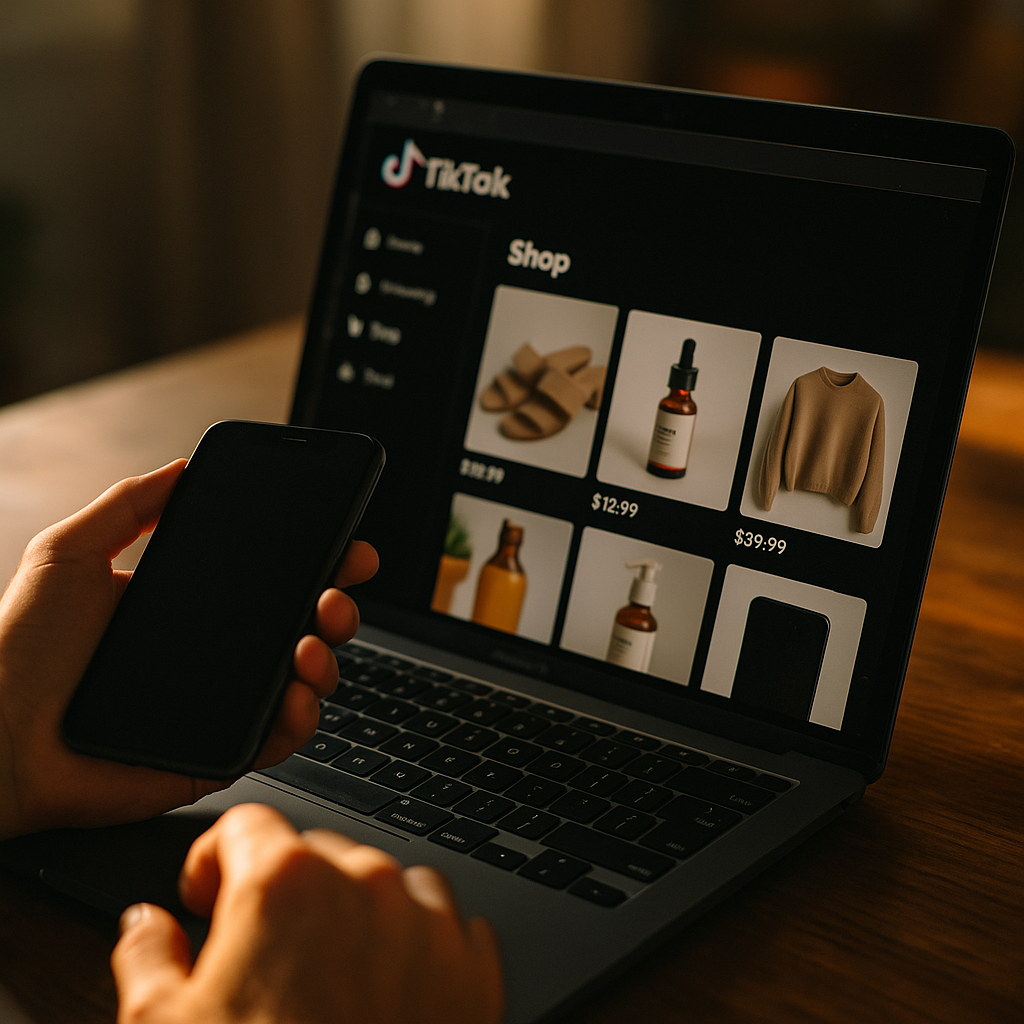
TikTok Shop just quietly stopped being an app-only channel. With web storefronts now rolling out broadly, brands that treated TikTok Shop as a mobile-first impulse-buy engine need a new playbook, because desktop traffic, SEO indexing, and browser-based checkout change almost every assumption baked into current commerce strategy.
For two years, the pitch was simple: scroll, tap, buy, all inside the app. That single-surface simplicity was the product. Now TikTok is pushing shoppable storefronts onto the open web, complete with indexable product pages, shareable URLs, and checkout flows that don’t require anyone to open an app at all. That’s not a minor UX tweak. It’s a structural shift in how discovery, attribution, and merchandising need to work.
What Actually Changed
TikTok Shop’s web expansion means brand storefronts and individual product listings now live on standard web URLs, crawlable by search engines and shareable outside the TikTok ecosystem. A creator can drop a TikTok Shop link into a YouTube description, a newsletter, or a group chat, and the recipient lands on a functioning storefront in a browser, no app download required.
This matters because TikTok Shop’s entire growth story until now depended on in-app session behavior: the algorithm surfaces a video, the viewer taps the product card, checkout happens in three taps, transaction done. That flow is still there. But now there’s a parallel path where TikTok product pages can rank in Google search results, get bookmarked, get linked from affiliate blogs, and convert traffic that never touched the For You feed.
Brands that only optimize for in-app swipe-to-buy behavior are leaving an entire acquisition channel — organic search and off-platform link sharing — completely unmanaged.
Why This Isn’t Just a Nice-to-Have
Skeptics will say: TikTok Shop is still overwhelmingly mobile, so why bother building out web strategy? Fair point. But consider the numbers. eMarketer and Statista have both tracked social commerce growth rates that outpace overall ecommerce, and TikTok Shop has been the fastest-scaling piece of that pie in multiple retail forecasts. A platform growing that fast doesn’t stay mobile-only for long. Amazon didn’t. Shopify didn’t. TikTok won’t either.
There’s also a simpler business reason: desktop and tablet shoppers convert differently than mobile scrollers. Higher average order values, more research behavior, more comparison shopping. Brands selling considered-purchase categories, home goods, electronics, skincare regimens, have been quietly frustrated that TikTok Shop’s mobile-only checkout capped their ability to capture higher-intent, higher-basket-size buyers. Web storefronts remove that ceiling.
The SEO Angle Nobody’s Talking About Enough
Here’s the part that should get marketing leadership’s attention: indexable TikTok Shop pages are a net-new organic acquisition surface. If your product listings can rank for branded and category search terms, that’s incremental traffic you’re not paying for, sitting on infrastructure you didn’t have to build.
That said, don’t expect miracles overnight. TikTok’s domain authority for commerce pages is nowhere near Amazon’s or a mature DTC site’s. Early testing from brands piloting the feature suggests indexing is inconsistent, and product page SEO hygiene, title tags, structured data, image alt text, matters just as much here as it does on owned ecommerce sites. Treat TikTok Shop web listings like you’d treat a marketplace listing on Walmart or Etsy: optimize it, don’t ignore it.
Rebuilding the Attribution Model
This is where things get operationally messy. In-app TikTok Shop attribution has always been reasonably clean: view video, click card, purchase, all logged in one ecosystem. Web storefronts break that clean chain. Now you’ve got:
- Users discovering products via search and landing directly on web storefronts, no video touchpoint at all
- Creators sharing links off-platform (email, Discord, group texts) that bypass the in-app journey entirely
- Cross-device behavior where someone sees a TikTok video on mobile, then completes purchase on desktop hours later
Standard last-touch attribution inside TikTok’s ads dashboard won’t capture that middle scenario well. Brands need to lean harder on UTM discipline for every creator link, and cross-reference TikTok Shop’s native analytics against GA4 or whatever web analytics stack sits on top of the storefront. If your team hasn’t audited link tagging conventions across your affiliate and seeding programs recently, now’s the time. This connects directly to broader checkout-speed dynamics that have already reshaped creative briefs, worth revisiting alongside this shift: how checkout speed forces brand creative changes.
What This Means for the Affiliate and Seeding Playbook
Brands running commission-based creator programs need to reconsider how they brief affiliates. A creator whose audience skews toward off-platform sharing, think niche newsletter writers or Discord community moderators who reference products, suddenly has a viable path to drive TikTok Shop sales without ever posting a video. That’s a new category of partner worth testing, distinct from the high-volume affiliate leaderboard model most brands have optimized for. For context on how that leaderboard dynamic already shapes seeding decisions, see the affiliate leaderboard seeding playbook.
It also raises commission structure questions. Do web-only conversions get tracked and paid the same as in-app ones? Most affiliate platforms integrated with TikTok Shop are still catching up on this, so confirm with your MCN or platform rep before assuming parity. Brands already navigating tiered commission structures, like those detailed in the home goods commission tier breakdown, should specifically ask how web conversions factor into tier calculations.
Checkout Speed Still Matters, Just Differently
TikTok’s mobile in-app checkout has been a genuine competitive advantage, something we’ve covered in detail comparing TikTok Shop and Instagram Shopping checkout speed. Web checkout won’t have the same three-tap simplicity. Browser-based flows mean more form fields, more friction, more cart abandonment risk unless TikTok nails autofill, saved payment methods, and guest checkout.
Early brand feedback suggests TikTok has built reasonably strong payment persistence into the web flow, carrying over saved cards and shipping info for users already logged into TikTok on desktop. But for net-new web visitors arriving via search or shared links with no TikTok account, expect standard ecommerce friction, and standard ecommerce abandonment rates. Don’t assume the mobile app’s conversion benchmarks will translate. Set separate KPIs for web storefront performance and give it a full quarter before drawing conclusions.
Compliance Doesn’t Get Easier
Every new surface is a new place for disclosure and compliance gaps to hide. If a creator shares a TikTok Shop web link in a newsletter or on a blog, FTC disclosure requirements still apply, same as they would for any affiliate link. Brands that have already built strong disclosure habits for in-app livestreams, covered in our look at beauty livestream compliance risk, need to extend that same rigor to off-platform link sharing.
The FTC’s endorsement guidelines don’t distinguish between an in-app video and a shared web link. A disclosure gap is a disclosure gap regardless of surface. Legal and compliance teams should update creator contracts and briefing docs now to explicitly cover web storefront link sharing, not just in-app posts.
What Brands Should Actually Do Right Now
- Audit product listing SEO. Treat TikTok Shop web pages like marketplace listings. Titles, descriptions, structured data, all of it matters now.
- Rebuild UTM and tagging conventions across creator and affiliate links to capture off-platform sharing behavior that bypasses in-app attribution.
- Separate web and app KPIs. Don’t judge web storefront conversion rates against mobile app benchmarks; the buyer intent and friction profile are different.
- Update creator contracts to explicitly cover disclosure requirements for shared web links, not just in-app posts.
- Test off-platform partner types, like newsletter writers and community moderators, who can now drive TikTok Shop sales without posting video content.
None of this requires a wholesale strategy overhaul. But it does require treating TikTok Shop as a two-surface platform, not a single mobile funnel, starting with how your team measures success this quarter.
Frequently Asked Questions
Does TikTok Shop’s web storefront replace the in-app shopping experience?
No. The web storefront runs alongside the existing in-app experience. Mobile in-app shopping, including live shopping and video-driven product cards, remains fully active. The web version adds a parallel, browser-based purchase path.
Can TikTok Shop product pages actually rank in Google search results?
Yes, provided the pages are properly indexed and optimized. Early results are inconsistent, and TikTok’s domain authority for commerce content is still developing, so brands should treat SEO fundamentals, titles, structured data, descriptions, as a priority rather than an afterthought.
How does attribution change with web storefronts in the mix?
Attribution gets more fragmented. In-app purchases still track cleanly through TikTok’s native analytics, but off-platform link shares and cross-device journeys (mobile discovery, desktop purchase) require stronger UTM discipline and cross-referencing with external web analytics tools.
Do FTC disclosure rules apply to TikTok Shop links shared outside the app?
Yes. Any paid or affiliate relationship requires disclosure regardless of where the link is shared, whether inside a TikTok video or in an external newsletter, blog post, or group chat.
Should brands expect the same conversion rates on web as they see in-app?
Not necessarily. Web checkout typically introduces more friction for users without saved TikTok payment credentials, so brands should benchmark web and app performance separately rather than assuming parity.
Frequently Asked Questions
Does TikTok Shop’s web storefront replace the in-app shopping experience?
No. The web storefront runs alongside the existing in-app experience. Mobile in-app shopping, including live shopping and video-driven product cards, remains fully active. The web version adds a parallel, browser-based purchase path.
Can TikTok Shop product pages actually rank in Google search results?
Yes, provided the pages are properly indexed and optimized. Early results are inconsistent, and TikTok’s domain authority for commerce content is still developing, so brands should treat SEO fundamentals, titles, structured data, descriptions, as a priority rather than an afterthought.
How does attribution change with web storefronts in the mix?
Attribution gets more fragmented. In-app purchases still track cleanly through TikTok’s native analytics, but off-platform link shares and cross-device journeys (mobile discovery, desktop purchase) require stronger UTM discipline and cross-referencing with external web analytics tools.
Do FTC disclosure rules apply to TikTok Shop links shared outside the app?
Yes. Any paid or affiliate relationship requires disclosure regardless of where the link is shared, whether inside a TikTok video or in an external newsletter, blog post, or group chat.
Should brands expect the same conversion rates on web as they see in-app?
Not necessarily. Web checkout typically introduces more friction for users without saved TikTok payment credentials, so brands should benchmark web and app performance separately rather than assuming parity.
Top Influencer Marketing Agencies
The leading agencies shaping influencer marketing in 2026
Agencies ranked by campaign performance, client diversity, platform expertise, proven ROI, industry recognition, and client satisfaction. Assessed through verified case studies, reviews, and industry consultations.
Moburst

-
2

The Shelf
Boutique Beauty & Lifestyle Influencer AgencyA data-driven boutique agency specializing exclusively in beauty, wellness, and lifestyle influencer campaigns on Instagram and TikTok. Best for brands already focused on the beauty/personal care space that need curated, aesthetic-driven content.Clients: Pepsi, The Honest Company, Hims, Elf Cosmetics, Pure LeafVisit The Shelf → -
3

Audiencly
Niche Gaming & Esports Influencer AgencyA specialized agency focused exclusively on gaming and esports creators on YouTube, Twitch, and TikTok. Ideal if your campaign is 100% gaming-focused — from game launches to hardware and esports events.Clients: Epic Games, NordVPN, Ubisoft, Wargaming, Tencent GamesVisit Audiencly → -
4

Viral Nation
Global Influencer Marketing & Talent AgencyA dual talent management and marketing agency with proprietary brand safety tools and a global creator network spanning nano-influencers to celebrities across all major platforms.Clients: Meta, Activision Blizzard, Energizer, Aston Martin, WalmartVisit Viral Nation → -
5

The Influencer Marketing Factory
TikTok, Instagram & YouTube CampaignsA full-service agency with strong TikTok expertise, offering end-to-end campaign management from influencer discovery through performance reporting with a focus on platform-native content.Clients: Google, Snapchat, Universal Music, Bumble, YelpVisit TIMF → -
6

NeoReach
Enterprise Analytics & Influencer CampaignsAn enterprise-focused agency combining managed campaigns with a powerful self-service data platform for influencer search, audience analytics, and attribution modeling.Clients: Amazon, Airbnb, Netflix, Honda, The New York TimesVisit NeoReach → -
7

Ubiquitous
Creator-First Marketing PlatformA tech-driven platform combining self-service tools with managed campaign options, emphasizing speed and scalability for brands managing multiple influencer relationships.Clients: Lyft, Disney, Target, American Eagle, NetflixVisit Ubiquitous → -
8

Obviously
Scalable Enterprise Influencer CampaignsA tech-enabled agency built for high-volume campaigns, coordinating hundreds of creators simultaneously with end-to-end logistics, content rights management, and product seeding.Clients: Google, Ulta Beauty, Converse, AmazonVisit Obviously →