


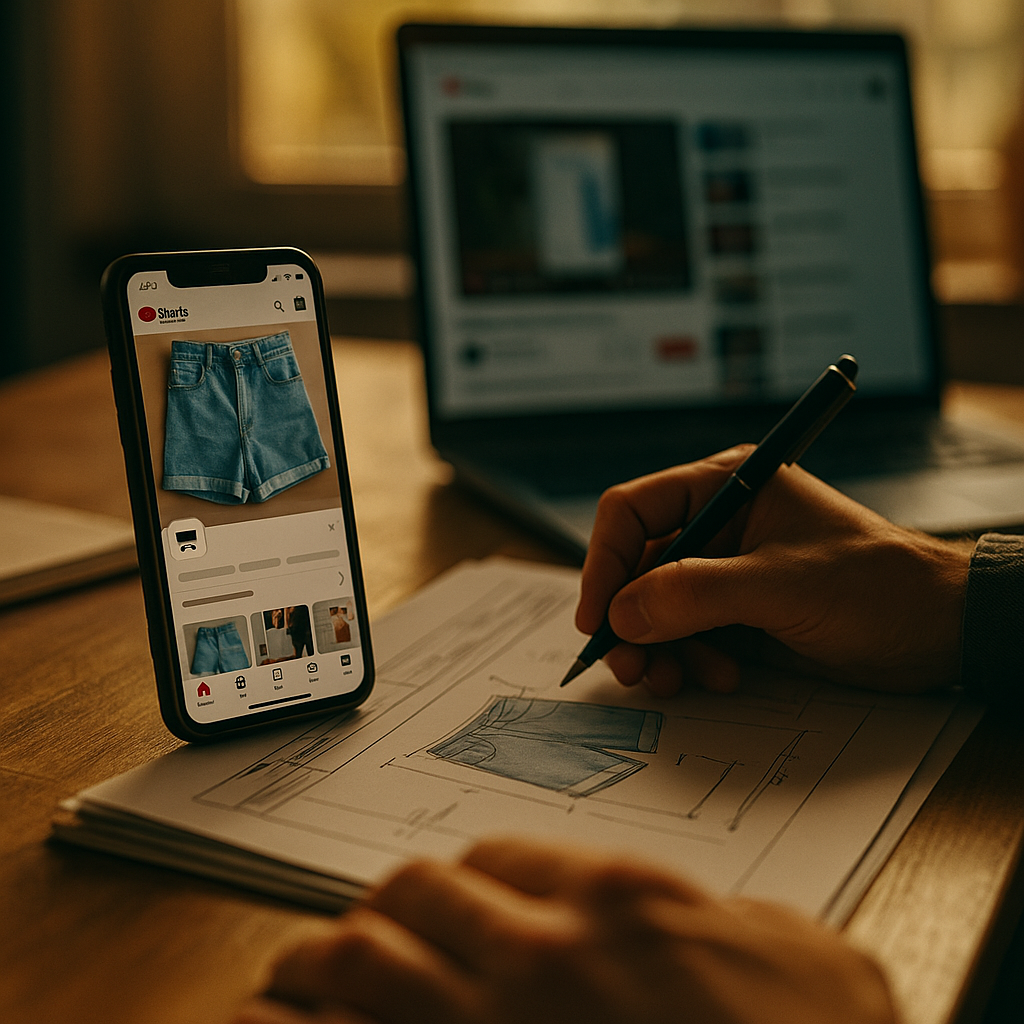
YouTube now quietly favors Shorts that look shoppable, whether or not a product tag is attached. Internal creator dashboards started flagging “shopping-ready” distribution boosts in late 2025, and early testers report reach differentials as high as 22% between structurally similar videos. If you’re briefing creators like it’s still 2023, you’re leaving that lift on the table. YouTube shopping-ready short-form weighting isn’t a rumor anymore. It’s a ranking input, and it’s technical.
What “Shopping-Ready” Actually Means to the Algorithm
YouTube isn’t manually reviewing every Short for commercial intent. It’s using a combination of signals — product mentions in captions, on-screen text patterns, linked product feeds via YouTube Shopping, and viewer behavior after similar tagged content — to classify a video’s “shopping readiness” before it even earns significant watch time. Think of it as a pre-qualification layer sitting on top of the existing engagement-based ranking system.
This matters because YouTube has been steadily building commerce infrastructure to compete with TikTok Shop and Instagram’s shopping tools. The platform’s own merchant data (referenced in Google’s Shopping and Merchant Center documentation) shows creator-linked product Shorts converting at meaningfully higher rates than static video ads. YouTube has every incentive to surface content that resembles a transaction funnel, even organically, because it validates the ad products being sold around Shopping tags.
Videos structured with clear product framing in the first three seconds are getting distribution bumps even when no purchase link exists — the algorithm is pattern-matching for commercial format, not just tracking clicks.
That’s the uncomfortable part for brands. You don’t need an active shopping campaign to be scored on shopping-readiness. Your creative format alone can trigger or suppress the weighting.
The Structural Elements That Trigger the Signal
Based on pattern analysis across brand-side test accounts and creator agency reporting, five structural elements consistently correlate with shopping-ready classification:
- Product-forward opening frame: The item, packaging, or branded object visible within the first 1-2 seconds, not buried after a hook monologue.
- On-screen text with commercial language: Words like “link,” “shop,” “price,” or “restock” rendered as burned-in captions, not just spoken audio.
- Consistent product placement across cuts: If the product disappears and reappears erratically, the classifier weights it lower than steady visual anchoring.
- Linked YouTube Shopping tag or affiliate tag: Even a low-traffic tag appears to seed the classifier with stronger confidence.
- End-frame call-to-action card: A dedicated 2-3 second closing frame referencing where to buy, mirroring the format TikTok popularized with Shop tabs.
None of this is officially published by YouTube as ranking criteria. It’s inferred from testing, the same way SEOs reverse-engineered Google’s core web vitals weighting years before it was confirmed. Treat it as a working hypothesis, not gospel, but a well-supported one.
Why This Changes Your Creator Brief
Most influencer briefs still treat product placement as a legal or brand-safety checkbox: “show the product, mention the brand name twice, disclose #ad.” That’s no longer sufficient if you want distribution. The brief now needs shot-list-level specificity, similar to how brands had to rebuild guidance after TikTok’s watch-time algorithm shift punished loosely structured content.
Here’s the tension: creators hate rigid shot lists. They’ll tell you (correctly) that overly scripted content performs worse on authenticity metrics. So the brief has to thread a needle — specify structural checkpoints without dictating exact dialogue or forcing a stiff, ad-like feel.
A workable brief template looks like this:
- Open on product in hand or in frame within 2 seconds — no cold opens with just the creator’s face.
- Include at least one burned-in caption with commercial language, timed to a key benefit moment.
- Maintain product visibility (in-frame or referenced on-screen) for at least 60% of total runtime.
- Close with a branded end card or verbal CTA paired with on-screen text.
- Tag the video using YouTube Shopping or an affiliate product link, even if conversion isn’t the primary KPI.
This isn’t wildly different from what performs well on TikTok Shop already. If your team has been optimizing for checkout speed on TikTok Shop, much of that creative logic transfers directly.
The Trust Layer Underneath the Shopping Signal
Shopping-readiness doesn’t operate in isolation. It sits on top of YouTube’s broader move toward trust-weighted distribution, which the platform has been rolling out steadily. As covered in our breakdown of how YouTube ranks creator trust over raw volume, channels with consistent audience retention and low spam-flag history get amplified further when they also hit shopping-format criteria. A low-trust channel posting a technically perfect shoppable Short still underperforms a high-trust channel with a slightly looser structure.
That compounding effect means brand vetting can’t stop at follower count or even engagement rate anymore. You need to check: does this creator have a stable comment-to-view ratio? Has YouTube’s comment signal weighting flagged anything unusual on their recent uploads? Are they part of the loyalty cohort YouTube rewards for repeat viewership, something we detailed in our piece on the loyalty algorithm reshaping creator deals?
Shopping-ready formatting without underlying channel trust is like optimizing meta tags on a site with zero backlinks — it helps at the margins, but it won’t overcome a weak foundation.
Measurement: What to Actually Track
Standard influencer reporting dashboards (impressions, engagement rate, EMV) won’t tell you whether a video hit the shopping-ready threshold. You need to look at proxy metrics instead:
- Impressions-to-subscriber ratio spike: A disproportionate jump relative to the creator’s baseline often indicates a classifier boost, not just organic virality.
- Traffic source breakdown: More “Browse” and “Shorts feed” traffic relative to “Search” suggests the algorithm is actively pushing the content, a pattern distinct from search-driven discovery.
- Shopping tag click-through, even at low volume, since YouTube appears to use early click signals as a feedback loop that reinforces or downgrades future distribution.
- Watch time retention curve shape: Videos holding attention through the product-reveal moment (rather than dropping off) seem to sustain the shopping-ready boost longer.
Ask your agency or in-house analytics team to pull these cuts separately from standard reporting. According to eMarketer’s creator commerce data, video commerce spend on YouTube is projected to keep climbing as brands shift budget away from static shopping ads, so the measurement infrastructure gap will only get more expensive to ignore.
Where Brands Get This Wrong
Three recurring mistakes show up in early adopter campaigns:
First, treating the shopping tag as optional because “we’re doing a brand awareness play.” Even awareness-focused Shorts benefit from the classifier boost, so skipping the tag is leaving reach on the table for no real reason.
Second, over-scripting the product-forward opening until it feels like a QVC clip. Creators who’ve built audiences through casual, low-production content lose credibility fast when forced into a rigid ad format. This is the same failure mode brands hit when rushing into livestream shopping formats without adapting tone to the platform’s native feel.
Third, ignoring compliance basics in the rush to optimize structure. A shoppable Short still needs proper disclosure under FTC endorsement guidelines, and burned-in captions promoting a product without a clear #ad disclosure can create real legal exposure, not just an algorithm problem.
Compare this to the discipline required in TikTok Shop’s beauty livestream compliance environment — the lesson transfers directly. Structure for the algorithm, but never at the expense of disclosure clarity.
Building the Test-and-Learn Loop
Don’t overhaul your entire creator program based on inferred signals. Run a controlled test: take four to six creators of similar trust tier, split them into structured-brief and legacy-brief cohorts, and compare distribution and shopping-tag performance over a four-week window. This mirrors how savvy teams approached the shift toward discovery-over-reach ranking across other platforms — small controlled tests beat wholesale strategy pivots based on anecdote.
Document what you find. Algorithm signals shift quarterly, and what’s true about shopping-ready weighting now may need recalibration within two quarters. Platforms rarely announce these changes; you find out by watching the data drift.
Start with one pilot campaign, five creators, structured briefs on half. Measure impressions-to-subscriber ratio and shopping-tag CTR separately from your normal KPIs, then scale whatever wins by month two.
FAQs
What is YouTube’s shopping-ready short-form weighting?
It’s an inferred ranking layer where YouTube’s Shorts algorithm appears to favor videos structured with commercial signals — product visibility, on-screen shopping language, and product tags — regardless of whether the creator is running an active paid shopping campaign.
Does a video need a YouTube Shopping tag to get the distribution boost?
Not necessarily, but testing suggests tagged videos get a stronger and more consistent boost than untagged videos with similar structure. Tags appear to seed the classifier with higher confidence.
How is this different from YouTube’s trust-based ranking updates?
Trust-based ranking evaluates the creator and channel history — retention, spam flags, audience loyalty. Shopping-ready weighting evaluates the individual video’s structure and commercial signals. The two appear to compound: high-trust creators get a bigger lift from shopping-ready formatting than low-trust ones.
Will over-optimizing for this signal hurt authenticity and engagement?
It can, if creators are forced into rigid, ad-like scripts. The better approach is giving creators structural checkpoints (product visibility, caption timing, end-card CTA) while leaving dialogue and delivery flexible.
What compliance risks come with shoppable Shorts?
The same FTC disclosure requirements apply regardless of format. Burned-in captions promoting products still need clear, unavoidable disclosure language, not just a spoken mention buried mid-video.
How long should a brand test before rebriefing its entire creator roster?
Run at least a four-week controlled test with a split cohort before making program-wide changes. Algorithm weighting can shift, so treat findings as directional and revisit quarterly.
FAQs
What is YouTube’s shopping-ready short-form weighting?
It’s an inferred ranking layer where YouTube’s Shorts algorithm appears to favor videos structured with commercial signals — product visibility, on-screen shopping language, and product tags — regardless of whether the creator is running an active paid shopping campaign.
Does a video need a YouTube Shopping tag to get the distribution boost?
Not necessarily, but testing suggests tagged videos get a stronger and more consistent boost than untagged videos with similar structure. Tags appear to seed the classifier with higher confidence.
How is this different from YouTube’s trust-based ranking updates?
Trust-based ranking evaluates the creator and channel history — retention, spam flags, audience loyalty. Shopping-ready weighting evaluates the individual video’s structure and commercial signals. The two appear to compound: high-trust creators get a bigger lift from shopping-ready formatting than low-trust ones.
Will over-optimizing for this signal hurt authenticity and engagement?
It can, if creators are forced into rigid, ad-like scripts. The better approach is giving creators structural checkpoints (product visibility, caption timing, end-card CTA) while leaving dialogue and delivery flexible.
What compliance risks come with shoppable Shorts?
The same FTC disclosure requirements apply regardless of format. Burned-in captions promoting products still need clear, unavoidable disclosure language, not just a spoken mention buried mid-video.
How long should a brand test before rebriefing its entire creator roster?
Run at least a four-week controlled test with a split cohort before making program-wide changes. Algorithm weighting can shift, so treat findings as directional and revisit quarterly.
Top Influencer Marketing Agencies
The leading agencies shaping influencer marketing in 2026
Agencies ranked by campaign performance, client diversity, platform expertise, proven ROI, industry recognition, and client satisfaction. Assessed through verified case studies, reviews, and industry consultations.
Moburst

-
2

The Shelf
Boutique Beauty & Lifestyle Influencer AgencyA data-driven boutique agency specializing exclusively in beauty, wellness, and lifestyle influencer campaigns on Instagram and TikTok. Best for brands already focused on the beauty/personal care space that need curated, aesthetic-driven content.Clients: Pepsi, The Honest Company, Hims, Elf Cosmetics, Pure LeafVisit The Shelf → -
3

Audiencly
Niche Gaming & Esports Influencer AgencyA specialized agency focused exclusively on gaming and esports creators on YouTube, Twitch, and TikTok. Ideal if your campaign is 100% gaming-focused — from game launches to hardware and esports events.Clients: Epic Games, NordVPN, Ubisoft, Wargaming, Tencent GamesVisit Audiencly → -
4

Viral Nation
Global Influencer Marketing & Talent AgencyA dual talent management and marketing agency with proprietary brand safety tools and a global creator network spanning nano-influencers to celebrities across all major platforms.Clients: Meta, Activision Blizzard, Energizer, Aston Martin, WalmartVisit Viral Nation → -
5

The Influencer Marketing Factory
TikTok, Instagram & YouTube CampaignsA full-service agency with strong TikTok expertise, offering end-to-end campaign management from influencer discovery through performance reporting with a focus on platform-native content.Clients: Google, Snapchat, Universal Music, Bumble, YelpVisit TIMF → -
6

NeoReach
Enterprise Analytics & Influencer CampaignsAn enterprise-focused agency combining managed campaigns with a powerful self-service data platform for influencer search, audience analytics, and attribution modeling.Clients: Amazon, Airbnb, Netflix, Honda, The New York TimesVisit NeoReach → -
7

Ubiquitous
Creator-First Marketing PlatformA tech-driven platform combining self-service tools with managed campaign options, emphasizing speed and scalability for brands managing multiple influencer relationships.Clients: Lyft, Disney, Target, American Eagle, NetflixVisit Ubiquitous → -
8

Obviously
Scalable Enterprise Influencer CampaignsA tech-enabled agency built for high-volume campaigns, coordinating hundreds of creators simultaneously with end-to-end logistics, content rights management, and product seeding.Clients: Google, Ulta Beauty, Converse, AmazonVisit Obviously →