


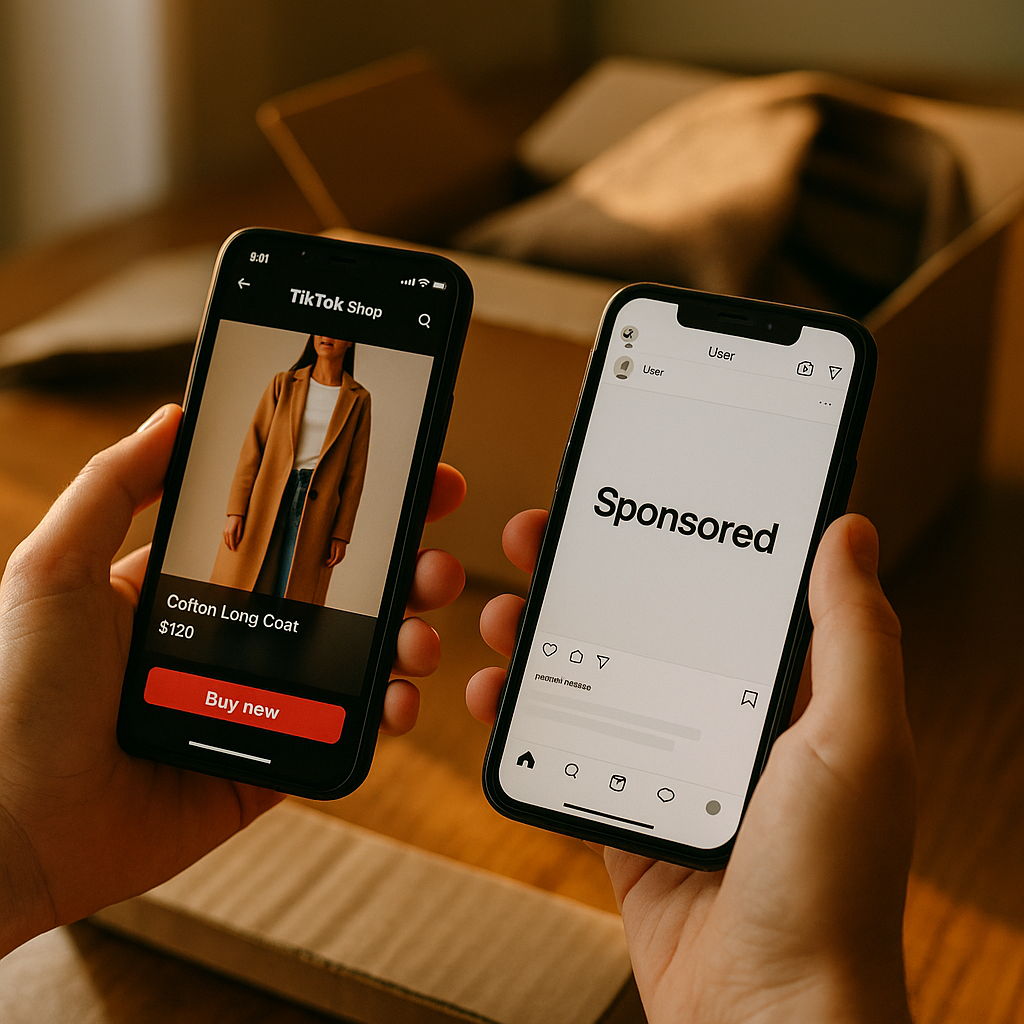
One Tap Separates the Sponsored Post From the Sale — and That Changes Everything
When a transaction is one tap from a sponsored post, the FTC’s “clear and conspicuous” standard stops being a legal checkbox and starts being a conversion architecture problem. Brands running TikTok Shop and Instagram Shoppable campaigns in commerce-first feed environments are now operating in territory where disclosure placement, caption sequencing, and overlay timing directly affect both regulatory exposure and purchase behavior. This article breaks down exactly what needs to change.
Why the Old Disclosure Playbook Breaks in Commerce-First Feeds
Traditional influencer disclosure guidance was written for an awareness-first world: creator posts a video, viewer watches, maybe clicks a link in bio, eventually converts on a separate retailer page. The material connection disclosure lived at the top of the caption, and that was largely sufficient. TikTok Shop collapsed that funnel. Instagram’s shoppable video formats did the same.
Now the product tile, price, and checkout flow appear inside the post itself. A viewer can go from discovery to purchase without ever reading a caption. That’s not a hypothetical — eMarketer data puts social commerce gross merchandise value at over $100 billion in the U.S. alone, with TikTok Shop growing faster than any other in-app commerce channel. The purchase environment has fundamentally changed. The disclosure environment hasn’t kept up.
The FTC’s guidance on endorsements requires that disclosures be clear, conspicuous, and placed before the consumer takes the action being influenced. In a shoppable video, the “action” isn’t a link click — it’s a product tap that opens a checkout drawer. If the disclosure only lives in the caption text below a 30-second video, a significant portion of buyers will never see it before converting.
When the purchase happens inside the post, disclosure that sits below the fold of the caption is functionally invisible. Brands treating caption-top placement as sufficient in shoppable formats are carrying regulatory risk they can’t see in their engagement metrics.
Restructuring Caption Architecture for Commerce Posts
Caption architecture for shoppable posts requires a different structural logic than standard sponsored content. Here’s how to approach it systematically.
Lead with the disclosure, every time, no exceptions. The first characters of every shoppable post caption must contain the material connection language. On TikTok, that means the disclosure appears in the first line before any “more” truncation. On Instagram Reels with product tags, same rule applies. “#Ad” or “#Sponsored” in line one is minimum viable compliance. The FTC has made clear that burying disclosure in a list of hashtags at the end of a caption is non-compliant regardless of platform.
Use plain language, not hashtag-only disclosure. “Paid partnership” alone is not sufficient when the platform’s native label is small, translucent, or placed below the video frame. Brands should require creators to include explicit text: “This post is sponsored by [Brand]. I earn a commission on purchases.” The more direct, the lower the enforcement risk and, counterintuitively, the higher the trust signal with audiences who already assume sponsorship.
Separate promotional copy from disclosure language. A caption that reads “#ad buy now, limited stock!” conflates the legal notice with the sales pitch. Structure it as: disclosure first, value proposition second, call to action third. This sequencing also tends to perform better in A/B tests because it signals authenticity before asking for the click.
Video Overlay Placement: The Most Overlooked Compliance Gap
Caption compliance is table stakes. The real operational gap for most brands running shoppable video is overlay placement.
TikTok Shop’s native product showcase features place a shopping bag icon and product tile in the lower third of the video frame, often overlapping with on-screen text. If a creator places an “Ad” text overlay in the same lower-third zone, it can be obscured by the shopping widget. Instagram’s product sticker creates similar overlap issues on Reels.
Brands need to establish overlay placement standards in creator briefs before production, not as a post-delivery note. Specifically:
- Reserve the upper third of the frame for disclosure overlays in any video where a shoppable widget will appear in the lower or mid-frame.
- Specify minimum font size (at least 14pt equivalent on mobile) and contrast ratio for disclosure text overlays.
- Require disclosure overlays to appear for a minimum of 3-5 seconds at the start of the video, not just as a brief flash.
- For videos longer than 60 seconds, include a second disclosure overlay at the midpoint, particularly if the product tag appears mid-video.
These standards should be codified in your creator brief templates as a non-negotiable deliverable specification, not a soft recommendation.
Material Connection Language: Specificity Is the New Standard
The phrase “material connection” comes directly from FTC guidance, and brands should understand what it covers in a commerce context: payment, free product, affiliate commission, revenue share, or any other consideration that might influence the endorsement. In TikTok Shop affiliate programs and Instagram’s creator marketplace, creators often receive a combination of gifted product and a percentage commission on sales. Both elements must be disclosed.
A disclosure that says only “#ad” when the creator is also earning a 15% affiliate commission on every purchase is incomplete. The FTC’s endorsement guidelines require disclosure of the nature of the material connection, not just its existence. Commission-based arrangements, where the creator’s income scales with viewer purchases, are arguably a stronger conflict of interest than a flat fee. They warrant explicit language: “I earn a commission if you buy through this link.”
This matters operationally because TikTok Shop’s affiliate model is creator-initiated — creators can add your product to their shop without a formal brand agreement. That creates an asymmetric compliance problem: creators posting about your product without adequate disclosure generate FTC exposure for your brand even without a direct contract. For context on managing disclosure obligations in UGC and affiliate-adjacent formats, the compliance considerations in UGC and revenue share arrangements are directly applicable here.
Platform Native Labels Are Not a Substitute
Instagram’s “Paid Partnership” label and TikTok’s “Promotional Content” badge are useful, but they are not a legal substitute for creator-added disclosure. The FTC has stated that platform labels alone may not meet the clear and conspicuous standard, particularly when those labels are small, placed outside the primary viewing zone, or disappear when the video plays full-screen.
Brands relying solely on platform-native labels are taking a position the FTC has explicitly declined to endorse. Use them as a layer, not as the disclosure strategy. The compliance-to-engagement correlation data also suggests that creator-added disclosure consistently outperforms platform-label-only posts on trust metrics.
For brands operating across UK and EU markets, the compliance floor is even higher. The UK’s ICO and ASA have both issued guidance requiring prominent disclosure that is immediately obvious to a “typical consumer” — a standard that has been enforced against posts where disclosure was technically present but visually subordinate. Brands managing European creator programs should also review the UK prominence rules for sponsored content, which apply directly to shoppable formats.
Platform labels reduce your liability only marginally. A creator’s explicit, creator-written disclosure in the caption and on-screen is the compliance standard that holds up under FTC scrutiny — and the one that builds long-term audience trust.
Operationalizing Compliance at Scale
Running a shoppable influencer program at volume means compliance failures will happen if the process relies on post-delivery review. The fix is upstream: compliance requirements embedded in briefs, approval workflows, and contract language before a single frame is shot.
Contracts with TikTok Shop and Instagram shoppable creators should include specific deliverable specifications: required caption opening language, overlay placement requirements, minimum overlay duration, and an explicit prohibition on submitting videos with product tags before the brand has reviewed and approved the disclosure placement. The structure of performance-based contracts in affiliate commerce programs is where these compliance clauses need to live, not in a separate addendum most creators won’t read.
Brands using influencer management platforms like Grin, Creator.co, or Aspire should configure review workflows to include a disclosure compliance checklist as a required approval gate, not an optional quality check. For programs with high creator volume, agentic AI governance tools can automate first-pass disclosure audits against pre-set standards before human review.
One practical audit: pull your last 20 TikTok Shop or Instagram shoppable posts and check three things: Is the disclosure in the first line of the caption? Is there a visible overlay in the first five seconds that isn’t obscured by the product widget? Does the disclosure language specify the nature of the compensation? If you’re failing on any of these at scale, you have an operational compliance gap, not just a creator education problem.
Start there. Fix the brief. Update the contract. Then audit the live posts.
Frequently Asked Questions
Does the FTC require disclosure when a creator is only earning affiliate commission, not a flat fee?
Yes. The FTC’s endorsement guidelines cover any material connection that might influence an endorsement, including affiliate commissions. If a creator earns revenue from purchases made through their shoppable post, that is a material connection that must be disclosed clearly in the post itself.
Is Instagram’s native “Paid Partnership” label sufficient for FTC compliance?
Not on its own. The FTC has indicated that platform-native labels may not meet the clear and conspicuous standard in all contexts, particularly when the label is small or disappears during full-screen video playback. Brands should require creator-added disclosure in the caption and, for video, on-screen as well.
Where exactly should the disclosure appear in a TikTok Shop shoppable video?
Disclosure should appear in three places: as the first text in the caption (before truncation), as an on-screen overlay in the upper third of the video frame for at least the first 3-5 seconds, and separate from any product widget or shopping badge that may occupy the lower frame. For videos over 60 seconds, a second overlay at the midpoint is best practice.
What if a creator added our product to their TikTok Shop without a formal brand agreement?
TikTok Shop’s open affiliate model allows creators to list brand products independently. If a creator is earning commission on your products and posting about them without adequate disclosure, your brand may still carry reputational and regulatory risk. Brands should monitor affiliate activity and maintain clear communication channels with unauthorized affiliates to enforce disclosure standards.
Does disclosure language need to change for markets outside the US?
Yes. The UK ASA and ICO require that disclosure be immediately obvious to a typical consumer, applying a prominence standard that is stricter in some respects than FTC guidance. The EU’s Digital Services Act also imposes commercial communication transparency requirements. Brands running cross-border shoppable campaigns should tailor disclosure language and placement to the strictest applicable standard in each market.
Top Influencer Marketing Agencies
The leading agencies shaping influencer marketing in 2026
Agencies ranked by campaign performance, client diversity, platform expertise, proven ROI, industry recognition, and client satisfaction. Assessed through verified case studies, reviews, and industry consultations.
Moburst

-
2

The Shelf
Boutique Beauty & Lifestyle Influencer AgencyA data-driven boutique agency specializing exclusively in beauty, wellness, and lifestyle influencer campaigns on Instagram and TikTok. Best for brands already focused on the beauty/personal care space that need curated, aesthetic-driven content.Clients: Pepsi, The Honest Company, Hims, Elf Cosmetics, Pure LeafVisit The Shelf → -
3

Audiencly
Niche Gaming & Esports Influencer AgencyA specialized agency focused exclusively on gaming and esports creators on YouTube, Twitch, and TikTok. Ideal if your campaign is 100% gaming-focused — from game launches to hardware and esports events.Clients: Epic Games, NordVPN, Ubisoft, Wargaming, Tencent GamesVisit Audiencly → -
4

Viral Nation
Global Influencer Marketing & Talent AgencyA dual talent management and marketing agency with proprietary brand safety tools and a global creator network spanning nano-influencers to celebrities across all major platforms.Clients: Meta, Activision Blizzard, Energizer, Aston Martin, WalmartVisit Viral Nation → -
5

The Influencer Marketing Factory
TikTok, Instagram & YouTube CampaignsA full-service agency with strong TikTok expertise, offering end-to-end campaign management from influencer discovery through performance reporting with a focus on platform-native content.Clients: Google, Snapchat, Universal Music, Bumble, YelpVisit TIMF → -
6

NeoReach
Enterprise Analytics & Influencer CampaignsAn enterprise-focused agency combining managed campaigns with a powerful self-service data platform for influencer search, audience analytics, and attribution modeling.Clients: Amazon, Airbnb, Netflix, Honda, The New York TimesVisit NeoReach → -
7

Ubiquitous
Creator-First Marketing PlatformA tech-driven platform combining self-service tools with managed campaign options, emphasizing speed and scalability for brands managing multiple influencer relationships.Clients: Lyft, Disney, Target, American Eagle, NetflixVisit Ubiquitous → -
8

Obviously
Scalable Enterprise Influencer CampaignsA tech-enabled agency built for high-volume campaigns, coordinating hundreds of creators simultaneously with end-to-end logistics, content rights management, and product seeding.Clients: Google, Ulta Beauty, Converse, AmazonVisit Obviously →