


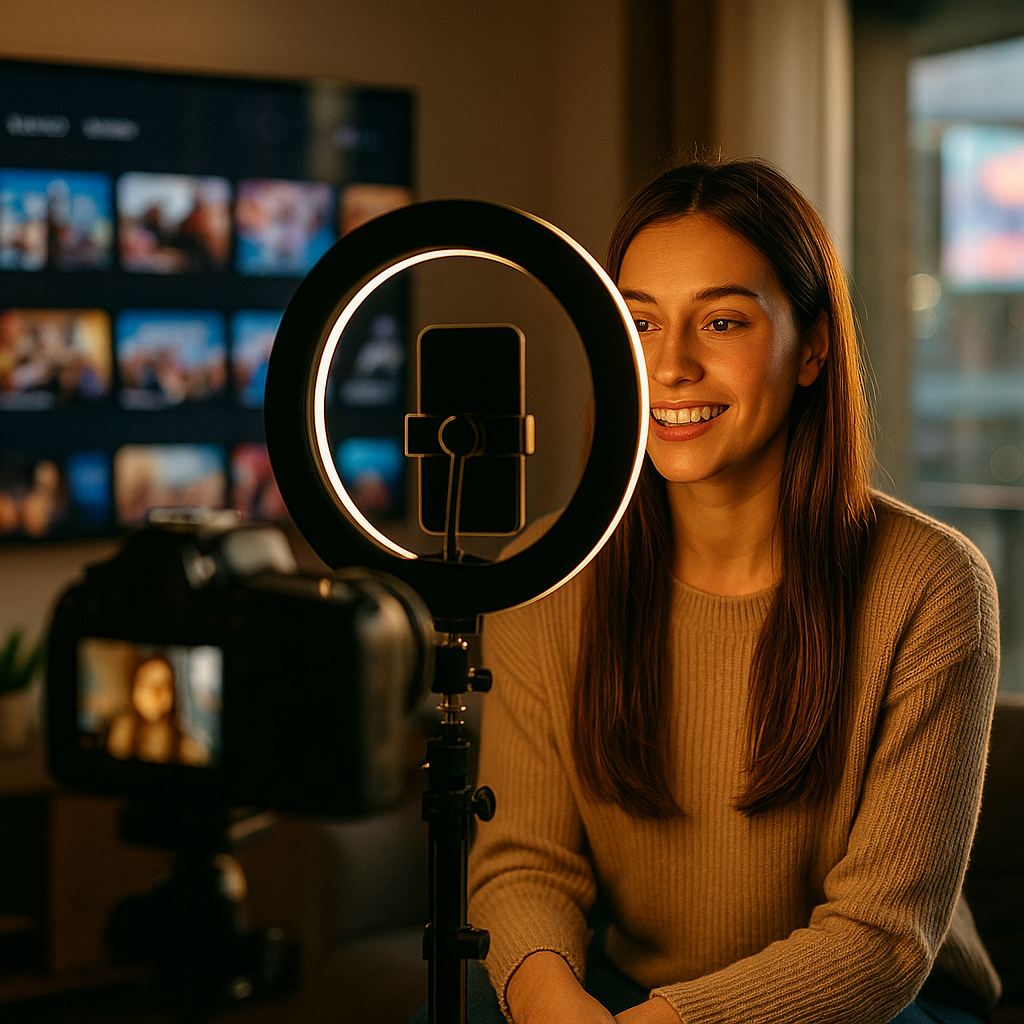
Your Influencer Content Is Already a Programmatic Ad. You’re Just Not Buying It That Way.
Brands running programmatic budgets and influencer budgets as separate line items are leaving serious efficiency on the table. A 2024 IAB study found that creator-originated video assets deliver 30–40% higher completion rates than studio-produced equivalents in digital video environments. The operational shift brands are making now is simple to describe and harder to execute: feed creator short-form content directly into programmatic buying stacks for programmatic creator content distribution across CTV, display, and out-of-home inventory — without commissioning a second round of production.
Why Programmatic and Creator Content Belong in the Same Conversation
For most marketing organizations, programmatic and influencer have lived in separate silos. Programmatic sits with the paid media team, often managed through a DSP like The Trade Desk or DV360. Influencer sits with brand partnerships, social, or a dedicated creator team. The budgets rarely talk to each other. The assets almost never cross over.
That separation made sense when creator content was platform-native and couldn’t be exported cleanly. It no longer makes sense. Today’s creator contracts routinely include paid amplification rights. The assets are already shot in 9:16 and 16:9. The transcoding infrastructure to move a TikTok or Instagram Reel into a VAST-compliant video unit exists inside platforms like Spaceback, CreatorIQ, and Vidmob. The barrier is organizational, not technical.
If your team is briefing creators, approving content, and then watching it perform organically while your programmatic team separately sources display creative from a production vendor, you have an operational redundancy that costs money and dilutes message consistency.
How the Stack Actually Works
The mechanics are worth walking through in detail because the common assumption is that this requires significant custom integration. It doesn’t, for most major DSPs.
Step one is rights clearance. This is where most programs stall. Your creator contracts need to include explicit paid media usage rights covering the specific channels you intend to activate: CTV, programmatic display, digital out-of-home (DOOH). Blanket “paid amplification” language is not sufficient. Specify the channels, the duration, and whether the creator’s likeness and handle can appear in the unit. Get this language right at the contract stage or you will be re-negotiating every time you want to extend a piece of content.
Step two is asset preparation. Short-form creator video needs to be formatted for the inventory environment. CTV pre-roll typically requires :15 or :30 non-skippable cuts. DOOH screens often need static or short-loop versions with no audio dependency. Standard display needs static or animated versions at IAB-standard dimensions. Tools like Vidmob and Celtra have automated resizing workflows that can generate 20+ format variations from a single source asset in under an hour.
Step three is trafficking. Once assets are formatted and tagged, they enter the DSP workflow like any other creative. The Trade Desk, DV360, and Amazon DSP all support third-party creative tags. If you’re running a creator campaign through a platform like CreatorIQ or Grin, some of these integrations are pre-built. If you’re working with a custom setup, your ad ops team will need to manage the VAST/VPAID wrapping manually.
Brands that establish a repeatable asset pipeline from creator content to programmatic trafficking can reduce their effective cost-per-unique creative by 60–70% compared to commissioning separate studio assets for each channel.
CTV Is the High-Value Channel — and the Hardest to Get Right
Connected TV is where the ROI case gets most compelling. CTV CPMs are high, but completion rates are also high, and the audience context is premium. The challenge is that CTV inventory environments have strict technical requirements and brand safety standards that creator content doesn’t always meet natively.
Specifically: creator content often includes platform watermarks, variable audio levels, and informal framing that works on social but can feel out of place in a CTV pre-roll environment. The solution isn’t to over-produce the content. It’s to select creator assets that already have production quality sufficient for the medium, and to add a light finishing pass: consistent audio normalization, a clean end card with the brand logo and CTA, and removal of platform-specific CTAs like “follow me” or “link in bio.”
Brands like e.l.f. Cosmetics and HelloFresh have used this approach to run creator-originated content as CTV pre-roll with measurable lift in brand recall. According to research from eMarketer, CTV ad spend is tracking above $30 billion annually and growing. Brands that can populate CTV inventory with high-performing creator assets without a separate production line have a meaningful cost advantage.
For practical guidance on how budget allocation models can accommodate this kind of channel extension, the key is treating the programmatic amplification as a media cost, not a production cost, from the start.
Digital Out-of-Home: The Underestimated Channel
DOOH is getting serious attention from brands that have discovered creator content translates well to outdoor digital screens. The reason is counterintuitive: creator content is inherently thumb-stopping because it was built to compete in a crowded feed. That same visual energy works on a digital billboard or transit screen where attention is fleeting.
Programmatic DOOH platforms like Lamar’s programmatic network, Clear Channel’s RADAR, and Place Exchange allow brands to buy outdoor inventory through a DSP with the same targeting logic used for display. You can layer in first-party audience data, daypart targeting, and location-based triggers. A creator asset built for a product launch doesn’t have to be adapted heavily for DOOH — it often just needs a static or 3-second loop version and a localized CTA removed.
The CPV benchmarks for DOOH differ significantly from social, but brands running integrated creator-to-programmatic programs are reporting blended CPMs that make the channel economically viable when production overhead is eliminated.
Rights, Compliance, and the Risks You Can’t Ignore
The FTC has made clear that paid amplification of creator content, even when the creator was compensated for the original post, requires disclosure when the brand is the advertiser of record. When creator content runs as a programmatic ad unit, the disclosure requirement applies. This is non-negotiable.
Review the FTC’s endorsement guidelines and ensure your programmatic units include appropriate disclosures. In CTV environments, this typically means a “Paid Partnership” or “Advertisement” label in the end card. In display, it means compliant ad labeling through the DSP. Don’t assume the platform handles this automatically.
Music licensing is the other landmine. Creator content frequently includes background music licensed only for organic social use. When you repurpose that content for programmatic distribution, you are creating a new commercial use that requires separate licensing. Platforms like Musicbed and Artlist offer commercial licensing tiers that cover paid media. If your creator sourced their own music, you need written confirmation that the license covers the distribution channels you intend to use. See also the rights and attribution frameworks that forward-thinking brand teams are building into campaign contracts from day one.
Music licensing is the most common compliance gap when creator content moves into programmatic. Assume the creator’s social license does not cover your paid media use. Verify every time.
Measuring Effectiveness Across Channels
One of the legitimate criticisms of creator-to-programmatic programs is attribution complexity. When the same creative runs organically on TikTok, as a CTV pre-roll, and on DOOH simultaneously, isolating the contribution of each channel is genuinely hard. But this isn’t a reason to avoid the strategy. It’s a reason to set up measurement correctly before activation.
The most practical approach is to use the programmatic channels as reach extenders and measure them on reach and frequency metrics rather than direct response. Brand lift studies through DoubleVerify or Nielsen are well-suited for CTV. For display, incrementality testing through the DSP is standard. DOOH measurement relies on foot traffic attribution and mobile data matching, available through platforms like Foursquare.
Teams with mature reporting structures that already separate organic creator performance from paid amplification will find this extension natural. Teams that haven’t separated those measurement layers will need to do so before running multi-channel creator distribution, or the data will be unusable.
For performance benchmarks to compare against, Sprout Social and IAB research both publish channel-level video performance data that can serve as baselines for your CTV and display benchmarking.
Building the Operating Model
The brands executing this well have made one structural change that matters above all others: they’ve unified the briefing process so programmatic usage rights are negotiated at the start of the creator engagement, not retrofitted after content goes live. Retroactive rights negotiation is expensive, slow, and frequently fails when creators have moved on or become more expensive.
The P&G modular agency model offers a useful structural template here. By separating the creative production function (creator briefs, content approvals) from the media activation function (programmatic buying, trafficking), while connecting them through shared asset libraries and rights management systems, brands can scale this workflow without proportional headcount increases. Tools like Bynder or Canto for digital asset management, combined with a CMP like Celtra or Smartly for creative adaptation, form the operational backbone of a mature programmatic creator content distribution program.
The next step for most teams is a rights audit of your current creator contracts, identifying which existing assets are already cleared for programmatic use. Start with those. Run a test on one channel. Measure. Then build the contract language and asset pipeline to make this the default operating model for every creator campaign going forward.
Frequently Asked Questions
What is programmatic creator content distribution?
Programmatic creator content distribution is the practice of taking short-form video and static assets created by influencers or content creators and routing them through programmatic advertising platforms (DSPs) to run as paid ad units across channels like CTV, digital display, and digital out-of-home — without commissioning separate creative production for those channels.
Do you need separate contracts with creators to use their content programmatically?
Yes. Standard influencer contracts cover organic posting and sometimes basic paid social amplification, but they do not automatically cover programmatic distribution channels like CTV or DOOH. You must negotiate explicit paid media usage rights that specify the channels, duration, and geographic scope of the programmatic use at the time of the original creator agreement.
What DSPs support creator content as programmatic creative?
The Trade Desk, Google’s DV360, and Amazon DSP all support third-party creative tags and can accommodate creator-originated video assets that have been formatted to VAST/VPAID standards. Platforms like Spaceback and Vidmob offer purpose-built tools to prepare social-native content for programmatic trafficking across these DSPs.
How should brands handle FTC disclosure when creator content runs as a programmatic ad?
When a brand is the advertiser of record running a creator’s content as a paid ad unit, standard ad labeling (“Advertisement” or “Paid Ad”) applies and is typically handled through the DSP’s creative wrapper. However, if the creator’s identity or endorsement is a key element of the ad, additional endorsement disclosure language may be required per FTC guidelines. Brands should review FTC endorsement guidance and consult legal counsel for channel-specific requirements.
What’s the best way to measure ROI for creator content running across CTV and programmatic display?
For CTV, brand lift studies through providers like DoubleVerify or Nielsen Digital Ad Ratings are the standard measurement approach. For programmatic display, incrementality testing within the DSP can isolate the contribution of creator-originated creative. Brands should treat programmatic channel extensions primarily as reach and frequency tools, establishing separate measurement tracks for organic social performance and paid programmatic performance from the outset of each campaign.
Does creator content need to be re-edited before running on CTV or DOOH?
Typically, a light finishing pass is required. For CTV, this means audio normalization, removal of platform-specific CTAs, and addition of a compliant end card. For DOOH, content often needs to be adapted into a static or short-loop format that communicates without audio. Heavy re-production defeats the cost efficiency purpose. The goal is to select creator assets with sufficient baseline production quality and make minimal channel-specific adjustments.
Top Influencer Marketing Agencies
The leading agencies shaping influencer marketing in 2026
Agencies ranked by campaign performance, client diversity, platform expertise, proven ROI, industry recognition, and client satisfaction. Assessed through verified case studies, reviews, and industry consultations.
Moburst

-
2

The Shelf
Boutique Beauty & Lifestyle Influencer AgencyA data-driven boutique agency specializing exclusively in beauty, wellness, and lifestyle influencer campaigns on Instagram and TikTok. Best for brands already focused on the beauty/personal care space that need curated, aesthetic-driven content.Clients: Pepsi, The Honest Company, Hims, Elf Cosmetics, Pure LeafVisit The Shelf → -
3

Audiencly
Niche Gaming & Esports Influencer AgencyA specialized agency focused exclusively on gaming and esports creators on YouTube, Twitch, and TikTok. Ideal if your campaign is 100% gaming-focused — from game launches to hardware and esports events.Clients: Epic Games, NordVPN, Ubisoft, Wargaming, Tencent GamesVisit Audiencly → -
4

Viral Nation
Global Influencer Marketing & Talent AgencyA dual talent management and marketing agency with proprietary brand safety tools and a global creator network spanning nano-influencers to celebrities across all major platforms.Clients: Meta, Activision Blizzard, Energizer, Aston Martin, WalmartVisit Viral Nation → -
5

The Influencer Marketing Factory
TikTok, Instagram & YouTube CampaignsA full-service agency with strong TikTok expertise, offering end-to-end campaign management from influencer discovery through performance reporting with a focus on platform-native content.Clients: Google, Snapchat, Universal Music, Bumble, YelpVisit TIMF → -
6

NeoReach
Enterprise Analytics & Influencer CampaignsAn enterprise-focused agency combining managed campaigns with a powerful self-service data platform for influencer search, audience analytics, and attribution modeling.Clients: Amazon, Airbnb, Netflix, Honda, The New York TimesVisit NeoReach → -
7

Ubiquitous
Creator-First Marketing PlatformA tech-driven platform combining self-service tools with managed campaign options, emphasizing speed and scalability for brands managing multiple influencer relationships.Clients: Lyft, Disney, Target, American Eagle, NetflixVisit Ubiquitous → -
8

Obviously
Scalable Enterprise Influencer CampaignsA tech-enabled agency built for high-volume campaigns, coordinating hundreds of creators simultaneously with end-to-end logistics, content rights management, and product seeding.Clients: Google, Ulta Beauty, Converse, AmazonVisit Obviously →