


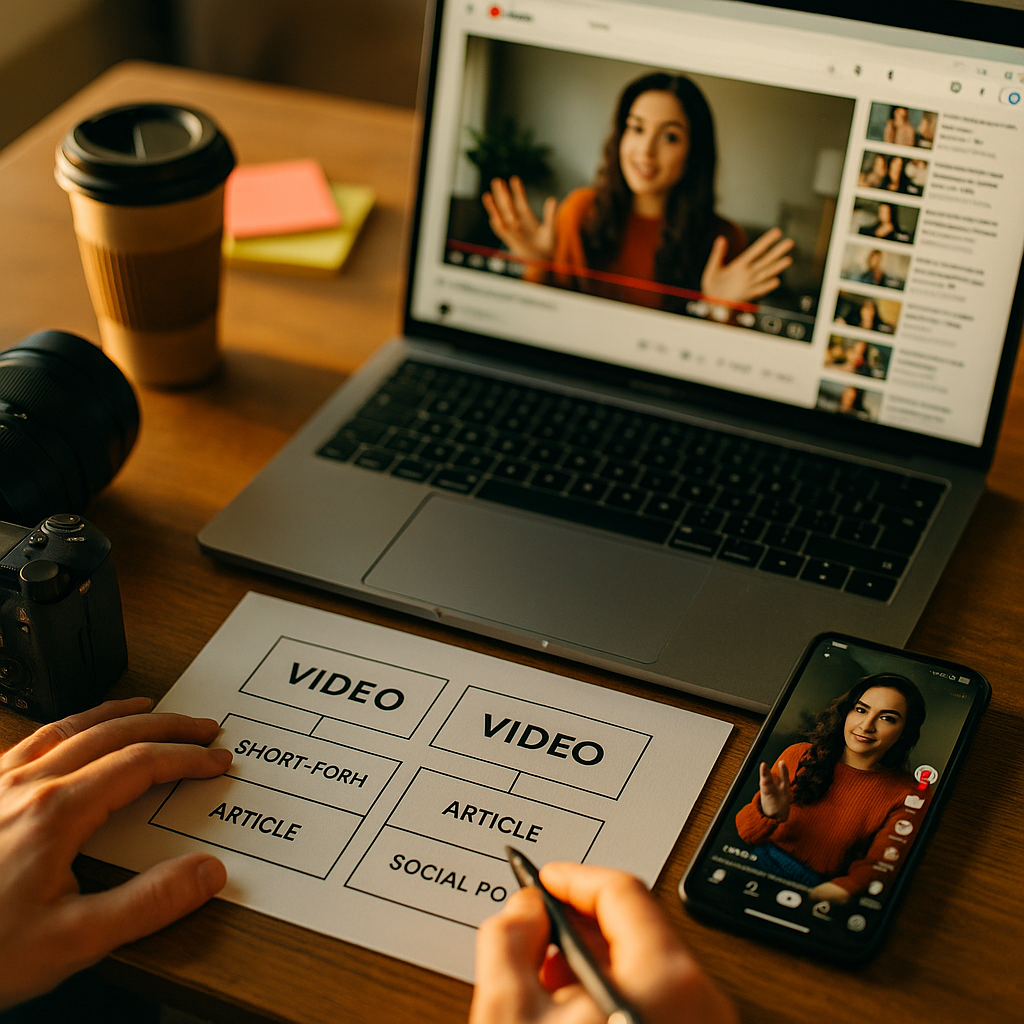
Brands running five-platform distribution strategies are still briefing creators for one platform at a time. That inefficiency costs real money. The modular creator brief for multi-surface distribution solves it by engineering a single shoot to yield platform-ready assets across every major surface — without a second camera call.
Why the Old Brief Model Is Bleeding Your Budget
Most creator briefs are written with a destination in mind. “Make a TikTok.” “Film a Reel.” The brief describes tone, talking points, and a call to action, then stops. What gets produced is a single vertical video optimized for one algorithm. If the campaign needs LinkedIn reach and a CTV spot, someone books another shoot, writes another brief, and pays another day rate.
That model made sense when social video lived in silos. It doesn’t anymore. Connected TV ad spend is projected to surpass $40 billion in the U.S. alone, and platforms like TikTok and Meta now explicitly support cross-format creative repurposing within their ad ecosystems. The production infrastructure exists. The briefing methodology hasn’t caught up.
The modular brief closes that gap. Instead of scoping for output, it scopes for raw material — structured so one shoot generates every deliverable the campaign needs.
What “Modular” Actually Means in a Creator Context
The word gets overused. In this context, modular means the brief is built around discrete content blocks that can be independently extracted, recombined, and reformatted. Think of it like a film shoot with a shot list, not a vlog with a loose concept.
Each module corresponds to a platform’s structural requirements. A TikTok hook fires in the first two seconds and drives watch time. A LinkedIn video earns its keep with a stated thesis in the first five seconds and longer explanatory depth. A CTV-ready asset needs a clean open without text overlays, dialogue that works without captions, and a minimum of 15 to 30 seconds of brand-safe B-roll. YouTube Shorts tolerates more context than TikTok but still rewards a tight loop. Reels need visual energy even on mute.
These are not the same video. But they can all come from the same session if the creator is briefed to produce specific blocks, not a finished piece.
A well-structured modular brief doesn’t ask creators to make more content. It asks them to capture the right raw material so your team can build what each platform needs.
The Five Blocks Every Modular Brief Should Include
Build the brief around five capture blocks, each mapped to a platform function:
- Hook block (0–3 seconds): Two to three variations of an opening statement or action, filmed cleanly without on-screen text. This feeds TikTok, Reels, and YouTube Shorts openers. Variations let you A/B test platform algorithms without re-shooting.
- Core value block (15–45 seconds): The creator explains or demonstrates the product or message in a natural, unscripted-feeling window. This is the spine of the LinkedIn video and the mid-section of a YouTube Short. It should be filmed with consistent audio quality because this block will likely end up in a CTV spot.
- B-roll stack (60–90 seconds total): Product close-ups, environmental shots, hands-on usage. No faces required. No dialogue. This feeds CTV production and gives editors fill footage for every other format. Brief the creator to hold each B-roll shot for at least five seconds — editors will thank you.
- Reaction and transition moments: Candid expressions, laughs, transitions between activities. These make vertical short-form feel human and drive the emotional resonance that platforms reward. Even a two-second genuine smile over a product close-up can become the most-clipped asset from the entire session.
- Clean outro with verbal CTA: A spoken call to action, filmed without music underneath. This is repurposable across formats and required for CTV where audio-only communication is the baseline expectation. Film two versions: one with a brand name mention, one without, for flexibility in paid distribution.
For a deeper look at how brief architecture drives algorithmic reach, see this guide on brief structure for organic growth.
Platform-Specific Assembly: What Comes From What
Once the blocks are captured, assembly follows a predictable logic:
TikTok: Hook block variant 1 + core value (trimmed to 20 seconds) + reaction moment + CTA outro. Total: 30–45 seconds. Native captions added in post.
Instagram Reels: Hook block variant 2 + B-roll stack (10 seconds) + core value (trimmed differently) + reaction. This version should be edited to rhythm if a licensed track is available. Meta’s creative guidance confirms that audio-synced Reels outperform silent versions on reach.
YouTube Shorts: Core value block (slightly longer cut) + B-roll fill + CTA outro. No aggressive hook required — Shorts audiences tolerate a slower entry than TikTok.
LinkedIn Video: Core value block (full length, up to 45 seconds) with a spoken thesis at the open. B2B brands should request the creator frame this block as a professional insight, not a consumer pitch. That’s a brief instruction, not a post-production fix.
CTV-ready asset: Clean open from B-roll stack + core value block (audio-only reliable segment) + clean outro CTA. This requires the least editing but the most upfront brief precision. The creator must know that CTV requires no jump cuts in the brand window, no platform watermarks, and no text overlays that would be burned into the master file.
This assembly logic is why briefing for CTV and social from one shoot is a distinct skill from standard influencer briefing. The constraints are technical, not creative.
Rights and Licensing: Get This Right Before the Session
Modular distribution creates a rights complexity that a single-platform brief avoids. If a creator produces content licensed for TikTok use only, repurposing that footage for CTV or LinkedIn paid promotion is a contract violation. This is not hypothetical — it’s a recurring operational failure in multi-platform campaigns.
The brief must specify usage rights explicitly. Language should cover: organic social on all platforms the creator’s handles touch, paid media amplification on each named platform, CTV and OTT distribution (this often requires a separate line item in the contract), and duration of all rights (12 months is standard; 24 months is worth negotiating for evergreen content).
The FTC’s disclosure guidance also applies across every surface where paid content appears. A modular brief that produces a CTV spot must include disclosure requirements for that format, which differ from a native social post. Brief the creator on this upfront. For more on compliance framing, see FTC compliance in creator briefs.
Directing the Session Without Directing the Creator
The modular brief is not a script. That distinction matters because over-direction is the fastest way to produce content that performs like an ad and nothing else. The brief’s job is to define structure, not dictate delivery.
Effective modular briefs use a shot list framework rather than a script framework. Instead of “say X about our product,” the brief reads: “capture a 20–30 second unscripted explanation of how you’d use this in your daily routine, filmed from your natural filming position.” The creator fills the block. Your team edits the output into platform-specific assets.
This approach also produces better raw material. Creators who feel autonomous perform better on camera. The data on open-ended briefs and engagement consistently shows that structured freedom outperforms scripted delivery.
For brands managing multiple creators across a campaign, the modular brief also standardizes production quality without standardizing tone. Each creator fills the same blocks differently. Your editors assemble platform-specific cuts with consistent structure but authentic voices across the roster.
The brief controls the architecture. The creator controls the voice. That division of responsibility is what makes modular production scalable without feeling factory-made.
Measuring Efficiency Across the Asset Library
One metric brands should track but rarely do: cost-per-platform-ready-asset. A single creator session that generates five platform-specific cuts costs a fraction of five separate shoots. If a creator day rate runs $3,000 and post-production costs $1,500, the total session investment of $4,500 spread across five assets yields a $900 cost-per-asset. Individual shoots for each platform at the same day rate would run $15,000 plus production overhead.
Beyond cost efficiency, the modular approach enables faster iteration. When a TikTok hook underperforms, you already have two alternate hook block variants in the asset library. Test the second variant without re-engaging the creator. That agility is a structural advantage in a media environment where platform algorithm behavior can shift within a campaign flight.
Track performance by asset type, not campaign. Over time, patterns emerge: which block structures generate the strongest CTV completion rates, which hook variants win on Reels versus TikTok. That data feeds the next modular brief. See how episodic series compare to one-off posts for a complementary ROI framing.
For teams scaling this system across multiple creators, platforms like Sprout Social and HubSpot offer asset performance tracking that can be adapted for cross-platform creative analysis.
Start with one campaign. Write one modular brief using the five-block structure, brief a creator you already have a relationship with, and build the asset library from a single session. The production logic will be obvious within the first edit pass, and you’ll have the proof of concept to standardize it across your full roster.
Frequently Asked Questions
What is a modular creator brief?
A modular creator brief is a production brief that structures a single creator shoot around discrete content blocks — hooks, core value segments, B-roll, reactions, and CTAs — designed to be independently extracted and assembled into platform-specific assets for TikTok, Reels, YouTube Shorts, LinkedIn Video, and CTV without additional shoots.
How long should a single modular creator session run?
Most modular sessions can be completed in two to four hours when the creator is properly briefed in advance. The brief should specify each block by duration and intent, so the creator isn’t improvising structure on set. Longer sessions don’t necessarily produce better raw material; preparation does.
Do I need a production crew for a modular creator shoot?
Not always. Many mid-tier and top-tier creators are equipped to self-shoot all required blocks, particularly for vertical social formats. CTV-ready assets may require higher production standards depending on the platform partner’s technical specifications. The brief should specify minimum technical requirements (resolution, audio quality, lighting) rather than mandating a crew.
How does modular briefing affect creator contracts?
Modular briefing significantly expands the rights conversation. Contracts must explicitly cover each distribution surface, paid media usage, duration, and geographic scope. CTV and OTT distribution rights often require separate licensing terms and may affect creator compensation. Address rights in the brief template itself so expectations are set before contracting begins.
Can a modular brief work for micro-creators with smaller audiences?
Yes, and it often works better. Micro-creators tend to have stronger platform-specific instincts and are more willing to follow structured production guidance. The modular brief also increases the value delivered per engagement, which strengthens the business case for working with micro-creator rosters at scale.
Top Influencer Marketing Agencies
The leading agencies shaping influencer marketing in 2026
Agencies ranked by campaign performance, client diversity, platform expertise, proven ROI, industry recognition, and client satisfaction. Assessed through verified case studies, reviews, and industry consultations.
Moburst

-
2

The Shelf
Boutique Beauty & Lifestyle Influencer AgencyA data-driven boutique agency specializing exclusively in beauty, wellness, and lifestyle influencer campaigns on Instagram and TikTok. Best for brands already focused on the beauty/personal care space that need curated, aesthetic-driven content.Clients: Pepsi, The Honest Company, Hims, Elf Cosmetics, Pure LeafVisit The Shelf → -
3

Audiencly
Niche Gaming & Esports Influencer AgencyA specialized agency focused exclusively on gaming and esports creators on YouTube, Twitch, and TikTok. Ideal if your campaign is 100% gaming-focused — from game launches to hardware and esports events.Clients: Epic Games, NordVPN, Ubisoft, Wargaming, Tencent GamesVisit Audiencly → -
4

Viral Nation
Global Influencer Marketing & Talent AgencyA dual talent management and marketing agency with proprietary brand safety tools and a global creator network spanning nano-influencers to celebrities across all major platforms.Clients: Meta, Activision Blizzard, Energizer, Aston Martin, WalmartVisit Viral Nation → -
5

The Influencer Marketing Factory
TikTok, Instagram & YouTube CampaignsA full-service agency with strong TikTok expertise, offering end-to-end campaign management from influencer discovery through performance reporting with a focus on platform-native content.Clients: Google, Snapchat, Universal Music, Bumble, YelpVisit TIMF → -
6

NeoReach
Enterprise Analytics & Influencer CampaignsAn enterprise-focused agency combining managed campaigns with a powerful self-service data platform for influencer search, audience analytics, and attribution modeling.Clients: Amazon, Airbnb, Netflix, Honda, The New York TimesVisit NeoReach → -
7

Ubiquitous
Creator-First Marketing PlatformA tech-driven platform combining self-service tools with managed campaign options, emphasizing speed and scalability for brands managing multiple influencer relationships.Clients: Lyft, Disney, Target, American Eagle, NetflixVisit Ubiquitous → -
8

Obviously
Scalable Enterprise Influencer CampaignsA tech-enabled agency built for high-volume campaigns, coordinating hundreds of creators simultaneously with end-to-end logistics, content rights management, and product seeding.Clients: Google, Ulta Beauty, Converse, AmazonVisit Obviously →