


One Agent Per Consumer: The Architecture Shift Brands Can’t Ignore
What if every consumer in your CRM had their own AI agent running 24/7, deciding when to send them a message, which channel to use, and what content would land best? That’s not a roadmap item. That’s what MoEngage and Aampe are shipping now, and the brands that understand the architecture behind it will outperform those still relying on segment-level send schedules.
The personal agent model represents a genuine paradigm shift in how behavior-driven creator targeting gets operationalized at scale. This article breaks down what that architecture actually means, how it applies to creator audience targeting specifically, and what questions your team should be asking before committing budget to any AI platform claiming to do this.
What “Personal Agent Architecture” Actually Means
Most marketing automation platforms work on cohort logic. You define a segment, assign a journey, and fire messages based on triggers or static schedules. The intelligence sits at the segment level, not the individual level. It’s efficient, but it’s also inherently blunt.
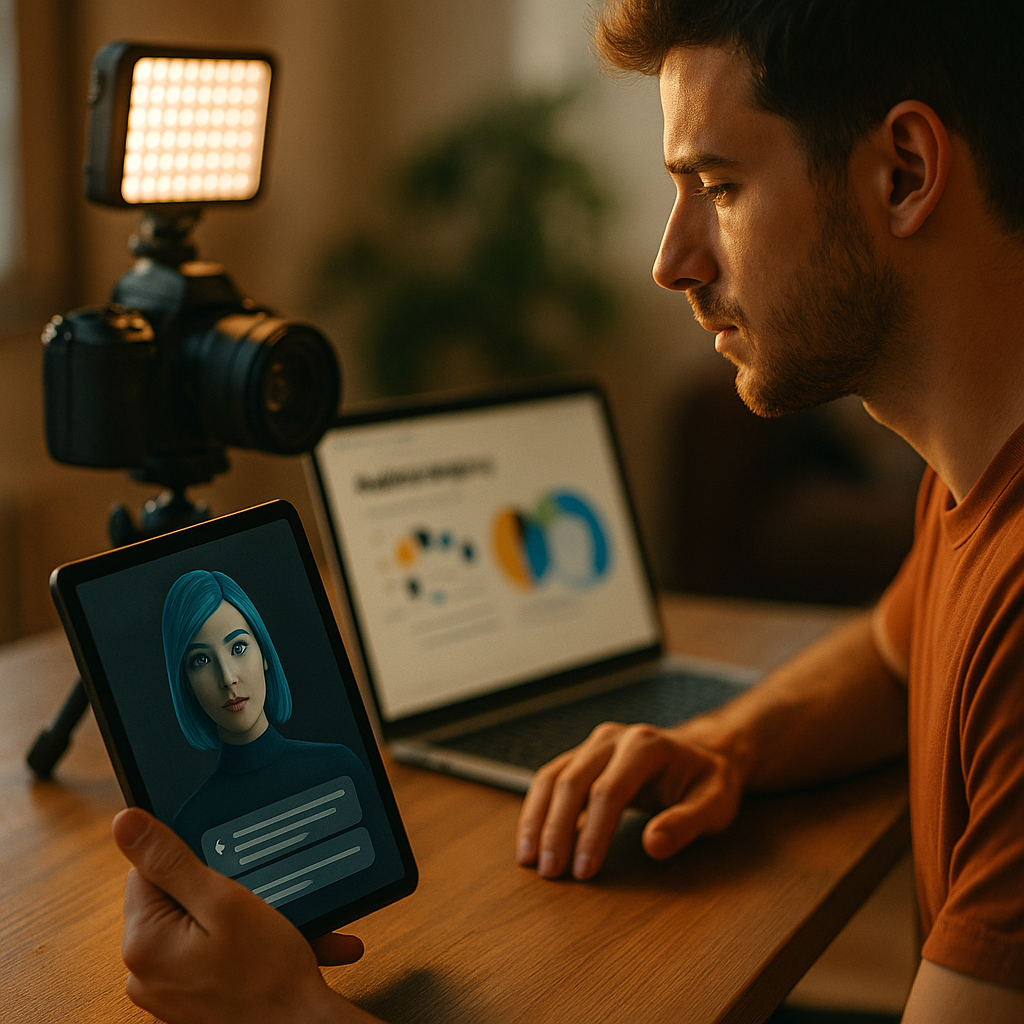
Personal agent architecture inverts this. Each consumer gets their own lightweight AI model, continuously updated with that individual’s behavioral signals: open times, channel responsiveness, content engagement patterns, purchase intent signals, and inactivity windows. The agent’s job is to make micro-decisions in real time. Not “when should we message the 35-44 female segment?” but “when should we message Sarah, based on her last 90 days of behavior?”
Aampe pioneered this architecture with what they call “propensity agents,” which learn individual-level response patterns and optimize message timing and content selection independently for each user. MoEngage has integrated similar agent-layer capabilities into its customer engagement stack, allowing brands to layer this intelligence across push, email, in-app, SMS, and WhatsApp from a single platform. The practical result: message send times that differ by hours, even days, across consumers who live in the same zip code and bought the same product.
Segment-level personalization is table stakes. The competitive edge now belongs to platforms that run individual-level agents—because consumer behavior is never truly cohort behavior.
Why This Matters for Creator Audience Targeting
Here’s where it gets interesting for brands running influencer programs. Creator audiences are not monolithic. A mid-tier fitness creator with 400,000 followers has viewers who range from casual content browsers to high-intent supplement buyers. Their behavioral signals are radically different, even if they all watched the same unboxing video.
When you retarget that creator’s audience through owned channels, traditional automation sends the same follow-up email at the same time to everyone who clicked. Personal agent architecture means the person who opened three emails this week at 7 AM gets their message Tuesday at 6:45 AM. The person who only engages on weekends via push notification gets a Saturday alert. The person who watched 80% of a YouTube creator’s product review gets a different content variant than someone who bounced after 15 seconds.
This is directly relevant to brands investing in mindset signal matching for creator content, because the agent layer is what converts audience-level insight into individual-level action. Without it, your audience intelligence stays descriptive. With it, it becomes prescriptive and automated.
The Evaluation Framework: What to Ask Before You Buy
Not every platform claiming “AI personalization” is running true individual agent architecture. Many are running smarter cohort models and marketing them as personalization. Here’s how to tell the difference.
1. Ask where the intelligence lives. Does the platform optimize at the user level or the segment level? Request a technical explanation of how send-time optimization works for a single user with a 90-day behavioral history. If the answer involves cohort averages or “smart buckets,” it’s not a personal agent model.
2. Ask about cold-start performance. New users have no behavioral history. How does the agent perform in the first 7-14 days? Platforms like Aampe use multi-armed bandit approaches to explore and exploit individual response patterns from day one, rather than falling back to global averages. Ask for data on engagement lift during the cold-start window specifically.
3. Understand the channel selection logic. Real agent architecture doesn’t just optimize send time. It selects the right channel per individual per message type. A user who only converts via push should not be receiving primary conversion messaging via email. Ask how channel preference is learned and how quickly agent behavior adapts when a user’s channel preference shifts.
4. Demand explainability. If the agent makes a decision you don’t understand or trust, can you audit the reasoning? This matters both for brand governance and for FTC compliance as AI-driven consumer communication faces increasing regulatory scrutiny. Explainability isn’t optional; it’s operational risk management.
5. Evaluate integration depth with your creator data stack. Creator campaign data (clicks from link-in-bio, affiliate codes, creator-specific landing page visits) needs to feed the agent as behavioral signals, not just CRM data. Ask how the platform ingests and weights creator-attributed engagement versus owned-channel engagement.
Operational Efficiency vs. Brand Control: The Real Tradeoff
The pitch is compelling. Let agents handle timing and channel selection; your team focuses on content strategy and creative. In practice, brands that hand over too much autonomy too fast encounter drift problems, where agent-optimized messaging gradually departs from brand voice, campaign themes, or regulatory guardrails.
This is not hypothetical. Any autonomous system optimizing for open rates and click-through rates will, over time, favor whatever message framing drives those metrics, regardless of whether it aligns with your current campaign positioning. Brands running creator campaigns need guardrails baked into the agent layer: content variant approval workflows, message frequency caps, and suppression rules tied to creator campaign windows.
For teams already thinking about agentic marketing readiness, the personal agent model is a natural next step, but it requires governance frameworks to be in place before deployment, not after the first anomaly surfaces.
Benchmarks Worth Knowing
Aampe has published case data showing 20-40% engagement lift when individual-level agent timing replaces static send schedules. MoEngage reports similar ranges across its AI send-time optimization deployments, particularly in markets like Southeast Asia and India where mobile-first behavior makes channel selection especially high-stakes. eMarketer research consistently shows that message timing and relevance are the top two drivers of unsubscribe behavior, which means agent-level optimization directly reduces list churn, not just improves open rates.
For a brand spending $500K annually on creator campaigns and routing 200,000 retargeted audience members through owned channels, a 25% reduction in list churn and a 30% improvement in conversion timing efficiency translates to meaningful revenue recovery. Run that math against platform licensing costs before dismissing the investment.
The brands getting ROI from personal agent architecture are not the ones with the largest budgets. They’re the ones who defined success metrics and governance rules before turning the agents on.
Platform Selection Shortlist Considerations
Beyond MoEngage and Aampe, the vendor landscape includes Braze, which has added intelligent timing and channel optimization features, and several CDP-adjacent players building agent layers on top of identity graph infrastructure. The differentiator to evaluate is not feature parity but architecture depth: how many individual-level decisions per second can the platform execute across your full addressable audience, and at what latency?
Latency matters more than most brands realize. If your creator just posted a story featuring your product and 40,000 of your customers watched it in the next two hours, your agent layer needs to detect that signal and re-prioritize outreach within that same window, not the next morning’s batch run. Real-time agent execution is a infrastructure claim. Verify it with a live demonstration, not a slide deck.
Teams evaluating the broader AI orchestration stack for paid social and owned channels will find that personal agent platforms integrate most cleanly when identity resolution is already solved. If your creator campaign data is siloed from your CRM, the agent has incomplete signal, and incomplete signal produces suboptimal decisions.
Before your next platform RFP, require a proof-of-concept using your own first-party data, scoped to one creator campaign audience segment. Two weeks of live agent behavior against your actual users will tell you more than any benchmark report.
FAQ
Frequently Asked Questions
What is personal agent architecture in marketing AI platforms?
Personal agent architecture means each individual consumer in your database has a dedicated AI model continuously learning their behavioral patterns—open times, channel preferences, content engagement—and making real-time decisions about when and how to contact them. Unlike cohort-based automation, which applies one decision to a group, personal agents make micro-decisions at the individual level, continuously updated as behavior changes.
How do MoEngage and Aampe differ in their approach?
Aampe originated the individual propensity agent model, using multi-armed bandit algorithms to learn per-user response patterns and optimize message timing and content selection independently for each user. MoEngage integrates similar agent-layer capabilities within a broader customer engagement platform covering push, email, in-app, SMS, and WhatsApp, making it operationally easier for brands that want agent intelligence without managing a separate point solution.
Is personal agent AI relevant if I’m running influencer campaigns rather than owned-channel campaigns?
It’s highly relevant because influencer campaigns generate first-party audience data through clicks, affiliate codes, and creator landing page visits. That data feeds into personal agents running in your owned channels, allowing you to retarget creator audiences with individually optimized timing and channel selection. The influencer touchpoint becomes the input signal; the personal agent layer handles the follow-up conversion sequence at the individual level.
What governance risks should brands consider before deploying agent-level AI?
The primary risks are message drift (agents optimizing for engagement metrics in ways that depart from brand voice or campaign themes), frequency abuse (agents sending more than a consumer would tolerate), and regulatory exposure under FTC guidelines for AI-driven consumer communication. Brands should require content variant approval workflows, frequency caps, and suppression rules tied to campaign windows before going live with any personal agent platform.
How do I validate a vendor’s claim of individual-level AI versus smart cohort segmentation?
Ask the vendor to demonstrate, using your own data, how the system assigns different send times and channel choices to two users with similar demographic profiles but different behavioral histories. A true personal agent model will show measurably different decision outputs for each. If the platform produces the same send window for users in the same “intelligent segment,” it is cohort-based, not individual-agent-based, regardless of how the feature is marketed.
Top Influencer Marketing Agencies
The leading agencies shaping influencer marketing in 2026
Agencies ranked by campaign performance, client diversity, platform expertise, proven ROI, industry recognition, and client satisfaction. Assessed through verified case studies, reviews, and industry consultations.
Moburst

-
2

The Shelf
Boutique Beauty & Lifestyle Influencer AgencyA data-driven boutique agency specializing exclusively in beauty, wellness, and lifestyle influencer campaigns on Instagram and TikTok. Best for brands already focused on the beauty/personal care space that need curated, aesthetic-driven content.Clients: Pepsi, The Honest Company, Hims, Elf Cosmetics, Pure LeafVisit The Shelf → -
3

Audiencly
Niche Gaming & Esports Influencer AgencyA specialized agency focused exclusively on gaming and esports creators on YouTube, Twitch, and TikTok. Ideal if your campaign is 100% gaming-focused — from game launches to hardware and esports events.Clients: Epic Games, NordVPN, Ubisoft, Wargaming, Tencent GamesVisit Audiencly → -
4

Viral Nation
Global Influencer Marketing & Talent AgencyA dual talent management and marketing agency with proprietary brand safety tools and a global creator network spanning nano-influencers to celebrities across all major platforms.Clients: Meta, Activision Blizzard, Energizer, Aston Martin, WalmartVisit Viral Nation → -
5

The Influencer Marketing Factory
TikTok, Instagram & YouTube CampaignsA full-service agency with strong TikTok expertise, offering end-to-end campaign management from influencer discovery through performance reporting with a focus on platform-native content.Clients: Google, Snapchat, Universal Music, Bumble, YelpVisit TIMF → -
6

NeoReach
Enterprise Analytics & Influencer CampaignsAn enterprise-focused agency combining managed campaigns with a powerful self-service data platform for influencer search, audience analytics, and attribution modeling.Clients: Amazon, Airbnb, Netflix, Honda, The New York TimesVisit NeoReach → -
7

Ubiquitous
Creator-First Marketing PlatformA tech-driven platform combining self-service tools with managed campaign options, emphasizing speed and scalability for brands managing multiple influencer relationships.Clients: Lyft, Disney, Target, American Eagle, NetflixVisit Ubiquitous → -
8

Obviously
Scalable Enterprise Influencer CampaignsA tech-enabled agency built for high-volume campaigns, coordinating hundreds of creators simultaneously with end-to-end logistics, content rights management, and product seeding.Clients: Google, Ulta Beauty, Converse, AmazonVisit Obviously →