


Most Brands Are Leaving Global Reach on the Table
What if your best-performing creator content is already sitting in your asset library, ready to reach 400 million more consumers, and you’re simply not distributing it? Multilingual creator content distribution, once the exclusive domain of multinational corporations with eight-figure localization budgets, is now accessible to any brand willing to partner with the right studio-scale operation.
The economics have flipped. AI-assisted dubbing, lip-sync technology, and professional localization pipelines inside creator studios have collapsed the per-language cost to a point where distributing a single piece of creator content across 10 to 13 languages costs less than a single day of traditional studio translation work. The brands that understand this are quietly building global audience share while competitors are still debating whether to translate at all.
Why Traditional Localization Models Don’t Fit Creator Content
Traditional localization was built for corporate assets: product videos, brand films, explainer content with fixed scripts and controlled production environments. Creator content breaks every assumption that model was built on. The pacing is faster. The slang is current. The authenticity is the point. Run it through a traditional localization agency, and you get a video that sounds like a press release read in Portuguese.
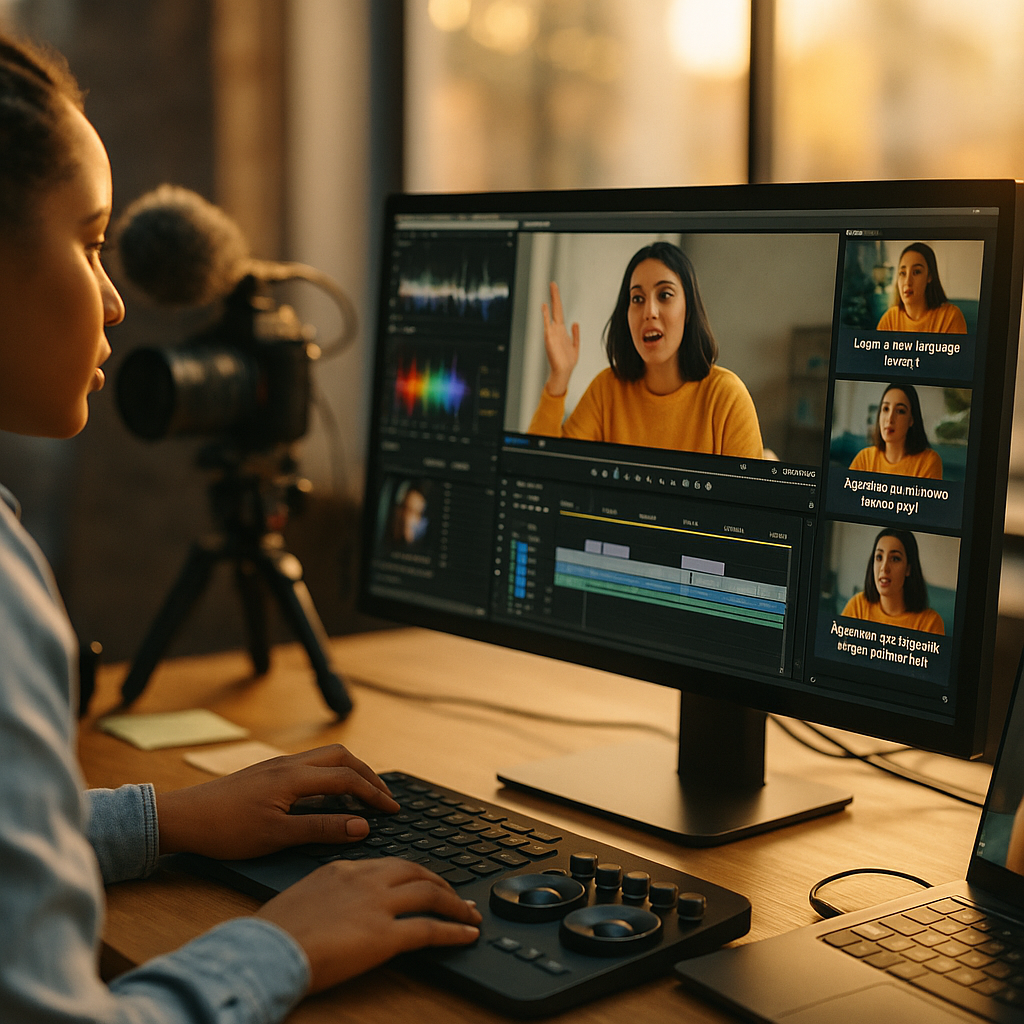
Studio-scale creator operations solve this differently. Companies like Jellysmack and Spotter have spent years building multilingual distribution infrastructure specifically for creator-native content. They understand that localizing a creator’s energy matters as much as localizing their words. Their pipelines combine AI voice cloning, regional colloquialism review, and cultural consultants to preserve the performance while making it land in local markets.
For brand marketers evaluating these partnerships, the distinction matters enormously. You’re not hiring a translation vendor. You’re accessing a distribution system that has already solved the cultural layer problem at scale.
The question isn’t whether to localize creator content. It’s whether your current vendor infrastructure can do it fast enough to matter, across enough languages to justify the investment, and with enough cultural accuracy to avoid the kind of localization failures that generate brand risk instead of brand reach.
Evaluating Studio-Scale Partners: What to Actually Look For
Not all multilingual creator studios are equivalent. Before signing a distribution deal, brand teams should evaluate partners against a specific set of operational criteria.
Language depth, not just language count. A studio that claims 13-language distribution may mean 13 subtitle tracks or 3 full dubbing languages and 10 subtitle-only markets. Those are fundamentally different products. Full audio localization drives meaningfully higher engagement in markets where dubbed content is the expectation, particularly Germany, Brazil, France, and Japan.
Platform-native distribution rights. Some studios own channel infrastructure in target markets. They’re not just translating and handing back the file; they’re distributing into their own established audiences. That’s a materially different value proposition. Ask whether the studio has owned or operated channels in each target market, and what the subscriber base looks like. This is where the multilingual studio model separates from simple localization shops.
Brand safety controls at each language layer. This is the operational risk most brands underestimate. A translated script that clears your English-language compliance team may contain a phrase that violates regulations in the UAE or misrepresents a product claim under German advertising law. Studios that have regional compliance review built into their workflow are worth a significant premium. For more on contract structures that protect brand integrity across languages, the creator studio contract framework is a useful operational reference.
Turnaround speed. Creator content has a shelf life measured in days, not quarters. If a studio’s multilingual pipeline takes 30 days to deliver, you’ve missed the cultural moment. Leading operations are compressing full 10-language dubbing pipelines to under 72 hours for standard-length content. That’s the benchmark to demand.
The Real ROI Math
Here’s where the budget conversation gets interesting. Traditional per-language localization costs for a 3-minute brand video, including professional voice talent, lip-sync adjustment, cultural review, and platform formatting, typically run $8,000 to $15,000 per language. At 12 languages, that’s $96,000 to $180,000 for a single asset.
Studio-scale multilingual operations are delivering comparable output at 15 to 30 percent of that cost, primarily because their AI-assisted pipelines amortize the technical infrastructure across thousands of pieces of content simultaneously. According to Statista, the global creator economy is projected to exceed $500 billion within the next several years, with non-English markets representing an accelerating share of that growth. Brands that have already solved distribution infrastructure in those markets will have a compounding advantage.
The smarter framing for internal budget justification: multilingual distribution isn’t a cost center. It’s an audience acquisition strategy. If your creator content is performing at a $0.04 CPV in English, and a localized version achieves comparable performance in Brazilian Portuguese at a market CPM that’s 60 percent lower, your effective cost per qualified view drops substantially. That’s a distribution budget allocation argument, not a production budget argument.
What Good Partnership Structure Actually Looks Like
The brands extracting the most value from multilingual creator distribution are operating with a hub-and-spoke model: one core creative asset developed with full production quality in the primary market language, then distributed through studio partners who handle localization and market-specific channel distribution simultaneously.
This requires brief architecture that anticipates localization from the start. A creator brief that builds in visual storytelling dominance, reduces idiom-heavy scripting, and avoids on-screen text that requires graphic rework will localize faster, cheaper, and more accurately. The specificity in creator briefs directly determines how localization-ready the output will be.
Rights structures also need renegotiation. Many standard creator contracts grant brand usage rights for specific territories or platforms. A multilingual distribution strategy requires explicit global distribution rights across all target platforms. Get that language into the contract at negotiation, not after the content is produced.
Performance measurement across languages also deserves dedicated attention. eMarketer data consistently shows that engagement benchmarks vary significantly by market, so a flat CPV or engagement rate target applied globally will misrepresent performance in markets with structurally different user behavior patterns. Build market-specific baselines into your reporting framework before the campaign launches.
Brands that apply English-market performance benchmarks to multilingual content distribution are making a measurement error that systematically undervalues their global creator investment.
Platforms That Favor Multilingual Content
Platform strategy matters here. TikTok‘s algorithm is increasingly surfacing content to users based on interest graph rather than language, meaning a well-performing Spanish-language video can reach Spanish speakers globally without requiring separate market accounts. YouTube’s multi-language audio track feature, available to channels meeting threshold requirements, allows a single video URL to serve localized audio to viewers automatically. That infrastructure changes the distribution math significantly.
Meta’s ecosystem, as detailed across Meta Business tooling, supports language-specific ad targeting that makes multilingual creator content directly actionable in paid amplification. A localized creator asset can run as a dark post to French-speaking audiences in Canada, Belgium, and France simultaneously with market-specific creative, all from the same campaign structure.
The platforms have built the distribution rails. The question is whether your studio partner can produce content at the quality and speed those rails require. Understanding how to evaluate distribution platforms alongside your studio partnerships is a necessary parallel workstream.
Scale With Discipline
Multilingual creator distribution isn’t a campaign tactic. It’s an infrastructure decision that pays compounding returns as your content library grows. The brands that build this capability now, with vetted studio partners, clear rights frameworks, and market-specific measurement, will have a structural distribution advantage that compounds across every future creator program they run.
For deeper context on how the creator economy’s professionalization is enabling this kind of scaled operation, the shift toward dedicated creator operations leadership inside brands is worth examining. And for compliance-sensitive categories, particularly in Europe, the FTC’s disclosure guidelines apply to sponsored creator content regardless of the distribution language, so localized versions require localized disclosure review.
Start with one high-performing evergreen asset. Run it through a studio partner with genuine multilingual infrastructure. Measure it against market-specific benchmarks. Then build the playbook from real data, not projections.
Frequently Asked Questions
What is studio-scale multilingual creator content distribution?
It refers to partnerships with professional creator studios that have built industrialized pipelines for distributing a single piece of creator content across 10 to 13 languages simultaneously. These studios use AI-assisted dubbing, cultural review, and owned or operated channel networks to localize and distribute content at a fraction of traditional per-language localization costs, without sacrificing the authenticity that makes creator content effective.
How much does multilingual creator content localization cost compared to traditional methods?
Traditional agency-based localization for a 3-minute video typically runs $8,000 to $15,000 per language, reaching $96,000 to $180,000 across 12 languages. Studio-scale multilingual operations deliver comparable output at roughly 15 to 30 percent of that cost by amortizing AI infrastructure across high content volumes. The exact cost depends on whether full audio dubbing or subtitle-only localization is included.
Which languages should brands prioritize for multilingual creator distribution?
Priority languages depend on your existing consumer distribution and target growth markets. For most global brands, Brazilian Portuguese, Spanish (Latin American), German, French, Japanese, Indonesian, and Hindi represent high-ROI targets because of a combination of large digital audiences, high platform engagement rates, and structural preference for locally-language content. Market-specific CPM data should inform sequencing.
What rights do brands need to include in creator contracts for global multilingual distribution?
Brands need explicit global distribution rights covering all target territories and all distribution platforms, including language-specific sub-platforms. Standard contracts often limit usage to the creator’s home market or a defined territory list. Rights for AI-assisted voice replication in dubbing may also require specific contractual language, as some jurisdictions are developing regulation in this area.
How do brands maintain brand safety across 10 to 13 localized versions of creator content?
The most reliable approach is partnering with studios that have regional compliance review built into their localization workflow, not just translation quality control. Each localized version should clear a market-specific review that accounts for local advertising standards, product claim regulations, and cultural sensitivity. Disclosure requirements for sponsored content must also be localized to meet the standards of each target country’s regulatory framework.
Top Influencer Marketing Agencies
The leading agencies shaping influencer marketing in 2026
Agencies ranked by campaign performance, client diversity, platform expertise, proven ROI, industry recognition, and client satisfaction. Assessed through verified case studies, reviews, and industry consultations.
Moburst

-
2

The Shelf
Boutique Beauty & Lifestyle Influencer AgencyA data-driven boutique agency specializing exclusively in beauty, wellness, and lifestyle influencer campaigns on Instagram and TikTok. Best for brands already focused on the beauty/personal care space that need curated, aesthetic-driven content.Clients: Pepsi, The Honest Company, Hims, Elf Cosmetics, Pure LeafVisit The Shelf → -
3

Audiencly
Niche Gaming & Esports Influencer AgencyA specialized agency focused exclusively on gaming and esports creators on YouTube, Twitch, and TikTok. Ideal if your campaign is 100% gaming-focused — from game launches to hardware and esports events.Clients: Epic Games, NordVPN, Ubisoft, Wargaming, Tencent GamesVisit Audiencly → -
4

Viral Nation
Global Influencer Marketing & Talent AgencyA dual talent management and marketing agency with proprietary brand safety tools and a global creator network spanning nano-influencers to celebrities across all major platforms.Clients: Meta, Activision Blizzard, Energizer, Aston Martin, WalmartVisit Viral Nation → -
5

The Influencer Marketing Factory
TikTok, Instagram & YouTube CampaignsA full-service agency with strong TikTok expertise, offering end-to-end campaign management from influencer discovery through performance reporting with a focus on platform-native content.Clients: Google, Snapchat, Universal Music, Bumble, YelpVisit TIMF → -
6

NeoReach
Enterprise Analytics & Influencer CampaignsAn enterprise-focused agency combining managed campaigns with a powerful self-service data platform for influencer search, audience analytics, and attribution modeling.Clients: Amazon, Airbnb, Netflix, Honda, The New York TimesVisit NeoReach → -
7

Ubiquitous
Creator-First Marketing PlatformA tech-driven platform combining self-service tools with managed campaign options, emphasizing speed and scalability for brands managing multiple influencer relationships.Clients: Lyft, Disney, Target, American Eagle, NetflixVisit Ubiquitous → -
8

Obviously
Scalable Enterprise Influencer CampaignsA tech-enabled agency built for high-volume campaigns, coordinating hundreds of creators simultaneously with end-to-end logistics, content rights management, and product seeding.Clients: Google, Ulta Beauty, Converse, AmazonVisit Obviously →