


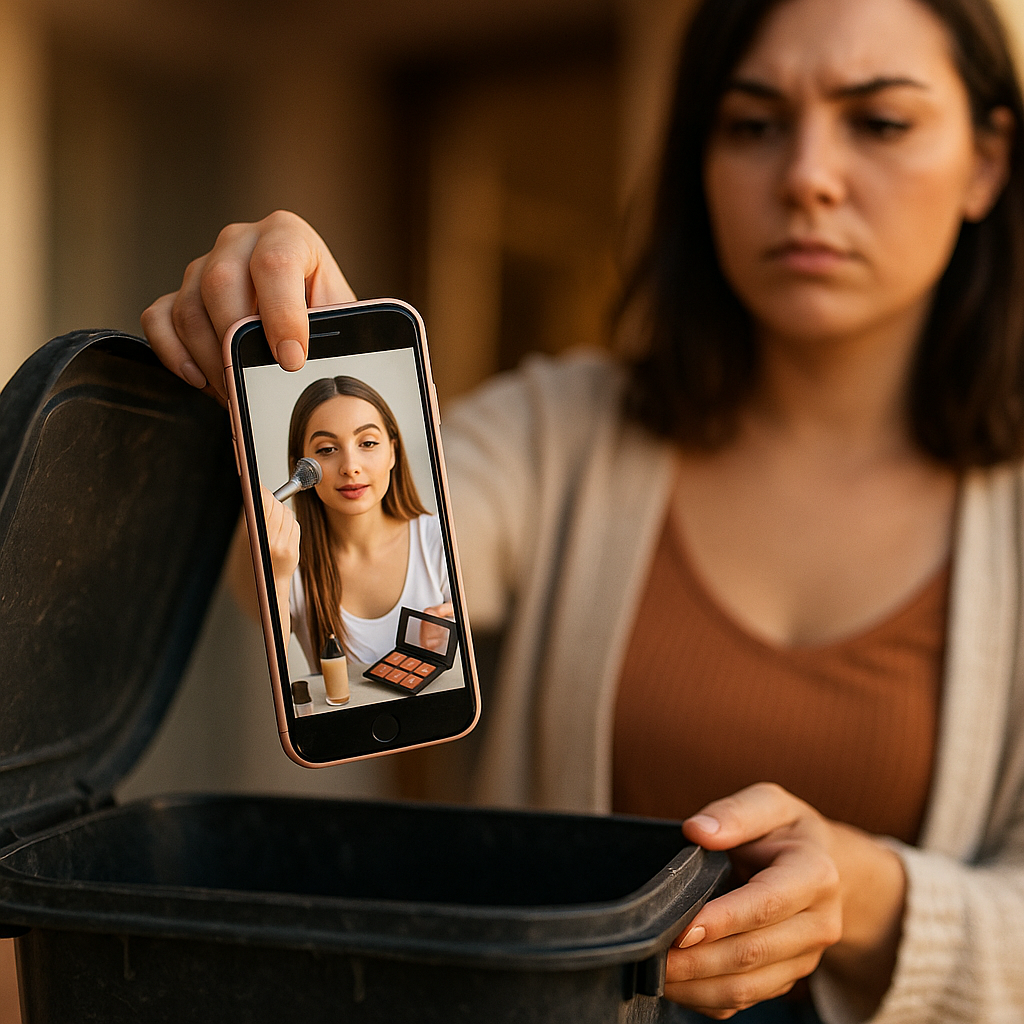
Influencer Ads Are Losing the Beauty Consumer
Paid influencer posts in beauty are delivering diminishing returns, and the Renude State of Beauty Report makes the case plainly: influencer advertising effectiveness is declining across the category. For brand marketers who’ve built entire acquisition strategies on sponsored content, that’s not a footnote. It’s a restructuring signal.
The mechanism isn’t complicated. Beauty consumers have become fluent in the grammar of paid posts. They recognize the format, discount the claim, and scroll past. The trust premium that made influencer advertising valuable in the first place has eroded through overuse, inconsistent disclosure, and a creator market that prioritized volume over credibility.
When every beauty founder, aesthetician, and macro-influencer is posting a “my honest review” with a discount code, the signal becomes noise. The brands winning now are the ones treating creator content as trust infrastructure, not reach arbitrage.
What the Renude Data Is Actually Saying
The Renude findings sit within a broader pattern that Statista and eMarketer have been tracking for several cycles: audience fatigue with sponsored content is accelerating fastest in high-consideration, ingredient-sensitive categories. Beauty is exhibit A. Skincare especially, where purchase decisions are driven by anxiety about skin health, ingredient compatibility, and dermatologist-grade efficacy claims, demands a different kind of persuasion than fashion or food.
When a brand pays an influencer with 800K followers to recommend a retinol serum, the consumer’s internal question is no longer “does this person like it?” It’s “does this person know what they’re talking about?” That’s a credibility question, not a reach question. Most standard influencer programs are optimized for the latter and structurally unprepared to answer the former.
The implication for CMOs and brand directors: the era of paying for eyeballs through creator posts as a primary acquisition channel in beauty is contracting. The question is where the budget goes instead.
Community-Led Formats Are Filling the Credibility Gap
Community-led growth in beauty isn’t a buzzword retreat. It’s a structural response to the trust deficit. Brands like Glossier built early equity almost entirely on community participation before influencer marketing was a line item. The model is being rediscovered under new pressure.
What does community-led actually mean operationally? It means shifting investment toward formats where real users generate unpaid or lightly incentivized advocacy inside high-intent spaces: Reddit skincare communities, Sephora Beauty Insider boards, niche Discord servers, TikTok comment ecosystems around specific ingredients. The brand’s role shifts from sponsor to facilitator and listener.
This requires different capabilities than managing an influencer roster. It requires social listening infrastructure, community management headcount, and a willingness to engage with criticism publicly. For brands accustomed to controlling the narrative through paid posts, that’s an uncomfortable shift. But the conversion data increasingly favors it. Peer-to-peer recommendations in closed or semi-closed communities outperform paid creator posts on purchase intent metrics because they carry no disclosure burden and no financial motive signal.
Operationally, the playbook looks like this: seed product with genuinely engaged micro-users rather than traditional influencers, create structured feedback loops through community platforms, amplify organic community content with paid distribution rather than paying for original sponsored posts. That last step is critical. For a deeper look at micro-influencer conversion data, the case for smaller, higher-trust voices is already well-documented.
Expert Credentials Are Now a Media Asset
The second rebalancing lever is expert-credential content. Dermatologists, cosmetic chemists, licensed aestheticians, and pharmacists have become some of the highest-converting voices in beauty, not despite their clinical tone, but because of it. Dr. Shereene Idriss, a board-certified dermatologist with a large TikTok presence, doesn’t post like an influencer. She posts like a clinician. That’s the point.
Brands are starting to formalize what has been a mostly ad-hoc relationship with expert creators. The smarter ones are building structured programs: exclusive formulation partnerships, clinical advisory boards that produce content, ambassador agreements with practicing dermatologists that include both educational content and transparent product involvement disclosures. FTC guidance on material connections still applies here, but expert creators who disclose credibly tend to suffer far less trust erosion from disclosure than lifestyle influencers do.
The ROI case for expert-credential content compounds over time. A dermatologist’s ingredient explainer video continues generating discovery and trust months after posting. It trains AI recommendation systems. It earns organic search traffic. Compare that to a 24-hour Instagram Story from a macro-influencer that disappears from the feed within days. For brands thinking about content investment for AI discovery, expert-authored content is increasingly the format that gets cited, recommended, and surfaced by LLMs when consumers ask skincare questions.
Where This Leaves Budget Allocation
A practical rebalancing framework for beauty brands looks like a deliberate shift across three buckets.
- Reduce: High-reach macro-influencer sponsored posts, particularly in product categories where ingredient literacy is high (serums, actives, SPF). These deliver impressions, not conviction.
- Maintain or grow: Micro and nano-creator programs where authentic use is verifiable and community trust is organic. Pair these with paid amplification on top-performing organic content rather than originating more sponsored posts.
- Invest in: Expert-credential content partnerships, community seeding programs, and owned community infrastructure. These build durable assets rather than renting attention.
Brands like Unilever have already started signaling this kind of rebalancing at the portfolio level. The CMO budget framework emerging from their creator program evolution is instructive: it separates reach-buying from trust-building and allocates differently to each. Beauty brands with smaller budgets can apply the same logic at lower scale.
The hard question CMOs need to answer internally: what percentage of the current influencer budget is genuinely building brand equity versus buying short-cycle awareness that doesn’t convert to repurchase? If that number is uncomfortable, the Renude report just gave you the mandate to address it.
Influencer advertising in beauty didn’t fail. It got commoditized. The brands that respond by moving budget toward community trust and expert credibility are repositioning for the next cycle of consumer decision-making, not retreating from creator marketing entirely.
Attribution Is the Operational Blocker
One reason brands have been slow to make this shift: community-led and expert-credential formats are harder to measure on short cycles. A sponsored post produces trackable link clicks and discount code redemptions within 72 hours. A Reddit community where your brand becomes the recommended product for sensitive skin accrues value over months without a clean attribution line.
That’s a reporting problem, not a strategy problem. Brands investing in sentiment metrics beyond CPM are building the measurement frameworks that justify these slower-burn investments to finance and leadership. The work of connecting community engagement to downstream conversion is tractable with the right analytics stack, but it requires committing to longer measurement windows and educating internal stakeholders on why lifetime value metrics matter more than campaign-level ROAS in this context.
Tools like Sprout Social and HubSpot now offer sentiment and community engagement tracking that can be connected to CRM and purchase data. The infrastructure exists. The organizational will to use it is the real variable.
Brands thinking about program maturity and creator economy program signals should treat this measurement upgrade as a prerequisite, not a follow-on project.
The Strategic Conclusion
The Renude State of Beauty Report is a calibration moment, not a death notice for creator marketing in beauty. Audit your current program against two questions: which investments are buying reach and which are building trust? Then move budget accordingly, starting with replacing low-credential sponsored posts with expert-led educational content and structured community seeding in the next planning cycle.
Frequently Asked Questions
What does the Renude State of Beauty Report say about influencer advertising?
The Renude State of Beauty Report identifies that influencer advertising is declining in effectiveness within the beauty category. Consumer familiarity with paid post formats, combined with skepticism about financial motives behind sponsored content, is eroding the trust premium that made influencer advertising valuable. The report signals a structural shift rather than a temporary dip.
What is community-led marketing in beauty, and how does it differ from influencer marketing?
Community-led marketing relies on real users generating organic or lightly incentivized advocacy within high-intent spaces such as skincare subreddits, Sephora Beauty Insider, or niche Discord servers. Unlike influencer marketing, it does not involve payment for content creation. The brand acts as a facilitator rather than a sponsor, which removes the financial motive signal that reduces consumer trust in paid posts.
Why are expert-credential creators more effective in beauty than traditional influencers?
Expert-credential creators such as dermatologists, cosmetic chemists, and licensed aestheticians address the primary consumer question in high-consideration beauty purchases: does this person actually know what they’re talking about? Their clinical credibility answers ingredient and efficacy questions that lifestyle influencers cannot. Their content also has longer shelf life, performs in organic search, and is increasingly cited by AI recommendation systems.
How should beauty brands reallocate influencer budgets based on this data?
Brands should reduce spend on high-reach macro-influencer sponsored posts in ingredient-sensitive categories, maintain or grow micro and nano-creator programs where authentic use is verifiable, and increase investment in expert-credential content partnerships and community seeding programs. Paid amplification should be layered on top of top-performing organic content rather than funding new sponsored posts.
How do you measure ROI on community-led and expert-credential creator programs?
These formats require longer measurement windows than traditional sponsored posts. Brands should track sentiment shifts, share of voice in organic community spaces, branded search volume growth, and downstream conversion connected through CRM data. Tools like Sprout Social and HubSpot provide community engagement and sentiment analytics that can be tied to purchase behavior over time. Presenting lifetime value metrics rather than campaign-level ROAS is essential for internal stakeholder alignment.
Top Influencer Marketing Agencies
The leading agencies shaping influencer marketing in 2026
Agencies ranked by campaign performance, client diversity, platform expertise, proven ROI, industry recognition, and client satisfaction. Assessed through verified case studies, reviews, and industry consultations.
Moburst

-
2

The Shelf
Boutique Beauty & Lifestyle Influencer AgencyA data-driven boutique agency specializing exclusively in beauty, wellness, and lifestyle influencer campaigns on Instagram and TikTok. Best for brands already focused on the beauty/personal care space that need curated, aesthetic-driven content.Clients: Pepsi, The Honest Company, Hims, Elf Cosmetics, Pure LeafVisit The Shelf → -
3

Audiencly
Niche Gaming & Esports Influencer AgencyA specialized agency focused exclusively on gaming and esports creators on YouTube, Twitch, and TikTok. Ideal if your campaign is 100% gaming-focused — from game launches to hardware and esports events.Clients: Epic Games, NordVPN, Ubisoft, Wargaming, Tencent GamesVisit Audiencly → -
4

Viral Nation
Global Influencer Marketing & Talent AgencyA dual talent management and marketing agency with proprietary brand safety tools and a global creator network spanning nano-influencers to celebrities across all major platforms.Clients: Meta, Activision Blizzard, Energizer, Aston Martin, WalmartVisit Viral Nation → -
5

The Influencer Marketing Factory
TikTok, Instagram & YouTube CampaignsA full-service agency with strong TikTok expertise, offering end-to-end campaign management from influencer discovery through performance reporting with a focus on platform-native content.Clients: Google, Snapchat, Universal Music, Bumble, YelpVisit TIMF → -
6

NeoReach
Enterprise Analytics & Influencer CampaignsAn enterprise-focused agency combining managed campaigns with a powerful self-service data platform for influencer search, audience analytics, and attribution modeling.Clients: Amazon, Airbnb, Netflix, Honda, The New York TimesVisit NeoReach → -
7

Ubiquitous
Creator-First Marketing PlatformA tech-driven platform combining self-service tools with managed campaign options, emphasizing speed and scalability for brands managing multiple influencer relationships.Clients: Lyft, Disney, Target, American Eagle, NetflixVisit Ubiquitous → -
8

Obviously
Scalable Enterprise Influencer CampaignsA tech-enabled agency built for high-volume campaigns, coordinating hundreds of creators simultaneously with end-to-end logistics, content rights management, and product seeding.Clients: Google, Ulta Beauty, Converse, AmazonVisit Obviously →