


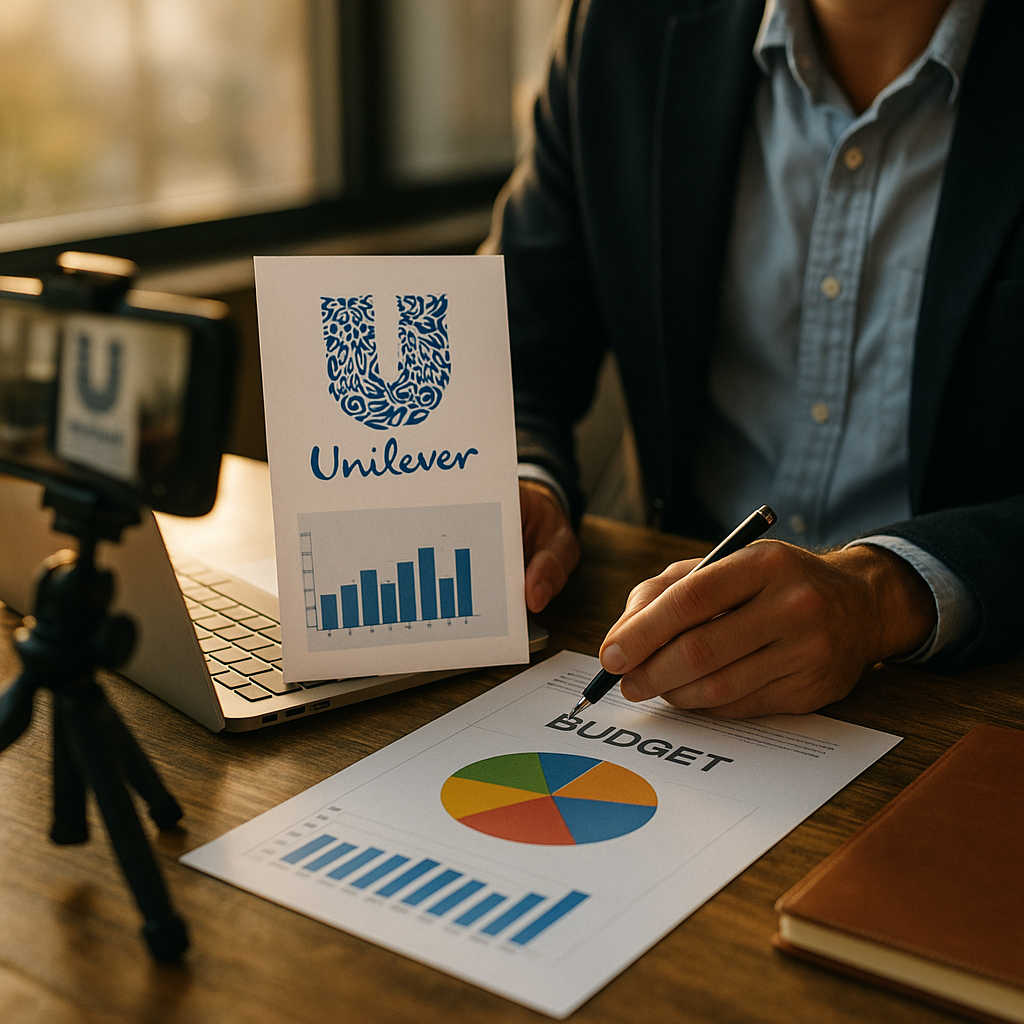
Unilever’s global marketing leadership has stated, plainly, that the era of the single transformative campaign idea is over. If one of the world’s largest advertisers, with over $8 billion in annual marketing spend, is structurally deprioritizing traditional creative agency retainers in favor of always-on creator content, every CMO at a mid-to-large brand needs a framework for what to do next.
What Unilever Actually Said — and What It Means Operationally
The “We Don’t Need the Big Idea” position isn’t anti-creativity. It’s anti-infrequency. Unilever’s shift reflects a fundamental belief that a continuous stream of contextually relevant content outperforms a quarterly hero asset, both in attention capture and in commercial return. Their investment in creator-led content, paired with algorithmic distribution across TikTok, YouTube Shorts, and Instagram Reels, is a structural bet on volume, velocity, and native trust.
For brand CMOs, the operational translation is uncomfortable but clear: if your agency is billing $2-4M annually to produce four campaign flights, and your creator program is a $300K line item managed by a coordinator, the ratio is inverted relative to where audience attention actually lives.
Unilever’s model treats creator content not as a campaign supplement but as a primary media asset class, one that compounds in reach and trust the longer it runs consistently.
This isn’t a trend. It’s a structural rebalancing that’s been accelerating since creator economy professionalization moved from experimental to operational inside Fortune 500 marketing departments.
The Budget Allocation Math Most CMOs Are Getting Wrong
Here’s where the calculus breaks down for most brands. Traditional agency retainers carry significant overhead: strategy layers, account management, production markups, and revision cycles that can consume 40-60% of a nominal budget before a single frame is shot. Compare that to a structured creator network where the content producer and the distribution channel are the same person, with built-in audience trust already priced in.
According to eMarketer, creator content consistently outperforms brand-produced video in engagement rate across TikTok and Instagram, often by a factor of 2-4x. That’s not a creative quality argument — it’s a native format argument. Creators know what works on their platform. Traditional agencies, by design, do not optimize for a single creator’s algorithmic relationship with their audience.
The question isn’t whether to cut agency spend. It’s whether your current agency spend is generating proportional reach and conversion relative to what an equivalent investment in a structured creator network would produce. For most brands running the honest comparison, the answer is clarifying.
If you’re evaluating creator budget accountability, start with cost-per-engaged-view, not CPM. The denominators are different categories of attention.
Always-On vs. Campaign Model: The Risk Profile CMOs Need to Understand
The campaign model concentrates risk. One bad creative direction, one tone-deaf execution, one misaligned spokesperson — and a quarter’s budget is compromised. Always-on creator networks distribute that risk across dozens of creators, dozens of content formats, and continuous feedback loops. A post that underperforms is a data point, not a brand crisis.
This is not a minor operational distinction. It’s a fundamentally different relationship with brand safety and content quality. Scaling a creator network introduces its own risks — compliance, IP ownership, brand voice consistency — but these are manageable with the right contracts, quality controls, and attribution infrastructure in place. The risks of the campaign model (irrelevance, latency, misalignment with platform behavior) are structurally harder to solve.
Brands should also account for the latency problem. A traditional campaign takes 12-16 weeks from brief to live. A creator-led piece of content can respond to a cultural moment in 48-72 hours. In a media environment where relevance decays in days, that speed differential compounds into a significant competitive disadvantage for brands still locked in campaign cycles.
A Strategic Framework for CMOs Evaluating the Shift
Before reallocating budget, run this four-part diagnostic:
- Audit current agency output against distribution reality. How many of your agency-produced assets are actually reaching target audiences organically versus requiring paid amplification to generate views? If the organic reach is near zero without media spend behind it, you’re paying for production, not for audience connection.
- Map your content cadence against platform algorithm requirements. TikTok’s algorithm rewards consistent posting frequency. YouTube Shorts rewards volume and watch-through rate. If your current model produces four to six hero assets per quarter, you are algorithmically invisible between flights. An always-on creator network solves this structurally, not with media budget.
- Identify your creator program maturity level. A brand with no existing creator relationships cannot immediately replace agency retainers. The transition requires building sourcing infrastructure, brief architecture, and measurement frameworks first. This takes six to twelve months of parallel operation before full reallocation makes sense. Review program maturity signals before committing to the shift.
- Define what “big idea” work still has a legitimate role. Unilever isn’t eliminating brand strategy or creative direction. They’re eliminating the production model that makes creative direction expensive and slow. Brand platform work, positioning strategy, and annual campaign architecture may still belong in an agency relationship. The question is whether execution should remain there.
The practical reallocation model that works: retain agency partnerships for strategic and brand platform work (typically 20-30% of former retainer value), and redirect production and execution budget into a tiered creator network covering nano, micro, and mid-tier creators across relevant categories. For a $2M agency relationship, a realistic reallocation might put $600K toward strategic agency partnership and $1.4M toward a managed creator network producing 40-60 pieces of content per month.
The math only works if you have measurement infrastructure to prove creator ROI. Without metrics beyond CPM, you’re replacing one unjustifiable line item with another.
What Agencies Should Be Offering — and Mostly Aren’t
The agencies best positioned in this environment are not fighting the creator shift. They’re building creator management capabilities, brief architecture frameworks, and performance analytics layers that allow them to sit above a creator network rather than compete with it. Some holding companies have moved aggressively here. Most independent creative shops haven’t, and that’s a procurement risk for brands relying on them to adapt.
If your current agency cannot articulate a creator network operating model, including sourcing, briefing, quality control, and attribution, they are not equipped to help you execute the Unilever-style shift. That’s a conversation worth having before the next contract renewal. For brands evaluating why creator budget rebalancing matters from a distribution standpoint, the agency evaluation criteria needs to update accordingly.
Meanwhile, TikTok for Business and Meta for Business have both built creator marketplace tools that reduce the operational lift of managing large creator networks directly. These platforms have a vested interest in making creator investment easier, which means brands that engage directly gain both cost efficiency and data access that agency-intermediated models often obscure.
Platform-Specific Considerations Before You Reallocate
Not all platforms reward always-on creator content equally from a brand ROI standpoint. YouTube delivers compounding long-term discovery value; a creator video from 18 months ago may still drive product consideration today. TikTok delivers immediacy but lower content longevity. Instagram sits in between, with Reels offering moderate shelf life and Stories driving real-time engagement with existing audiences.
Platform selection should drive creator tier strategy. YouTube mid-tier creators with strong search-optimized content deserve different investment logic than TikTok nano-creators driving moment-based awareness. Sprout Social and similar analytics platforms can help brands model cross-platform content performance before committing to a network build. And Statista’s creator economy data provides benchmark spend data by platform category for brands building internal business cases for reallocation.
The Unilever model works partly because of their scale: they can simultaneously run creator networks across dozens of categories and markets. Smaller brands need to sequence, picking one or two platforms and one creator tier to prove the model before scaling. Start where your audience’s attention is densest, not where your agency has existing relationships.
Your next step: run a 90-day parallel pilot, fund a structured creator network at 15-20% of your current agency production budget, apply the same attribution framework to both, and let the data determine the reallocation percentage. The argument for the shift stops being philosophical and becomes financial very quickly.
Frequently Asked Questions
Does Unilever’s shift mean brands should eliminate traditional agency relationships entirely?
No. Unilever’s model retains agency relationships for brand strategy, platform development, and creative direction. What’s being reduced is agency-led content production and campaign execution, which are being replaced by always-on creator networks. The practical model for most brands involves retaining 20-30% of former agency retainer value for strategic work while redirecting production and execution budget toward creator programs.
How do you measure ROI on an always-on creator network compared to a traditional campaign?
The measurement framework needs to shift from campaign-level metrics (reach, GRP, brand lift per flight) to content-level metrics applied continuously: cost-per-engaged-view, conversion-attribution-by-creator, earned media value per post, and audience growth rate tied to creator content periods. Attribution tools like Northbeam, Triple Whale, or platform-native analytics can track creator-sourced conversion at a granularity that traditional campaign measurement rarely achieves.
What creator program infrastructure does a brand need before reallocating agency budget?
At minimum, brands need a sourcing and vetting process, a brief architecture that maintains brand voice without over-directing creators, contract templates covering IP, exclusivity, and compliance, and an attribution framework that connects creator content to business outcomes. Without these in place, reallocation creates operational chaos rather than efficiency gains. Most brands need six to twelve months of parallel operation to build this infrastructure before full reallocation.
Which creator tiers work best for an always-on network strategy?
The optimal always-on network typically uses a tiered structure: nano creators (1K-10K followers) for community-level authenticity and niche targeting, micro creators (10K-100K) for category authority and conversion efficiency, and occasional mid-tier creators (100K-500K) for reach events and brand credibility. The weighting depends on category and objective, but most always-on programs over-index on micro creators for cost-efficiency and audience trust.
How do brands manage brand safety at scale across a large creator network?
Brand safety at scale requires three layers: pre-vetting creators through social listening and audience analysis tools, structuring contracts with clear content guidelines and approval rights for key executions, and ongoing monitoring using brand safety platforms like Integral Ad Science or DoubleVerify for paid amplification. The risk is distributed rather than eliminated, but a diversified creator network means a single brand safety incident affects a fraction of the program, not the entire campaign investment.
Top Influencer Marketing Agencies
The leading agencies shaping influencer marketing in 2026
Agencies ranked by campaign performance, client diversity, platform expertise, proven ROI, industry recognition, and client satisfaction. Assessed through verified case studies, reviews, and industry consultations.
Moburst

-
2

The Shelf
Boutique Beauty & Lifestyle Influencer AgencyA data-driven boutique agency specializing exclusively in beauty, wellness, and lifestyle influencer campaigns on Instagram and TikTok. Best for brands already focused on the beauty/personal care space that need curated, aesthetic-driven content.Clients: Pepsi, The Honest Company, Hims, Elf Cosmetics, Pure LeafVisit The Shelf → -
3

Audiencly
Niche Gaming & Esports Influencer AgencyA specialized agency focused exclusively on gaming and esports creators on YouTube, Twitch, and TikTok. Ideal if your campaign is 100% gaming-focused — from game launches to hardware and esports events.Clients: Epic Games, NordVPN, Ubisoft, Wargaming, Tencent GamesVisit Audiencly → -
4

Viral Nation
Global Influencer Marketing & Talent AgencyA dual talent management and marketing agency with proprietary brand safety tools and a global creator network spanning nano-influencers to celebrities across all major platforms.Clients: Meta, Activision Blizzard, Energizer, Aston Martin, WalmartVisit Viral Nation → -
5

The Influencer Marketing Factory
TikTok, Instagram & YouTube CampaignsA full-service agency with strong TikTok expertise, offering end-to-end campaign management from influencer discovery through performance reporting with a focus on platform-native content.Clients: Google, Snapchat, Universal Music, Bumble, YelpVisit TIMF → -
6

NeoReach
Enterprise Analytics & Influencer CampaignsAn enterprise-focused agency combining managed campaigns with a powerful self-service data platform for influencer search, audience analytics, and attribution modeling.Clients: Amazon, Airbnb, Netflix, Honda, The New York TimesVisit NeoReach → -
7

Ubiquitous
Creator-First Marketing PlatformA tech-driven platform combining self-service tools with managed campaign options, emphasizing speed and scalability for brands managing multiple influencer relationships.Clients: Lyft, Disney, Target, American Eagle, NetflixVisit Ubiquitous → -
8

Obviously
Scalable Enterprise Influencer CampaignsA tech-enabled agency built for high-volume campaigns, coordinating hundreds of creators simultaneously with end-to-end logistics, content rights management, and product seeding.Clients: Google, Ulta Beauty, Converse, AmazonVisit Obviously →