


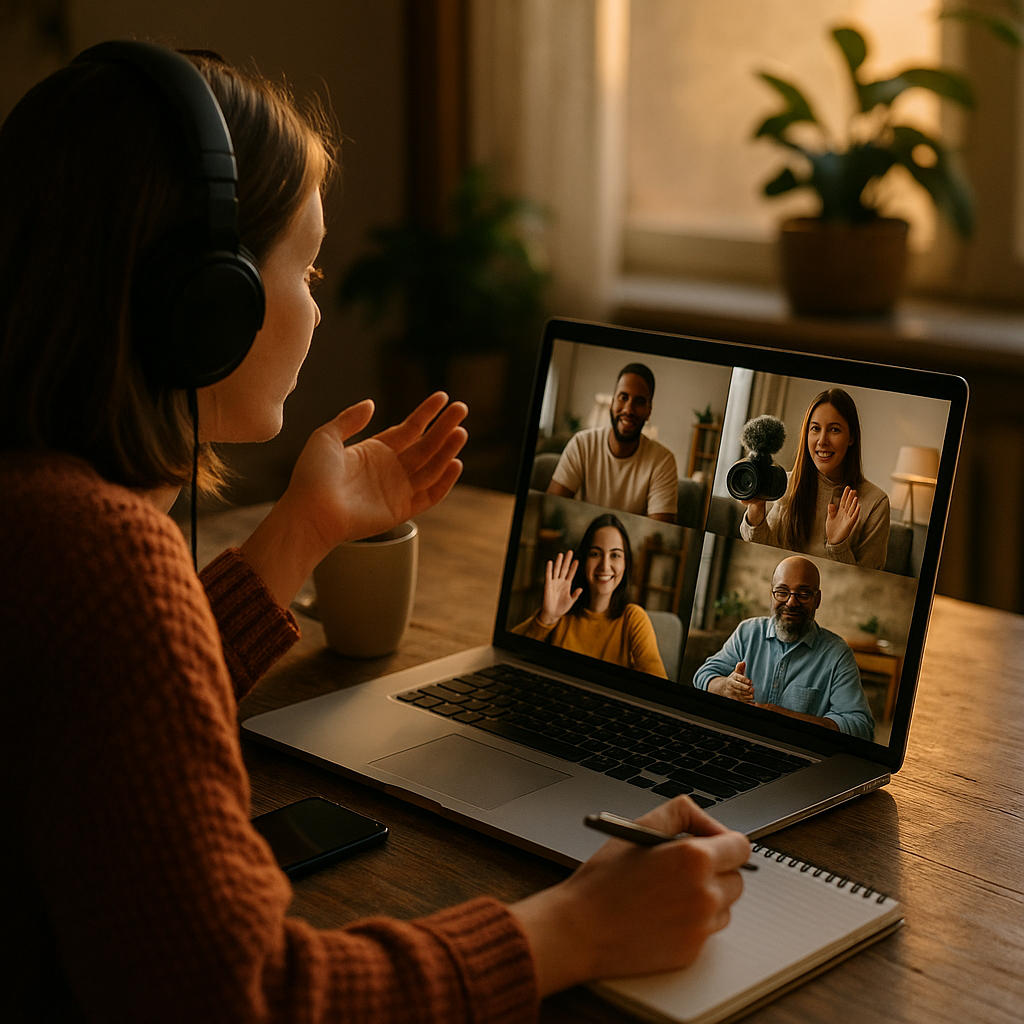
Forty-two percent of consumers now actively avoid algorithmic feeds, migrating to Discord servers, Substack comment threads, and WhatsApp communities where brands have no native ad unit and no easy reach. The slow social movement is not a fringe behavior. It is a structural shift, and most creator programs are not designed for it.
What “Slow Social” Actually Means for Brand Strategy
Strip away the wellness branding around it. Slow social is not about posting less. It is about audiences choosing environments where the algorithm does not curate for them, where follower counts are hidden or irrelevant, and where depth of engagement replaces breadth of reach. Think Geneva communities, Patreon tiers, Substack with comment access gated behind paid subscriptions, or Discord servers built around a creator’s niche.
These spaces share a common characteristic: friction is the feature. Audiences opted in through multiple steps, they pay or participate actively, and they hold the space to a different standard. When a brand message arrives here feeling like a traditional sponsored post, it does not just underperform. It damages the creator’s relationship with their community, sometimes irreparably.
In private-channel environments, a single misaligned brand activation can cost a creator 15-20% of their most engaged community members within 72 hours. That is a risk most creator contracts do not price or account for.
For brand strategists, this creates a real operational question: how do you build creator programs that belong in these environments rather than intrude on them?
Why Your Current Brief Architecture Fails Here
Most influencer briefs are designed for broadcast. They specify message pillars, required claims, visual guidelines, CTA language, and disclosure language formatted for Instagram captions or TikTok overlays. They are optimized for content that lives in an algorithmic feed where attention is scarce and the brand competes with ten thousand other posts.
Private-channel audiences have already escaped that competition. They are not scrolling. They are reading, discussing, and expecting the creator to be a whole human being rather than a content vehicle. When a creator in a paid Substack community receives a brief that scripts their enthusiasm, it shows. Their community notices the register shift, the forced vocabulary, the slightly unnatural product placement in what was previously a raw, personal dispatch.
Understanding how to design brief architecture for specificity becomes more important here than anywhere else in your program. Specificity means giving creators the brand’s actual business problem to solve, not a list of talking points to recite. The difference is significant. One invites genuine creative partnership; the other produces detectable performance.
Consider how this applies practically. A skincare brand briefing a creator who runs a paid Discord server for people with chronic skin conditions should not send a brief about “glowing, confident skin.” It should share clinical data, founder intent, formulation trade-offs, and then ask the creator what resonates given what they know about their community. That is a brief designed for the channel, not retrofitted to it.
The Trust Deficit Is Already Priced In
Audiences in high-friction private channels carry a higher baseline skepticism about brand involvement, but they are not categorically opposed to it. The distinction matters. They will accept commercial relationships when the creator discloses them as part of an ongoing, honest narrative about how they sustain their work. What they reject is the pretense of organic enthusiasm around something that is clearly transactional.
Research from Sprout Social consistently shows that transparency in creator partnerships drives higher long-term purchase intent than undisclosed or ambiguously disclosed content. In slow social environments, that effect amplifies because the community already operates on a norm of directness. The creator’s credibility is the asset being lent to the brand, not their reach.
This is why compliance is not just a legal function in these channels. Working with IAB-UK certified creators who understand disclosure as a community relationship tool, not just a regulatory checkbox, will structurally outperform programs that treat compliance as an afterthought. The FTC’s guidelines (available at ftc.gov) have always required clear disclosure; slow social audiences enforce it socially before regulators ever see a complaint.
Designing for Depth, Not Distribution
Here is the strategic reframe most brand teams resist: in slow social environments, distribution is not the metric. A creator with 800 paying Substack subscribers who discuss brand recommendations in comment threads is worth more to a considered-purchase brand than a creator with 800,000 algorithmic followers who generate passive impressions. The audience has demonstrated commitment with money or active time, two of the highest-signal proxies for actual purchase behavior.
This challenges how most brands calculate creator program ROI. If your measurement framework is built around CPM, reach, and EMV, it will systematically undervalue slow social creators and starve the part of your program most likely to generate genuine community advocacy. The case for micro-influencer rate premiums gets stronger when the audience is concentrated, invested, and in a deliberate consumption mindset.
Designing for depth means structuring the creator partnership around sustained narrative, not individual post events. A single sponsored post in a Substack newsletter is almost always the wrong unit. A creator who writes about your product as part of a four-week journey, with unscripted updates including neutral or mixed observations, generates the kind of social proof that private-channel audiences actually act on. That requires a longer contract structure, a more permissive brief, and a brand team willing to tolerate some uncertainty in the creative output.
Platform-Specific Program Design
Each slow social environment has its own community norms. Treating them interchangeably is a mistake.
- Substack: Long-form, personal, essayistic. Brand integration works best when woven into the creator’s ongoing story rather than formatted as a discrete ad unit. Paid subscriber communities expect the creator to have a point of view about the brand, not just facts about it.
- Discord: Community-governed, synchronous, and highly sensitive to outsider energy. Brands that sponsor Discord servers work best as infrastructure providers (tools, events, access) rather than message broadcasters. The creator mediates everything; they cannot be bypassed.
- Geneva / Circle: More structured than Discord but similarly community-first. Works well for brands with a community angle, fitness, professional development, parenting, creative fields, where the brand’s values map to what the community is actually doing together.
- Patreon tiers: Audience has paid for access. Any brand integration requires the creator to genuinely vouch for the product as relevant to why their audience pays. Product trial and honest reporting over time work significantly better than scripted enthusiasm at launch.
Your program design should specify channel-level norms in the partnership agreement, not just content-level guidelines. The creator needs to know what kinds of brand behavior are welcome in their specific space and what would compromise their community’s trust in them.
The brands winning in slow social environments are not running creator programs. They are running community investment programs that happen to include creators as the primary relationship holders.
Budget and Measurement Implications
Allocating budget to slow social creator work requires a different planning conversation with finance and your CMO. Reach numbers will not impress. You need a framework that connects community engagement quality to downstream conversion and brand perception data.
Structuring this within a broader quarterly budget framework means creating a separate measurement track for private-channel activations. Useful proxies include: creator community referral traffic (UTM-tagged, obviously), direct response rates from community-exclusive offers, survey-based attribution asking customers how they first heard about the brand with enough granularity to capture “community or group” as a source, and creator-specific promo code redemption tracked over a 60-90 day window rather than 7-30 days.
Slow social conversions take longer. The audience deliberates. They discuss the recommendation in the community thread. They come back. If your attribution window does not account for that latency, you will misread the program as underperforming and reallocate budget away from what is actually working.
For context on how the broader creator economy is repricing these relationships, top-tier creators are already signaling that community access carries a premium above standard reach-based rates. Budget accordingly or lose access to the environments where your audience is actively paying attention.
On the compliance and regulatory dimension, especially if you are operating across markets, the ICO’s guidance on data handling in community environments matters when creators are collecting first-party audience data in these channels. Get your legal team involved early in program design, not as a post-hoc review.
For additional context on the creator economy’s structural direction, both eMarketer and Statista publish useful benchmarks on private community platform growth and creator monetization trends that can support internal budget justification.
The Operational Shift Required
Running slow social creator programs well requires your team to give up real-time creative control. That is uncomfortable, especially for brand managers used to approval workflows and content calendars. The structural solution is investing more time in creator selection and less time in content approval. If you have selected the right creator, one whose values, audience relationship, and content sensibility align with your brand without requiring you to script them, the content will reflect that without micromanagement.
Burning-out creators with over-engineered briefs is a documented problem. Resources on designing briefs for fatigued creators are increasingly relevant as slow social creators carry their community relationships as their primary asset. Protect that asset. It is also yours while the partnership lasts.
Start with one private-channel creator in your next program cycle, map their community’s norms before writing a single brief element, and measure conversion over 90 days. That single test will teach you more about slow social ROI than any benchmark report currently on the market.
FAQs
What is the slow social movement and why does it matter to brands?
The slow social movement refers to audiences deliberately migrating from algorithmic public feeds to private, high-friction environments like paid newsletters, Discord servers, and gated communities. It matters to brands because these audiences are more engaged, more skeptical of traditional advertising, and more likely to act on recommendations from creators they have actively chosen to follow with their time or money.
How should brands measure ROI from slow social creator programs?
Standard reach and CPM metrics significantly undervalue slow social programs. Brands should use UTM-tracked referral traffic, creator-specific promo codes with 60-90 day attribution windows, survey-based attribution that captures community as a discovery source, and direct response rates from community-exclusive offers. Conversion latency in these environments is longer because audiences deliberate more before purchasing.
What makes a creator brief appropriate for private-channel environments?
A brief designed for slow social should share the brand’s actual business problem, relevant data, and product context rather than scripting talking points. It should give the creator latitude to integrate the brand into their ongoing narrative authentically, including space for neutral or mixed observations. The goal is genuine creative partnership, not supervised content production.
Which platforms are considered “slow social” for brand programs?
Primary platforms include Substack (especially paid subscriber tiers), Discord servers, Geneva, Circle, and Patreon communities. Each has distinct norms. Substack rewards long-form personal narrative; Discord requires brands to operate as infrastructure or access providers rather than broadcasters; Patreon demands genuine creator endorsement given that audiences are paying for access to that creator’s perspective.
How do brands handle disclosure requirements in private community channels?
FTC disclosure requirements apply regardless of channel privacy. In slow social environments, transparent disclosure is both a legal requirement and a community norm. Audiences in these spaces expect creators to be honest about commercial relationships as part of how they sustain their work. Using certified creators who treat disclosure as a community relationship tool rather than a legal formality consistently outperforms programs that approach disclosure as an afterthought.
Top Influencer Marketing Agencies
The leading agencies shaping influencer marketing in 2026
Agencies ranked by campaign performance, client diversity, platform expertise, proven ROI, industry recognition, and client satisfaction. Assessed through verified case studies, reviews, and industry consultations.
Moburst

-
2

The Shelf
Boutique Beauty & Lifestyle Influencer AgencyA data-driven boutique agency specializing exclusively in beauty, wellness, and lifestyle influencer campaigns on Instagram and TikTok. Best for brands already focused on the beauty/personal care space that need curated, aesthetic-driven content.Clients: Pepsi, The Honest Company, Hims, Elf Cosmetics, Pure LeafVisit The Shelf → -
3

Audiencly
Niche Gaming & Esports Influencer AgencyA specialized agency focused exclusively on gaming and esports creators on YouTube, Twitch, and TikTok. Ideal if your campaign is 100% gaming-focused — from game launches to hardware and esports events.Clients: Epic Games, NordVPN, Ubisoft, Wargaming, Tencent GamesVisit Audiencly → -
4

Viral Nation
Global Influencer Marketing & Talent AgencyA dual talent management and marketing agency with proprietary brand safety tools and a global creator network spanning nano-influencers to celebrities across all major platforms.Clients: Meta, Activision Blizzard, Energizer, Aston Martin, WalmartVisit Viral Nation → -
5

The Influencer Marketing Factory
TikTok, Instagram & YouTube CampaignsA full-service agency with strong TikTok expertise, offering end-to-end campaign management from influencer discovery through performance reporting with a focus on platform-native content.Clients: Google, Snapchat, Universal Music, Bumble, YelpVisit TIMF → -
6

NeoReach
Enterprise Analytics & Influencer CampaignsAn enterprise-focused agency combining managed campaigns with a powerful self-service data platform for influencer search, audience analytics, and attribution modeling.Clients: Amazon, Airbnb, Netflix, Honda, The New York TimesVisit NeoReach → -
7

Ubiquitous
Creator-First Marketing PlatformA tech-driven platform combining self-service tools with managed campaign options, emphasizing speed and scalability for brands managing multiple influencer relationships.Clients: Lyft, Disney, Target, American Eagle, NetflixVisit Ubiquitous → -
8

Obviously
Scalable Enterprise Influencer CampaignsA tech-enabled agency built for high-volume campaigns, coordinating hundreds of creators simultaneously with end-to-end logistics, content rights management, and product seeding.Clients: Google, Ulta Beauty, Converse, AmazonVisit Obviously →