


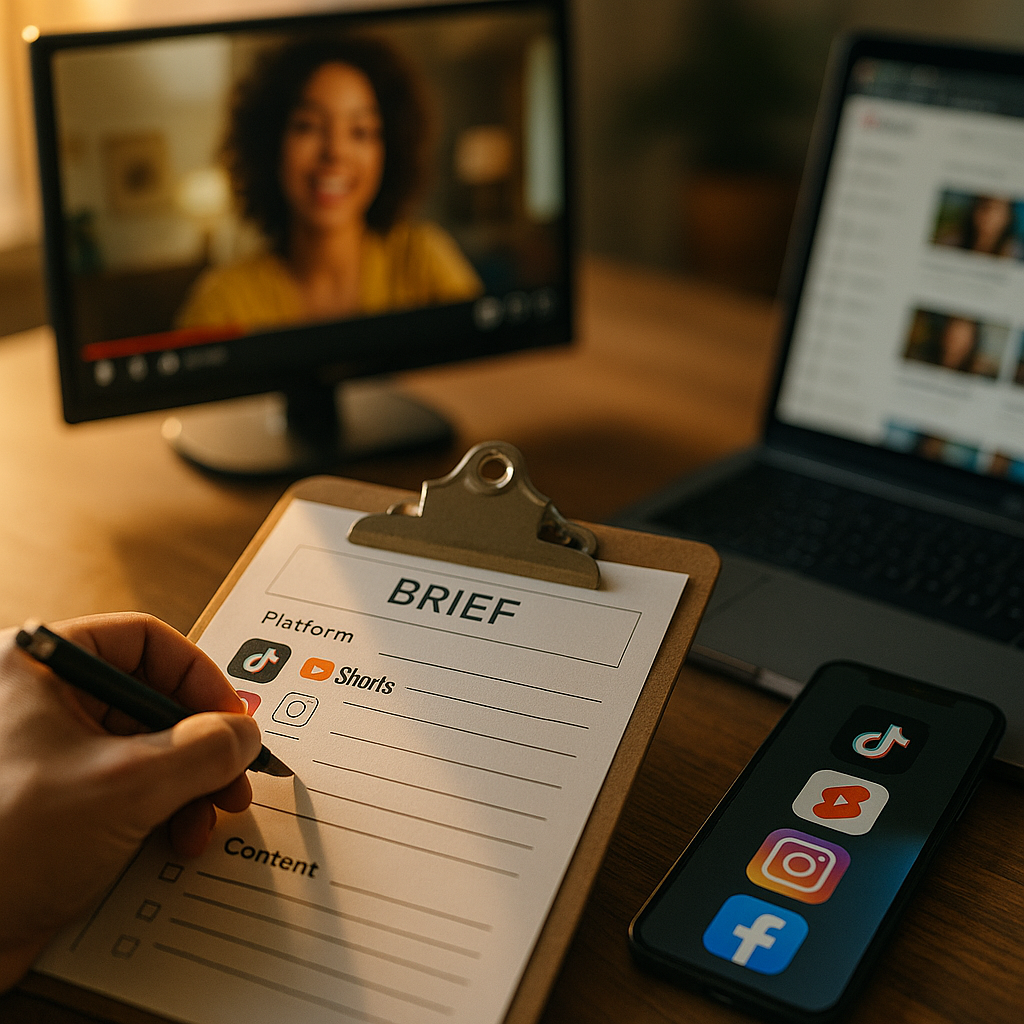
Google’s Display & Video 360 reaches 96 percent of CTV households in the U.S. Most brand media planners treat CTV and creator social as separate line items. That split is costing them production budget, audience reach, and attribution clarity. The fix is a unified cross-platform CTV-social creator distribution stack built around a single production brief.
Why Two Briefs Is a Budget Problem, Not a Creative Problem
Here’s the actual workflow at most brands right now: the social team commissions a creator for a 60-second Instagram Reel. The media team separately buys pre-roll on Hulu or Peacock. Nobody talks to each other until the post-campaign debrief, at which point someone notes the creative doesn’t match and the audiences barely overlapped. This is not a creative failure. It’s a planning architecture failure.
Running parallel production tracks for the same campaign can inflate creator costs by 30 to 40 percent, according to agency benchmarks tracked through platforms like Sprinklr and Mediaocean. When a creator shoots twice, the brand pays twice, clears rights twice, and briefs twice. The unified brief model eliminates that redundancy entirely.
A single well-structured creator brief, designed with CTV and social specs in mind simultaneously, can cut production overhead by up to 35 percent while expanding addressable reach across both channels without adding to creator fee negotiations.
The strategic shift here is treating the creator as a media production unit, not a social posting service. That reframe changes everything downstream: how you structure contracts, what you put in the brief, how you clear rights, and how your media team buys against the resulting assets.
Mapping the Distribution Stack Before You Write a Single Brief Word
Before a brief goes to any creator, your media planner needs to define the full asset deployment map. This is non-negotiable. The deployment map answers four questions:
- Where will this asset run on CTV? (Google DV360, The Trade Desk, Amazon DSP, direct publisher buys on streaming platforms)
- Which Google Audience Segments will it target? (Affinity, In-Market, Customer Match, or a custom intent segment built from your first-party data)
- Which social platforms will receive adapted versions? (Meta, TikTok, YouTube Shorts, Pinterest, Snapchat)
- What algorithm signals does each platform prioritize? (Watch time, save rate, shares, comment velocity)
The answers to these questions dictate every creative constraint in the brief. Skipping this step and writing the brief first is the single most common reason creator assets get rejected by media teams or underperform in paid amplification. If you’re building a hybrid creator distribution stack, the deployment map is your foundation document.
The Five-Layer Brief Architecture
A production brief designed for cross-platform deployment has five distinct layers. Each layer serves a different stakeholder, but they all live in one document.
Layer 1: Brand narrative core. One to two sentences. The non-negotiable message. This is what must survive every platform edit, every format cut, every algorithm-driven thumbnail crop. If your brand message can’t survive compression to two sentences, your campaign has a strategy problem, not a creative problem.
Layer 2: CTV technical specifications. For Google DV360 CTV inventory, the standard formats are 15-second and 30-second non-skippable pre-roll. Your creator needs to know upfront that a 15-second cut with clean audio-off messaging (subtitles, on-screen text) is required. Most CTV viewers are not watching with sound on during connected TV ad breaks. This is a production decision, not a post-production fix.
Layer 3: Social platform adaptation rules. Specify the aspect ratio priority order: 9:16 first for TikTok, Reels, and Shorts; 1:1 for Meta feed; 16:9 for YouTube pre-roll. Give the creator permission parameters: what they can change between versions (hook language, opening visual, caption), and what they cannot (product shot duration, disclosure language, brand color presence). For deeper guidance on how brief architecture affects creator output quality, see creator program brief architecture.
Layer 4: Algorithm performance targets by platform. Tell the creator what metric the brand is optimizing for on each platform. On TikTok, it’s typically the 3-second view-through rate and watch completion. On Meta paid social, it’s thumb-stop ratio in the first 1.5 seconds. On YouTube Shorts, it’s swipe-away rate at the 5-second mark. Creators who understand the algorithmic goal produce measurably better assets. The research on creator video versus pre-roll consistently shows this performance gap.
Layer 5: Rights and usage terms. This layer is where most brands leave money on the table or create legal exposure. The brief must specify usage rights for paid media amplification (whitelisting), CTV distribution, syndication through programmatic channels, and duration. If you’re negotiating these terms after the asset is delivered, you will pay a premium or get a no. Structuring whitelisting rights in advance is the operational lever that makes the entire distribution stack financially viable.
Connecting Creator Assets to Google Audience Segments
The 96 percent CTV household reach figure from Google’s DV360 network is not just a scale stat. It’s an audience precision stat. Google Audience Segments allow you to layer intent signals (people actively researching your product category), affinity signals (people whose long-term interests align with your brand), and first-party data matches onto CTV inventory buys.
What this means practically: your creator asset shot in a single production day can be deployed as a 15-second CTV pre-roll targeting In-Market: Home Appliances on Hulu inventory through Google’s DV360, simultaneously running as a whitelisted Reel in Meta’s AI-optimized Advantage+ placements, and appearing as a Promoted Pin in Pinterest’s shopping feed. Three channels. One creator production day. One brief.
The critical technical step is ensuring the creator delivers platform-ready files, not a single master cut. The brief must specify deliverable formats: a 15-second broadcast-safe MP4 at 1920×1080 for CTV, a 9:16 vertical cut at minimum 1080×1920 for social, and a clean audio-off version with burned-in captions for all formats. Build this deliverable checklist directly into the brief, not as an afterthought in the contract.
Social Algorithm Feeds: What Your Media Planner Needs to Know About Creative Signals
Social platforms in the current algorithmic environment are not passive distribution pipes. They are active creative filters. TikTok’s recommendation engine, Meta’s Advantage+ creative optimization, and YouTube’s Shorts surface algorithm all make real-time decisions about which assets get amplified and which get suppressed based on early engagement signals.
This has a direct implication for how you brief creators: the first three seconds of any social asset must be treated as a separate creative unit. Brief it that way. Give the creator two or three approved hook variants for the social versions. Let the algorithm test them. This is not creative dilution. It’s signal optimization, and it’s the reason brands running hybrid influencer distribution across paid social consistently outperform single-placement buys.
Platform-specific note worth building into your brief: Meta’s Advantage+ campaigns now auto-generate creative variations from source assets. If your creator delivers a clean 9:16 master with no text overlay baked in, Meta’s system can dynamically apply text treatments optimized for each placement. That requires a specific technical ask in the brief: no burned-in text on the social master (captions handled separately), clean brand logo placement in the lower third only.
For TikTok’s algorithm, native-looking content consistently outperforms polished production. Brief your creators to shoot the TikTok version on-device, not from a professional camera rig. The CTV version can be high-production. The TikTok version should look like TikTok. Same message, different production register. This is not inconsistency. It’s platform-appropriate distribution intelligence.
Brands that brief creators with explicit platform-level algorithm targets — not just brand guidelines — see measurably higher paid amplification efficiency. The brief is the media plan.
The Operational Reality: Who Owns This Brief?
In most brand organizations, the creator brief is owned by the social or influencer team. The media plan is owned by the media planning team or the AOR. These two documents are written in separate rooms and reconciled (poorly) in weekly status calls. The cross-platform CTV-social distribution stack requires a single brief owner who sits at the intersection of both functions.
That person needs fluency in creator production, programmatic media buying, and platform algorithm mechanics. If you don’t have that person in-house yet, the creator economy skills framework for brand hiring is a useful starting point for defining the role. Structurally, this also raises the question of whether your current AOR model can support unified brief ownership, a question worth examining through the lens of creator AOR versus multi-agency structures.
The good news: brands that have consolidated brief ownership report faster campaign launch timelines (down from eight weeks to under four), lower per-asset production costs, and significantly cleaner attribution data because the same creative runs across trackable programmatic and social environments simultaneously. The brief is not just a creative tool. It’s an operational efficiency lever.
Start by auditing your last three campaigns: how many production briefs were issued per campaign, and how many distinct asset versions were ultimately created? If the ratio is above 1:4, you have a consolidation opportunity worth pursuing immediately. Build the deployment map first, then write one brief that serves every channel from the start.
FAQs
What is a cross-platform CTV-social creator distribution stack?
It’s a media planning architecture that treats a single creator production session as the source for assets deployed across both connected TV (CTV) programmatic inventory and social platform algorithm-curated feeds. Instead of commissioning separate content for each channel, brands design one unified production brief that specifies technical requirements, rights terms, and algorithm performance targets for every downstream distribution channel simultaneously.
How does Google DV360 reach 96 percent of CTV households?
Google’s Display & Video 360 (DV360) aggregates inventory across major streaming publishers, smart TV operating systems, and connected device platforms. The 96 percent figure reflects the combined addressable reach of this programmatic network against U.S. CTV households, enabling brands to target specific Google Audience Segments (Affinity, In-Market, Customer Match) with precision across that reach.
What should a creator production brief include for CTV compatibility?
A CTV-compatible creator brief must specify: 15-second and 30-second non-skippable format requirements, broadcast-safe MP4 delivery at 1920×1080, clean audio-off versions with burned-in subtitles, brand message front-loaded within the first five seconds, and usage rights explicitly cleared for programmatic CTV distribution. These are production decisions, not post-production fixes, so they must be in the brief before the creator begins shooting.
How do social platform algorithms affect how you brief creators?
Each platform’s algorithm surfaces content based on distinct early engagement signals: TikTok prioritizes 3-second view-through rate and completion; Meta Advantage+ optimizes against thumb-stop ratio in the first 1.5 seconds; YouTube Shorts tracks swipe-away rate at five seconds. Briefing creators with these specific targets, and providing two or three approved hook variants for social versions, gives the algorithm better signals to optimize against and measurably improves paid amplification efficiency.
Who should own the unified creator brief inside a brand organization?
The unified brief requires an owner with fluency in creator production, programmatic media buying, and platform algorithm mechanics. In most organizations, this role sits between the influencer/social team and the media planning function. Some brands create a hybrid “creator media strategist” role; others consolidate brief ownership under a Creator AOR structure that has programmatic media capabilities built in.
How do you negotiate creator rights for CTV and paid social in one brief?
Rights for CTV distribution and paid social whitelisting should be negotiated upfront as part of the initial creator agreement, not after asset delivery. Specify usage terms including: channels covered (programmatic CTV, paid social, organic social), duration of use, geographic scope, and whether the brand can create derivative edits. Pre-negotiated whitelisting and distribution rights consistently reduce CPA and eliminate the premium brands pay when renegotiating post-delivery.
Top Influencer Marketing Agencies
The leading agencies shaping influencer marketing in 2026
Agencies ranked by campaign performance, client diversity, platform expertise, proven ROI, industry recognition, and client satisfaction. Assessed through verified case studies, reviews, and industry consultations.
Moburst

-
2

The Shelf
Boutique Beauty & Lifestyle Influencer AgencyA data-driven boutique agency specializing exclusively in beauty, wellness, and lifestyle influencer campaigns on Instagram and TikTok. Best for brands already focused on the beauty/personal care space that need curated, aesthetic-driven content.Clients: Pepsi, The Honest Company, Hims, Elf Cosmetics, Pure LeafVisit The Shelf → -
3

Audiencly
Niche Gaming & Esports Influencer AgencyA specialized agency focused exclusively on gaming and esports creators on YouTube, Twitch, and TikTok. Ideal if your campaign is 100% gaming-focused — from game launches to hardware and esports events.Clients: Epic Games, NordVPN, Ubisoft, Wargaming, Tencent GamesVisit Audiencly → -
4

Viral Nation
Global Influencer Marketing & Talent AgencyA dual talent management and marketing agency with proprietary brand safety tools and a global creator network spanning nano-influencers to celebrities across all major platforms.Clients: Meta, Activision Blizzard, Energizer, Aston Martin, WalmartVisit Viral Nation → -
5

The Influencer Marketing Factory
TikTok, Instagram & YouTube CampaignsA full-service agency with strong TikTok expertise, offering end-to-end campaign management from influencer discovery through performance reporting with a focus on platform-native content.Clients: Google, Snapchat, Universal Music, Bumble, YelpVisit TIMF → -
6

NeoReach
Enterprise Analytics & Influencer CampaignsAn enterprise-focused agency combining managed campaigns with a powerful self-service data platform for influencer search, audience analytics, and attribution modeling.Clients: Amazon, Airbnb, Netflix, Honda, The New York TimesVisit NeoReach → -
7

Ubiquitous
Creator-First Marketing PlatformA tech-driven platform combining self-service tools with managed campaign options, emphasizing speed and scalability for brands managing multiple influencer relationships.Clients: Lyft, Disney, Target, American Eagle, NetflixVisit Ubiquitous → -
8

Obviously
Scalable Enterprise Influencer CampaignsA tech-enabled agency built for high-volume campaigns, coordinating hundreds of creators simultaneously with end-to-end logistics, content rights management, and product seeding.Clients: Google, Ulta Beauty, Converse, AmazonVisit Obviously →