


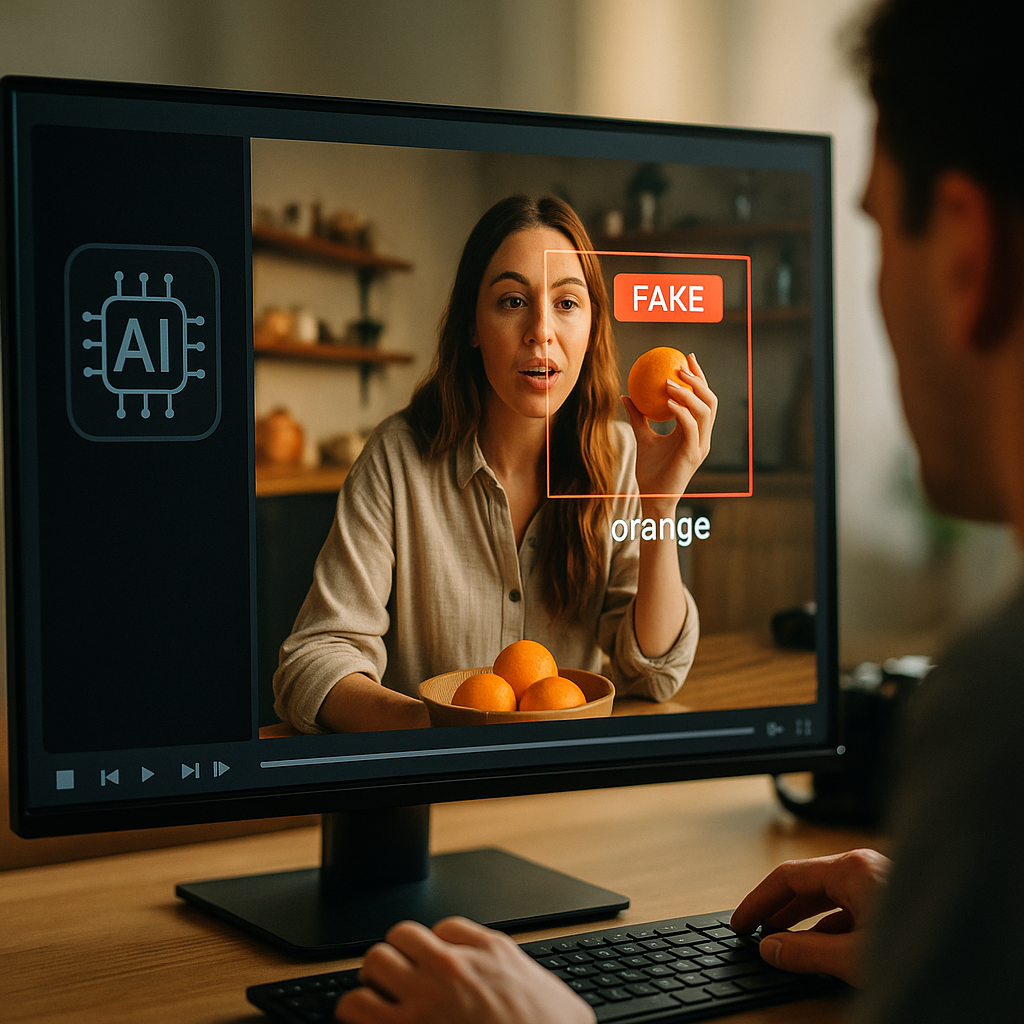
TikTok now auto-detects AI-generated content and slaps a label on it whether the creator asked for one or not. Meta requires disclosure for “digitally altered or generated” content in ads and increasingly in organic posts. Get it wrong, and you’re not just risking a takedown, you’re risking an FTC inquiry. So brands are doing what brands do when compliance gets expensive: they’re building AI to police the AI. Welcome to AI pre-screening for creator content, the newest checkpoint in the influencer workflow.
Why This Suddenly Matters
Eighteen months ago, “AI disclosure” meant a creator typing #ad and calling it a day. Now it means something structurally different. TikTok, YouTube, and Meta have all rolled out AI-content classifiers that scan uploads and apply labels automatically, sometimes overriding what the creator or brand intended. YouTube’s “altered or synthetic content” disclosure has been mandatory since last year, and its detection systems are getting aggressive enough to flag content that merely looks synthetic, like heavily color-graded UGC or beauty filters that smooth skin a little too well.
That’s the problem for brands. Platform classifiers are imperfect, inconsistent, and applied post-publish. A label slapped on after a video goes live can tank reach, confuse audiences, or trigger a compliance review you didn’t budget time for. Waiting for the platform to tell you there’s a problem is no longer viable at scale, not when a mid-size brand might be running 200+ creator assets a month across five platforms.
The shift isn’t about avoiding AI labels — it’s about controlling when and how they’re applied, instead of finding out after a video’s already live to 40,000 followers.
What “Pre-Screening” Actually Looks Like in Practice
Pre-screening isn’t a single tool. It’s a layer brands are inserting between content submission and publish approval, usually built on a mix of vendor APIs and internal review logic. The typical stack looks like this:
- Synthetic media detectors — tools that scan video, audio, and images for generative fingerprints (diffusion artifacts, voice-clone signatures, deepfake indicators) before the asset goes anywhere near a platform upload.
- Metadata and C2PA checks — Content Credentials (the C2PA standard backed by Adobe, Microsoft, and others) embed provenance data directly into a file. Brands are increasingly requiring creators to shoot and edit in apps that preserve this metadata, so the “was this AI-touched” question gets answered before a human even looks at it.
- Rules-based classification matching — mapping the brand’s own AI-use policy (did the creator use an AI voice-over? AI b-roll? a virtual try-on filter?) against what each platform’s disclosure policy actually requires, since TikTok, YouTube, and Meta don’t define “AI-generated” identically.
- Human-in-the-loop escalation — borderline cases get routed to a compliance reviewer instead of auto-approved, which is the part most brands underinvest in and later regret.
Agencies like Movers+Shakers and in-house teams at DTC brands running high creator volume have started treating this like a pre-flight checklist, not unlike the approval gates brands already use for paid spend. If that sounds familiar, it’s because it mirrors the same governance logic behind spend guardrails and approval thresholds in agentic ad buying: set the rule, automate the check, escalate the exception.
The Labeling Patchwork Brands Are Actually Fighting
Here’s the part nobody enjoys explaining to a CMO: there is no single “AI content” rule. Each platform has its own threshold, its own detection sensitivity, and its own enforcement mood.
TikTok’s disclosure requirements apply broadly to “realistic” AI content, including synthetic voices and AI-altered footage of real people. YouTube’s synthetic media policy leans hard on realism too, but its automated detection has been flagging things creators swear are just filters. Meta’s ad policies require disclosure specifically when AI substantially alters a photo or video in ways that could mislead, but that standard gets fuzzier in organic influencer posts, where Meta’s own AI labeling has misfired on unedited footage more than once.
The result: a piece of creator content compliant on one platform can trigger a label, or a takedown, on another. Multiply that across a 50-creator campaign and you’ve got a QA nightmare if you’re checking manually.
This is exactly the kind of fragmentation that pushed brands toward automated governance in adjacent areas too — see how teams are approaching governance checklists for agentic media buying. The pattern repeats: platform rules diverge faster than manual review can keep up, so the review has to become software.
Building the Pre-Screen Workflow: What It Costs and Who Owns It
Most brands aren’t building detection models from scratch. They’re licensing them. Vendors like Reality Defender, Hive Moderation, and TrueMedia offer API-based synthetic detection that plugs into existing creator management platforms (CreatorIQ, Grin, Aspire all support middleware integrations now). Pricing generally scales with volume, expect per-asset scanning costs in the low cents range at high volume, which sounds trivial until you’re running thousands of assets a quarter.
The bigger cost is process redesign, not software. Someone has to own the escalation queue. Someone has to define what “borderline” means for your brand’s risk tolerance. Someone has to train creators on what triggers a flag before they even submit a draft.
Practically, brands are structuring it in three checkpoints:
- Brief stage — creators disclose upfront whether AI tools (voice cleanup, AI captions, generative b-roll, virtual backgrounds) touched the asset. This mirrors how agentic AI campaign briefs now bake disclosure fields directly into the brief template.
- Draft submission — the pre-screening tool scans the raw file for synthetic markers and metadata, flagging discrepancies between what the creator disclosed and what the file actually shows.
- Pre-publish gate — a final automated check against each target platform’s specific labeling threshold, with an internal compliance sign-off for anything flagged as ambiguous.
Brands running this well treat it the same way they’d treat a media-buying circuit breaker: automated by default, human override always available. It’s the same philosophy discussed in human control and decision boundaries for agentic systems — full automation without an escape hatch is how brands end up publishing something they can’t unpublish fast enough.
Where This Gets Messy: False Positives and Creator Trust
Detection tools aren’t perfect, not close. Independent testing on deepfake detectors, including benchmarks referenced by industry analysts tracking AI adoption, shows accuracy rates that vary wildly depending on content type, lighting, and compression. A heavily filtered TikTok video shot on an iPhone can trip the same alarms as an actual AI-generated clip.
That creates a genuinely awkward moment: telling a creator their perfectly real, unedited content got flagged as synthetic. Handle it badly and you burn trust with a talent roster you’ve spent months building.
The smarter brands are transparent about this upfront. They tell creators exactly what the pre-screening tool checks for, they build in a fast appeal path, and they don’t auto-reject on a single flag. Some are borrowing tactics from community-moderation playbooks entirely, treating false positives the way platforms treat spam false positives, worth studying in Reddit’s anti-spam AI approach, where the goal is catching bad actors without alienating good ones.
A pre-screening system that creators don’t trust becomes a bottleneck, not a safeguard. The tech is only half the project; the other half is change management with your talent roster.
The Regulatory Backdrop Nobody Can Ignore
This isn’t just a platform-rules problem. The FTC’s endorsement guidelines already require clear disclosure when content is misleading about its nature, and AI-generated influencer content sits squarely in that scope. Regulators in the UK, through bodies like the ICO, have signaled similar scrutiny on synthetic media transparency. Brands that treat platform labels as the only compliance bar are missing the bigger one: regulatory exposure doesn’t disappear just because TikTok didn’t flag something.
This is why pre-screening is increasingly framed as a legal risk function, not just a content-ops one. Legal and compliance teams are getting looped into creator content review earlier than they ever have before, often the same teams already tracking where AI automation needs human intervention across other marketing functions.
Where This Is Headed
Expect pre-screening to become a standard line item in creator contracts within the next year, not an optional QA step. Platforms are only going to tighten detection, not loosen it, and brands that build the muscle now avoid scrambling later. If you’re still relying on manual spot-checks, start budgeting for a detection API and a clear escalation policy before your next campaign cycle, not after your first mislabeled post goes viral for the wrong reason.
Frequently Asked Questions
What counts as AI-generated content under platform disclosure rules?
It varies by platform, but generally includes synthetic voices, AI-altered footage of real people, generative video or images, and edits that meaningfully change what’s depicted. TikTok, YouTube, and Meta each define “realistic” AI content slightly differently, which is exactly why brands need pre-screening rather than relying on one platform’s standard.
Can AI pre-screening tools guarantee a platform won’t apply an AI label?
No. Pre-screening reduces surprises and catches disclosure gaps before publish, but platform classifiers run independently and can still flag content, including false positives. Pre-screening is about risk reduction and faster response, not a guarantee.
Who should own the pre-screening process, marketing or legal?
Both, ideally. Marketing or creator ops typically owns the workflow and tooling, while legal or compliance defines the risk thresholds and handles regulatory exposure. Brands that isolate this entirely within one team tend to miss either the operational or the legal half of the problem.
Do creators need to disclose AI use even for minor edits like AI captions or voice cleanup?
Often yes, depending on the platform. Some disclosure policies focus on “substantial” alteration, but enforcement has been inconsistent enough that most compliance teams now recommend over-disclosing minor AI-assisted edits rather than guessing wrong.
How much does AI content pre-screening typically cost a brand?
Per-asset scanning through vendor APIs is usually low-cost at scale, often fractions of a cent to a few cents per asset, but the real investment is in workflow redesign: defining escalation rules, training creators, and staffing human review for flagged content.
Top Influencer Marketing Agencies
The leading agencies shaping influencer marketing in 2026
Agencies ranked by campaign performance, client diversity, platform expertise, proven ROI, industry recognition, and client satisfaction. Assessed through verified case studies, reviews, and industry consultations.
Moburst

-
2

The Shelf
Boutique Beauty & Lifestyle Influencer AgencyA data-driven boutique agency specializing exclusively in beauty, wellness, and lifestyle influencer campaigns on Instagram and TikTok. Best for brands already focused on the beauty/personal care space that need curated, aesthetic-driven content.Clients: Pepsi, The Honest Company, Hims, Elf Cosmetics, Pure LeafVisit The Shelf → -
3

Audiencly
Niche Gaming & Esports Influencer AgencyA specialized agency focused exclusively on gaming and esports creators on YouTube, Twitch, and TikTok. Ideal if your campaign is 100% gaming-focused — from game launches to hardware and esports events.Clients: Epic Games, NordVPN, Ubisoft, Wargaming, Tencent GamesVisit Audiencly → -
4

Viral Nation
Global Influencer Marketing & Talent AgencyA dual talent management and marketing agency with proprietary brand safety tools and a global creator network spanning nano-influencers to celebrities across all major platforms.Clients: Meta, Activision Blizzard, Energizer, Aston Martin, WalmartVisit Viral Nation → -
5

The Influencer Marketing Factory
TikTok, Instagram & YouTube CampaignsA full-service agency with strong TikTok expertise, offering end-to-end campaign management from influencer discovery through performance reporting with a focus on platform-native content.Clients: Google, Snapchat, Universal Music, Bumble, YelpVisit TIMF → -
6

NeoReach
Enterprise Analytics & Influencer CampaignsAn enterprise-focused agency combining managed campaigns with a powerful self-service data platform for influencer search, audience analytics, and attribution modeling.Clients: Amazon, Airbnb, Netflix, Honda, The New York TimesVisit NeoReach → -
7

Ubiquitous
Creator-First Marketing PlatformA tech-driven platform combining self-service tools with managed campaign options, emphasizing speed and scalability for brands managing multiple influencer relationships.Clients: Lyft, Disney, Target, American Eagle, NetflixVisit Ubiquitous → -
8

Obviously
Scalable Enterprise Influencer CampaignsA tech-enabled agency built for high-volume campaigns, coordinating hundreds of creators simultaneously with end-to-end logistics, content rights management, and product seeding.Clients: Google, Ulta Beauty, Converse, AmazonVisit Obviously →