


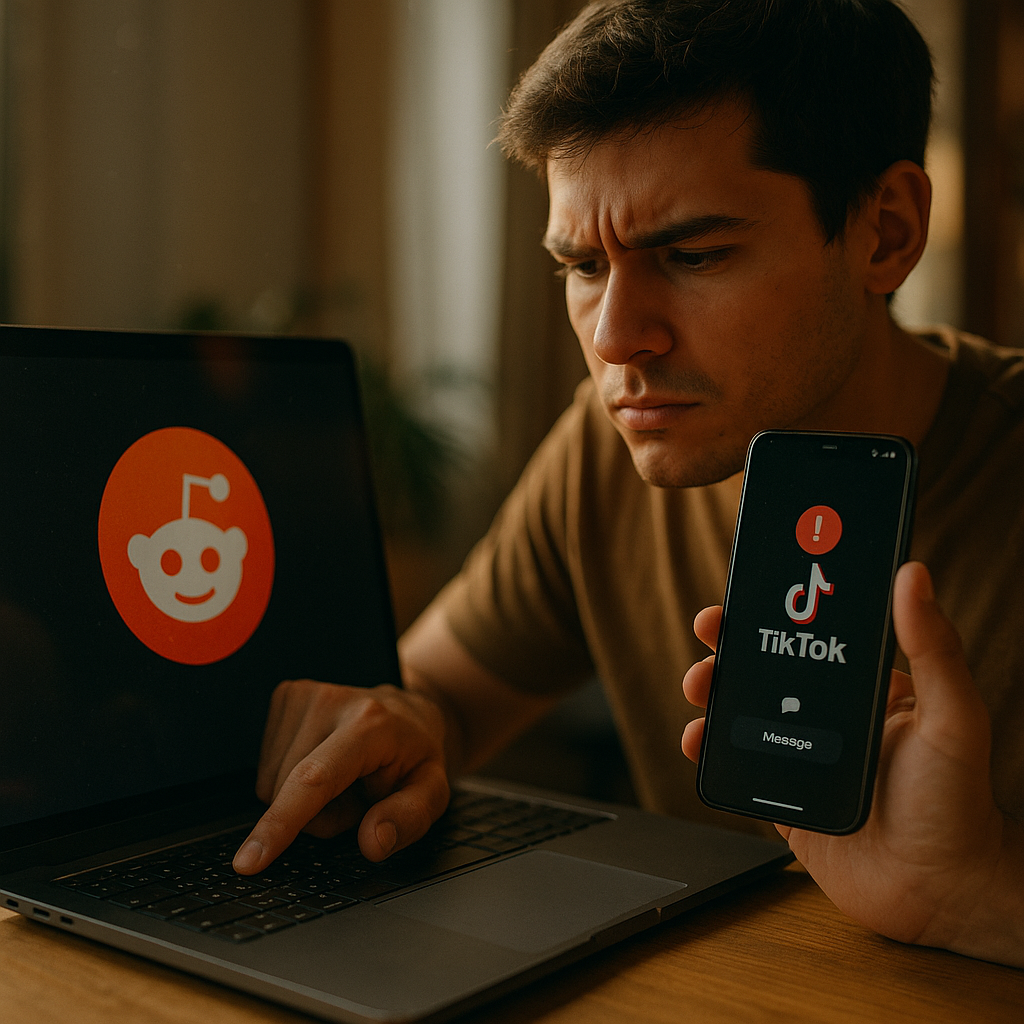
An estimated 1 in 5 content moderation decisions made by AI systems on major platforms gets appealed and reversed. Now ask yourself: how many of your brand’s flagged posts, paused ads, or shadowbanned creator content never get appealed at all? A brand safety escalation protocol isn’t a nice-to-have anymore. It’s the difference between recovering revenue and quietly eating losses.
Reddit and TikTok have leaned harder into automated moderation over the past two years, and the collateral damage is landing on brand accounts, sponsored content, and creator partnerships that did nothing wrong. If your team doesn’t have a documented path for disputing these calls, you’re leaving money and reach on the table every single week.
Why False Positives Are a Budget Problem, Not Just an Annoyance
Marketers tend to file moderation errors under “platform quirks.” That’s a mistake. When TikTok’s AI misreads a skincare ad as a medical claim, or Reddit’s automod nukes a sponsored AMA for tripping a spam filter, you’re not dealing with an inconvenience. You’re dealing with paused spend, stalled creator payouts, and campaign timelines that quietly slip.
Consider the mechanics. A paused TikTok Spark Ad still burns through its flight window while your team figures out what happened. A Reddit post removed mid-campaign loses its early engagement window, which on that platform determines almost everything about downstream reach. There’s no make-good for lost momentum. The platform might reinstate the content three days later, but the algorithmic window that mattered has already closed.
A flagged post that gets reinstated after 72 hours hasn’t been “fixed.” It’s been effectively deleted, because the engagement window that determined its reach is gone.
This is why escalation can’t be a reactive scramble owned by whichever community manager happens to notice the outage first. It needs to be a protocol: documented, staffed, and rehearsed.
What’s Actually Driving the Surge in False Flags
Both platforms have shifted enforcement further upstream, meaning more decisions happen pre-publish or within minutes of posting, before any human ever looks at it. TikTok’s moderation stack leans heavily on classifiers trained to catch policy violations at scale, and Reddit has expanded automod rulesets across subreddits to handle volume its trust and safety teams can’t review manually.
The result is a blunt instrument. Common triggers we’re seeing brands run into:
- Aggressive keyword matching that flags legitimate product claims as prohibited content (supplements, financial services, and health/beauty categories get hit hardest).
- Creator account history bleed-through, where a creator’s past strikes or unrelated flagged content drag down the visibility of new, compliant sponsored posts.
- Context collapse in AI-generated captions, where synthetic or AI-assisted copy trips disclosure-adjacent language filters even when disclosure is present.
- Subreddit-level automod conflicts, where community rules and platform-wide rules contradict each other and the stricter one wins by default.
- Spam-pattern matching on cross-posted content, which increasingly affects multi-market campaigns running near-identical creative across regions.
None of these are edge cases anymore. They’re predictable, recurring failure modes. Which means they’re manageable, if you build for them.
The Core of an Escalation Protocol
A real protocol has four components: detection, triage, escalation channel, and documentation. Skip any one of them and you end up with the status quo, which is a scramble every time something breaks.
Detection. You need monitoring that catches moderation actions faster than an angry client email does. That means dashboard alerts tied to ad account status, API-level webhook monitoring where platforms support it, and a standing checklist for community managers to flag anomalies within a defined window, ideally under two hours.
Triage. Not every flag deserves the same response. Build a severity tier: Tier 1 is a single organic post removed with no ad spend attached (low urgency, standard appeal). Tier 2 is a paused paid campaign with active spend (urgent, same-day escalation). Tier 3 is an account-level suspension or ad account restriction (critical, immediate escalation with legal/comms looped in).
Escalation channel. This is where most teams fall down. “Submit a support ticket and wait” is not a channel, it’s a hope. Brands running meaningful spend on TikTok should have a dedicated partner manager or agency contact who can escalate outside the standard TikTok Ads support queue. For Reddit, that typically runs through your ads rep or a verified advertiser account manager rather than public modmail.
Documentation. Every escalation needs a paper trail: screenshot of the flag, timestamp, campaign ID, spend at risk, and the specific policy the platform cited. This isn’t just for the appeal itself. It’s for pattern analysis later, and for any conversation with legal if the flag touches something like an AI-generated creator brief that might have separate disclosure exposure.
Building the Internal Chain of Command
Who actually owns this? In most mid-size marketing orgs, nobody does, and that’s the problem. The protocol needs a named owner, not a shared inbox.
A workable structure looks like this: the community/social team owns detection and Tier 1 triage. A paid media lead owns Tier 2, since spend recovery and campaign timeline decisions live there. Legal or compliance gets looped in automatically at Tier 3, and honestly, probably should have a standing seat any time a flag involves AI-generated content, since that’s where creative review frameworks and platform enforcement start to overlap in messy ways.
Set response-time SLAs internally even if the platform won’t commit to any externally. If your team commits to escalating a Tier 2 flag within four hours, you at least control the variables you can control.
What to Document Before You Even Need It
The best escalation protocols are boring, in the sense that most of the work happens before anything goes wrong. Build a reference library now:
- A copy of every active campaign’s approved claims language, mapped against each platform’s ad policy library.
- A record of creator disclosure language used in briefs, tied to your creator contract disclosure clauses, so you can show intent and compliance fast when a flag hits.
- A contact sheet of every platform rep, agency liaison, and support escalation path your brand has access to, refreshed quarterly (people change roles constantly).
- A log of past false positives and their resolutions, categorized by trigger type, so triage gets faster over time instead of starting from zero each time.
This documentation habit pays off doubly if you’re already running quarterly compliance audits. The escalation log becomes an input to that audit, not a separate exercise.
When a False Positive Becomes a Legal Question
Not every moderation error stays a moderation error. If a platform’s AI flags content because it genuinely violates a disclosure rule, that’s not a false positive, that’s a compliance gap wearing a disguise. Before you escalate anything as “wrongly flagged,” run it against your actual disclosure standards. The FTC’s endorsement guidance hasn’t gotten more lenient, and platforms are increasingly using it as cover for enforcement decisions, whether or not the AI got the specific call right.
This matters especially for anything involving synthetic media or AI-assisted content, where the line between “wrongly flagged” and “correctly flagged, badly labeled” gets thin. If your team is producing AI-assisted ad creative at any volume, cross-check flagged content against your AI ad disclosure workflow before you file an appeal claiming the platform got it wrong.
If a pattern of flags starts looking like a platform-wide enforcement sweep rather than isolated errors, that’s worth tracking against broader regulatory trends too. Advertisers who’ve had disputes escalate past platform support and into formal complaint territory know how fast that path opens up once an NAD referral pipeline gets involved.
Measuring Whether the Protocol Is Working
Track three numbers quarterly: average time-to-resolution for each severity tier, percentage of flags overturned on appeal, and estimated spend/reach recovered versus lost. If your overturn rate is high but resolution time is slow, your appeals process works but your speed doesn’t, meaning campaigns are still bleeding value even when you eventually win.
Benchmark against industry moderation data where you can find it. Platforms rarely publish granular false-positive rates, but eMarketer and Statista both track broader trust-and-safety enforcement trends that help contextualize whether your experience is typical or whether something about your content category is drawing extra scrutiny.
Next step: Pick one platform, Reddit or TikTok, and draft a one-page escalation flowchart this week: detection trigger, severity tier, named owner, and contact path. Test it on the next flag that hits, then expand to the other platform once it holds up under real pressure.
FAQs
What counts as a false positive in platform AI moderation?
A false positive is content, an ad, or an account action flagged, removed, or restricted by automated moderation despite complying with the platform’s actual policies. It’s distinct from a correct enforcement action that a brand simply disagrees with.
How fast should a brand escalate a paused TikTok ad?
Within hours, not days. Paid campaigns with active spend should sit at the top severity tier in your protocol, with same-day escalation through a partner manager or agency contact rather than the standard support queue.
Does Reddit have a formal appeals process for advertisers?
Reddit’s advertiser appeals typically run through your ads account manager rather than public modmail, which is built for organic community disputes. Verified advertisers should confirm their specific escalation contact as part of onboarding, not after the first problem hits.
Can repeated false positives affect a brand’s standing with a platform?
Not usually on their own, but a pattern of flags combined with unresolved appeals can affect account trust scores over time on some platforms. Documenting resolutions matters partly for this reason.
Who inside a marketing org should own the escalation protocol?
Detection and initial triage typically sit with community or social teams, paid media leads own campaign-spend escalations, and legal or compliance should have a standing role for anything involving AI-generated content or disclosure questions.
Frequently Asked Questions
What counts as a false positive in platform AI moderation?
A false positive is content, an ad, or an account action flagged, removed, or restricted by automated moderation despite complying with the platform’s actual policies. It’s distinct from a correct enforcement action that a brand simply disagrees with.
How fast should a brand escalate a paused TikTok ad?
Within hours, not days. Paid campaigns with active spend should sit at the top severity tier in your protocol, with same-day escalation through a partner manager or agency contact rather than the standard support queue.
Does Reddit have a formal appeals process for advertisers?
Reddit’s advertiser appeals typically run through your ads account manager rather than public modmail, which is built for organic community disputes. Verified advertisers should confirm their specific escalation contact as part of onboarding, not after the first problem hits.
Can repeated false positives affect a brand’s standing with a platform?
Not usually on their own, but a pattern of flags combined with unresolved appeals can affect account trust scores over time on some platforms. Documenting resolutions matters partly for this reason.
Who inside a marketing org should own the escalation protocol?
Detection and initial triage typically sit with community or social teams, paid media leads own campaign-spend escalations, and legal or compliance should have a standing role for anything involving AI-generated content or disclosure questions.
Top Influencer Marketing Agencies
The leading agencies shaping influencer marketing in 2026
Agencies ranked by campaign performance, client diversity, platform expertise, proven ROI, industry recognition, and client satisfaction. Assessed through verified case studies, reviews, and industry consultations.
Moburst

-
2

The Shelf
Boutique Beauty & Lifestyle Influencer AgencyA data-driven boutique agency specializing exclusively in beauty, wellness, and lifestyle influencer campaigns on Instagram and TikTok. Best for brands already focused on the beauty/personal care space that need curated, aesthetic-driven content.Clients: Pepsi, The Honest Company, Hims, Elf Cosmetics, Pure LeafVisit The Shelf → -
3

Audiencly
Niche Gaming & Esports Influencer AgencyA specialized agency focused exclusively on gaming and esports creators on YouTube, Twitch, and TikTok. Ideal if your campaign is 100% gaming-focused — from game launches to hardware and esports events.Clients: Epic Games, NordVPN, Ubisoft, Wargaming, Tencent GamesVisit Audiencly → -
4

Viral Nation
Global Influencer Marketing & Talent AgencyA dual talent management and marketing agency with proprietary brand safety tools and a global creator network spanning nano-influencers to celebrities across all major platforms.Clients: Meta, Activision Blizzard, Energizer, Aston Martin, WalmartVisit Viral Nation → -
5

The Influencer Marketing Factory
TikTok, Instagram & YouTube CampaignsA full-service agency with strong TikTok expertise, offering end-to-end campaign management from influencer discovery through performance reporting with a focus on platform-native content.Clients: Google, Snapchat, Universal Music, Bumble, YelpVisit TIMF → -
6

NeoReach
Enterprise Analytics & Influencer CampaignsAn enterprise-focused agency combining managed campaigns with a powerful self-service data platform for influencer search, audience analytics, and attribution modeling.Clients: Amazon, Airbnb, Netflix, Honda, The New York TimesVisit NeoReach → -
7

Ubiquitous
Creator-First Marketing PlatformA tech-driven platform combining self-service tools with managed campaign options, emphasizing speed and scalability for brands managing multiple influencer relationships.Clients: Lyft, Disney, Target, American Eagle, NetflixVisit Ubiquitous → -
8

Obviously
Scalable Enterprise Influencer CampaignsA tech-enabled agency built for high-volume campaigns, coordinating hundreds of creators simultaneously with end-to-end logistics, content rights management, and product seeding.Clients: Google, Ulta Beauty, Converse, AmazonVisit Obviously →