


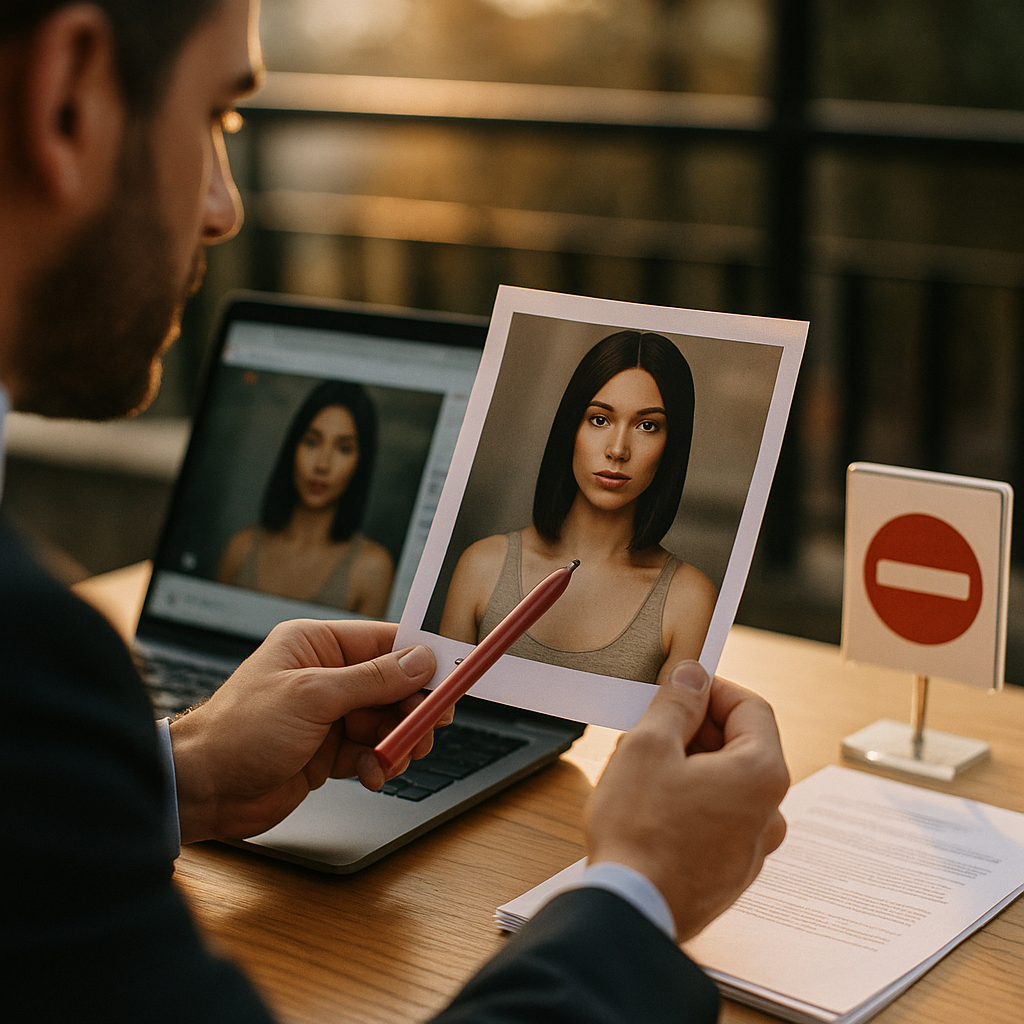
One state statute just rewrote the rules for every brand running AI-generated talent in ads. Synthetic performer disclosure laws are no longer a theoretical compliance issue — New York made them a legal one, with penalties attached. If your brand has used a virtual influencer, an AI voice clone, or a digitally recreated “spokesperson” anywhere in the country, this statute probably touches you.
Why New York’s Law Matters Even If You’ve Never Shot There
New York passed a statute requiring clear disclosure whenever advertising uses a “synthetic performer” — a digitally created or materially altered likeness standing in for a human actor. The law defines synthetic performers broadly: fully AI-generated avatars, deepfaked versions of real people, and voice clones all qualify. It doesn’t matter where your agency is headquartered or where the ad was produced. What matters is whether the content reaches New York consumers.
That’s the part brand legal teams keep underestimating. Advertising law has always followed distribution, not production. If your paid social campaign runs nationally, it runs in New York, and New York’s disclosure rule applies regardless of your home office address.
A statute written for one state’s consumers now functions as a de facto national standard — because no brand builds separate creative for 49 states and a compliant version for one.
What Counts as a “Synthetic Performer,” Exactly?
The definition matters more than the headline. Under the New York framework, a synthetic performer includes:
- Fully AI-generated human likenesses (virtual influencers, digital spokespeople)
- Voice clones used in place of a real actor’s recorded voice
- Digitally altered footage that materially changes a real performer’s appearance or actions
- AI-composited scenes where a synthetic figure interacts with real products or real people
Notice what’s not exempted: minor edits like color correction or background removal aren’t synthetic performance. But face-swaps, de-aging, and generative body doubles are squarely in scope. Brands that assumed “we didn’t use a deepfake, we used an AI model tool” are finding out the statute doesn’t care about the tool name — it cares about the output.
The Disclosure Requirement Itself
The law requires disclosure that’s clear, conspicuous, and understandable to an average consumer — not buried in a terms page or a five-second end-card. This mirrors language regulators have used before, including the FTC’s own endorsement guidance, but New York adds statutory teeth: private right of action potential and state AG enforcement. That combination is what separates this from prior guidance documents. It’s enforceable, and plaintiffs’ attorneys have noticed.
The Compliance Gap Most Brands Haven’t Closed
Here’s the uncomfortable truth: most brand marketing teams don’t have a system for tracking which assets contain synthetic performers. Production moves fast. Agencies mix real footage with AI-generated inserts. Nobody tags the asset library by “contains synthetic likeness: yes/no.” That’s a problem the moment a state regulator or a consumer plaintiff asks for records.
Compare this to how brands already handle AI-generated ad copy and imagery disclosure under FTC frameworks — most teams built a checklist for that. Few have built the equivalent for synthetic performers specifically, which is a narrower but higher-risk category because it involves a simulated human being, not just simulated background art.
If your team already maintains an FTC disclosure checklist for AI creative, extend it. Synthetic performer disclosure needs its own line item, its own sign-off, and its own audit trail separate from general AI-content labeling.
How This Fits Into the Broader Deepfake Regulation Landscape
New York isn’t operating in isolation. At least ten states now have some form of deepfake advertising restriction, ranging from election-specific rules to broad commercial-speech disclosure mandates. Brands running national campaigns are effectively subject to the strictest applicable state law by default, because segmenting creative by state is operationally impractical for most paid social and CTV buys.
Our 10-state deepfake compliance matrix breaks down where the thresholds differ — some states require disclosure only for political content, others cover all commercial advertising. New York sits on the stricter end for commercial use, which is exactly why it’s become the reference point other states are expected to model future statutes on.
This pattern isn’t new. We’ve seen similar dynamics with data privacy law, where California and Virginia’s frameworks became templates nationwide even though only two states initially passed them. Expect the same gravitational pull here — read our state AI disclosure patchwork guide for how legal teams are already building for the strictest-common-denominator scenario.
Platform Rules Add a Second Layer
Even where state law is ambiguous, platforms have their own AI-content labeling requirements that often exceed statutory minimums. Meta, TikTok, and Google all require some form of “synthetic or digitally created” tagging on qualifying content, independent of where the law stands. That means a brand could be legally compliant with New York’s statute but still get flagged, demonetized, or have reach throttled for failing a platform’s internal disclosure rule.
Getting both layers aligned is the real operational challenge. Our AI ad disclosure automation guide walks through how to tag creative once and satisfy platform and statutory requirements simultaneously, rather than running two separate review passes.
Where Brand Liability Actually Sits
One question keeps coming up in legal reviews: if an agency or AI vendor fails to disclose, who’s on the hook? Under most state advertising frameworks, the advertiser — meaning the brand — carries primary liability regardless of who produced the asset. Agencies and AI platforms can be named too, but brands are the deep pocket and the party consumers transacted with. That’s consistent with how the FTC has approached endorsement liability for years: the brand doesn’t get to outsource its disclosure obligation to a vendor’s contract terms.
If you haven’t mapped this explicitly, our brand liability waterfall breakdown lays out how responsibility typically flows between brand, agency, and AI tool provider — and where indemnification clauses actually hold up versus where they’re cosmetic.
What to Fix in Contracts This Quarter
Legal and procurement teams working with AI talent vendors, virtual influencer agencies, or voice-clone providers should update contract language now, not after an enforcement action. Priority items:
- Require vendors to affirmatively identify any synthetic performer elements in delivered assets, in writing, per asset
- Add indemnification specific to disclosure-law violations, not just general IP warranties
- Mandate disclosure language be embedded in the creative file itself, not just delivered as a separate compliance note
- Build a review checkpoint before media buying — not after the campaign has already run nationally
Teams that already run structured creative sign-off should extend their AI ad creative review framework to include a synthetic-performer flag as a mandatory field, not an optional note. It’s a small addition to an existing process, and it closes the biggest documentation gap regulators tend to probe first: can you show when you knew and what you disclosed?
Marketing teams working with virtual influencers specifically should also revisit talent agreements. Many of these were drafted before disclosure statutes existed and don’t address who bears responsibility if the disclosure itself is missing or inadequate. Our creator contract guide for AI disclosure rules covers the clause language brands are adding for exactly this scenario.
Enforcement Is Coming Faster Than Guidance
Regulatory bodies including the Federal Trade Commission have signaled increasing interest in AI-generated endorsement content, and state attorneys general have shown they’re willing to act ahead of federal rulemaking. Industry researchers, including analysts at eMarketer, have tracked accelerating brand adoption of AI-generated talent even as regulatory clarity lags behind. That gap — fast adoption, slow guidance — is precisely where enforcement risk concentrates. Brands that move early on disclosure infrastructure aren’t just avoiding fines; they’re avoiding the reputational hit of being the test case.
Self-regulatory bodies matter here too. NAD referrals to the FTC have picked up pace on AI-related claims, and synthetic performer disclosure is a natural next target. Our NAD-to-FTC referral pipeline analysis explains why brands need an escalation plan before a complaint gets filed, not after.
FAQs
Frequently Asked Questions
Does New York’s synthetic performer law apply to brands based outside the state?
Yes. The statute applies based on where advertising reaches consumers, not where the brand or agency is headquartered. Any national campaign that includes New York in its distribution is subject to the law.
What qualifies as a synthetic performer under the statute?
Fully AI-generated human likenesses, voice clones standing in for real actors, and digitally altered footage that materially changes a performer’s appearance or actions all qualify. Minor edits like color correction do not.
Who is liable if an AI talent vendor fails to disclose properly?
Primary liability generally falls on the brand as the advertiser, even if a vendor or agency produced the noncompliant asset. Contracts should include specific indemnification for disclosure-law violations to shift some of that risk contractually.
Is platform-level AI labeling the same as legal disclosure compliance?
No. Meta, TikTok, and Google labeling requirements are separate from state statutes and don’t automatically satisfy legal disclosure obligations. Brands need both layers addressed independently.
How is this different from FTC endorsement guidance?
FTC guidance has historically been enforced through Section 5 unfair-practices actions and consent decrees. New York’s statute creates direct statutory disclosure requirements with clearer enforcement mechanisms, including potential private rights of action.
Next Step
Audit your current AI talent contracts and creative asset library this quarter — flag every synthetic performer, confirm disclosure language is embedded in the asset itself, and close the gap before a regulator or plaintiff’s attorney finds it for you.
Top Influencer Marketing Agencies
The leading agencies shaping influencer marketing in 2026
Agencies ranked by campaign performance, client diversity, platform expertise, proven ROI, industry recognition, and client satisfaction. Assessed through verified case studies, reviews, and industry consultations.
Moburst

-
2

The Shelf
Boutique Beauty & Lifestyle Influencer AgencyA data-driven boutique agency specializing exclusively in beauty, wellness, and lifestyle influencer campaigns on Instagram and TikTok. Best for brands already focused on the beauty/personal care space that need curated, aesthetic-driven content.Clients: Pepsi, The Honest Company, Hims, Elf Cosmetics, Pure LeafVisit The Shelf → -
3

Audiencly
Niche Gaming & Esports Influencer AgencyA specialized agency focused exclusively on gaming and esports creators on YouTube, Twitch, and TikTok. Ideal if your campaign is 100% gaming-focused — from game launches to hardware and esports events.Clients: Epic Games, NordVPN, Ubisoft, Wargaming, Tencent GamesVisit Audiencly → -
4

Viral Nation
Global Influencer Marketing & Talent AgencyA dual talent management and marketing agency with proprietary brand safety tools and a global creator network spanning nano-influencers to celebrities across all major platforms.Clients: Meta, Activision Blizzard, Energizer, Aston Martin, WalmartVisit Viral Nation → -
5

The Influencer Marketing Factory
TikTok, Instagram & YouTube CampaignsA full-service agency with strong TikTok expertise, offering end-to-end campaign management from influencer discovery through performance reporting with a focus on platform-native content.Clients: Google, Snapchat, Universal Music, Bumble, YelpVisit TIMF → -
6

NeoReach
Enterprise Analytics & Influencer CampaignsAn enterprise-focused agency combining managed campaigns with a powerful self-service data platform for influencer search, audience analytics, and attribution modeling.Clients: Amazon, Airbnb, Netflix, Honda, The New York TimesVisit NeoReach → -
7

Ubiquitous
Creator-First Marketing PlatformA tech-driven platform combining self-service tools with managed campaign options, emphasizing speed and scalability for brands managing multiple influencer relationships.Clients: Lyft, Disney, Target, American Eagle, NetflixVisit Ubiquitous → -
8

Obviously
Scalable Enterprise Influencer CampaignsA tech-enabled agency built for high-volume campaigns, coordinating hundreds of creators simultaneously with end-to-end logistics, content rights management, and product seeding.Clients: Google, Ulta Beauty, Converse, AmazonVisit Obviously →